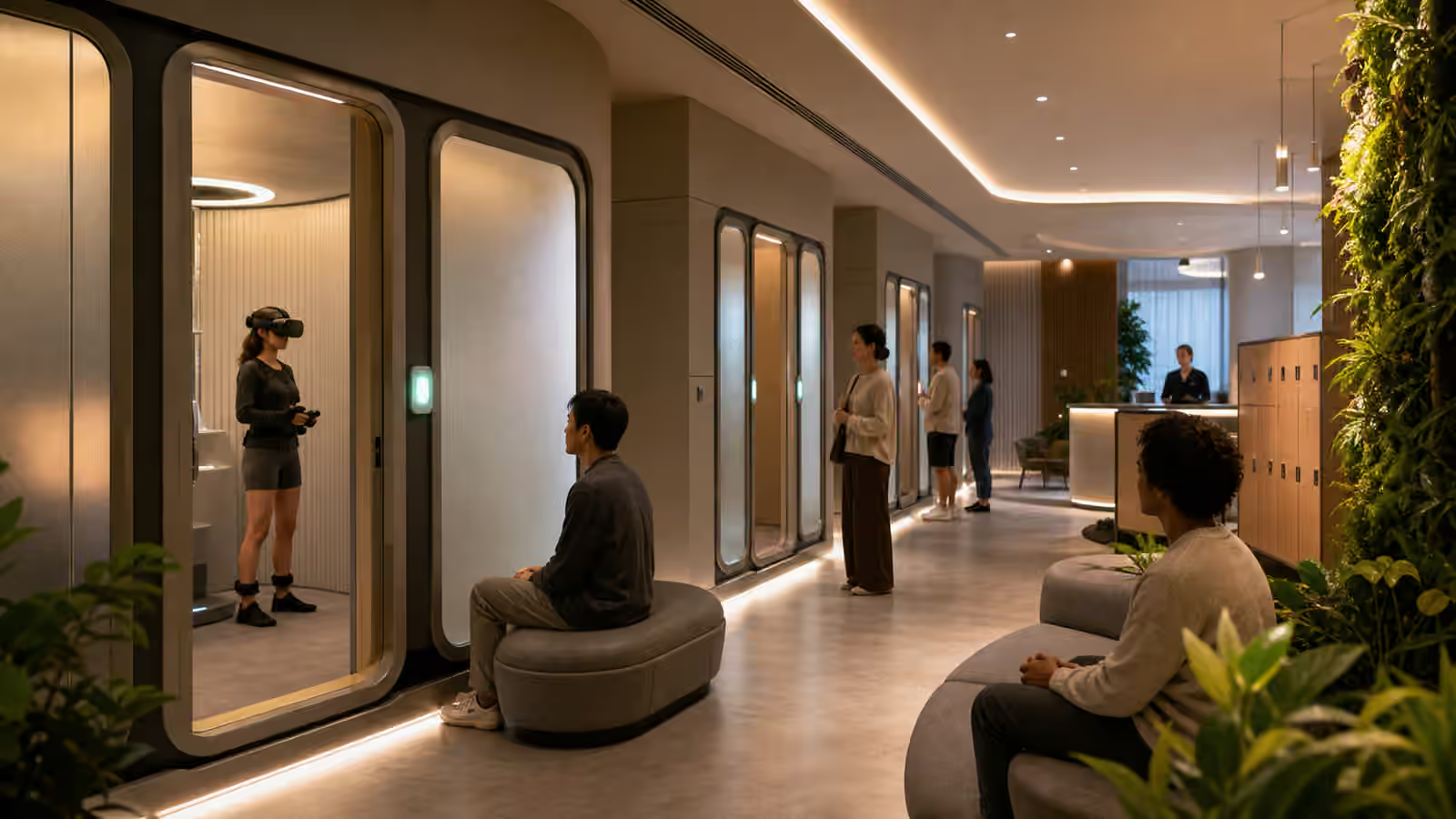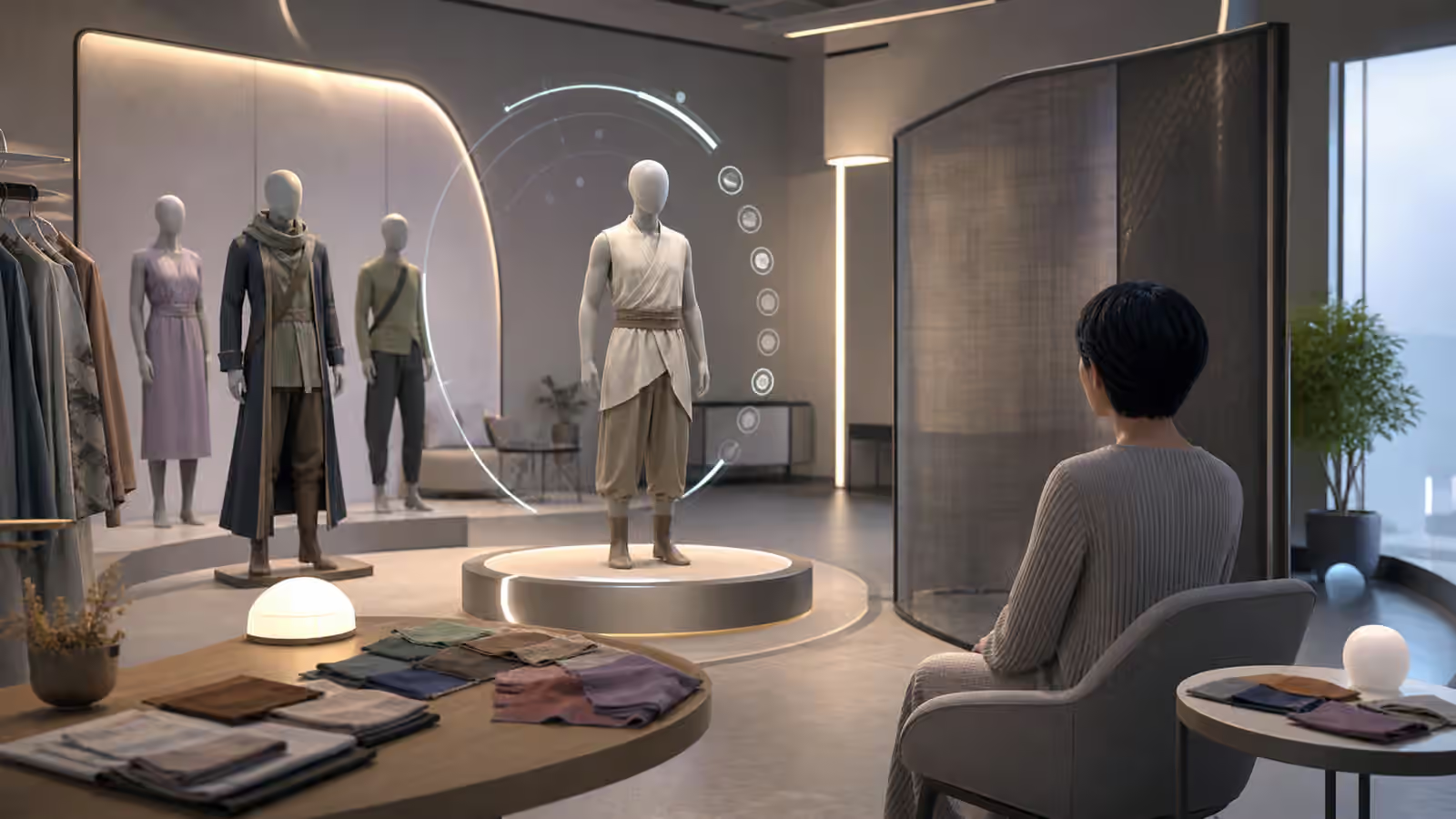
Avatar clothing is easy to dismiss as decoration until the body starts to feel inhabited. In ordinary online spaces, a skin, outfit, badge, uniform, or accessory can signal taste, group membership, status, role, humor, culture, privacy, or performance. In full dive VR, presentation may also shape touch, proximity, temperature, movement, and how comfortable a person feels being seen from inside a virtual body. Clothing becomes part of the boundary between self and world.
Multiple Avatars and Role Switching in Full Dive VR explains why changing bodies is more than changing appearance. Clothing and presentation are smaller changes, but they carry the same principle. A full dive platform should not treat them as trivial cosmetics if they alter how the user is perceived, touched, addressed, or remembered.
Clothing Can Be a Felt Boundary
In a visual-only avatar system, clothing mainly affects what other people see. In full dive, clothing may affect what the user feels. A coat might dampen touch. A glove might change hand contact. A helmet might change sound. A uniform might alter posture because the user knows others read it as authority. A soft garment might help a person feel settled in a social room. A badly chosen outfit might make every gaze feel too close.
Contact, Weight, and Texture in Full Dive VR matters here because virtual materials can become part of body expectation. If clothing is haptic, the user should know what kind of contact it permits. Does a sleeve block touch? Does armor reduce pressure? Does formal clothing restrict movement? Does a sensory costume intensify feedback? These are not merely art decisions when the body believes them.
A humane system lets users set clothing as a boundary, not only a look. The choice can say how visible, approachable, protected, ceremonial, casual, or private the user wants to feel in a given world.
Modesty Is Contextual, Not Universal
Different people and cultures understand modesty, privacy, and presentation differently. A platform should not flatten those differences into one default body. Some users may want more coverage in public worlds than private ones. Some may use clothing to express faith, gender, profession, disability, grief, humor, or community. Some may want a simple neutral form that avoids attention. Some may want an expressive body in a creative world and a restrained one in a workplace.
Identity Continuity and Impersonation in Full Dive VR is relevant because presentation is one of the ways people recognize each other. It can also be one of the ways they misread each other. A platform should allow variation without making presentation a trap. A user should be able to change style without losing access to their own identity, and they should be able to keep stable presentation where recognition matters.
The practical design is not a universal modesty slider. It is context-aware preparation. Before entering a public room, workplace, intimate scene, memorial, family space, or training world, the user should understand how their presentation will appear and whether the world imposes any role clothing or visibility rules.
Uniforms Carry Authority
Uniforms are powerful because they change how people respond. A facilitator avatar, instructor outfit, moderator badge, workplace uniform, medical-looking costume, ceremonial garment, or official platform style can make authority feel natural before anyone explains the actual permissions. Full dive can make that authority stronger through scale, voice, posture, haptic distance, and control of the room.
Workplace Boundaries in Full Dive VR and Facilitators and Operator Roles in Full Dive VR both point to the same rule: authority should be disclosed through real powers, not smuggled through presentation. If an avatar can pause the room, review logs, assess performance, or enforce rules, the user should know that directly. Clothing can support clarity, but it should not replace it.
Uniforms also affect the wearer. A worker may feel pressured to use a standardized avatar that erases comfort or cultural expression. A trainee may behave differently in a role outfit. A facilitator may be mistaken for a friend if the platform makes official clothing too warm or casual. Presentation should help people read the room without manipulating them.
Wardrobe Permissions Should Be Real
If a world can change the user’s clothing, it is changing how the user is seen and possibly how they feel. That should require permission. A story may want to dress a visitor for a historical scene. A training module may assign protective gear. A social world may offer costumes. A memorial room may suggest ceremonial clothing. These can be meaningful choices when they are choices.
Permission Boundaries in Full Dive VR applies cleanly. A world should not undress, expose, brand, restrain, label, or socially mark a user without clear consent. It should also allow refusal without breaking the entire experience when possible. If a garment is required for safety or role clarity, the reason should be plain.
The same rule applies to other people’s access. A friend should not be able to change a user’s outfit as a prank in a serious space. A host should not be able to force a guest into a humiliating presentation. A marketplace should not make purchased clothing behave as a hidden tracker or social signal beyond what the user agreed to show.
Accessibility Is Part of Presentation
Clothing and presentation can support accessibility when designed well. A user might choose high-contrast edges, simplified forms, visible mobility aids, sensory-dampening layers, voice-friendly face presentation, or garments that communicate preferred distance. Another user might hide assistance features because they do not want to explain them. Both choices can be valid.
Accessibility in Full Dive VR argues that different bodies should be designed in from the start. Wardrobe systems should follow that lead. They should not treat accessibility gear as an awkward add-on or make assistance visually louder than the user wants. They should let practical needs, identity, and style coexist.
This is especially important in shared worlds. Clothing can help others understand boundaries without exposing private diagnoses or histories. A visible distance cue, low-touch garment, or quiet-mode presentation can say what the room needs to know without explaining why.
Archives Should Remember Presentation Carefully
Session memories often include how people appeared. Memory Rights in Full Dive VR becomes relevant because presentation can be sensitive later. A playful outfit may not belong in a workplace archive. A private avatar may not belong in a public replay. A culturally meaningful garment may not be something the user wants copied, remixed, or sold.
Full dive platforms should let users control how presentation appears in saved records. A memory might preserve the session accurately for the user while abstracting clothing for others. A training record might note required protective gear without storing the full avatar. A social album might require consent before another person’s presentation is reused in a different context.
Avatar clothing can be expressive, practical, protective, ceremonial, funny, or ordinary. It can help a user feel present without feeling overexposed. The stronger full dive becomes, the less sense it makes to treat presentation as a shop tab outside the serious design. What a body wears in a virtual world can become part of how that body is trusted, touched, recognized, and remembered.