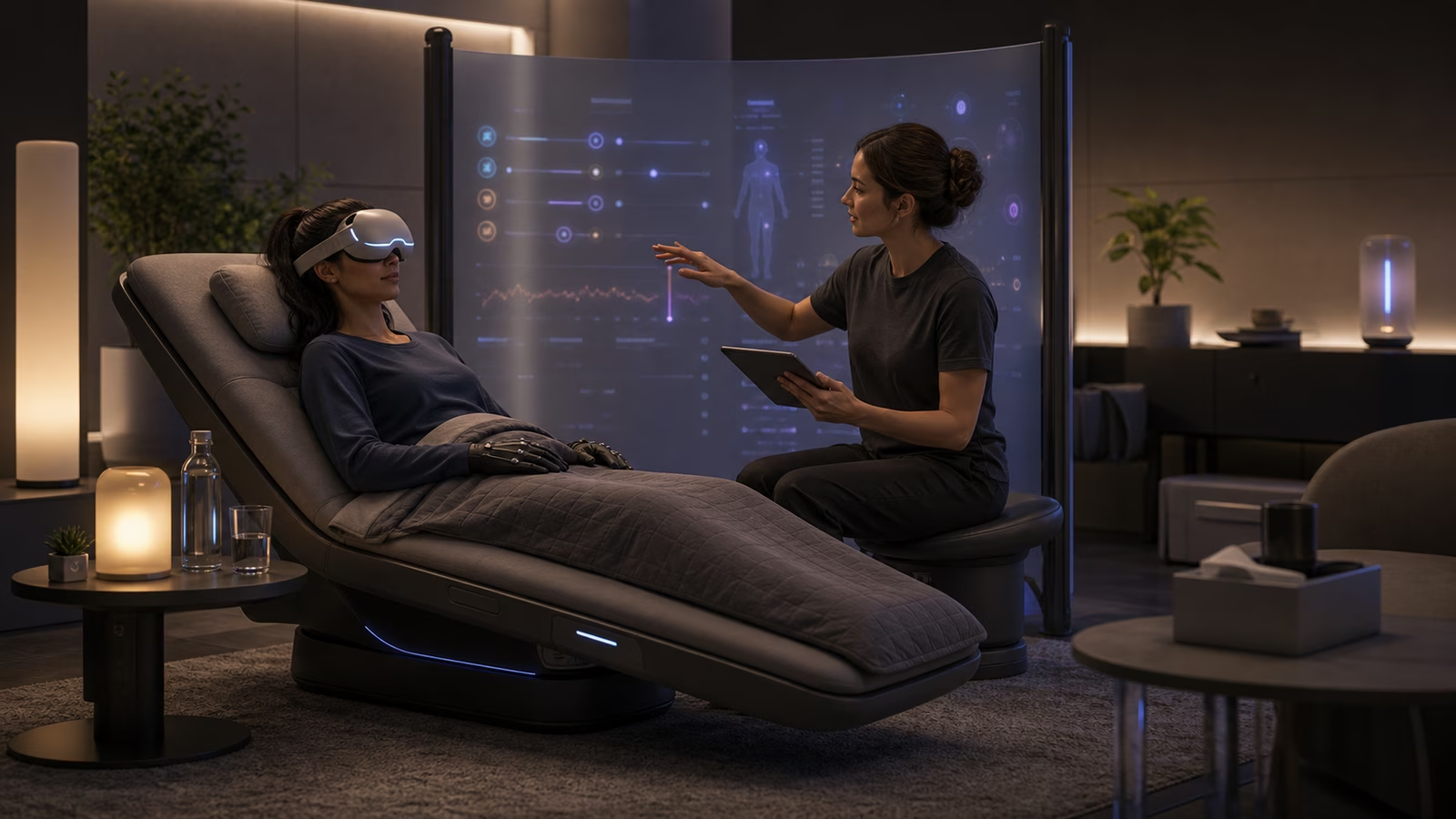
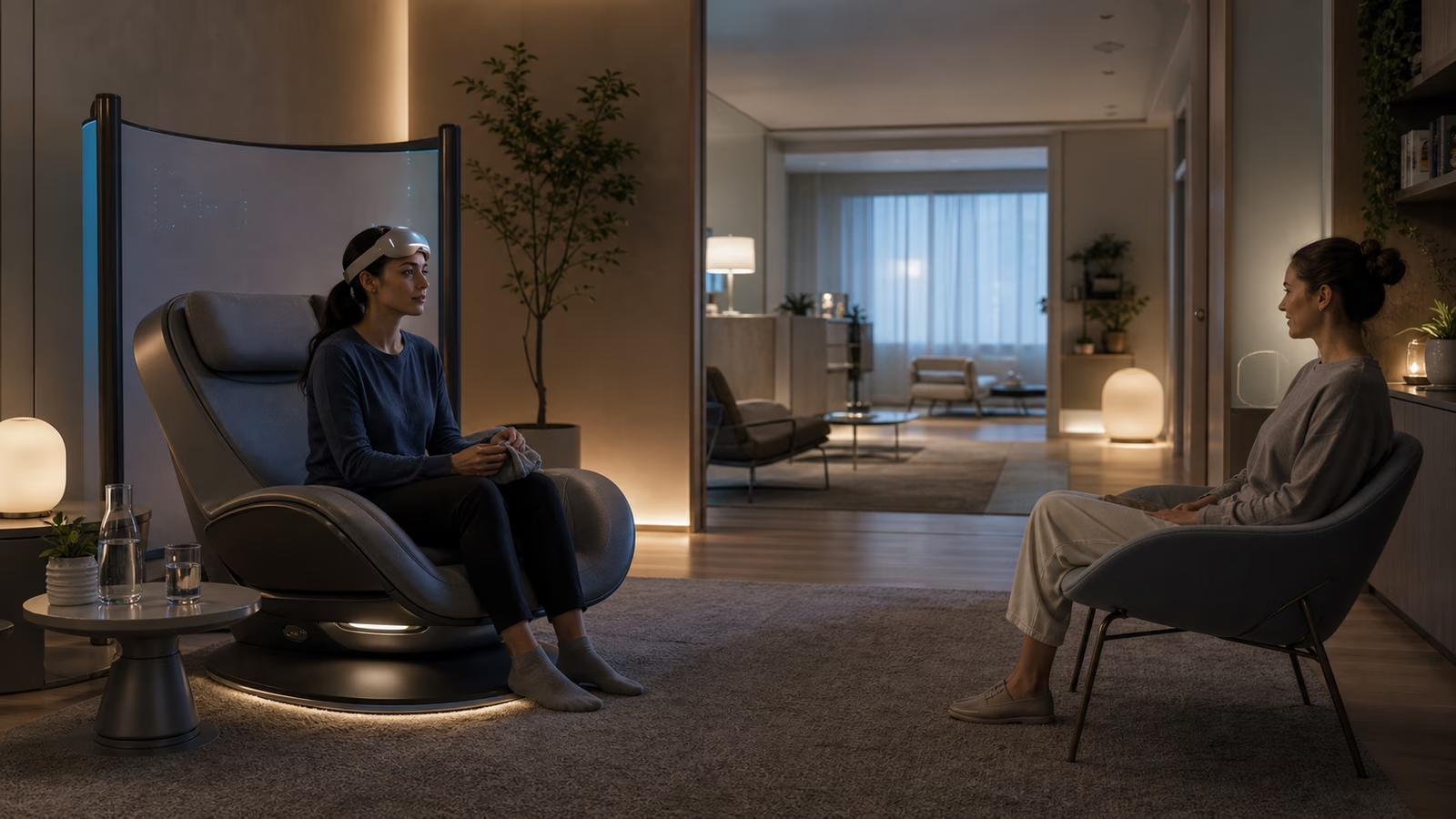
Full dive VR becomes a different technology when the user is still growing. A deep immersive system does not only entertain a child or teenager. It may shape how they understand bodies, privacy, friendship, authority, risk, recovery, and the difference between a chosen experience and a pressured one. That does not make younger users incompatible with immersive worlds. It does mean that the family and institutional layer cannot be treated as an afterthought.
Many full dive conversations imagine a solitary adult entering a private simulation. Children rarely live that way. They move through households, schools, teams, friendships, custody arrangements, clinics, clubs, and platforms where adults make decisions on their behalf. A headset or future neural interface would not arrive as a neutral object. It would arrive inside those relationships, with all their care, impatience, trust, conflict, and uneven power.
The question is not simply how young is too young. That question sounds clean, but it hides too much. A quiet seated art world, a family visit to a remembered place, a supervised physical therapy exercise, a competitive social arena, a horror experience, and a school assessment are not the same kind of session. Age matters. So do intensity, duration, social contact, sensory range, recording, adult supervision, commercial pressure, and the child’s ability to understand refusal.
Full Dive VR Safety, Identity, and Consent frames consent as a core safety feature. For younger users, that idea needs another layer. Consent is not only the child’s yes, and it is not only the guardian’s yes. A humane system needs to notice the gap between permission and willingness.
Permission Is Not the Same as Readiness
A child may agree because a parent is excited. A teenager may agree because friends are already inside. A student may agree because the assignment feels mandatory. A young athlete may agree because a coach calls the simulation training. A patient may agree because adults in the room are using careful voices and expensive equipment. None of those situations is automatically abusive, but none is simple either.
Full dive VR would need readiness checks that are more than legal cover. The user should understand what kind of experience is coming, what senses are involved, who else is present, what is recorded, how long it will last, how to leave, and what happens afterward. Younger users may need that explanation in concrete terms rather than policy language. A calm demonstration room may teach more than a consent screen.
Readiness should also be allowed to change. A child who wanted to try a world five minutes ago may want to stop once the room feels too large, the avatar feels strange, or another person comes too close. A teenager who enjoys a social world may still want private limits around voice, body shape, or session history. A good system treats withdrawal as normal. It does not make the young user perform distress before adults believe them.
This is where Permission Boundaries in Full Dive VR becomes especially important. A family account should not be a master key that lets an adult override every embodied boundary. Guardians may need setup rights, spending controls, contact limits, and emergency visibility, but the young person’s body and sensory field still deserve respect. Protection should not become ownership of the child’s inner experience.
Families Need Roles, Not Just Controls
Parental controls in ordinary software often become a pile of switches: allow this, block that, set a time limit, hide a category, approve a purchase. Full dive would need something more like role design. A guardian, caregiver, facilitator, teacher, clinician, sibling, and friend should not all have the same power over a young user’s session.
A parent may help prepare the room and set broad limits. A facilitator may watch physical safety and help with reentry. A teacher may assign a lesson but should not automatically receive emotional or biometric detail. A sibling may share a family world without gaining access to private calibration. A platform moderator may need evidence after a report without seeing unrelated memories. The system has to distinguish care from surveillance.
Privacy and Consent in Full Dive VR argues that body data is not ordinary usage data. That is even clearer for young users. Movement, gaze, reaction time, hesitation, comfort limits, voice changes, and social behavior can become intimate records before the user understands what a record is. A child may not grasp that a replay can outlive a mood. A teenager may understand privacy socially but not understand data retention technically. Adults designing the system should not exploit that mismatch.
The safest default is restraint. Keep less. Show more clearly what is being kept. Separate household safety signals from platform analytics. Give young users private ways to say no. Give guardians enough information to care for them without turning every session into a report card.
The School Problem
Education is one of the most plausible early uses for deeper immersion. A well-designed simulation can let a student practice a rare procedure, inhabit a historical setting carefully, rehearse a conversation, or understand scale in a way a textbook cannot. Full Dive VR for Education and Training makes the case for practice without pretending that presence is automatically learning.
For younger users, school changes the consent problem. A student can be told that participation is optional while still feeling that refusal will mark them as difficult, scared, poor, disabled, religiously different, or behind. A parent may consent because the school recommends it. A teacher may feel pressure from administrators or vendors. A classroom can normalize technology before anyone has asked whether a child has a real path to opt out.
An age-appropriate educational session should have a non-immersive alternative that is not punitive or embarrassing. It should avoid grading raw body reactions as character. It should not reward students for tolerating discomfort. It should not turn attention, fear, stillness, confidence, or emotional response into a permanent student profile. A simulation can teach courage, empathy, or skill, but it should be careful about measuring those things through a nervous system that is still developing.
Shared school worlds also need social boundaries. Students bring friendship, rivalry, status, flirtation, teasing, exclusion, and performance into any room they enter. Full dive could make those dynamics more intense because body presence feels closer than a chat window. Shared Worlds in Full Dive VR explains why consent, proximity, identity, and moderation need to be built into multiplayer spaces. For minors, those rules should be visible before the lesson begins, not explained after something goes wrong.
Bodies Change, and Worlds Should Notice
Children and teenagers do not have fixed bodies, fixed identities, or fixed comfort needs. Height changes. Balance changes. Voice changes. Stamina changes. Sensory tolerance changes. A body that felt right in last year’s calibration may feel wrong now. An avatar that once felt playful may later feel embarrassing, exposing, or dishonest. A social identity that felt safe in a private room may feel unsafe in a public one.
Full dive systems should expect change rather than treating it as a settings problem. Calibration should be revisited gently. Body mappings should be reversible. A young user should be able to retire an avatar, hide an old replay, soften a voice transform, or change social visibility without needing to justify a personal transition to every adult nearby.
Avatar Bodies and Body Schema describes the avatar as a vehicle, boundary, signal, and sense of self. That is a serious claim for any user. For younger users it becomes developmental. A virtual body can offer freedom and experimentation, but it can also teach someone to compare, perform, or detach from ordinary embodiment in ways that deserve care. The design goal should not be to freeze children into “realistic” bodies. It should be to make exploration bounded, legible, and recoverable.
Accessibility belongs here too. Accessibility in Full Dive VR argues that different bodies need to be designed into the medium from the beginning. A child with limited mobility, chronic fatigue, sensory sensitivity, neurodivergent processing, low vision, hearing differences, or a communication disability should not be treated as an exception to a default able-bodied session. For families, accessibility also means reducing the burden on the child to explain their limits while adults are eager for the experience to work.
Reentry Is a Family Moment
Coming back from immersion does not happen in private for many young users. It may happen in a living room, a clinic, a classroom, a lab, or a shared bedroom. An adult may immediately ask what happened. A sibling may want a turn. A teacher may want a reflection. A parent may look for evidence that the purchase or program was worth it.
That moment needs patience. A young user may need time to return to ordinary sensation before explaining anything. They may be excited, quiet, embarrassed, disappointed, angry, clingy, or tired. None of those reactions should automatically become a diagnosis, a performance score, or a family argument. Comfort and Reorientation in Full Dive VR treats exit as part of the experience, and families should treat it that way too.
The physical room matters. The Room Outside the World focuses on the body that remains outside immersion. With younger users, the room also holds trust. Is there a familiar person nearby? Can the user stop without shame? Is there water, light, quiet, and time? Does the facilitator explain what will happen before touching equipment or asking questions? Does the family know not to crowd the first minute after exit?
Sleep and rest deserve special caution. A child or teenager may want to keep playing late, use a calming world as a bedtime ritual, or replay a session in their head long after it ends. Sleep, Rest, and Recovery in Full Dive VR argues that rest should not become another optimized product. Families can carry that principle into ordinary habits. The system should help give attention back, not make a young user fight for permission to be done.
The Right to Grow Out of a Record
One of the hardest family questions is memory. Parents take photos. Schools keep work. Platforms save activity. Children grow up inside archives they did not design. Full dive could make that archive much richer and more sensitive: first avatars, fear responses, family worlds, learning simulations, grief spaces, social mistakes, performances, repairs, apologies, and experiments with identity.
Memory Rights in Full Dive VR asks what should stay yours. For younger users, the answer should leave room for becoming a different person. A childhood full dive record should not follow someone forever by default. A family may cherish a shared session, but the young participant may later feel differently about it. A school may value training records, but not every embodied mistake deserves permanent storage. A platform may find old interaction data useful, but usefulness is not the same as moral permission.
The right to grow includes the right to outgrow. Outgrow an avatar. Outgrow a family world. Outgrow a recorded lesson. Outgrow a fear. Outgrow a social mistake. A humane full dive culture would make deletion, hiding, expiration, and context part of normal care, not an obscure privacy chore left for adulthood.
The promise of full dive for younger users is not maximum immersion. It is the chance to learn, play, connect, imagine, and practice while still being protected as someone unfinished. The system should remember what children and teenagers cannot always say clearly: I may want this, but I am still learning what wanting means. I may trust you, but I still need boundaries. I may enter the world you built, but I need to come back with more of myself, not less.