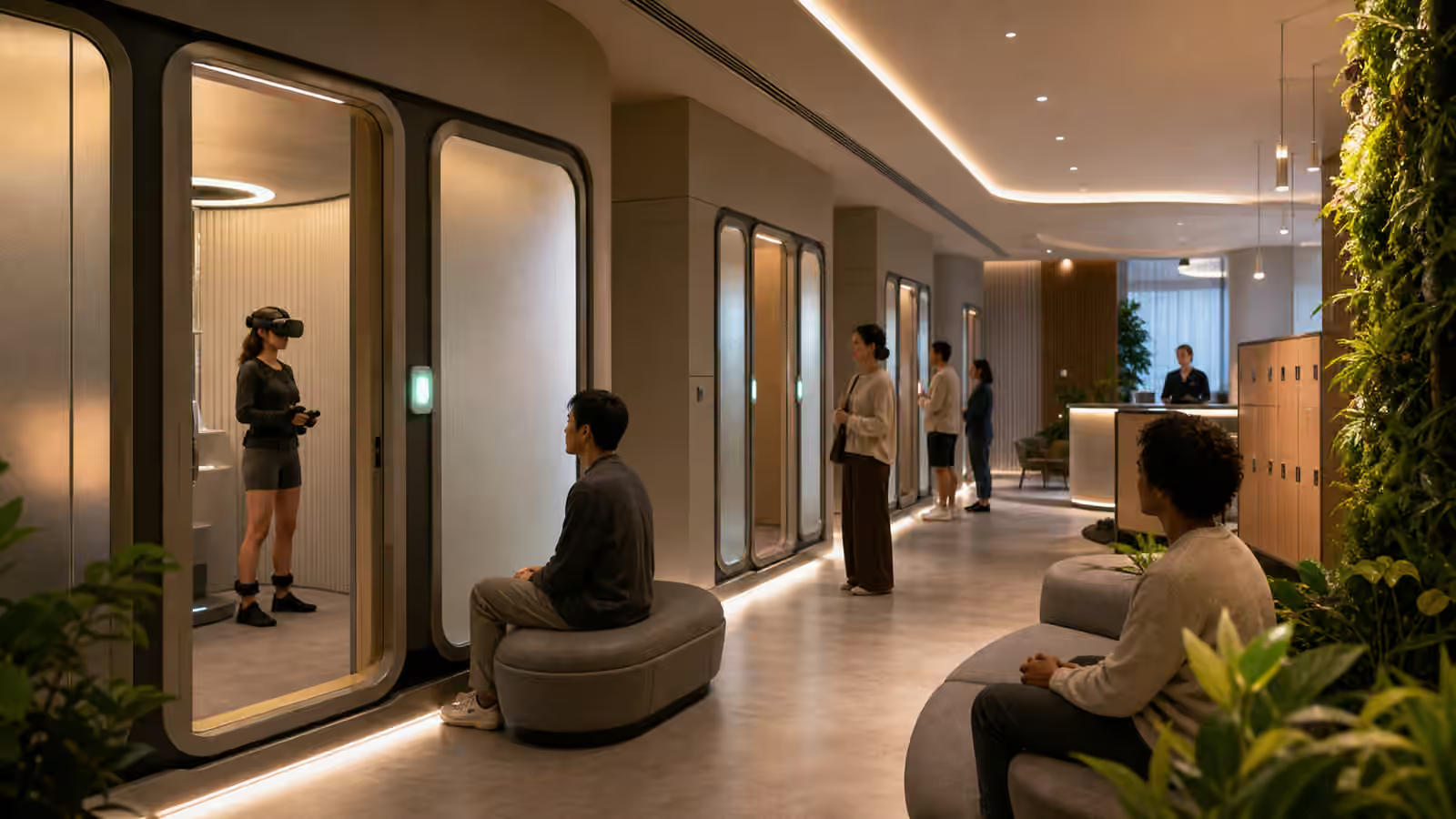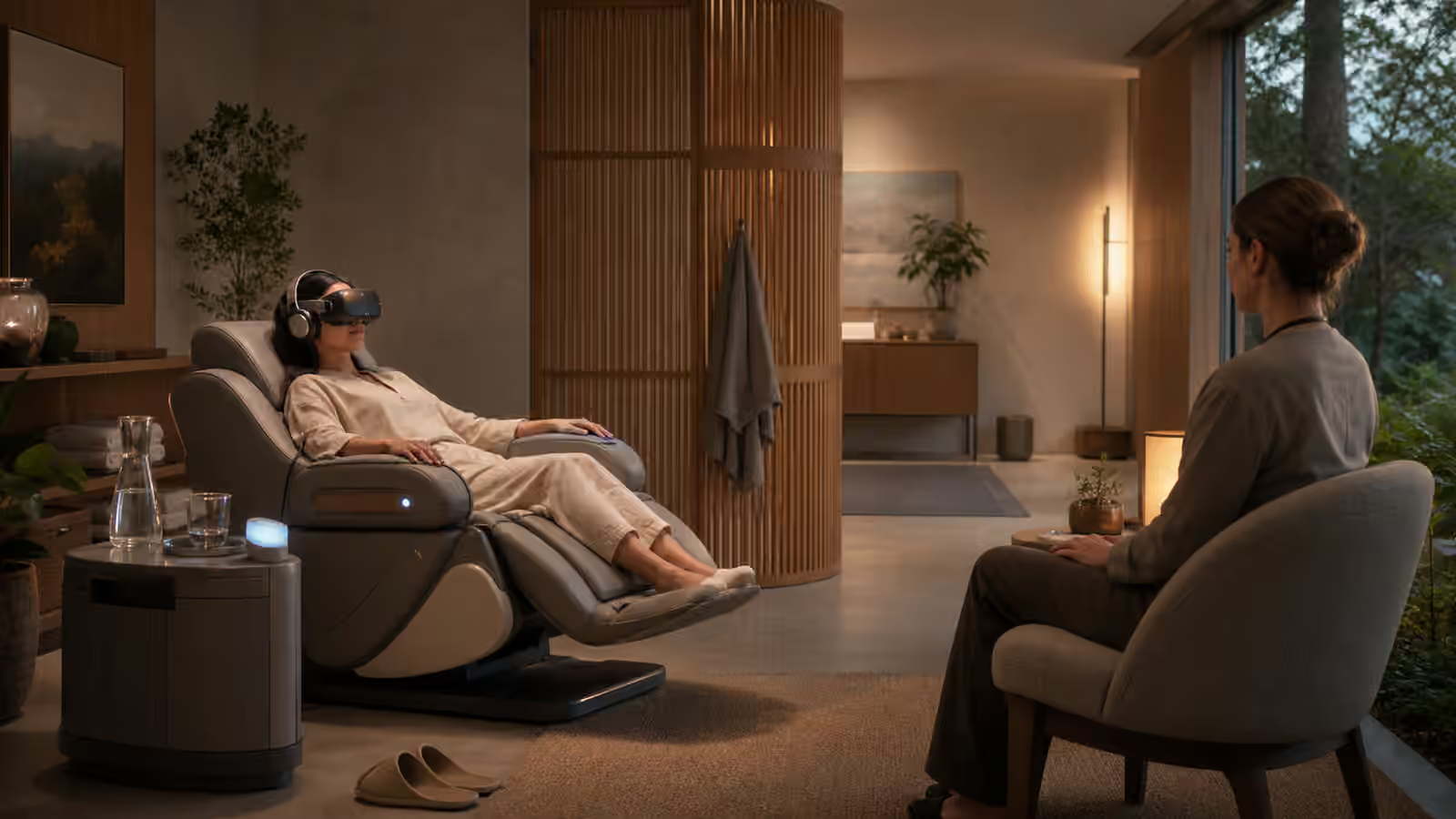
Full dive VR is imagined as escape from the ordinary body, but the ordinary body does not leave. It still gets thirsty. It still needs the bathroom. It still shifts against a chair, responds to room temperature, carries fatigue from the day, and asks for attention at inconvenient moments. The deeper the immersion becomes, the more important those ordinary needs become.
This is not a medical guide, and a full dive system should not pretend to diagnose people. The point is simpler. If a system asks for deep attention, strong presence, or partial handoff of sensory experience, it needs humane ways to notice when the person may need a break. It should do that without turning every bodily signal into a permanent record.
The Room Outside the World explains that deep immersion still depends on a physical place. Bodily needs are the time-based version of that same truth. The chair, room, facilitator, session length, and exit path all matter because the user’s body continues to have a life outside the simulation.
The Ordinary Body Stays in the Contract
A full dive session is not only an agreement with a virtual world. It is also an agreement with the body that remains in the room. That agreement includes posture, breathing space, temperature, modesty, movement limits, and the right to pause for basic needs without embarrassment.
Many imagined full dive experiences focus on spectacular risks, such as getting trapped in a world or confusing reality with simulation. Ordinary discomfort may be more common. A user might ignore thirst because the scene is compelling. They might avoid asking for a bathroom break because other people are waiting. They might continue through fatigue because the world makes stopping feel like failure. They might not notice a poor fit until after the session because the virtual body is more comfortable than the physical one.
Pre-Session Readiness Checks in Full Dive VR helps before entry, but readiness is not permanent. A person who was comfortable at the start can become uncomfortable later. A mature system should treat bodily needs as part of session design, not as interruptions from outside the experience.
Signals Should Be Private Before They Are Useful
A full dive platform might have access to many signals. Some could be direct, such as posture, fit, temperature, or motion. Others could be inferred, such as fatigue, hesitation, or stress. The temptation will be to collect broadly and sort out usefulness later. That temptation is dangerous in a medium where body data may be close to identity.
Body Data Minimization in Full Dive VR offers the stronger principle: collect less when less is enough. A system does not need to know everything about the user to offer a break. It can use local, temporary, low-detail cues. It can ask a simple question. It can make pausing socially normal. It can let the user schedule reminders without revealing why.
For example, a session might offer a private pause at a planned interval. It might gently lower intensity when the user has been still too long. It might ask whether the user wants to continue after a long training segment. It does not need to label the user as anxious, dehydrated, distracted, or medically vulnerable. The safer design often uses the least intimate explanation that still supports care.
Automation Should Stay Conservative
Full dive systems will be tempted to automate support. A synthetic guide may notice that the user is slower to respond. A chair may detect shifting. A facilitator console may show a status change. These tools can help, but they should not become overconfident.
A conservative system distinguishes between possibility and fact. It may know that a user has been in one posture for a long time. It should not claim to know why. It may know that timing confidence is lower or that the user missed a prompt. It should not assume emotional state. It may know that a break is recommended. It should not turn the break into a public announcement.
This matters because bodily needs can be private. A person may want water, quiet, a bathroom break, a posture reset, or simply a moment away from other people. The system should make space for those needs without demanding a confession. Privacy and Consent in Full Dive VR is not only about dramatic recordings. It also applies to small facts that people usually manage without an audience.
Facilitators Need Narrow Information
Human support can make full dive safer, especially in shared equipment rooms, research settings, training sites, or home care contexts. But a facilitator does not need unrestricted access to the user’s inner experience. The role should be bounded.
Facilitators and Operator Roles in Full Dive VR already frames operators as stewards rather than owners of the session. Bodily needs make that boundary practical. A facilitator might need to know that the user requested a pause, that the session is entering a low-stimulation hold, or that reorientation should take more time. They usually do not need a detailed sensor narrative or a guess about private feelings.
The best support room may be one where help is available without becoming intrusive. A user can ask for a break inside the world. The facilitator sees only the information needed to support that break. The world reduces social pressure. The ordinary room is prepared for return. Everyone involved understands that care does not require exposure.
Breaks Should Not Feel Like Failure
If a world treats pauses as exceptional, users will learn to push through. That is a bad habit for a medium that may be intense, social, and emotionally convincing. Breaks should be ordinary. They can be woven into pacing, especially in long sessions, training experiences, and shared events.
Time and Duration in Full Dive VR explains that felt time may not match clock time. A user may experience a session as shorter or longer than it is. That makes external pacing valuable. The system can place natural rests between scenes, offer quiet transition rooms, and remind users that leaving now does not mean the session was wasted.
The language matters. A break can be framed as reorientation, reset, save point, intermission, or return window. The goal is not to hide the body. The goal is to remove shame from tending to it. A person who pauses early is not less suited to immersion. They are using the system in a way that preserves trust.
Reentry Begins Before Discomfort Becomes Urgent
Waiting until a user is uncomfortable creates a harder exit. Strong thirst, urgent bathroom needs, pain from posture, or emotional fatigue can make reorientation feel abrupt. A system that notices earlier can soften the path back. It can lower sensory detail, restore a familiar body, reduce social demands, and move the user toward a threshold before discomfort has become the center of attention.
Comfort and Reorientation in Full Dive VR belongs here because reentry is not only a shutdown sequence. It is a change of bodily attention. The user needs to feel the chair again, the room again, the weight of ordinary limbs again. If the session has been masking or replacing bodily signals, that return should be gradual enough to feel respectful.
The strongest full dive system may sometimes be the one that interrupts its own spectacle. It notices that the body has been patient. It offers water, privacy, stillness, or exit without drama. It keeps the signals local when possible. It lets the user explain less. It remembers that immersion is impressive only when the person inside it can still answer the body’s small, ordinary requests.