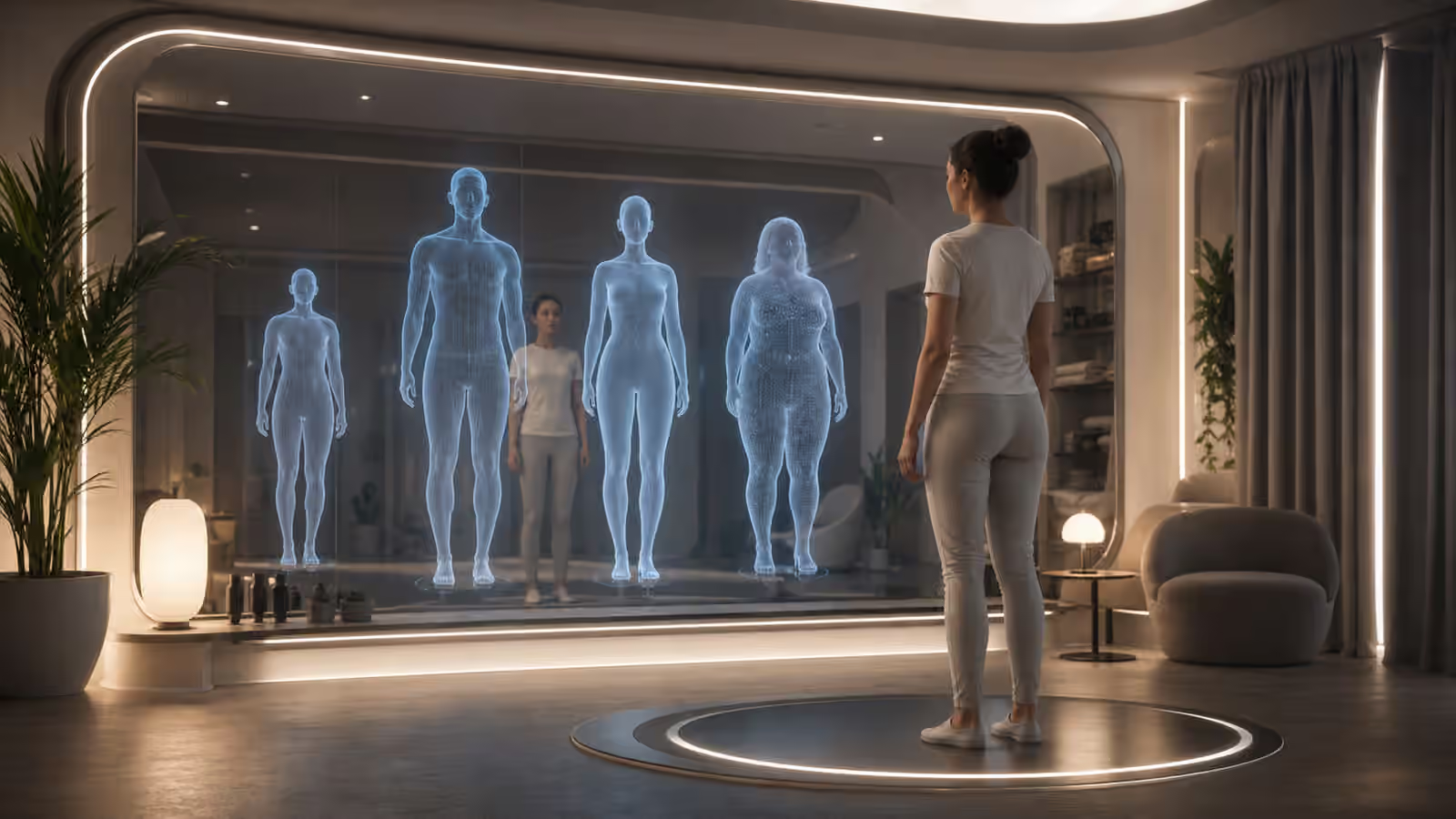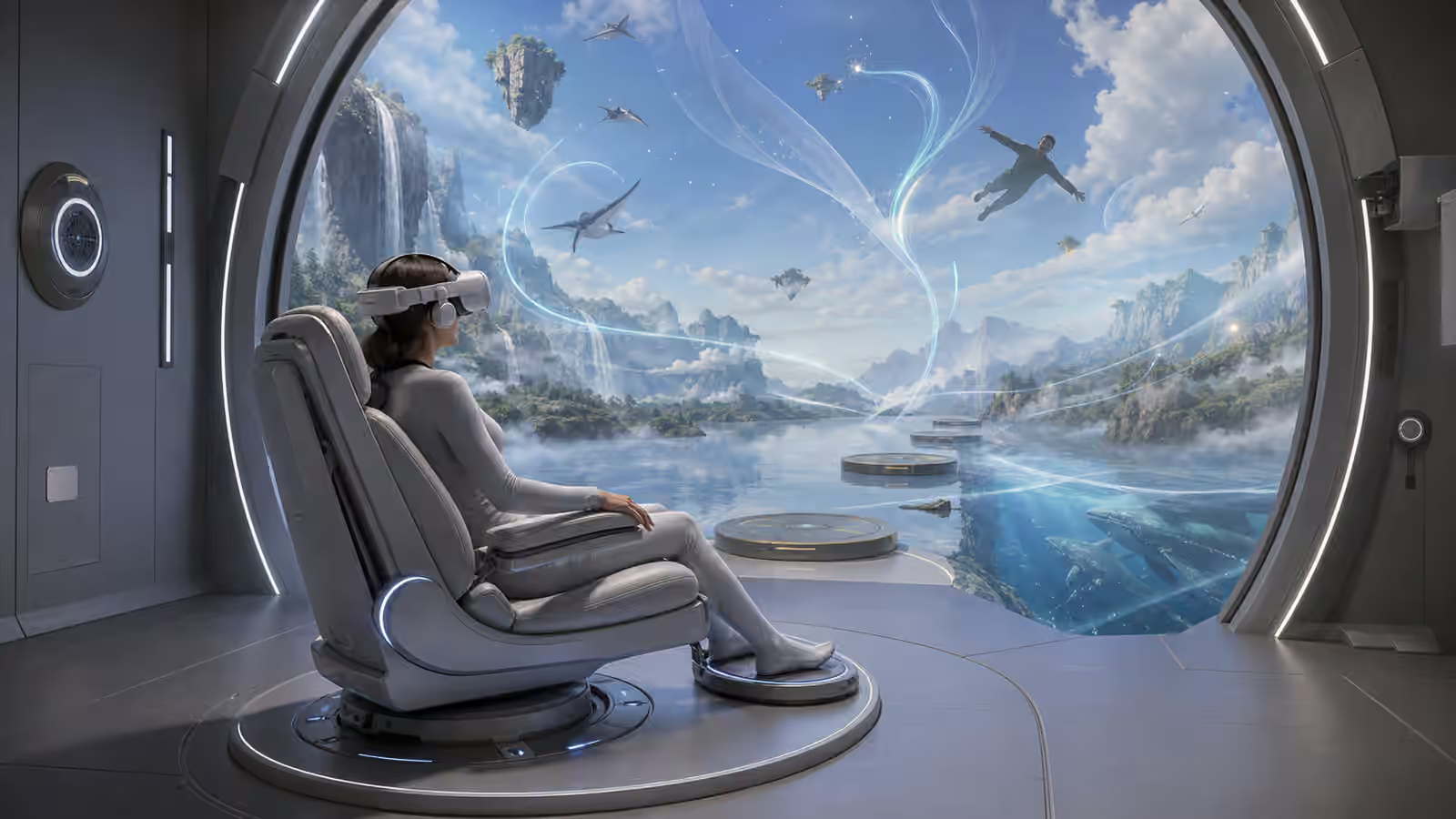
The first promise of full dive VR is place. You are not looking at a world through a rectangle. You are in it. The second promise is body. You do not simply move a camera. You reach, turn, balance, touch, and feel present as someone or something. That second promise is where the technology becomes intimate, powerful, and risky.
An avatar is not just a costume. In deep immersion, the body you inhabit becomes part of how you judge distance, safety, identity, and action. If your virtual arm is too long, reaching feels wrong. If your virtual height changes suddenly, stairs and eye contact feel wrong. If haptic feedback arrives late or in the wrong place, touch becomes confusing. If the system lets another person alter your body without consent, the problem is not cosmetic. It is a boundary violation.
Body schema is the hidden interface
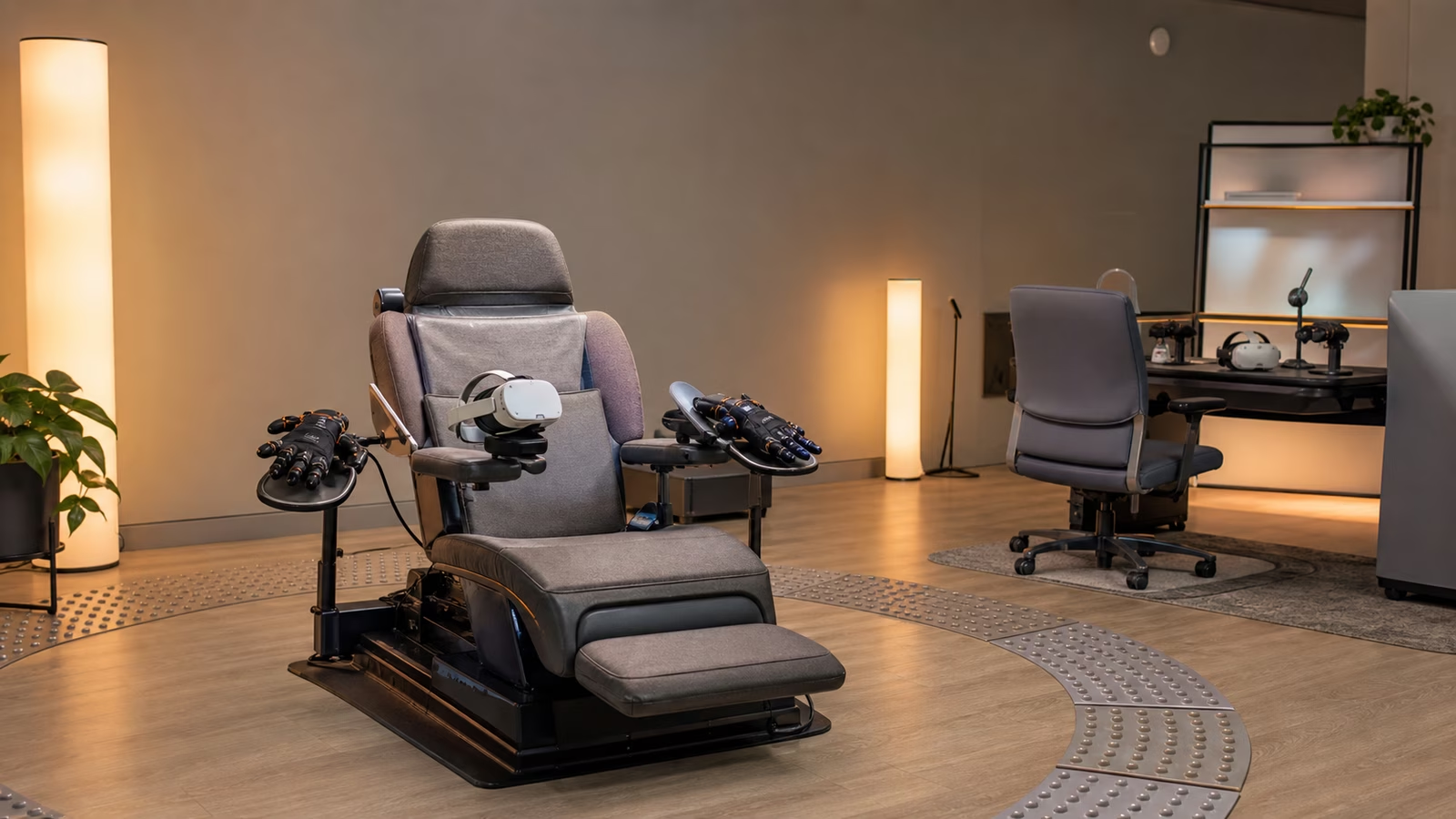
Your body schema is the brain’s working sense of your body’s size, position, and movement. You do not normally calculate where your elbow is before reaching for a cup. You know. That knowing is constantly updated by vision, balance, muscle feedback, touch, and habit. VR already plays with this system by giving you visual hands, controller vibration, and tracked head movement. Full dive would go much further.
The more convincing the system becomes, the more careful calibration has to be. A headset game can get away with cartoon hands floating in front of you. A deeper system that claims touch, weight, pain limits, balance cues, or whole-body presence cannot be that casual. The avatar has to match enough of the user’s expectations that action feels coherent. It also has to mark intentional differences clearly so the user understands what changed.
This does not mean every avatar must match the user’s real body. Fantasy, experimentation, accessibility, and play are part of the appeal. The point is that body changes need handling. Taller, shorter, stronger, lighter, winged, tailed, many-armed, nonhuman, or abstract bodies all change perception. A safe system should introduce those changes with calibration rather than throwing the user directly into a crowded street or combat arena.
The calibration room should come first
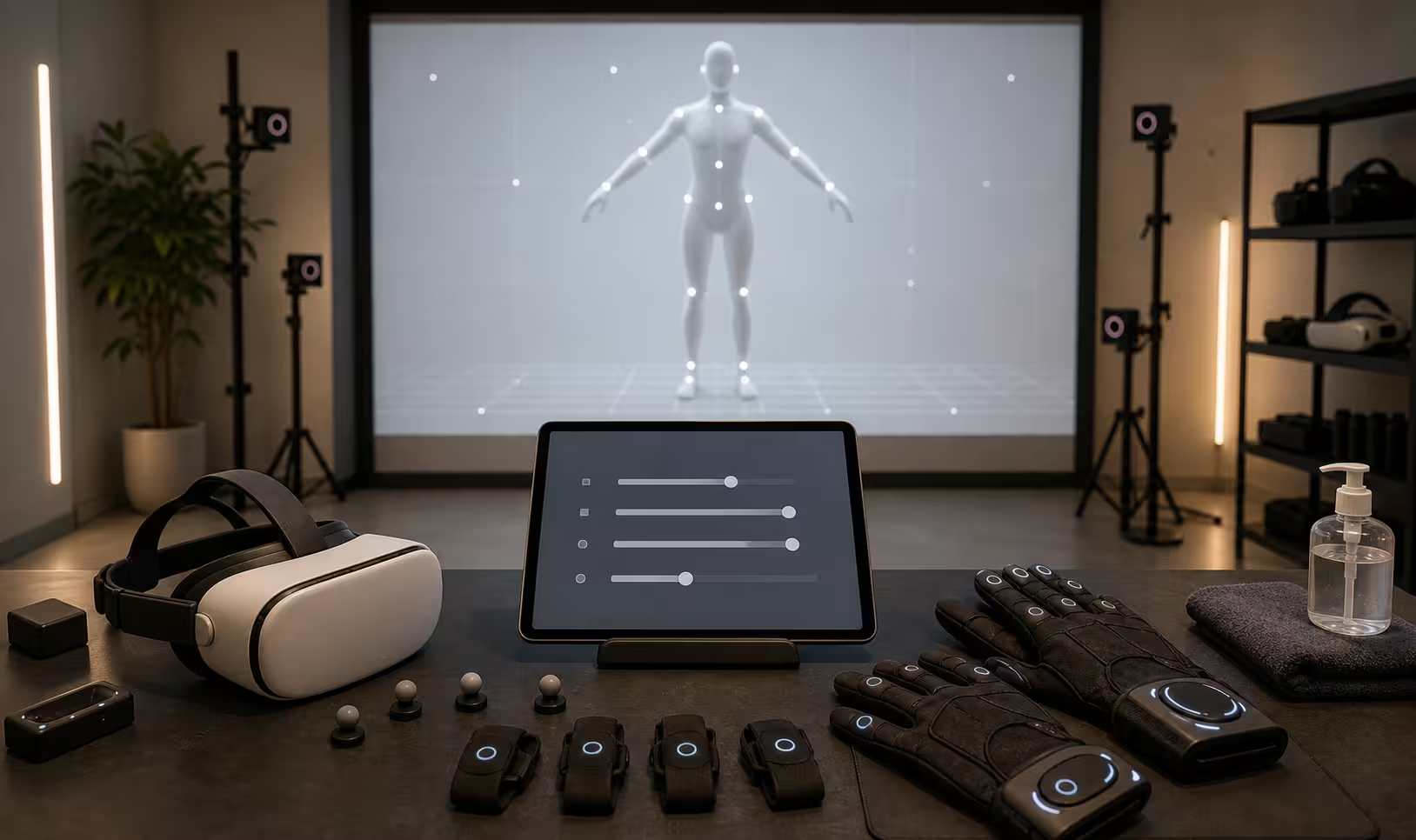
A serious immersive system needs a neutral place where the user learns the body before the world asks anything difficult. The calibration room is not a loading screen. It is a safety tool. It lets the user see the avatar, move slowly, reach for objects, test boundaries, adjust comfort settings, and understand what sensations mean.
At the simplest level, calibration checks proportion and tracking. Do hands appear where the user expects them? Does turning feel stable? Does crouching match the virtual knees? Does seated use behave differently from standing use? Are reach, grip, and release reliable? If haptic gloves or suits are involved, does touch arrive in the right location and at the right intensity?
Then calibration should check comfort. Some users may want visible arms. Others may prefer simplified hands. Some may tolerate full-body mirrors. Others may find them unsettling. Some may enjoy height changes. Others may need a real-body reference to stay grounded. The safest default is not maximal realism. It is adjustable coherence.
Identity is not only appearance
Avatar identity is often discussed as hair, clothing, face, and style. In full dive, identity includes motion, voice, posture, touch permissions, sensory intensity, and memory. A body can feel wrong even if it looks impressive. A walk cycle can feel like wearing someone else’s habits. A voice can create social expectations. A face can invite recognition or misrecognition. A body shape can change how others behave toward you.
This is why avatar design needs more than a character creator. It needs identity controls that are understandable and reversible. Users should know what others can see, what can be recorded, what traits are persistent, and what changes are session-only. They should be able to separate private exploration from public identity. Trying a body in a private room is different from entering a shared world where other people respond to it.
The system also needs to respect the difference between chosen transformation and imposed transformation. A world that lets you become taller, older, smaller, or nonhuman can be liberating when chosen. The same changes become invasive if triggered by another user, an advertisement, a game mechanic, or a malicious script without consent.
Haptics need boundaries
Touch is where avatar embodiment becomes especially sensitive. A vibration in a hand controller is easy to dismiss. A convincing touch mapped onto a virtual body is different. It can create presence, intimacy, urgency, and discomfort. It can make tools feel real and social contact feel meaningful. It can also make unwanted contact feel much more serious.
A full dive system should treat haptic permissions as basic infrastructure. Users need control over who can touch them, what kinds of touch are allowed, how intense sensations can become, and how quickly all contact can be muted. Public spaces may need conservative defaults. Private spaces may allow more explicit agreements. Games may need separate rules for combat, medical simulation, sports, dance, training, and social contact.
Pain deserves special caution. Even simulated pain can shape behavior and memory. Training systems may want discomfort signals for safety, but strong pain feedback should not be a casual entertainment setting. The body is how the user trusts the world. If the world uses that trust carelessly, immersion becomes hostile.
Nonhuman bodies should teach slowly
One of the beautiful possibilities of full dive is inhabiting bodies that real life cannot provide. A birdlike body, a low-gravity body, a many-limbed body, a tiny body, or a body made of light could teach new relationships to space. But nonhuman embodiment should not be treated as a skin swap. It changes how movement works.
A body with wings needs a training space. A body with extra arms needs attention design. A very small body changes threat and scale. A very large body changes collision, social distance, and responsibility. A body without a familiar face may change how others read emotion. These experiences can be wondrous, but wonder is stronger when the user is not fighting confusion.
Good design introduces unfamiliar bodies through stages. First, look. Then move. Then touch objects. Then interact with simple environments. Only after that should the user enter complex social or high-stakes settings. The lesson from real bodies applies here too: confidence comes from sensorimotor practice, not a menu selection.
Exit is part of embodiment
Returning from an avatar body to the real body may become its own transition. If the virtual body was taller, faster, lighter, younger, stronger, or differently shaped, the user’s real body may feel strange for a moment. Current VR already produces aftereffects for some people: balance shifts, hand oddness, eye strain, or a lingering sense of scale. Deeper systems could amplify that.
A responsible full dive experience should include reorientation. The system can slow the final moments, restore a neutral body, reduce sensory intensity, and give the user time before standing or making real-world decisions. It should not eject someone abruptly from a highly embodied experience into a room full of hazards, notifications, and social pressure.
Avatar bodies are not a decorative layer on full dive VR. They are the user’s vehicle, boundary, signal, and sense of self inside the world. That makes them one of the places where design ethics becomes practical. Calibrate slowly. Make body changes legible. Give users control over identity and touch. Treat nonhuman embodiment as movement learning. Build exits that return people gently. The future of full dive will not be judged only by how real the world looks. It will be judged by whether the body inside it can be trusted.