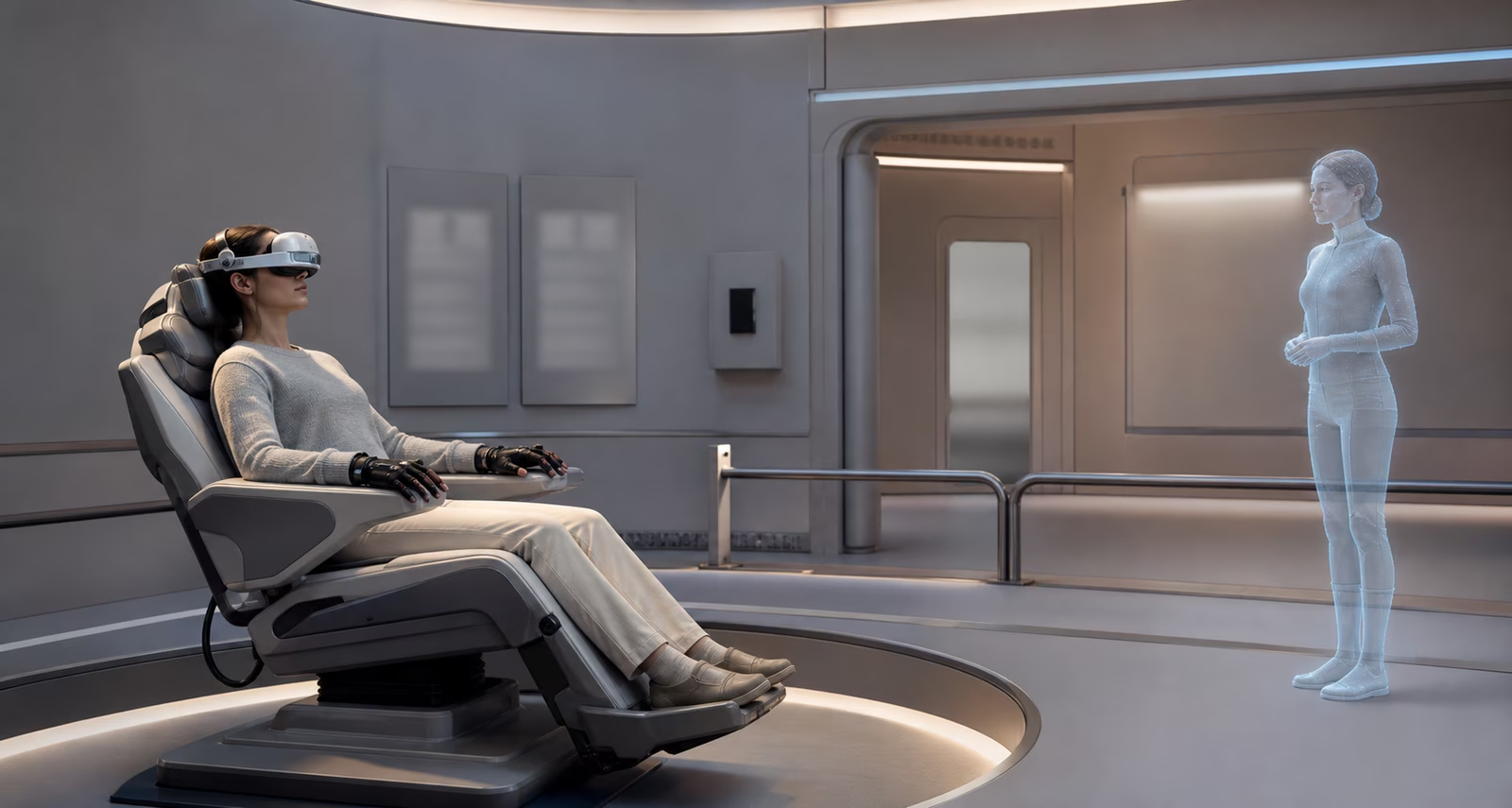
Full dive VR would not only create places. It would create places that someone pays to build, host, maintain, promote, and keep populated. That practical fact brings advertising into the room early. A virtual city can have storefronts. A game world can have sponsored objects. A social venue can be subsidized by placement. A synthetic guide can recommend a destination. A training platform can nudge a subscription. A calm recovery room can become a place where a brand wants to be associated with relief.
None of this requires a cartoon villain. Persuasion often begins as convenience.
The difficulty is that full dive VR would make persuasion more embodied than ordinary media. A screen ad competes for attention. A full dive ad could shape the room, the sound, the pacing, the social context, the tactile cue, or the synthetic person who seems to understand what the user wants. Privacy and Consent in Full Dive VR explains why body data sits close to the self. Advertising built on that data would need stricter limits than ordinary targeting, because the medium can notice and influence more than clicks.
Sponsored Space Should Be Legible
A sponsored full dive space does not have to be manipulative. A museum wing, sports arena, concert venue, fantasy market, travel simulation, or training lab might be funded by a sponsor in a way users understand. The ethical problem begins when the sponsorship becomes hard to see from inside the experience. If a world feels like a neutral public square but its paths, weather, characters, and memories are arranged to favor a commercial goal, the user is not simply being advertised to. They are being placed inside an argument.
Legibility matters because full dive presence can soften skepticism. A user walking through a beautiful virtual greenhouse may not feel that an object placement is an ad. A synthetic host who remembers their preferences may feel helpful rather than promotional. A comforting scent or warm light may make a brand feel trustworthy without ever making a claim. The persuasion works by setting the room.
Permission Boundaries in Full Dive VR offers a useful frame. A world should be clear about what it is allowed to do. If it is allowed to recommend, sell, upsell, sponsor, collect preference signals, or adjust the environment for retention, those permissions should not hide behind decorative language. Users should know when they are in a commercial space, when a character has a selling role, and when a recommendation is paid or optimized.
Personalization Can Become Too Intimate
Personalization is attractive because full dive VR will likely require calibration. The system may know which body settings reduce discomfort, which sensory cues feel pleasant, which social distances feel safe, which environments lead to longer sessions, and which kinds of synthetic companions create trust. Those details can improve accessibility and comfort. They can also become a persuasion profile.
A platform might learn that a user lingers in rain scenes, accepts recommendations from calm voices, responds to a certain kind of praise, or becomes more agreeable after a long cooperative task. Even if those inferences are imperfect, they can guide design. A system does not need to read a mind to exploit a pattern. It only needs to test which scenes keep someone present and which cues make refusal less likely.
The safest rule is that calibration data should serve the user’s experience before it serves the seller’s. A temperature preference should not become a shopping trigger. A stress response should not become a targeting category. A recovery routine should not become a retention strategy. The guide to Calibration Profiles in Full Dive VR asks what should travel with the user. Commercial exploitation is one reason the answer should be cautious.
Synthetic Sellers Need Disclosure
Synthetic people create a special persuasion problem. A human salesperson is socially legible, even when they are charming. A synthetic guide in full dive VR may be designed to feel patient, attentive, responsive, and personally safe. It may remember prior conversations, adapt its posture, lower its voice, offer reassurance, and choose the moment when a recommendation feels least intrusive.
Synthetic People in Full Dive VR argues that companions and guides need disclosure, memory boundaries, and exit rules. Advertising adds another layer. A synthetic person should not quietly shift from helper to seller. If it has a commercial role, the user should know. If it is paid to recommend, the user should know. If it is measuring reactions to improve persuasion, the user should be able to refuse that measurement without losing ordinary access to the world.
This is not only about honesty. It is about dependency. A user may rely on a synthetic guide for navigation, translation, accessibility, emotional pacing, or social mediation. Turning that relationship into a sales channel can make refusal costly. The user may worry that rejecting the recommendation will change the guide’s warmth or usefulness, even if the system does not intend that effect.
Sensory Persuasion Should Be Limited
Full dive advertising will not be limited to images and slogans. It could use sound, proximity, touch, temperature, smell, timing, fatigue, and social choreography. A cafe could feel warmer near one product. A sponsored tool could have more satisfying weight. A paid destination could smell more inviting than an unpaid one. A premium avatar skin could move with subtly better body confidence. A store could slow the exit just enough to invite one more look.
Those possibilities are why Smell, Taste, and Temperature in Full Dive VR and Contact, Weight, and Texture in Full Dive VR matter beyond realism. Sensory cues are not neutral decoration when they are tied to a commercial outcome. They can make a choice feel natural before the user has evaluated it.
The boundary should be stricter around bodily states. A platform should not increase sensory intensity to create urgency, use discomfort relief as a purchase pressure, or tune social closeness to make a sales moment harder to refuse. It should not blur the difference between a safety cue and a commercial cue. If a haptic pulse usually means warning, it should not be reused to pull attention toward a sponsored object.
Attention Is Not the Only Cost
Ordinary advertising is often criticized for taking attention. Full dive persuasion may take more: recovery time, emotional residue, memory association, body comfort, and social meaning. A sponsored scene that borrows the feeling of home may linger after exit. A sales event built around friendship may complicate real relationships. A branded training environment may change how a worker remembers a skill. These effects are not guaranteed, but the medium makes them plausible enough to design against.
Time and Duration in Full Dive VR is relevant because persuasion can hide in pacing. A world can delay exits, lengthen transitions, make the next step feel small, or create a sense that leaving now would abandon other people. In a deeply social or embodied medium, a dark pattern does not need to be a button. It can be a room that makes departure feel rude.
Good commercial design would make leaving ordinary. It would separate safety controls from purchase flows. It would let users turn off commercial personalization. It would avoid advertising in recovery spaces, private calibration, child-focused environments, and high-vulnerability sessions. It would treat refusal as a stable preference, not a challenge to be overcome.
Trust Is Worth More Than Conversion
Full dive VR will probably need business models. Servers cost money. Artists, moderators, safety teams, accessibility work, and physical facilities do not appear for free. The question is not whether commerce exists. The question is whether commerce is allowed to use the body’s trust as raw material.
A healthy full dive ecosystem would make sponsored space visible, synthetic sellers honest, personalization limited, sensory persuasion restrained, and exits clean. It would let users enjoy beautiful commercial worlds without wondering whether every warmth, pause, and friendly voice has been tuned against them.
The strongest advertising boundary is not a ban on recommendation. It is a refusal to confuse presence with permission. A user can choose a product, visit a store, support a creator, or enter a sponsored world. They should not have to wonder whether the world learned too much about their body in order to ask.