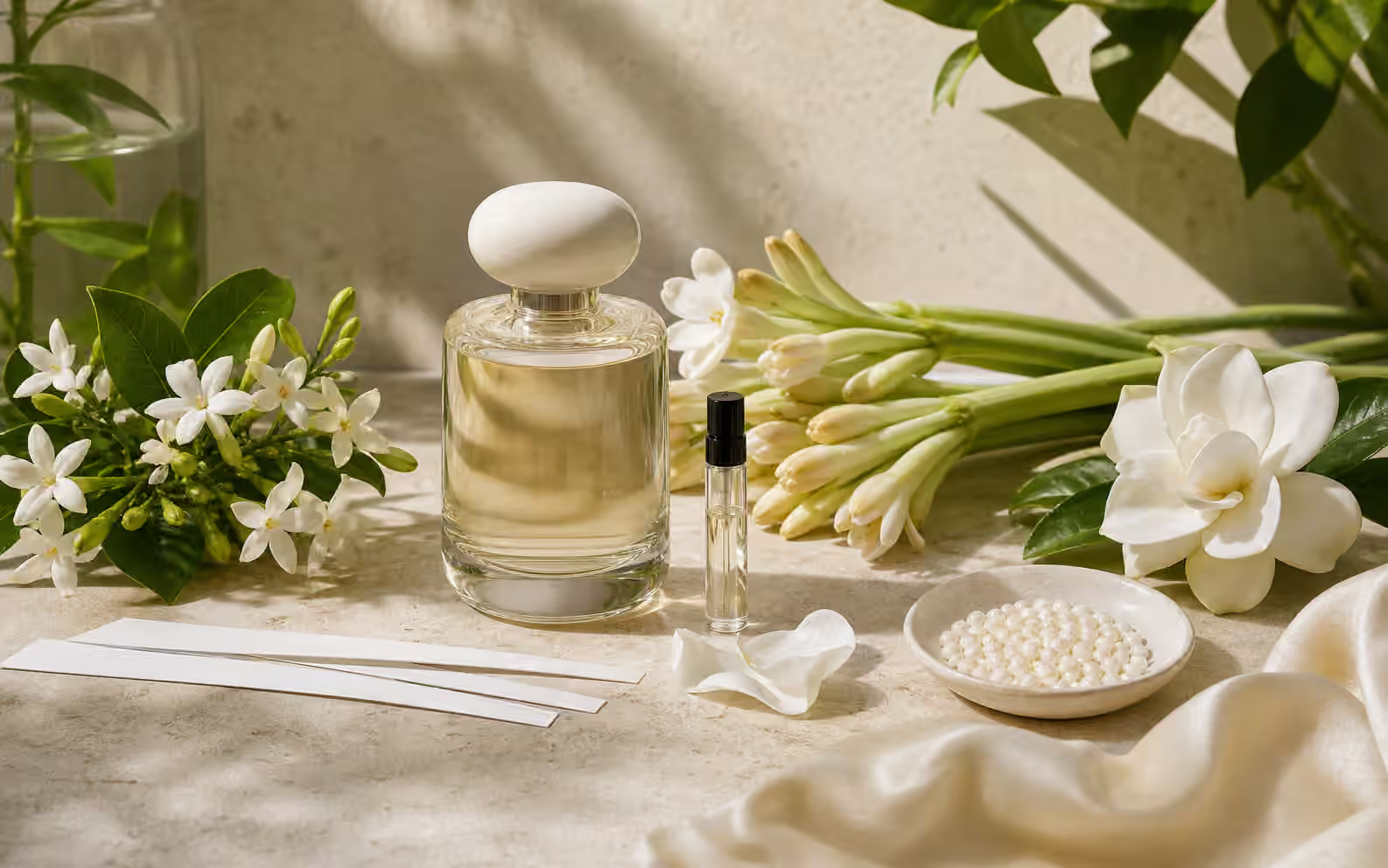
White floral perfumes can be radiant, creamy, green, tropical, soapy, animalic, clean, narcotic, or quietly luminous. The phrase sounds tidy, but the experience is not one thing. Jasmine, tuberose, orange blossom, gardenia, ylang-ylang, magnolia, lily, and many abstract white floral accords all belong near this territory. Some smell like petals in daylight. Some smell like warm skin and pollen after dark. Some behave politely. Some fill a room before the wearer realizes what happened.
The broader Floral Scents guide maps rose, iris, violet, peony, and modern bloom structures. White florals deserve a closer look because they teach one of perfume’s most important lessons: beauty can have volume, texture, and shadows. A white flower note is not always clean prettiness. It can be creamy, waxy, green, spicy, indolic, honeyed, musky, or almost salty.
Jasmine can be luminous or animalic
Jasmine is often described as beautiful, but that word hides its range. It can smell bright and airy, like white petals warmed by sun. It can smell creamy, fruity, banana-like, tea-like, green, or slightly dirty in a living way. Some jasmine effects are polished until they feel clean and abstract. Others keep an indolic edge, a natural-smelling warmth that can suggest skin, breath, overripe flowers, or night air.
Indolic does not mean bad. It means the floral has depth beyond fresh petals. A small amount can make a perfume feel alive. Too much can feel heavy, intimate, or challenging, depending on taste and context. This is why jasmine often overlaps with Animalic Notes in Perfume . The flower can carry a human warmth that makes a fragrance more sensual than decorative.
Jasmine also changes depending on its setting. With tea and citrus, it can feel transparent. With vanilla and musk, it can feel creamy. With green notes, it can feel fresh and stemmy. With amber, it can become warm and evening-like. If one jasmine perfume overwhelms you, another may still work. The support notes matter as much as the flower.
Tuberose is not just loud
Tuberose has a reputation for drama, and it earns it in some perfumes. It can be huge, creamy, tropical, buttery, mentholated, green, rubbery, or almost coconut-like. It can suggest a white flower in full bloom, but also the stem, wax, air, and heat around it. That complexity is why tuberose can feel glamorous to one person and too much to another.
The mistake is assuming all tuberose perfumes are the same volume. Some are grand and deliberate. Some are sheer, green, or modern. A green tuberose may emphasize stems and freshness. A creamy tuberose may lean toward coconut, sandalwood, or musk. A vintage-style tuberose may feel more animalic and plush. A minimalist tuberose may use the note as a clean floral glow rather than a full bouquet.
Tuberose is a good reminder to sample slowly. It often changes after the opening, and it can become more present as the perfume warms on skin. A blotter in a shop may smell gorgeous from a distance and exhausting up close. A small skin test may be perfect outdoors and too large at a dinner table. The same scent can be right or wrong depending on distance.
Orange blossom sits between clean and sensual
Orange blossom and neroli share family resemblance but behave differently in perfume language. Neroli often feels bitter, green, citrusy, and cologne-like. Orange blossom can feel sweeter, more floral, honeyed, soapy, or creamy. Together they create one of the most wearable bridges between fresh and floral fragrance.
Orange blossom can smell like clean skin after a shower, a white shirt in warm air, a flower beside citrus peel, or a soft honeyed floral. It often appears in perfumes that want brightness without sharpness. It can pair with musk for a clean effect, vanilla for softness, amber for warmth, or green notes for a more natural flower. This is why orange blossom can work for people who think they dislike florals but enjoy fresh scents.
The clean side can become soapy, which may be exactly the point. The sweet side can become syrupy if the base is heavy. The floral side can project more than expected. Testing orange blossom through the drydown helps you learn which part you enjoy: bitter leaf, white petal, soap, honey, cream, or musk.
Green facets keep white flowers alive
White florals can become too smooth when every edge is polished away. Green facets bring them back to the plant. Leaves, stems, galbanum, basil, violet leaf, cut grass, and fig leaf can make jasmine or tuberose feel less like a cosmetic accord and more like a flower with air around it. The Green and Herbal Scents guide explains this texture more broadly, but white florals show it vividly.
A green white floral can feel elegant, almost austere. It may not be sweet at all. It may smell like a florist’s cold room, a crushed stem, or a garden after rain. This style is useful when rich white florals feel too creamy. It gives the bloom structure and freshness. It can also make the perfume feel less gendered because the plant material matters as much as the petal.
Musk, woods, and amber decide the room
The base of a white floral determines whether it feels close, polished, beachy, vintage, clean, or dramatic. White musk can make flowers feel like fresh fabric. Sandalwood can make them creamy. Cedar can make them drier. Amber can add warmth. Vanilla can turn them soft and golden. Coconut or lactonic notes can pull tuberose toward tropical cream. Animalic musks or indolic materials can make the floral feel more bodily and intense.
Projection is the practical issue. White florals often travel. Even when they smell soft to the wearer, they may create a noticeable cloud. If you want to wear them in offices, transit, classrooms, or small restaurants, start with less than you think you need. Close-Space Fragrance is worth reading before treating any floral as harmless because it smells pretty.
How to sample white florals
Give white florals space. Do not test four of them on the same arm and expect clarity. Smell one on paper if you want the opening, then choose one for skin. Check from a distance, not only with your nose pressed to your wrist. Notice whether the scent blooms in warm air. Notice whether it clings to sleeves. Notice whether the base becomes creamy, soapy, animalic, or woody.
White florals reward precise notes. “Jasmine tea opening, clean musk later” is different from “heavy jasmine.” “Green tuberose, beautiful outside, too much indoors” is a useful finding. “Orange blossom soap, perfect after shower” gives you a real wardrobe job. The goal is not to decide whether white florals are good. They are too varied for that. The goal is to find the distance, texture, and setting where the flower makes sense on you.