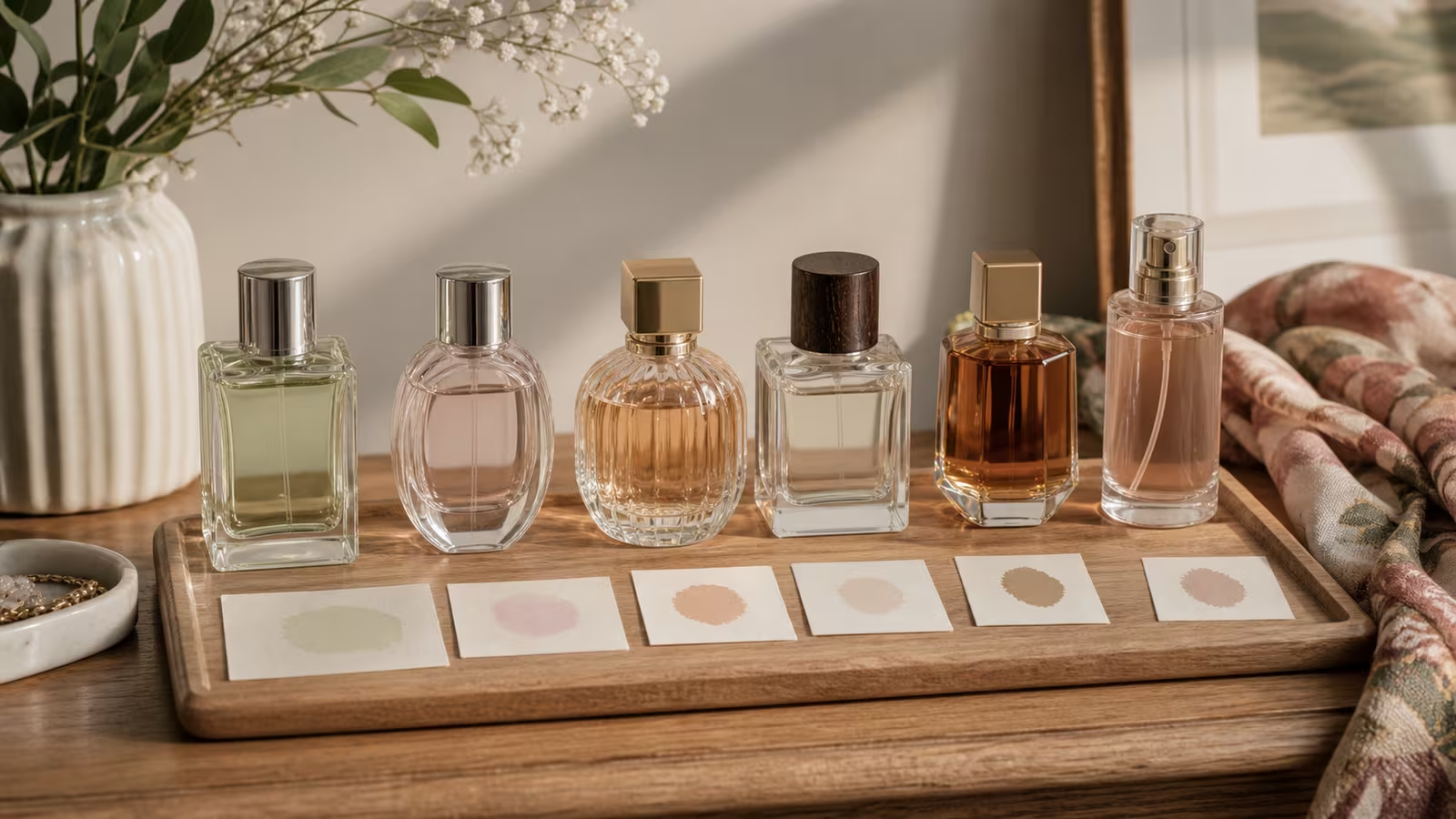
Fragrance labels can make scent feel more fixed than it really is. A bottle may be placed on the men’s shelf because it has lavender, cedar, vetiver, citrus, leather, or aromatic herbs. Another may be placed on the women’s shelf because it has rose, vanilla, white flowers, peach, powder, or soft musk. A third may be sold as unisex because the brand wants the perfume to seem modern, minimal, niche, or easy to share. None of those labels tells the whole story.
The material inside the bottle does not know who is wearing it. Rose can be dry, green, spicy, jammy, powdery, smoky, or woody. Vetiver can smell like clean grass, bitter roots, gray smoke, grapefruit peel, or polished office air. Vanilla can be dessert-like, leathery, salty, woody, or barely sweet at all. What makes a fragrance feel masculine, feminine, or comfortably unisex is usually a combination of materials, dose, structure, cultural memory, bottle design, and the wearer standing inside it.
Labels Are Shortcuts, Not Instructions
Gendered perfume language is a shortcut for shoppers. It groups scents by familiar expectations so a customer can find the counter, shelf, or search result faster. That can be useful when you are overwhelmed, but it becomes limiting when the label starts doing the smelling for you. A “masculine” fragrance may be no more than a crisp citrus aromatic with clean woods. A “feminine” fragrance may be a green floral with dry moss and bitter stems. A “unisex” fragrance may still lean warm, sweet, sheer, smoky, polished, or soft.
If you read the label as an instruction, you may miss perfumes that would suit you beautifully. Someone who loves clean shirts, tea, iris, and cedar might avoid the women’s shelf and lose many elegant options. Someone who loves dry vetiver, lavender, cardamom, and sandalwood might avoid the men’s shelf and miss scents that feel exactly right on their skin. The better question is not who the bottle was marketed to. The better question is what the scent does after the opening settles.
Scent Families is helpful here because families give you a more useful map than gender. Fresh, floral, woody, gourmand, green, musk, amber, leather, powdery, and aquatic tell you something about behavior. They still do not decide whether you will like a perfume, but they describe the room you are entering more clearly than a gender label does.
What Makes a Scent Read Masculine
Many fragrances read masculine because they borrow from shaving soap, barbershop tonics, aftershave, cologne, leather goods, tailored clothing, and dry woods. Lavender, rosemary, sage, basil, bergamot, vetiver, cedar, patchouli, oakmoss-style effects, tobacco, suede, and clean musks often carry those associations. A fougere structure, with lavender, herbs, coumarin warmth, mossy texture, and woods, can immediately suggest a classic masculine grooming ritual even when the scent itself is gentle.
The association is cultural, not chemical. Lavender has appeared in soaps, linens, aromatics, fougeres, florals, and modern musks. Cedar can make a vanilla drier, a rose more architectural, or a citrus more dressed. Vetiver can feel formal in one fragrance and almost green-tea fresh in another. Leather can feel smoky and severe, but it can also feel soft, powdery, floral, or suede-like.
When a fragrance feels too masculine for your taste, try to name the actual effect. Is it bitter, shaving-cream clean, smoky, herbal, dry, sharp, woody, leathery, or too much like aftershave? That distinction matters. You may dislike barbershop lavender but love citrus vetiver. You may dislike harsh leather but love suede softened with iris. The guide to Chypre and Fougere Scents can help separate classic aromatic structure from the habit of calling every lavender-wood scent masculine.
What Makes a Scent Read Feminine
Many fragrances read feminine because they borrow from flowers, cosmetics, fruit, sweet warmth, powder, soft musks, and skin-care rituals. Rose, jasmine, orange blossom, tuberose, peony, violet, iris, peach, pear, vanilla, almond, heliotrope, white musk, and cosmetic powder can all carry familiar feminine cues. A floral bouquet over musk may feel gentle and polished. A vanilla amber may feel warm and enveloping. A powdery iris may suggest lipstick, dressing tables, soft cloth, and old-fashioned elegance.
Again, the cue is not a rule. Rose can be dark and woody. Iris can feel cool, austere, and almost mineral. White flowers can be sunny, indolic, creamy, green, tropical, or severe. Vanilla can soften smoke or leather without making the whole fragrance sugary. Musk can feel clean, salty, warm, powdery, or barely there. A perfume can use traditionally feminine materials and still feel dry, tailored, quiet, or shared.
If a fragrance feels too feminine for your taste, the useful question is what bothered you. Was it sweetness, powder, syrupy fruit, creamy white flowers, cosmetic musk, or the memory of a perfume someone else wore? Those are different problems. A person who dislikes jammy rose may still love green rose with cedar. A person who dislikes frosting-like vanilla may still love dry vanilla with woods. Floral Scents and Powdery Scents are good companions because they show how wide these materials can be.
Unisex Does Not Mean Bland
Unisex fragrance is sometimes misunderstood as a narrow middle: clean, minimal, citrusy, woody, and safe. Some unisex scents do live there, and they can be excellent. A transparent tea musk, a cedar citrus, or a soft fig wood can be easy to share because it does not lean heavily into sweet florals or shaving-cream aromatics. But unisex does not have to mean neutral in the sense of quiet or plain.
A unisex fragrance can be smoky, rosy, resinous, salty, green, leathery, powdery, or gourmand. What often makes it feel shareable is balance. The rose may be paired with pepper and woods instead of heavy sweetness. The vanilla may be dry and resinous instead of cupcake-like. The leather may be suede with iris instead of harsh tar. The citrus may sit over musk, tea, or vetiver instead of a barbershop base. The scent gives several people enough space to project themselves into it.
This is why the phrase “smells like you” can be more useful than “smells unisex.” A good shared scent does not erase character. It leaves room. It may feel different on different wearers because skin, fabric, heat, and application change the emphasis. Skin Chemistry and Perfume is especially relevant when two people share one bottle. The same clean musk may bloom on one person and vanish on another. The same sandalwood may turn creamy on skin and much drier on fabric.
Shop by Materials and Wear, Not by Shelf
The simplest way to move past gendered labels is to translate them into materials and wearing behavior. If you are drawn to fragrances sold for men, ask what you like about them. It may be the brightness of bergamot, the dryness of cedar, the structure of lavender, the clean snap of vetiver, or the restraint of less sweetness. Those qualities exist across the whole perfume world. If you are drawn to fragrances sold for women, ask the same thing. It may be softness, warmth, floral texture, powder, creaminess, fruit, or musk. Those qualities also appear everywhere.
When sampling, let one fragrance have the day. Wear it through the opening, heart, and drydown before deciding whether the label was right about you. A scent that feels too sharp in the first five minutes may become a beautifully clean skin scent later. A perfume that opens sweet may dry into woods and musk. A fragrance that seems perfectly neutral on paper may become too loud on fabric. The habits in How to Sample Fragrances are more reliable than trying to guess from the shelf.
It also helps to test application style. A scent that feels bold at the throat may feel perfect behind the knees or under a sweater. A woody fragrance may read severe when sprayed heavily on a shirt and elegant when worn lightly on skin. A floral musk may feel too pretty in a cloud and wonderfully close as one spray under clothing. Gender labels often assume a performance style. Your application does not have to obey it.
Build a Wardrobe That Uses Contrast
A useful fragrance wardrobe does not need every scent to tell the same story about you. It can include a clean work scent, a soft weekend musk, a dry wood, a warm vanilla, a green floral, a smoky evening scent, and a simple citrus. Some may come from shelves marketed to men, some from shelves marketed to women, and some from brands that avoid gender labels entirely. What matters is whether each bottle has a role you actually wear.
Beginner Fragrance Wardrobes frames this well because a wardrobe is about use, not identity performance. You might want a scent that feels crisp with a white shirt, another that feels tender after a shower, and another that gives structure to a coat in cold weather. Those are practical roles. They are more specific than masculine or feminine, and they are easier to test.
If you are choosing a signature scent, gender language can become even more distracting. A signature is not a category prize. It is the scent that keeps making sense when the novelty fades. Choosing a Signature Scent Without Forcing One is a better path than asking whether a bottle matches the person you think you are supposed to smell like. Wear the scent in ordinary rooms, with ordinary clothes, through ordinary moods. If it still feels easy, the label has become less important.
Respect Context Without Shrinking Your Taste
Ignoring gender labels does not mean ignoring context. A huge smoky leather may be beautiful and still wrong for a small office. A powdery floral may be lovely and still feel too nostalgic for the outfit you chose. A bright aromatic may feel perfect outdoors and too brisk at dinner. These are questions of projection, setting, clothing, weather, and personal comfort, not permission.
Close-Space Fragrance and Projection and Sillage matter because other people experience your perfume in shared air. The most freeing fragrance choice is not always the loudest one. Sometimes it is wearing the scent you love in a dose that lets it stay close. Sometimes it is saving the dramatic perfume for a room that can hold it. Sometimes it is choosing the so-called men’s citrus because it is cleaner for a hot commute, or the so-called women’s musk because it is softer for a long flight.
The point is not to pretend gendered associations do not exist. They do exist, and they shape how people read scent. The point is to treat them as one layer of information rather than a wall. Smell the materials. Wear the drydown. Notice the role the fragrance plays in your day. The bottle’s label may help you find the sample, but your skin, clothes, rooms, and taste should get the final word.