Travel changes fragrance. The bottle you reach for at home may behave differently in a hot car, a dry airplane cabin, a humid hotel bathroom, or a small room where everyone is tired. A perfume that feels elegant in your daily routine can become too loud in a rideshare, too fragile in heat, too risky in a suitcase, or simply unnecessary when the trip is full of close quarters.
Traveling with fragrance is not only about getting liquid through a bag check. It is about choosing what deserves space, how to protect it, when to wear it, and how to avoid making your scent someone else’s problem. The best travel fragrance habit is practical rather than glamorous. Bring less, pack better, apply with restraint, and remember that travel already has plenty of smells competing for attention.
The goal is not to abandon perfume on the road. A familiar scent can make an unfamiliar room feel more settled. A small atomizer can carry the mood of a trip. A fresh cologne can feel good after a shower. But travel rewards editing. A heavy bottle collection belongs at home. A trip needs a smaller decision.
Decants Are Useful When They Are Reliable
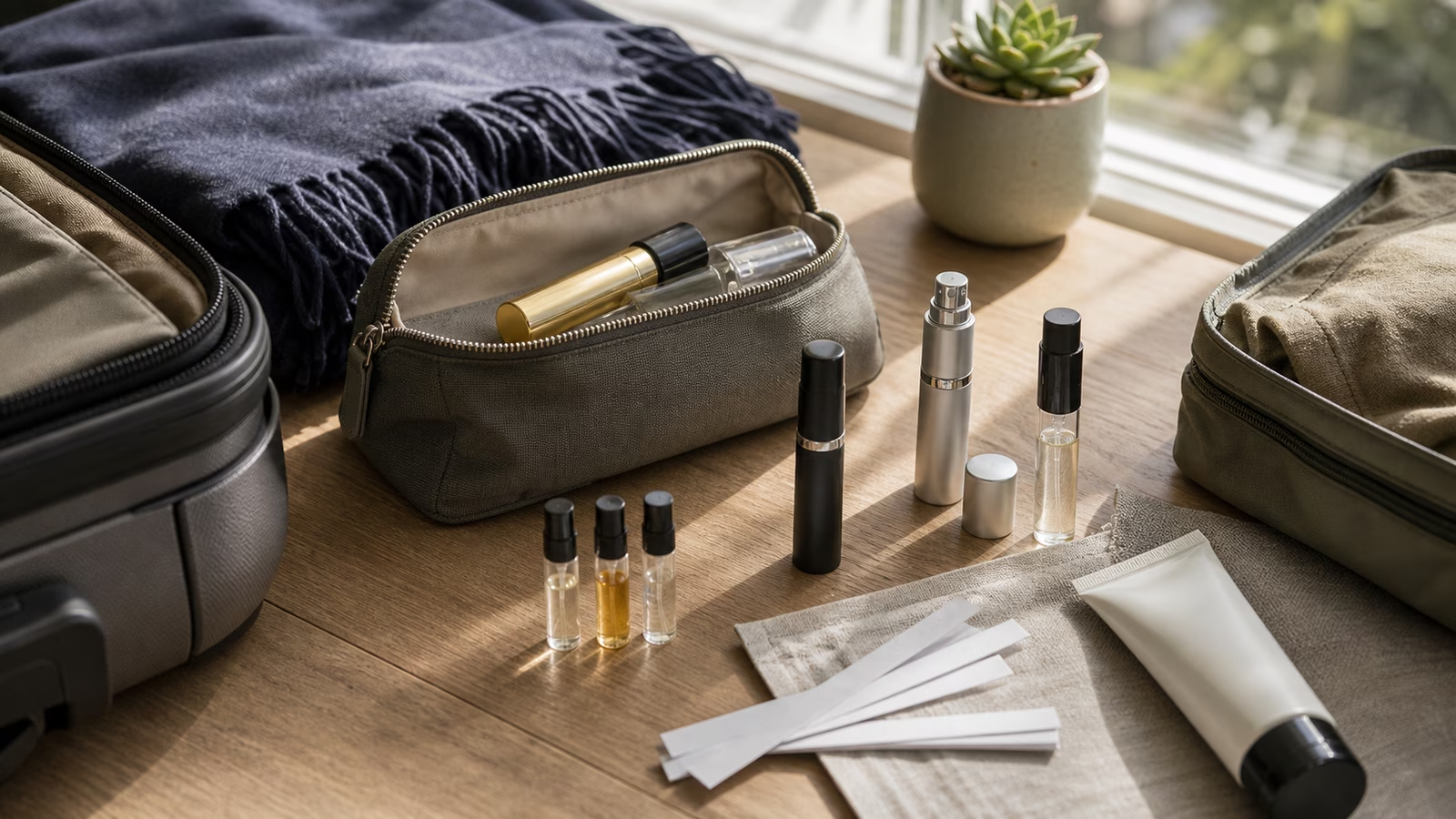
A decant is only helpful if it does not leak, evaporate, mislabeled itself into confusion, or spray strangely. Cheap atomizers can work, but they should be tested before the trip. Fill one, leave it upright and on its side, carry it in a pouch for a day, and see whether it weeps around the collar. A leaking atomizer inside a toiletry bag can turn every object into the same fragrance, and not in a charming way.
Glass sample vials are useful for short trips, but they can be fragile and easy to lose. Twist-up travel sprays are convenient, but the inner vial still matters. Rollerballs are slower and often stay closer to skin, though they can feel less hygienic if shared or used over sunscreen and sweat. Small manufacturer travel sprays can be excellent if they are well built, but they are not automatically better than a good empty atomizer.
The perfume itself also matters. Some fragrances are more volatile, some stain, some cling to fabric, and some are so strong that a small leak becomes a major event. Travel is not the time to discover that a bottle cap is decorative rather than secure.
Heat Is the Enemy of the Bottle
Perfume does not like heat, sunlight, or big temperature swings. Travel exposes it to all three. A bottle left in a car, a sunny hotel window, a beach bag, or checked luggage sitting in extreme conditions may age faster or change. One afternoon of heat may not destroy every perfume, but repeated abuse shortens the life of a scent.
This is one reason decants make sense. It is easier to risk a few milliliters than a full bottle. Keep fragrance in a shaded pouch, away from windows, radiators, bathrooms after hot showers, and car interiors. In a hotel, a drawer or closet is usually better than a bathroom counter. At the beach or pool, fragrance often has no useful role at all. Sunscreen, sweat, heat, water, and close bodies already create enough chemistry.
If a perfume smells sour, flat, metallic, or strangely changed after bad storage, do not keep punishing yourself with it because it was expensive. Travel can teach hard lessons about storage quickly.
Airport Rules Are Only the Beginning
Liquid limits and security rules vary by country and can change, so travelers should check current rules before flying. In many common carry-on contexts, small perfume containers fit within the broader liquids rule, but compliance is only the first step. A perfume can be allowed and still be a bad travel choice if it leaks, breaks, or overwhelms the cabin.
Checked luggage has its own risks. Bags are handled roughly. Temperatures can vary. A bottle can break or spray into clothing. If you must check fragrance, wrap it carefully, seal it in a small leak-resistant bag, and avoid packing the one bottle you would be upset to lose. Even then, understand that travel is less controlled than a dresser drawer.
The simplest approach is usually one or two small containers in a protected pouch. Choose scents you know well. A trip is not the ideal setting for testing a fragrance that may become exhausting after three hours.
Close Quarters Change the Ethics
Travel puts people near each other. Airplanes, trains, buses, elevators, hotel lobbies, taxis, shared rooms, conference halls, and restaurant tables all compress personal space. In those settings, fragrance projection matters more than personal enthusiasm. A scent that feels moderate outdoors can feel intrusive in a cabin where air is recirculating and people cannot leave.
Apply less than you would at home. Consider spraying under clothing rather than on exposed pulse points if the perfume is strong. Choose lighter or quieter scents for travel days. Avoid reapplying in enclosed spaces. If you cannot smell it after a while, remember nose blindness. Other people may still smell it clearly.
This is not about apologizing for liking fragrance. It is about understanding that travel reduces other people’s ability to choose distance. A good travel scent stays close, behaves politely, and does not announce itself across rows.
Fabric Holds Memories Longer Than Skin
Clothing can hold fragrance far longer than skin, which is useful and risky. A scarf lightly scented before a trip may feel comforting. A coat sprayed too heavily can become a mobile cloud for days. Perfume on fabric may also stain, especially with darker juices or delicate materials. Heat and sunlight can change the smell on fabric too.
If you like scenting fabric, test carefully at home on materials that can handle it. Do not spray rented clothing, borrowed garments, hotel linens, or shared upholstery. A hotel pillow that smells like your perfume after checkout is not a gift to the next guest or the cleaning staff.
Skin application is easier to control and wash off. Fabric application is slower to forgive.
The Best Travel Fragrance Is Usually Familiar
There is a romance to buying or wearing a new scent for a trip, and sometimes that works beautifully. But if you only bring one or two options, familiarity matters. You should know whether the fragrance gives you a headache, blooms in heat, lasts forever on fabric, turns too sweet in humidity, or disappears in dry air. Travel already contains enough variables.
A small travel wardrobe can be simple. One clean daily scent, one warmer evening scent, or one quiet comfort scent may be plenty. Some people prefer unscented travel days and fragrance only after arrival. Some bring a single sample and use it as a memory marker for the trip. There is no universal rule. The better question is what the trip will actually feel like.
Fragrance should support the travel, not become a fragile object around which the travel must bend.
Pack for the Trip You Are Taking
A work conference, camping trip, beach week, family visit, city weekend, long flight, and wedding all ask different things from fragrance. The perfume that fits a formal dinner may not fit a crowded shuttle. The fresh scent that works in summer may feel thin in winter. The loud scent that feels exciting at home may become too much when sleep is short and rooms are shared.
Traveling well with fragrance means accepting those limits. Protect the liquid. Respect heat. Bring less than your fantasy self wants. Apply with other people in mind. Let the scent be part of the trip rather than the loudest thing in the room.
The best travel fragrance habit is not complicated. Choose what you know, carry it safely, keep it close, and let the place you are visiting have its own smell too.