The same perfume can smell charming on one person, sharp on another, and strangely quiet on someone else. This is one of the first things that makes fragrance feel mysterious. A friend hands you a bottle that smells warm and clean on them. You spray it on your wrist and get metal, soap, sour fruit, pencil shavings, or almost nothing. It can feel personal, as if your skin rejected the idea. Usually the explanation is less dramatic and more useful.
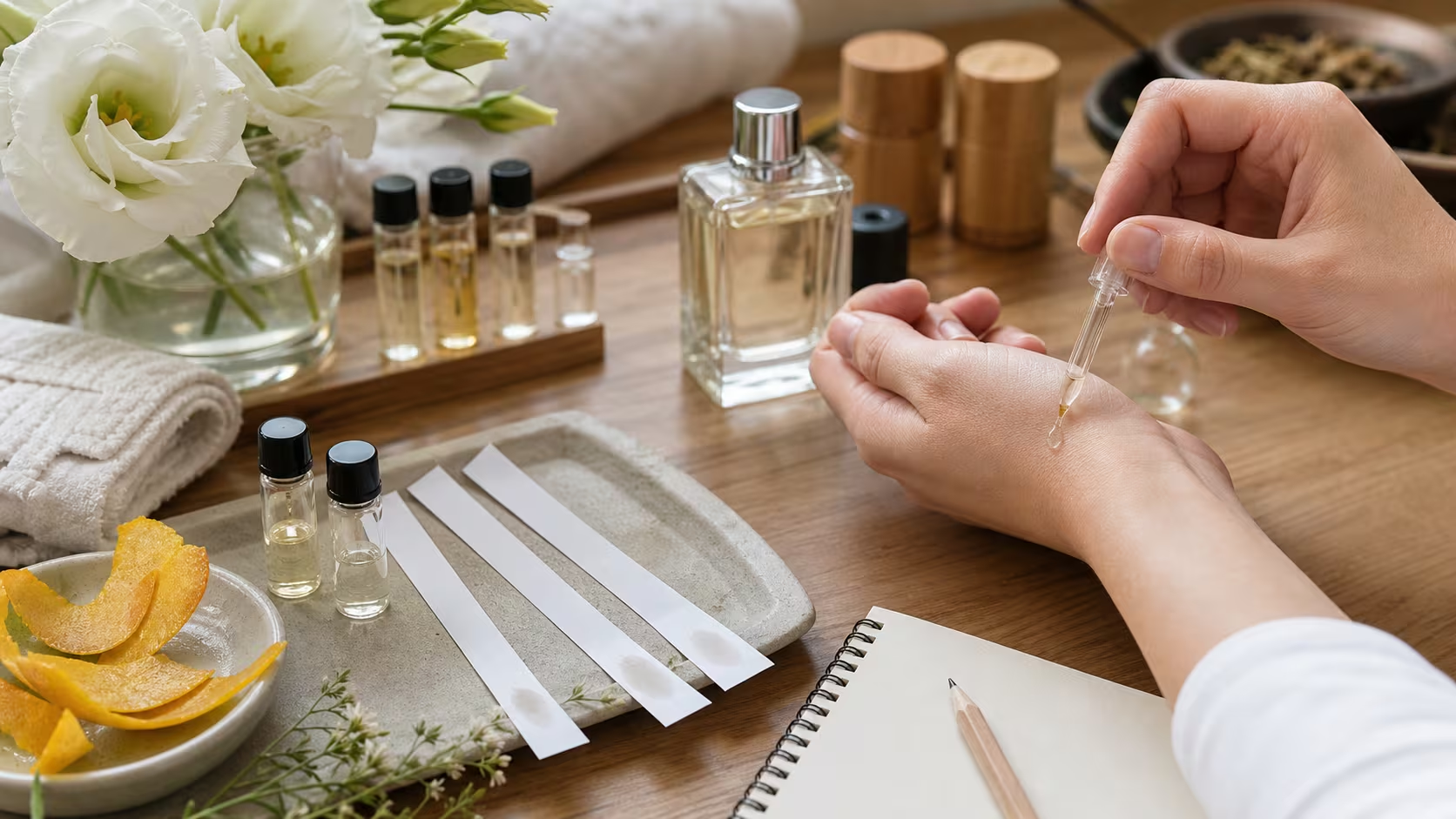
Perfume is not a fixed object once it leaves the bottle. It is a mixture of volatile materials meeting skin, air, heat, fabric, moisture, oil, soap residue, weather, and the nose of whoever is nearby. A blotter strip can show the shape of a fragrance, but skin shows how it behaves in life. That is why sampling only on paper is useful but incomplete. Paper tells you the outline. Skin tells you the story.
Skin changes the pace
Perfume unfolds because different materials evaporate at different speeds. Bright citrus, aromatic herbs, aldehydes, and airy fruits often lift quickly. Florals, spices, and green notes may sit through the middle. Woods, musks, resins, vanilla, amber materials, and heavier synthetics tend to last longer. This movement is called drydown, and it is one reason a perfume can smell exciting at first and ordinary two hours later, or strange at first and beautiful by evening.
Skin affects that pace. Warm skin can make a fragrance bloom faster and project more. Cooler skin may keep it quieter and slower. Dry skin can make some perfumes fade quickly because there is less surface moisture and oil to hold the aromatic materials. Moisturized skin often gives fragrance a more comfortable place to sit. Very oily skin may hold certain base notes longer. None of this works like a perfect formula, but the pattern is real enough to matter when you sample.
This is why a perfume that seems weak on one person may be powerful on another. It may not be a weak perfume. It may be meeting a different surface, different body heat, and different habits.
Clean skin is not always neutral
People often test perfume after showering, which sounds sensible. Clean skin is a good starting point, but it is not blank. Soap, shampoo, conditioner, body wash, lotion, deodorant, shaving products, sunscreen, hair products, laundry detergent, and fabric softener all leave scent traces. Some are faint. Some are loud enough to change the whole test.
A delicate tea fragrance sprayed over coconut lotion may become sweeter. A green floral over a powdery deodorant may turn soapy. A woody musk over sunscreen may smell waxy or mineral. A vanilla over strongly scented laundry detergent may become impossible to read. When people say a fragrance “turned weird” on them, sometimes skin chemistry is involved. Sometimes the perfume simply ran into the rest of the morning.
For serious sampling, the best base is boring. Use unscented lotion if your skin is dry. Keep the test area away from scented body products. Try the fragrance on a day when you are not already wearing another perfume. This does not mean your daily routine is wrong. It only means that a fair test needs fewer voices in the room.
Paper is useful, but it lies by omission
Blotter strips are helpful because they let you compare several fragrances without exhausting your skin. They are especially good for first impressions. If something smells unpleasant on paper, you may not want to spend a full day with it. Paper also lets you return to a strip after ten minutes, an hour, or a day and see how the structure changes.
But paper does not sweat, warm up, wear sleeves, produce oil, or move through weather. It does not have the faint saltiness of skin or the residue of your soap. It does not sit under a coat or warm in the sun. A fragrance that is cold and stiff on paper may soften beautifully on skin. A fragrance that sparkles on paper may collapse quickly when worn. A musk that seems invisible on a strip may become intimate and persistent on a person.
The best habit is to use paper for screening and skin for decisions. Smell the opening on a strip. If it interests you, wear it alone on skin. Give it time. Do not judge the whole fragrance from the first five minutes unless the opening is truly unbearable.
Body heat and weather change projection
Projection is the distance a fragrance travels. Sillage is the trail it leaves as you move. Both are affected by the perfume formula, but they are also affected by your body and environment. Heat makes fragrance more active. Humidity can make sweet, musky, and dense scents feel larger. Cold air can make bright top notes seem sharper at first but may also keep heavier notes closer.
This is why a perfume that felt perfect in an air-conditioned shop can feel too big on a crowded summer train. It is also why a fragrance that seemed faint in winter may come alive in spring. Seasonal fragrance is not just mood. It is physics and comfort.
Clothing matters too. Fabric can hold scent longer than skin, sometimes much longer. Wool, scarves, collars, and coats can preserve base notes for days. That can be lovely if you want a signature scent and annoying if you are testing many fragrances. Fabric also changes the drydown because the scent is not interacting with skin in the same way. Spraying clothes may improve longevity, but it can flatten some of the skin warmth that makes a perfume feel alive. It can also stain delicate fabric, so caution matters.
The nose is part of the chemistry
Not every difference is on the skin. Some is in perception. People vary in how strongly they smell certain aroma materials. Musks are famous for this. One person may find a musk soft and clean, another may find it loud, and another may barely smell it. Some woody amber materials can seem elegant to one nose and harshly scratchy to another. A fragrance can also connect to memory. A note that reminds one person of expensive soap may remind another of a school hallway, a relative, a medicine cabinet, or a hotel lobby.
This is why fragrance opinions sound so contradictory. They are not always careless. People are often telling the truth from inside different noses and different histories. A useful review can describe behavior, but it cannot replace wearing the scent yourself.
Give a perfume a full day before deciding
The most common sampling mistake is rushing. A perfume is sprayed, judged in the opening, and mentally filed away before the middle has arrived. Openings sell bottles because they are immediate. Drydowns decide whether you will actually wear them. A citrus burst may vanish into a dull base. A strange herbal opening may settle into a beautiful skin scent. A sweet perfume may become warmer and smoother after the first hour. A clean scent may grow louder than expected.
Wear one test fragrance at a time when you can. Put it somewhere you naturally notice but do not constantly press your nose into, such as the wrist or inner arm. Smell after five minutes, thirty minutes, two hours, and later in the day. Notice not only whether you like it, but when you like it. Some fragrances are opening-only pleasures. Some are drydown treasures. Some are wonderful for an hour and tiring by lunch.
Oversmelling can confuse you. If you sniff your wrist every two minutes, your nose may fatigue and the scent may seem to disappear. Give it air. Let it come to you as you move.
Skin chemistry is not destiny
It is tempting to turn skin chemistry into a verdict. “Vanilla never works on me.” “Citrus disappears on my skin.” “Musk goes strange.” Sometimes those patterns are useful. More often they need detail. Which vanilla? A bakery vanilla, a dry vanilla, a smoky vanilla, a floral vanilla, a woody vanilla? Which citrus? Lemon cologne, bitter bergamot, orange blossom, grapefruit musk? Which musk? Clean laundry musk, skin musk, powdery musk, animalic musk, woody musk?
Fragrance materials are too varied for broad bans to be perfect. If a family usually fails on you, try a different structure before giving up. You may dislike sweet vanilla but love vanilla with cedar. You may lose bright citrus quickly but enjoy citrus paired with tea, vetiver, or neroli. You may struggle with clean musks but enjoy soft amber musks. The problem may not be your skin. It may be the version you keep meeting.
The practical answer is patient sampling. Test on paper first, then skin. Use unscented moisturizer when needed. Avoid testing over loud body products. Wear the fragrance in real weather. Notice the drydown. Keep a small note about what happened, not just whether you liked it. Over time, you learn your own patterns.
That knowledge is better than any rule. It turns the perfume counter from a wall of promises into a set of experiments you can actually read.