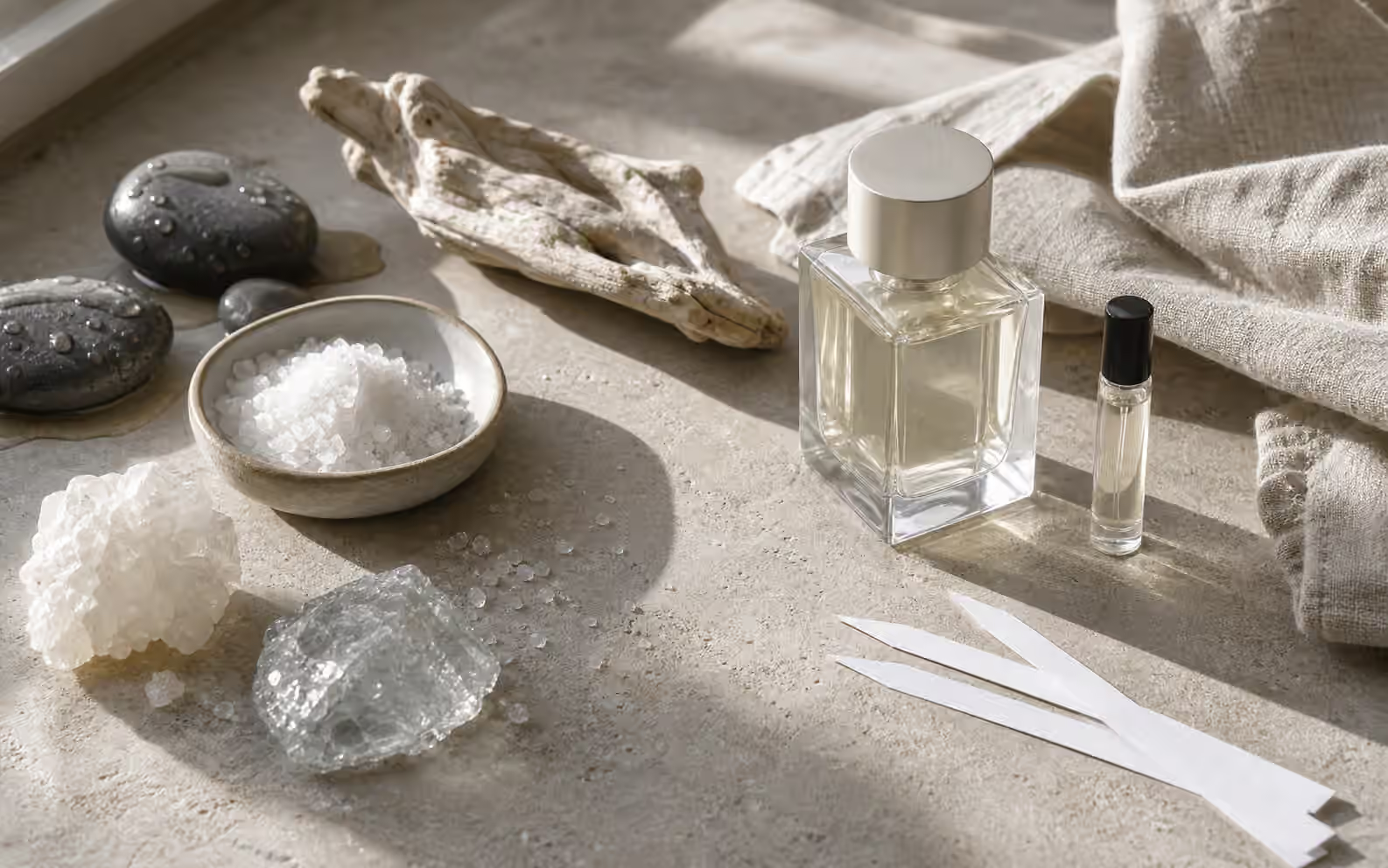
Salt is one of the most useful words in fragrance and one of the easiest to misunderstand. It does not mean a perfume will smell like table salt poured from a shaker. Salt in scent is usually an impression: dry skin after swimming, sea air on a jacket, a mineral edge around citrus, the faint tang of warm body and clean musk, or the strange brightness that makes a perfume feel less sweet than its note list suggests. It can make freshness feel more physical. It can make fruit feel less syrupy. It can make flowers feel windblown instead of arranged in a vase.
This is why salt belongs near Aquatic and Marine Scents but deserves its own attention. Aquatic perfume often creates the illusion of water, rain, sea spray, or cool air. Salt is more tactile. It is what remains on skin after the water dries. It can be clean, sweaty, mineral, coastal, musky, or ambered depending on what surrounds it.
Salt makes freshness feel worn
Many fresh perfumes aim for polish. Citrus sparkles, laundry musk lifts, tea feels clear, and pale woods keep the base tidy. Salt changes that polish by adding contact with the body. A salted citrus can feel like lemon peel on warm skin rather than lemonade. A salted musk can feel like clean shoulders after a shower rather than a folded towel. A salted floral can make petals seem wind-exposed, as if the flower grew near dry grass and sea air.
The guide to Fresh Scents is useful here because salt often acts as a correction to freshness that feels too flat. If a clean scent seems too detergent-like, a saline edge can make it more human. If an aquatic scent feels too blue and synthetic, a mineral base can ground it. If citrus disappears too quickly, salt and pale woods can leave a trace that still feels connected to the opening.
This does not mean salty perfume is always quiet. Some salty musks are persistent. Some marine amber materials leave a strong trail even when the scent itself feels transparent. The sensation can fool the wearer because salty freshness often reads as airy. It may still cling to scarves, collars, and warm skin.
Mineral notes create texture, not only scenery
Mineral is another perfume word that points to an effect rather than a literal ingredient. A fragrance may suggest wet stone, chalk, flint, sea glass, rain on pavement, cold metal, or sun-warmed rock. These impressions can make a scent feel less edible and more atmospheric. They also help explain why two fresh perfumes can behave so differently. One is soft and musky. Another is bright and watery. A third has a stony edge that feels almost dry.
Mineral effects work especially well with citrus, violet leaf, tea, vetiver, incense, iris, and pale woods. Citrus brings flash. Tea brings tannin. Vetiver brings rooty dryness. Iris brings cool powder. Incense can make stone feel shaded. Woods give the whole structure somewhere to settle after the opening leaves.
If you already enjoy Vetiver Scents or Tea Scents , mineral perfumes can be a natural next step. They share a dry intelligence. They do not need to be sweet, creamy, or obviously floral to feel complete. Their pleasure is often in the surface: cool, clean, lightly bitter, and specific.
Ambergris-style effects and skin warmth
Many salty perfumes owe part of their character to ambergris-style or ambergris-inspired effects. In modern perfume conversation, this does not always mean a literal natural material. It often points to a family of salty, musky, marine, ambery, or skin-warm impressions that can make a fragrance feel radiant and lived-in. The guide to Natural vs Synthetic Fragrance Materials helps with this distinction because material language can be more complicated than the note list suggests.
The important thing for a wearer is how the effect behaves. Some salty amber styles are soft and skin-like. They make citrus, woods, and musk feel sunlit. Others are more powerful and can turn a fragrance into a clear trail. A small dose can make perfume feel diffusive and alive. Too much can become sharp, scratchy, or strangely loud in a warm room.
This is where Projection and Sillage matters. A salty amber may seem clean at the wrist but fill more air than expected. It can also outlast brighter notes. You may stop smelling the grapefruit or sea spray while the mineral musk continues around you.
Salt can discipline sweetness
Salt is valuable in sweet perfumes because it interrupts syrup. A salted vanilla, salted caramel, or salty fruit scent may still be sweet, but the sweetness has contrast. The salt creates edges. It can make pear less shampoo-like, coconut less sunscreen-like, fig less milky, and amber less heavy. It gives the nose a place to rest.
This is why salty notes often connect to Coconut and Lactonic Scents , Fruity Scents , and Gourmand Scents . A beachy coconut without salt can feel like lotion. With salt, driftwood, and musk, it can feel more like skin after a day outside. A sweet fig without green or salty contrast may feel creamy and soft. With a mineral edge, it can feel drier and more architectural.
The same lesson applies to florals. Salt can make rose feel windswept. It can make orange blossom feel less syrupy. It can give white flowers a humid realism without pushing them fully into animalic territory. It is a small tool, but it changes the posture of a perfume.
Sampling salty scents with patience
Salty and mineral notes need real wear. On paper, they may seem faint, abstract, or even harsh. On skin, they can bloom with warmth and motion. They can also turn metallic or overly sharp on some people, which is why Skin Chemistry and Perfume belongs beside this topic. A scent that smells like clean sea air on one person may smell like hot metal on another.
Wear one salty fragrance at a time. Do not judge it only in the first ten minutes. Notice whether the salt stays fresh, becomes musky, turns ambered, or disappears into a woody base. Check fabric carefully if you normally spray clothes, because mineral musks and marine bases can linger longer than the softer parts of the perfume.
Close-Space Fragrance is also relevant. Salty scents are often chosen because they seem casual and clean, but they are not automatically discreet. A mineral musk can be excellent for warm weather, travel, errands, and daytime routines when applied lightly. Oversprayed, it can become oddly persistent, like fresh air that refuses to leave the room.
The best salty perfumes do not smell like a beach postcard. They smell like contrast: wet and dry, clean and human, sweet and sharp, bright and mineral. They teach that freshness is not only about soap, citrus, or water. Sometimes freshness is the trace left behind after the obvious freshness has evaporated.