Rose is one of the great perfume notes because it refuses to be only one thing. It can smell like a flower just cut from a garden, but it can also feel like raspberry jam, black tea, soap, lipstick, pepper, wine, incense, honey, earth, clean musk, or dark velvet. Some rose fragrances are tender and transparent. Some are formal. Some are sweet enough to feel almost edible. Some have a dry, thorny quality that makes them feel less like a bouquet and more like a stem held between the fingers.
That range is why rose deserves its own guide beside the broader Floral Scents . A general floral guide can map jasmine, peony, orange blossom, iris, and white flowers, but rose has its own grammar. It changes dramatically depending on whether the perfumer gives it citrus, green leaves, violet, musk, patchouli, saffron, oud-style woods, amber, vanilla, pepper, or aldehydes. When people say they dislike rose, they often mean they dislike one old idea of rose: powdery, sweet, heavy, or cosmetic. Another rose may be exactly the freshness, texture, or structure they have been looking for.
Fresh rose is more leaf than lipstick
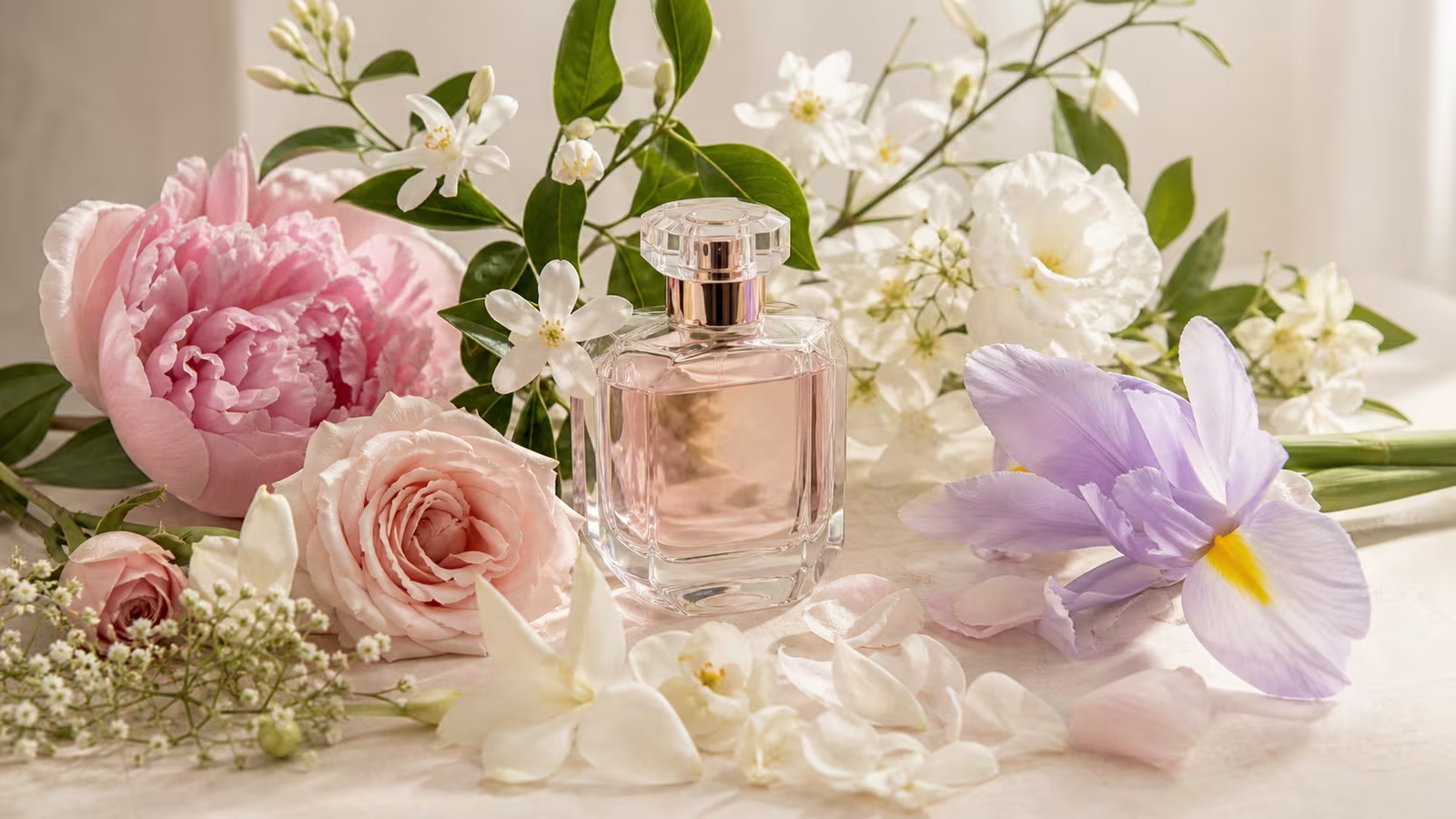
Fresh rose fragrances usually keep the flower close to the garden. They may use citrus, green leaves, stems, watery notes, pear, lychee, blackcurrant bud, mint, geranium, or clean musk to create the sense of petals still attached to something alive. The best versions do not smell like a vase left in a warm room. They have lift, air, and a little green tension.
That green tension matters. A rose without any stem can turn soft and decorative very quickly. A trace of leaf, citrus peel, or geranium makes the flower feel awake. It can give the perfume the crispness of morning rather than the plushness of evening. If you enjoy Green and Herbal Scents but find full garden fragrances too sharp, a fresh rose can be a useful bridge. It gives the green material a human softness.
Fresh rose also behaves differently from many white florals. It may feel radiant, but it usually does not have the same creamy, heady volume as jasmine or tuberose. That makes it easier to wear in close spaces, especially when the base is musk, tea, or sheer wood. Still, rose can project more than expected because people recognize it quickly. A small application may read clearly even when the perfume is technically light.
Tea rose and watery rose feel transparent
Tea rose effects often sit between floral freshness and quiet elegance. They can suggest pale petals, black tea, green tea, bergamot, dry leaves, and soft musk. This style overlaps naturally with Tea Scents because tea gives rose a dry frame. Instead of syrup or powder, the flower gains tannin. It becomes clearer and less sentimental.
Watery rose works in a similar way, though the emphasis is different. It may use dewy notes, cucumber, pear, melon, lotus-like florals, soft musk, or pale woods to make rose feel rinsed and translucent. The risk is that watery rose can become thin. A little citrus bitterness, mineral freshness, or clean wood helps keep it from feeling like scented water with no drydown.
These styles are useful for people who want a floral scent for daytime but do not want a traditional bouquet. They can feel polished with a white shirt, a linen dress, or a simple sweater. They also teach the importance of the drydown. A beautiful watery opening may fade to nothing, while a quieter tea rose may leave a graceful musky trace for hours.
Jammy rose uses fruit as volume
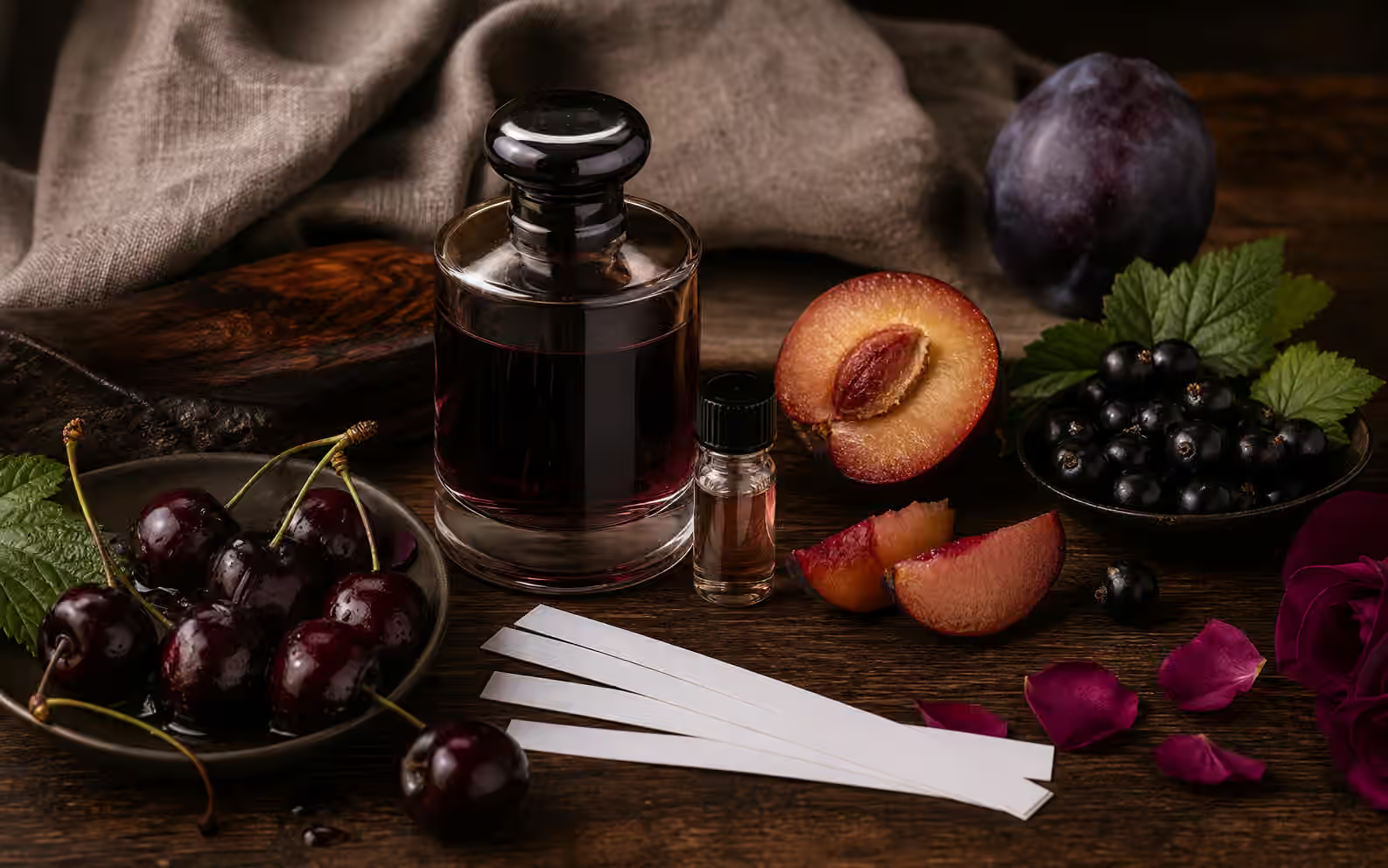
Jammy rose is the rose of ripe berries, plum, raspberry, blackcurrant, liqueur, honey, and thick petals. It feels saturated. Sometimes it is romantic. Sometimes it is dramatic. Sometimes it becomes too sweet for its own good. The difference is structure.
A jammy rose needs something to push against. Patchouli, woods, musk, spice, incense, saffron, leather, tea, or a dry amber base can keep the fruit from turning sticky. Without contrast, jammy rose can smell like red candy poured over petals. With contrast, it can feel lush, dark, and dimensional. This is why many rose fragrances include patchouli or dark woods, even when the marketing copy does not make those materials central. They stop the rose from floating away into pure sweetness.
If you like Fruity Scents but sometimes find them too playful, jammy rose can add maturity. If you like florals but find them too polite, fruit can add pulse. Sample slowly, because jammy rose often feels most seductive in the first hour. The later base decides whether it becomes a pleasure to wear or a sweetness you keep noticing too much.
Spicy rose has edge and movement
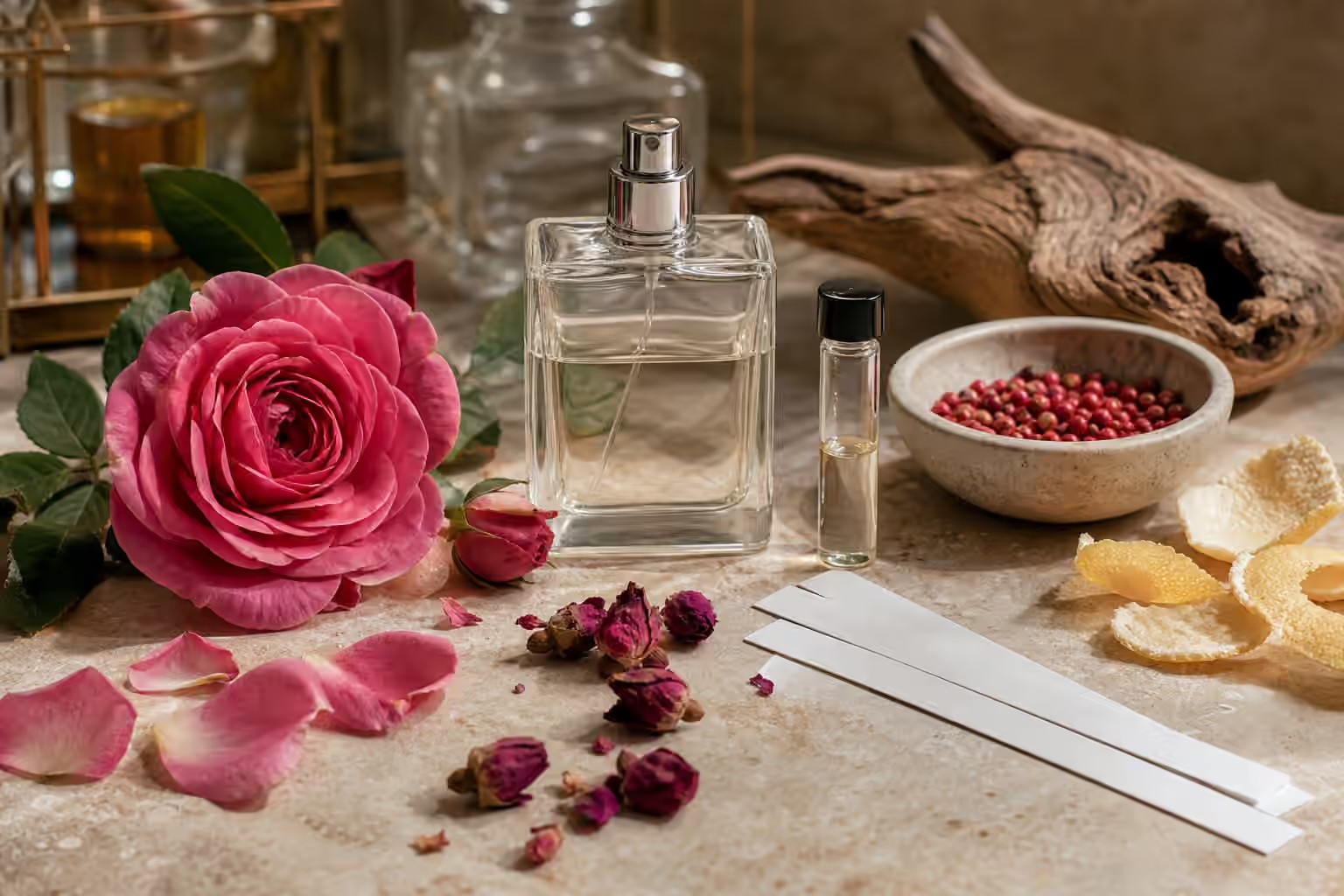
Rose and spice are old companions. Pink pepper can make rose sparkle. Black pepper can make it dry and modern. Saffron can make it warm, leathery, and golden. Cardamom can make it cool and aromatic. Clove can bring a vintage carnation-like shadow. Cinnamon can push rose toward warmth and sweetness. Ginger can keep it bright.
The Spice Notes in Perfume guide explains how spice changes texture, and rose is one of the clearest examples. A small amount of pepper can turn a pretty floral into something with air around it. Saffron can make rose feel more tactile, especially when suede, musk, or amber appears underneath. Clove can make rose feel cosmetic, old-fashioned, or velvet-lined, depending on the rest of the composition.
Spicy rose can be excellent in cool weather because it has warmth without needing heavy sweetness. It can also be beautiful at night, when a little more projection feels appropriate. In small rooms, test carefully. Spice and rose are both recognizable, and a fragrance that feels elegant at arm’s length can become insistent when oversprayed.
Woody rose is where softness gets a backbone
Woody rose is broad territory. Cedar can make rose dry and clean. Sandalwood can make it creamy. Vetiver can make it grassy and tailored. Patchouli can make it earthy or chocolate-dark. Oud-style woods can make it smoky, leathery, medicinal, or plush. Moss can make rose feel classic and shadowed. These bases decide whether the flower reads as fresh, elegant, gothic, polished, or intimate.
This is where rose connects to Woody Scents and Leather and Suede Scents . A rose over cedar may feel like petals on a writing desk. A rose over sandalwood may feel smooth and warm. A rose with leather or suede may feel more like fabric and skin than a flower shop. A rose with oud-style woods may feel ceremonial or dramatic, especially when saffron and amber join the structure.
Not every woody rose is heavy. Some are transparent and almost mineral. Others are dense enough that the rose becomes a red thread through darkness rather than the main subject. When sampling, ask what the wood is doing. Is it drying the flower, sweetening it, smoking it, grounding it, or making it feel closer to skin?
Powdery and musky rose can be tender or cosmetic
Powdery rose often uses iris, violet, heliotrope, musk, aldehydes, or cosmetic-style accords. It can feel like lipstick, face powder, clean fabric, soft petals, or a vintage dressing table. Some people love that intimacy. Others find it too nostalgic. The Powdery Scents guide is useful because powder is not only an ingredient. It is a texture.
Musk changes rose in another direction. Clean musk can make it feel freshly washed. Skin musk can make it warmer and quieter. White musk can make it float. Ambrette-like effects can add a soft seed warmth. A musky rose may be easier to wear than a full floral because it reads as personal space rather than a bouquet.
The most wearable rose for many people is not the loudest or most realistic. It is the one whose supporting materials match the situation. Fresh rose for heat, tea rose for quiet days, jammy rose for pleasure, spicy rose for movement, woody rose for structure, musky rose for closeness. Rose is not a single mood. It is a flower with enough range to become almost a wardrobe by itself.