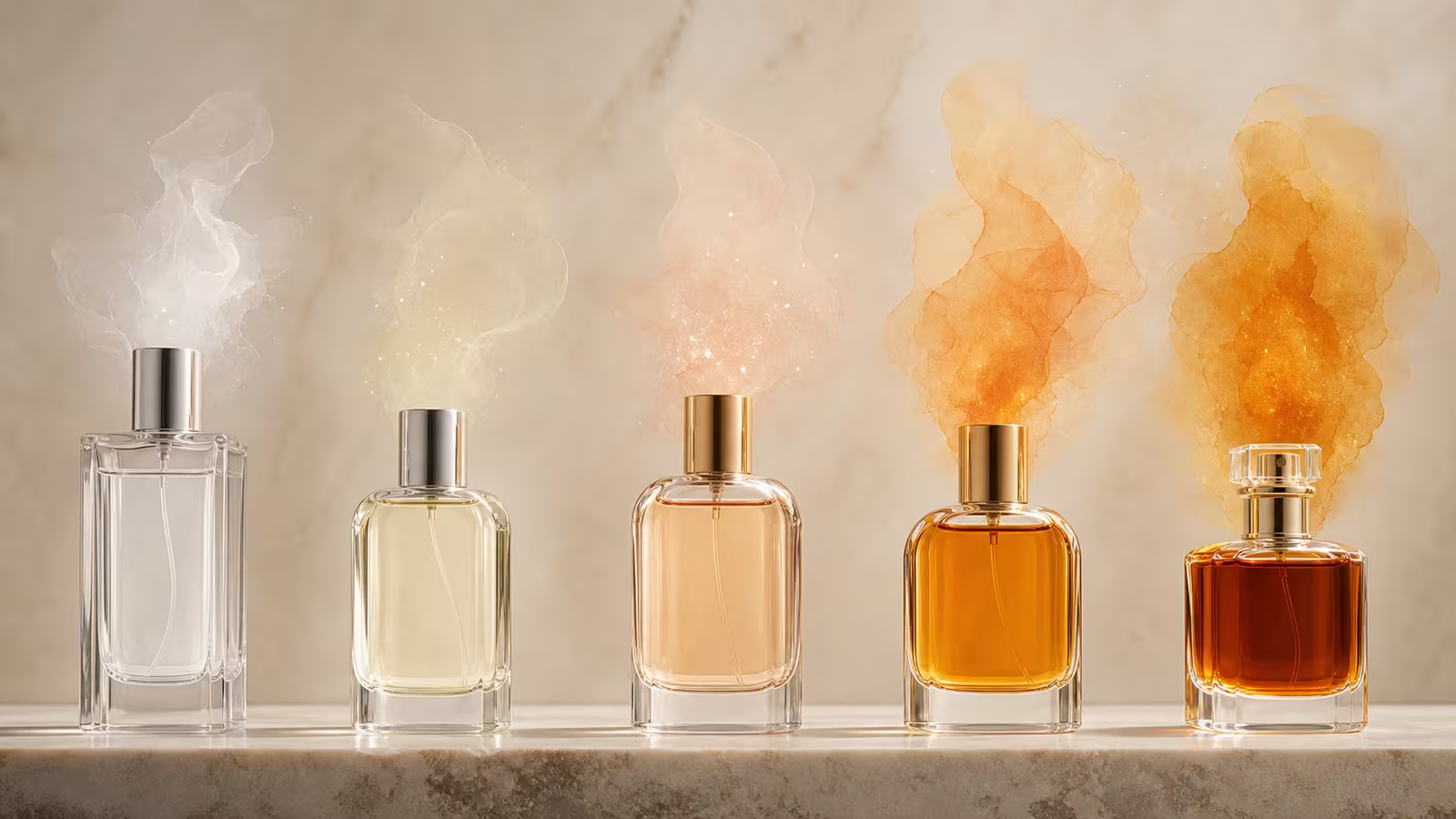
Perfume shopping becomes much harder when one name turns into a family. A fragrance launches, gains attention, and then the shelf fills with versions: eau de toilette, eau de parfum, parfum, intense, extreme, elixir, sport, fresh, noir, absolu, limited edition, summer edition, extrait, hair mist, oil, body mist, and bottles that look almost identical except for a color change. These related releases are often called flankers, though the word can cover many kinds of variation. Some are close relatives. Some are only cousins. Some share a name and little else.
The confusion is understandable because fragrance naming sounds more precise than it is. An eau de parfum version is not always just a stronger eau de toilette. An intense version is not always darker. A summer edition is not always lighter in a useful way. An elixir may be richer, sweeter, woodier, more ambered, or simply positioned as more dramatic. The name gives a clue, not a verdict. Your job is to compare behavior, not obey the label.
A flanker is a conversation with the original
A flanker usually borrows from an existing perfume’s identity. It may keep the core accord and change the brightness, sweetness, concentration, texture, or base. It may emphasize one part of the original that was already there. It may simplify the structure for easier wear. It may make the scent louder, smoother, fresher, warmer, fruitier, smokier, or more fashionable. It may also use the famous name as a loose umbrella for a different idea.
Think of the original as a sentence. One flanker may say the same sentence in a softer voice. Another may add more bass. Another may remove the sharp opening and underline the vanilla. Another may replace the dry woods with amber. Another may keep only the mood. That is why people disagree so strongly about versions. A wearer who loved the original for its citrus lift may dislike the richer eau de parfum. A wearer who found the original thin may adore the intense version. Both reactions can be reasonable.
The practical question is not which version is best. The practical question is which version solves your wearing problem. If the original fades too quickly on you, a denser version may help. If the original feels too sharp, a smoother flanker may work. If the original feels perfect except for a loud base, a lighter version may be more useful. If you never liked the central accord, a flanker may not rescue it unless it truly moves in another direction.
Concentration names do not tell the whole story
The guide to Perfume Concentration Types explains the common labels, but flankers show why those labels need context. Eau de toilette, eau de parfum, parfum, extrait, and mist are broad categories. They suggest how a fragrance may be built, but they do not guarantee the exact experience. An eau de toilette can last longer than an eau de parfum if its materials are more tenacious. A parfum can feel closer to the skin than a bright eau de toilette if it is built for density rather than projection. A body mist can seem louder than expected when sprayed generously on clothes.
When comparing versions, avoid assuming the higher concentration is the upgrade. It may be richer, but richness is not always better. A bright floral may lose its sparkle when made denser. A citrus aromatic may become heavy when the base is pushed forward. A sheer musk may become more powdery or woody in a parfum version. Sometimes the lighter version carries the idea more gracefully. Sometimes the deeper version finally gives the scent the backbone it needed.
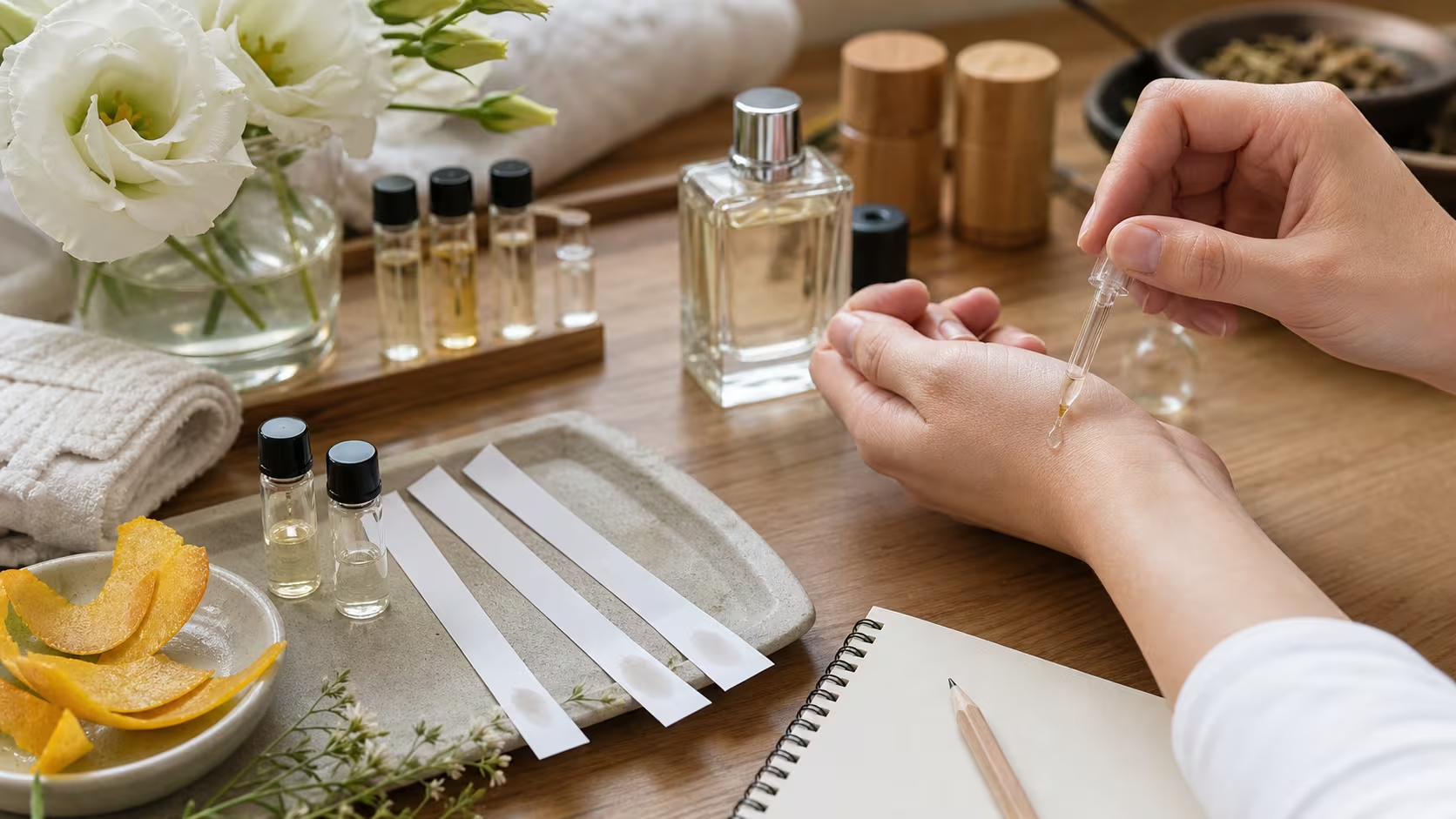
The only reliable method is to test the versions as separate perfumes. Do not spray the EDT on one wrist and the EDP on the other if both are strong and you need a full day of clarity. Their trails can mix. Try them on different days or at least on different arms with enough distance and time. Notice the opening, the heart, the drydown, and the way each behaves after several hours. The best version may not be the one you prefer in the first minute.
Words like intense and elixir are style signals
Intense, extreme, elixir, absolu, and extrait often suggest more depth, but they do not share one fixed meaning. One intense flanker may add vanilla, tonka, amber, or woods. Another may increase patchouli. Another may make the florals creamier. Another may remove freshness and create a sweeter, darker drydown. These names are partly descriptive and partly emotional. They tell you that the brand wants the fragrance to feel more concentrated, more dramatic, or more evening-oriented. They do not tell you whether it will suit your skin or your rooms.
Fresh, light, aqua, sport, cologne, summer, and eau fraiche versions have the opposite problem. They may sound easier, but easy can mean many things. A summer flanker may add citrus, watery fruit, salt, clean musk, or transparent woods. It may be less sweet, or it may simply shift sweetness toward fruit. A sport version may lean aromatic, shower-clean, woody, or synthetic in a way that feels sharp to some noses. A fresh version may still project strongly because fresh materials can be piercing.
Use the label as a sampling prompt. If you usually like Fresh Scents , a lighter flanker may deserve attention. If you like Amber, Resin, and Spice Scents , an intense or elixir version may point toward your taste. If you like Clean, Soapy, and Laundry Scents , a sport or eau fraiche version may appeal, but only if the drydown stays comfortable. The label opens a door. Sampling decides whether you walk through.
Compare the center, not only the notes
Note lists can make flankers look more different or more similar than they feel. Two versions may share only a few listed notes and still smell clearly related because the same accord sits underneath. Two versions may list several of the same notes and feel unrelated because the balance has changed. A vanilla note can move from background softness to the whole point. A rose can shift from fresh petal to jammy fruit. A woody base can become dry cedar, smoky amberwood, creamy sandalwood, or clean pencil shaving.
When you sample, ask what the center of the perfume is. Is it still citrus over musk? Rose over patchouli? Lavender over tonka? Vanilla over woods? Pear over clean musk? Amber over smoke? If the center is the same, the flanker may feel like a variation in mood. If the center has moved, it may behave like a different perfume that happens to share a name.
This is where the guide to Perfume Accords helps. Many flankers are built by adjusting accords rather than swapping literal ingredients. A leather accord might become suede. A marine accord might become mineral. A gourmand accord might become less edible and more ambered. A clean accord might become powdery instead of laundry-like. Reading the note list is useful, but smelling the accord is more important.
Reviews can mix versions by accident
Flankers make review reading messy. People sometimes review the wrong version, remember an older bottle, compare a sample from years ago, or write about the parfum while the page is for the eau de toilette. Even when everyone is careful, versions may change over time, packaging may look similar, and retailers may group reviews together. A performance claim is not useful if you cannot tell which version was worn.
Before you trust a review, look for details. Does the reviewer name the concentration or year? Do they mention bottle color, cap style, or a note that clearly belongs to one version? Do several reviews complain that the scent is nothing like the original, while others say it is identical? That disagreement may come from mixed versions, batch differences, reformulation memories, or different expectations. The Reading Perfume Reviews Without Losing Your Own Nose guide is especially helpful because it teaches you to use reviews as clues instead of verdicts.
If a fragrance has many versions, sampling becomes even more important. Do not blind buy the intense version because you liked the original once on paper. Do not reject the eau de toilette because someone online says the parfum is better. Do not assume a limited edition will return. Try the actual version you plan to wear, ideally from a source that identifies it clearly. A small sample can prevent a full bottle of the wrong relative.
Where flankers fit in a wardrobe
Flankers are most useful when they let you keep a loved idea while changing the setting. You might love the original in spring but want a warmer version for cold evenings. You might like the parfum for dinners and the eau de toilette for work. You might prefer a lighter summer version for travel because it feels easier in heat. You might choose the original because every flanker moves too sweet, too woody, or too dense for your taste.
The danger is collecting variations that all do the same job. If three related bottles fill the same wardrobe slot, one may be enough. The Beginner Fragrance Wardrobes guide is a useful restraint here. A wardrobe works when each scent has a reason to be worn. If a flanker gives you a new function, it may be worth owning. If it only gives you a slightly different fantasy, sampling may be enough.
The most satisfying comparison is slow. Put away the assumption that one version is the official answer. Wear each candidate through a real day, pay attention to the drydown, and ask which one solves the job you actually need. A flanker is not a sequel you are required to prefer. It is another draft of an idea. Sometimes the first draft is still the cleanest. Sometimes the revision says what you wanted all along.