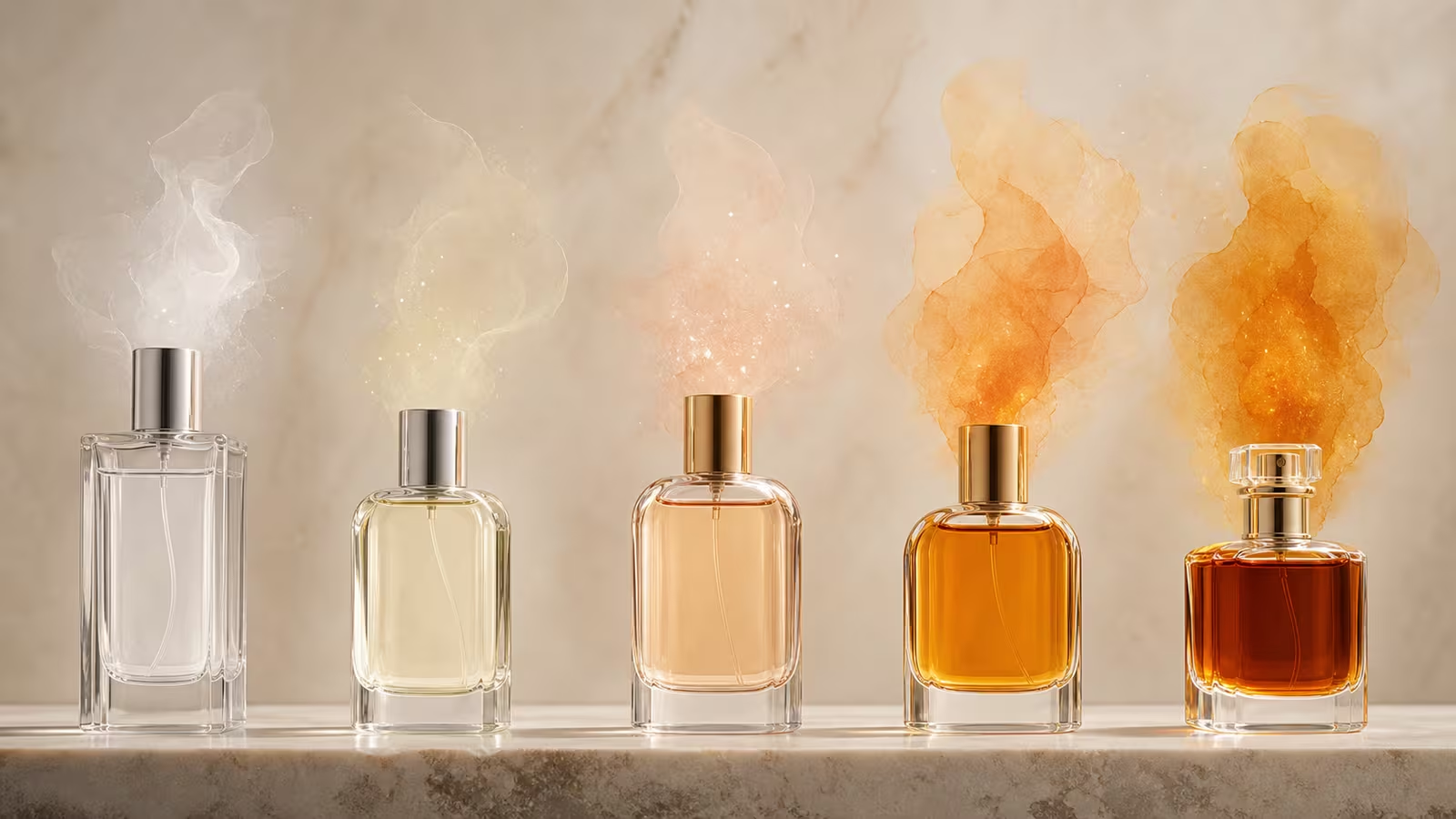
Perfume concentration names look like a tidy ladder. Body mist sounds light, cologne sounds fresh, eau de toilette sounds casual, eau de parfum sounds stronger, and parfum sounds luxurious. That ladder is useful, but it is not the whole truth. A concentration label tells you something about how a fragrance is built, how much aromatic material it may contain, and how it is meant to be worn. It does not guarantee that one bottle will last longer than another, project farther than another, or smell richer than another. Materials, style, skin, weather, and application all matter.
The simplest way to think about concentration is to imagine flavor in a drink. A splash of fruit in sparkling water, a brewed tea, a syrupy cordial, and a dense liqueur may all involve the same general flavor family, but they behave differently. Some are refreshing because they are light. Some are satisfying because they are rich. Some are better with lunch. Some are better after dinner. Perfume concentrations work in a similar way. Stronger is not always better. The right concentration is the one that suits the scent and the way you plan to wear it.
Body mist and fragrance mist
Body mists are usually the easiest entry point. They tend to be lighter, more casual, and more affordable than traditional perfumes. They often feel refreshing right after a shower, before errands, after the gym, or as a soft scent for home. Many body mists focus on clear ideas: vanilla sugar, coconut, clean cotton, cherry blossom, pear, citrus, lavender, or fresh musk. They may not unfold in a dramatic pyramid, and they may not last all day, but that can be part of their charm.
The mistake is treating body mist as a failed perfume. A mist is often designed for generosity. You can spray more, reapply without feeling precious, keep one in a bag, or layer it with lotion. If a perfume is like a tailored jacket, a body mist can be like a clean T-shirt. You would not judge the T-shirt for not behaving like a jacket. You would ask whether it feels good, fits the moment, and plays well with the rest of what you are wearing.
Body mists are also useful for learning. Because they are often simpler, they help you identify preferences without too much complexity. If you repeatedly reach for fresh pear mists and avoid heavy vanilla mists, you have learned something. If a coconut mist makes you happy only in summer, that is wardrobe information. The lower commitment can make your nose braver.
Cologne and eau de cologne
Cologne is a word with two lives. In everyday American speech, people often use “cologne” to mean fragrance marketed to men. In concentration language, eau de cologne traditionally refers to a lighter, refreshing style with a relatively low concentration of aromatic materials. Classic cologne structures often center on citrus, herbs, neroli, lavender, rosemary, and clean musks. They feel bright, brisk, and easy.
This kind of fragrance is wonderful when you want the pleasure of scent without weight. It can be ideal in hot weather, after a shower, before a walk, or during a day when you do not want a fragrance to occupy the room. The tradeoff is longevity. A true cologne may fade faster, especially on dry skin or in heat. That does not mean it performed badly. Its job may be to refresh rather than to cling.
If you love the first hour of a citrus fragrance but feel annoyed that it fades, try changing your expectations before changing the bottle. Keep a travel spray. Apply to moisturized skin. Put a tiny amount on a scarf or shirt if the fabric can handle it. Or accept it as a morning ritual, the way coffee is beautiful even though you do not expect one cup to last until midnight.
Eau de toilette
Eau de toilette, often shortened to EDT, usually sits in the light-to-moderate zone. Many EDTs are made to feel airy, wearable, and clear. They can be excellent for daily use because they give a recognizable fragrance experience without always feeling dense. Fresh scents, aromatic scents, light florals, and many classic masculine fragrances appear in EDT form.
Beginners sometimes assume EDT means weak. That is not fair. Some EDTs have excellent presence because their materials are naturally radiant. Others are intentionally transparent. An EDT can be sharper, brighter, and more sparkling than its eau de parfum version. When a brand offers both EDT and EDP, the difference is not always just strength. The formula may be adjusted. The EDT might emphasize citrus and freshness while the EDP emphasizes woods, vanilla, amber, or florals.
This is why it helps to sample versions side by side on different days. Do not buy the EDP automatically because it sounds more serious. If you want an office scent, warm-weather scent, or easy daytime signature, the EDT may be more useful. A good EDT can feel like open windows. Not every day needs velvet curtains.
Eau de parfum
Eau de parfum, or EDP, is one of the most common modern perfume concentrations. It often has more body than EDT and may feel fuller in the heart and base. Many popular fragrances are sold as EDPs because the format gives enough richness to feel satisfying while still being sprayable and versatile.
An EDP can be excellent when you want a fragrance to stay present through a workday, dinner, or evening out. Florals can feel rounder, woods can feel smoother, and gourmand notes can feel more enveloping. But EDP is not a promise of elegance. A clumsy EDP can be loud and flat. A beautiful EDT can be more graceful than a heavy EDP. Concentration is a tool, not a moral ranking.
The main wearing skill with EDP is restraint. Because many EDPs have more lasting materials, one or two sprays may be plenty in close settings. The fact that you stop noticing a scent after a while does not always mean it vanished. Your nose adapts. Someone sitting next to you may still smell it. If you are new to EDPs, start with less, then ask someone you trust how far it travels after an hour. That feedback is more useful than spraying until you can smell yourself constantly.
Parfum, extrait, and richer formats
Parfum and extrait de parfum are often richer and more concentrated. They may use less alcohol, more aromatic material, and a composition that sits closer and deeper. A beginner might expect them to explode across a room, but many extraits are not about volume. They can be about texture, depth, smoothness, and a longer drydown. Some feel almost plush, as if the fragrance has moved from watercolor to oil paint.
These formats can be beautiful, but they are not automatically practical. They may be expensive. They may stain some fabrics because of higher oil content. They may require a lighter hand. They may also feel too dense in summer or in small spaces. If you are curious, sample first. A tiny dab of an extrait can teach you more than reading a dozen claims about luxury.
Rich concentrations shine when you love the base of a fragrance. If you mostly care about a sparkling citrus opening, a dense parfum version may not give you what you want. If you love amber, woods, resins, musks, or deep florals, richer formats may be worth exploring because they often emphasize the part of the fragrance that lingers.
Perfume oils
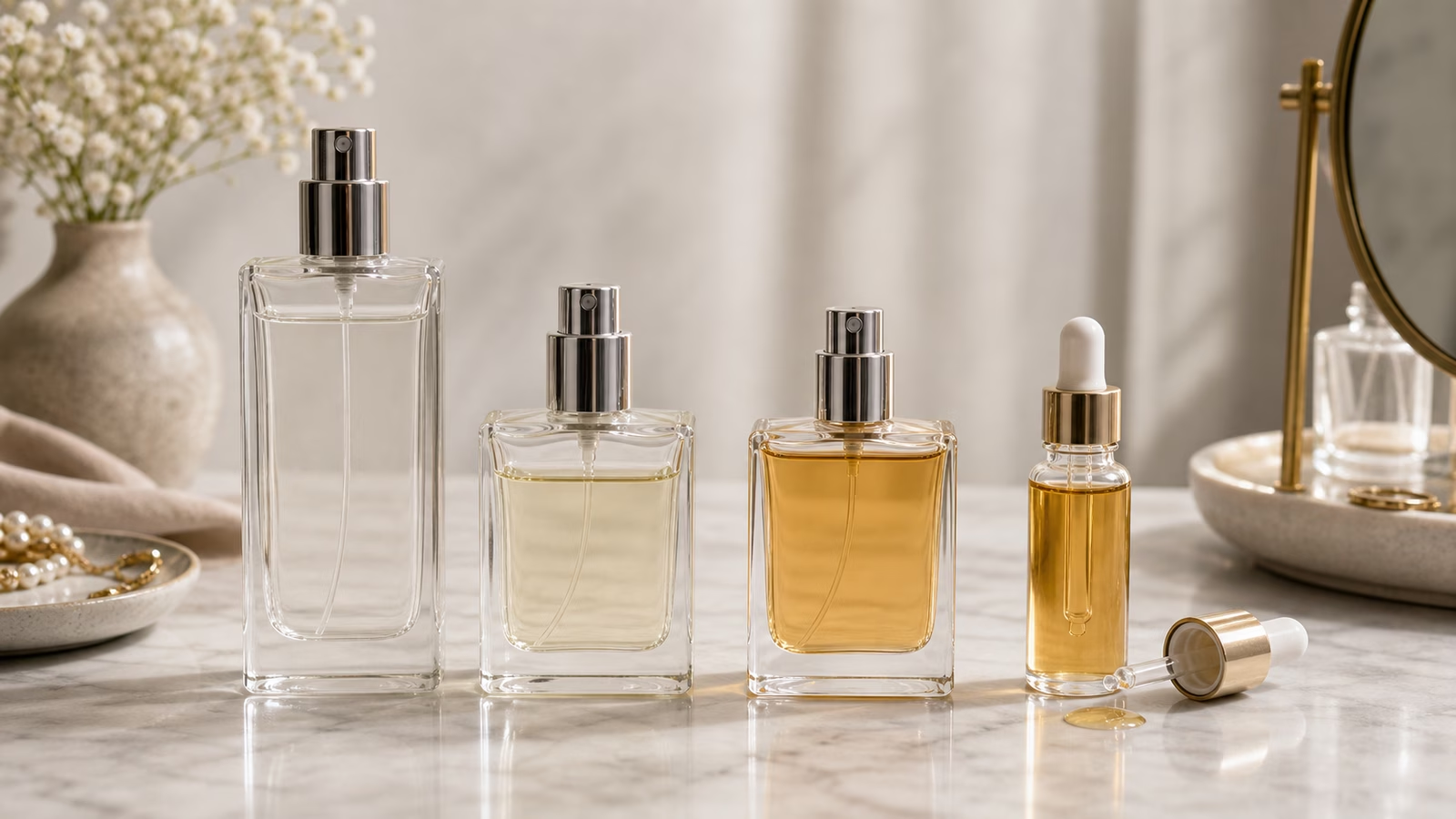
Perfume oils replace the alcohol spray experience with an oil base, often applied by rollerball, wand, or dabber. They tend to sit closer to the skin. They can feel intimate, soft, and long-wearing without leaving a large scent trail. Oils are popular for vanilla, musk, amber, sandalwood, rose, and cozy skin scents, though they can appear in many styles.
The advantage is control. You can place a small amount on pulse points, layer with unscented lotion, and refresh quietly. The disadvantage is that oils may not project the way sprays do. If you want people across a room to notice your fragrance, oil may disappoint you. If you want a scent that someone notices only when they hug you, oil may be perfect.
Oils also vary widely in quality and safety. Buy from brands that disclose usage guidance, avoid applying oils to irritated skin, and patch test if you are sensitive. Natural does not automatically mean gentle, and synthetic does not automatically mean harsh. Skin comfort matters more than romance.
Choosing by job
The best concentration is chosen by job. For hot weather, errands, or post-shower freshness, body mist, cologne, or EDT may be ideal. For daily polish and a clear scent identity, EDP is often useful. For evening, cold weather, or close, luxurious wear, parfum or oil may make sense. For travel and bags, small sprays and rollerballs can be more practical than a large bottle.
Try to describe what you need before you shop. Do you want something you can reapply casually? Something that survives a long day? Something subtle for work? Something cozy at home? Something noticeable for an event? Once you know the job, concentration labels become helpful instead of intimidating. They are not grades. They are wearing formats, and every format has a kind of beauty when it is used in the right moment.