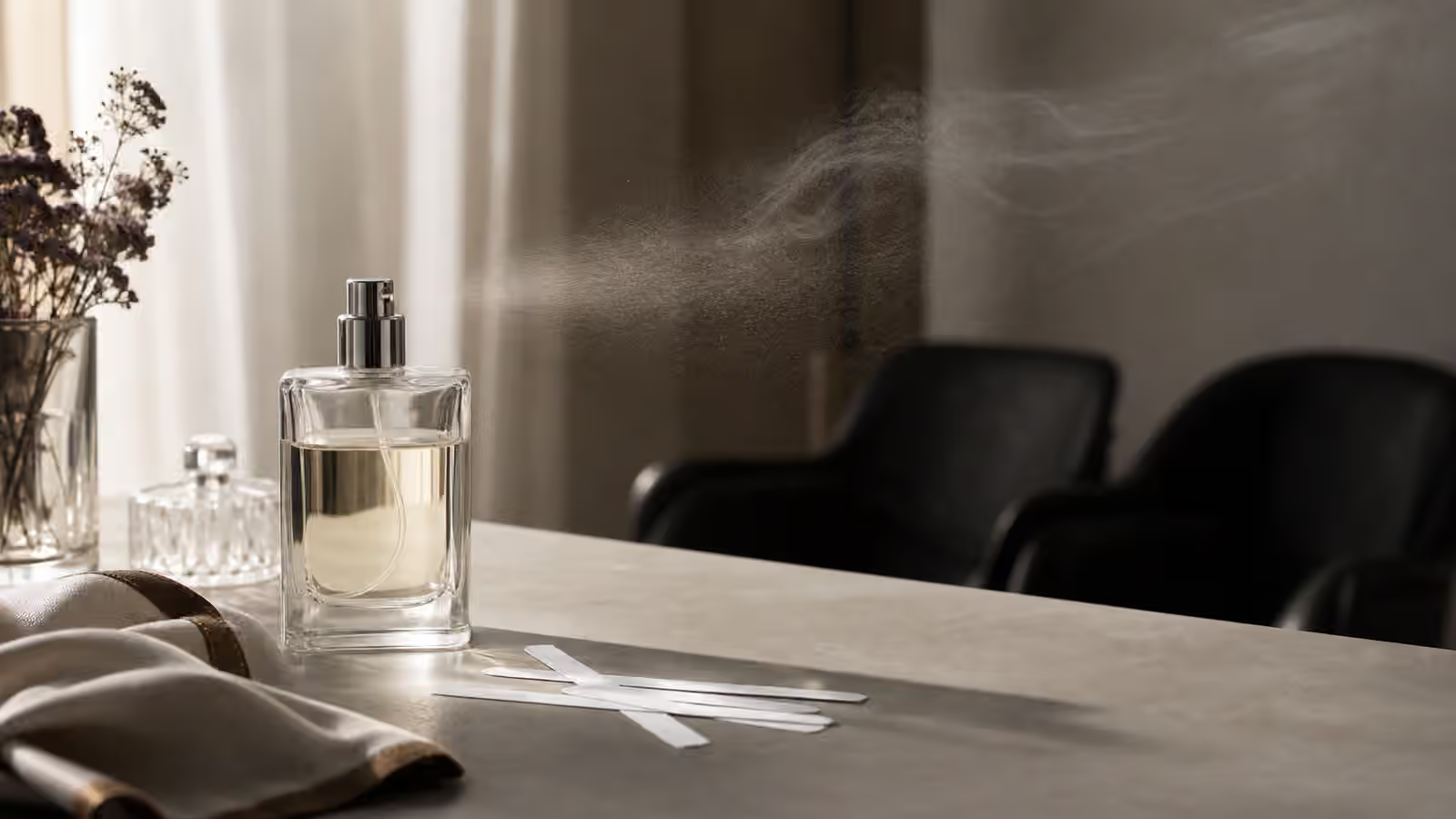
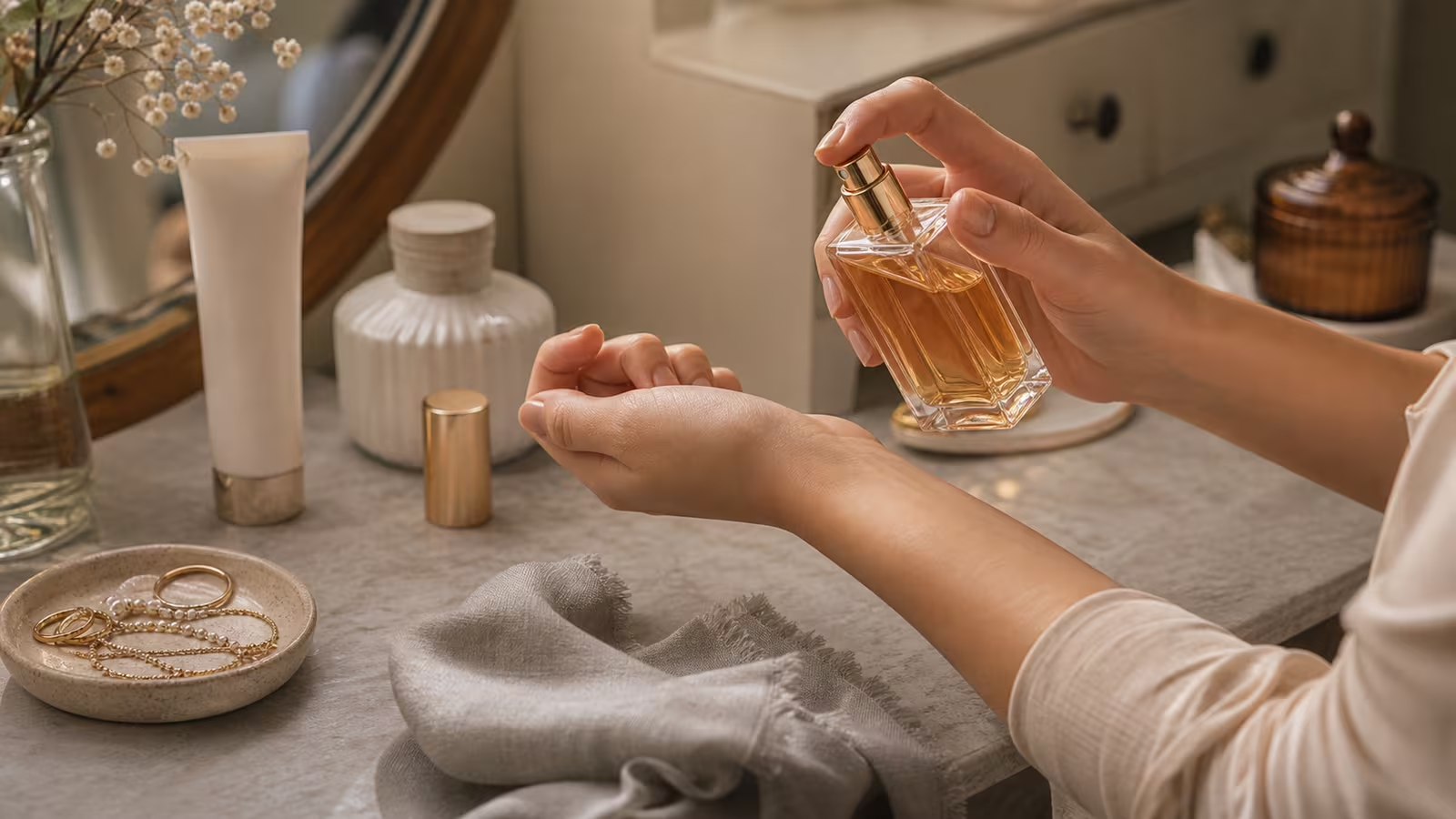
Perfume application looks simple because the gesture is simple. You lift a bottle, press the atomizer, and the scent is on you. The part that takes practice is deciding where that spray belongs. A perfume behaves differently on warm skin, under clothing, on a scarf, near the neck, on the back of the knees, or in hair. The same bottle can feel intimate, polished, loud, fleeting, or stubborn depending on placement.
Good application is not about finding a secret pulse point that makes every fragrance perfect. It is about matching the scent to the job. A citrus cologne may want open air and easy reapplication. A dense amber may need only one hidden spray under clothing. A soft musk may become lovelier on moisturized skin than on a blotter. A strong woody base may cling to a coat long after you stop noticing it. Placement turns perfume from a pretty smell into a wearable routine.
Start With Clean, Comfortable Skin
Skin is the most revealing place to wear perfume because it adds warmth, moisture, oil, salt, movement, and time. A blotter can show the outline of a fragrance, but skin shows how it joins your day. That is why the guide to Skin Chemistry and Perfume matters before any placement rule. A scent that blooms on one wrist may flatten on another person, and a perfume that seems thin on paper may become rounder once it meets body heat.
Comfort comes first. Perfume should not be used to force irritated, freshly shaved, sunburned, or broken skin to behave. If a spray stings, the clever answer is not more technique. Choose another spot, wait until the skin is calm, or use fabric carefully if the fragrance and textile allow it. Scent is meant to make the body feel attended to, not punished.
Moisturized skin usually gives perfume a better landing place. A plain unscented lotion can soften the first spray and sometimes help the scent last because the aromatic materials are not sitting on a dry surface. This is one of the reasons Scent Layering begins with the surrounding routine rather than the perfume bottle. If your soap, lotion, deodorant, and laundry products are already scented, they become part of the application. Sometimes that harmony is pleasant. Sometimes it turns a clean perfume into a noisy mixture before the fragrance has a fair chance.
Pulse Points Are Warm, Not Magical
Pulse points are places where blood flow and body warmth can help a fragrance lift from the skin. Wrists, inner elbows, the base of the throat, the chest, behind the ears, and behind the knees are common examples. They are useful because warmth encourages evaporation. More evaporation often means more scent in the air around you.
That warmth is also the tradeoff. A bright opening can sparkle beautifully on warm skin, but it may leave faster. A rich base can bloom strongly from the neck, but it may feel too present in a small room. A delicate floral may open nicely at the inner elbow because the movement of the arm releases small traces through the day. A heavy gourmand on both sides of the neck may become tiring because the scent sits directly under your nose.
Wrists are popular because they are easy to reach and easy to check, but they are not always the best place for a full wearing. They wash off, touch desks, rub against sleeves, and invite constant sniffing. If you keep chasing the scent from your wrist, your nose adapts faster and the perfume may seem to vanish. That is a habit to watch, especially if you already struggle with the issues in Fragrance Fatigue and Nose Blindness .
The chest is often underrated. A spray on the chest under clothing can create warmth without throwing perfume directly from the neck. It is especially useful for scents you want to enjoy mostly for yourself. The back of the neck is useful in a different way. It can create a soft trail as you move, especially with musks, woods, light florals, and fresh scents. These placements matter because projection is not only about how much you spray. It is about the path the scent takes into the air.
Clothing Holds Memory
Fabric often holds fragrance longer than skin. This can be beautiful. A scarf carrying a trace of iris, sandalwood, amber, or clean musk can make outerwear feel personal. A shirt collar can hold a fresh scent after the skin version has faded. Wool, cotton, and knits can keep base notes for hours or days, especially woody, musky, resinous, and sweet materials.
Fabric is also where perfume mistakes become persistent. Dark liquids, oils, dense vanillas, resins, and colored fragrances can mark delicate textiles. Silk, satin, pale clothing, and vintage fabrics deserve caution. Spray from a distance, let the mist settle before dressing when possible, and test hidden areas if the fabric matters. The goal is not to make the closet smell like one bottle forever. It is to give the day a trace without staining, clashing, or carrying yesterday into every outfit.
Clothing changes the scent too. Fabric is cooler and less alive than skin, so some perfumes smell cleaner, flatter, or more linear there. A citrus that vanishes on skin may last longer on cotton. A musk that feels cozy on a sweater may seem sharp on a bare wrist. A floral that turns sour on skin may remain graceful on a scarf. These differences are useful, but they should not replace skin testing. If you want to know whether a perfume suits you, wear it both ways before deciding.
The longevity guide, How to Make Perfume Last Longer Without Overspraying , covers fabric as one tool among several. The important word is tool. Clothing can extend wear, but it can also magnify a scent that was already strong enough. A small fabric spray may be plenty for an eau de parfum with a powerful base.
Hair Needs Distance and Restraint
Hair can hold fragrance beautifully because it moves and releases scent in small waves. That is why people often remember the smell of clean hair, shampoo, or a soft floral near someone more vividly than a loud cloud of perfume. A trace near hair can feel elegant and natural.
Regular perfume is usually alcohol based, and alcohol can be drying when sprayed directly and repeatedly into hair. The practical approach is restraint. Mist from a distance so only a little reaches the hair, spray a brush lightly and let it air for a moment before brushing the ends, or use a hair mist made for that purpose if you like the format. Keep perfume away from eyes and from the face. A fragrance that is lovely at the nape of the neck does not belong in your breathing space.
Hair placement is best with scents that already have softness. Musks, light florals, clean woods, tea scents, and gentle fruits can work well. Dense smoke, syrupy vanilla, heavy amber, and strong leather may become too insistent because hair keeps moving the scent back into the air. If you love a dramatic perfume, try it lower on the body first before adding it to hair.
Choose Placement by Distance
The most useful application question is not “How many sprays?” It is “How close should this scent stay?” One spray on the chest under a sweater can be more intimate than one spray on each side of the neck. One spray on the back of the neck can create a softer trail than several sprays on the front of the body. A perfume oil on the wrists may stay close, while the same fragrance in an alcohol spray on clothing may travel more.
This is where Projection and Sillage becomes practical. Projection is the space around you. Sillage is the trail you leave. Application controls both, but not perfectly. Materials matter. Weather matters. Fabric matters. Your own nose adapts. A person across a table may still smell a fragrance that feels gone to you.
Close settings deserve conservative placement. Offices, classrooms, airplanes, trains, rideshares, small restaurants, medical waiting rooms, and shared cars leave people with little room to choose distance. The guide to Close-Space Fragrance is really a guide to courtesy, and application is the main tool. A soft spray under clothing, a tiny dab of oil, or a scent kept away from the neck can let you enjoy perfume without making the room wear it with you.
Open settings allow more freedom. Outdoor walks, evening events with space, cool weather, and moving air can handle more presence. Even then, more spray is not always better. A fragrance that arrives before you do can feel less elegant than one that appears when someone is near.
Oils, Dabs, and Rollerballs Behave Differently
Perfume oils, rollerballs, and dabbers change the application conversation because they usually sit closer to the skin. They do not disperse like an atomized spray. A rollerball on the wrists, inner elbows, or chest can create a small warm zone rather than a cloud. That makes oils useful for close comfort, travel, bedtime, or settings where a large spray would feel intrusive.
The Perfume Oils guide explains the format in more detail, but the placement lesson is simple: oil rewards precision. A tiny amount can feel intimate and lasting, especially with musk, sandalwood, amber, vanilla, rose, or soft resin. Too much oil can feel greasy or heavy, and some oils may mark fabric, so let them settle before dressing. Do not assume that because an oil projects less, it cannot become too much at close range. Skin warmth can still make it noticeable.
Dabbing also changes the opening. A spray spreads fragrance through air and can make top notes sparkle. A dab places a more concentrated spot on skin. Some perfumes feel smoother that way, while others lose the lift that made them charming. If a fragrance comes in both oil and spray, treat them as related formats, not identical experiences.
Build a Repeatable Routine
A good routine should be boring enough to repeat. Choose one or two reliable placements for ordinary days, then adjust only when the scent or setting asks for it. For a soft daily fragrance, the chest and one wrist may be enough. For a fresh summer scent, the back of the neck or forearm may give lift without weight. For a rich cold-weather perfume, one spray under clothing may be more graceful than several exposed sprays. For a travel day, a rollerball or tiny fabric-safe touch may be wiser than a full morning cloud.
Give each perfume a few wears before deciding that an application method works. Try it on moisturized skin, then on a shirt collar if the fabric is safe, then in a close setting where restraint matters. Notice when you stop smelling it and whether anyone else can still detect it. Notice whether the scent feels better when it comes from your wrist, your chest, your clothing, or behind you as a trail.
Perfume application becomes easier when it stops being a superstition and becomes observation. Warm skin blooms. Fabric remembers. Hair moves. Oils stay close. The neck projects. The chest softens. The back of the neck leaves a trace. None of these are hard rules, but they are dependable tendencies. Once you learn how a bottle behaves in these places, you can wear it with less anxiety and more control.