Oud is one of the most loaded words in fragrance. It can suggest rare agarwood, dark resin, smoke, leather, medicine, barnyard warmth, polished wood, rose, saffron, incense, amber, or a dramatic base accord built to feel rich and shadowed. In modern perfume, “oud” may describe many things: natural oud material, a reconstruction, an oud-style accord, or a marketing idea around dark woods and resins. That does not make the note meaningless, but it does mean the wearer should smell the perfume rather than trusting the word on the box.
Dark woody scents deserve a separate guide because they sit near several existing families without being identical to any of them. They overlap with Woody Scents , Tobacco, Incense, and Smoke Scents , Leather and Suede Scents , and Amber, Resin, and Spice Scents . Their real subject is gravity. They make perfume feel darker, slower, and more ceremonial, even when the composition is smooth and modern.
Oud-style does not always mean natural oud
Natural oud comes from agarwood, a resinous material with enormous variation. It can smell woody, smoky, animalic, medicinal, sweet, sour, leathery, barnyard-like, balsamic, or incense-rich depending on origin, quality, age, and treatment. Many mainstream fragrances use oud-style accords instead of large amounts of natural oud. These accords can still be effective. They create a recognizable dark woody impression using other materials.
For a beginner, the practical question is not whether a perfume contains a particular percentage of natural oud. The practical question is how the oud idea behaves. Is it smoky or smooth? Medicinal or sweet? Leathery or woody? Clean and polished or animalic and challenging? Does it support the perfume, or does it dominate every stage?
This matters because two oud fragrances may have almost nothing in common. One may feel like rose petals on dark polished wood. Another may feel like tar, leather, and incense. Another may be mostly amber sweetness with a shadowed woody base. If the first oud you try feels too intense, that does not close the category. It only tells you where your threshold begins.
Rose, saffron, and oud create drama
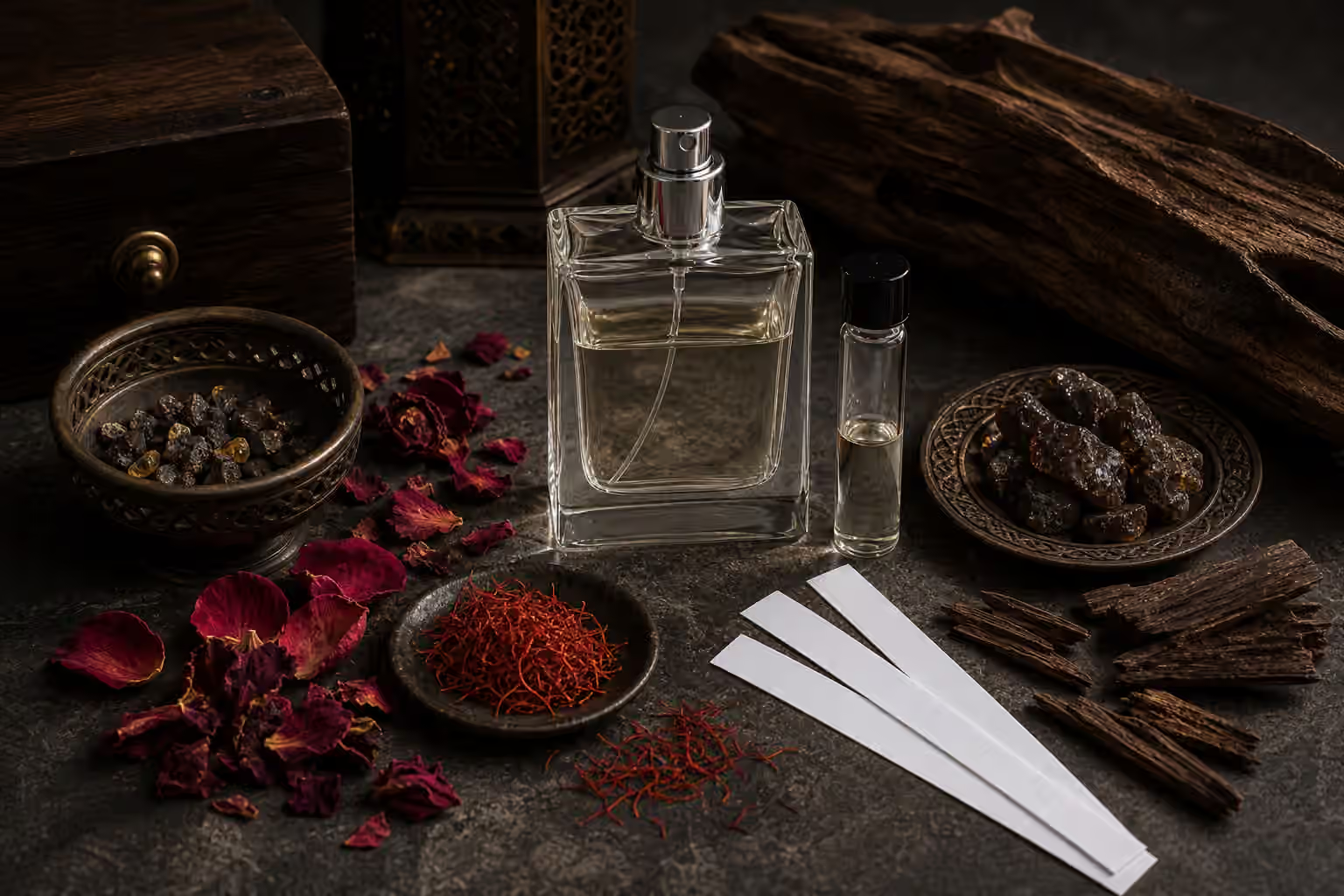
Rose and oud-style woods are a classic pairing because each gives the other a shape. Rose adds color, lift, and a living floral center. Oud adds darkness, depth, and a sense of weight. Saffron often joins the structure because it can add warmth, leather, and a golden dryness. The result can feel opulent, but it can also become heavy if sweetness, amber, and projection are pushed too far.
The guide to Rose Scents helps here because rose has many personalities. A fresh rose with a soft oud base feels different from a jammy rose with thick amber and saffron. A dry rose oud can feel elegant and formal. A sweet rose oud can feel plush and evening-ready. A leathery rose oud can feel darker and more tactile.
If you are new to this style, sample with restraint. One spray may be enough. Let the fragrance move through the day before deciding. Rose oud perfumes often have impressive openings, but the late drydown decides whether they feel wearable or too persistent.
Smoke and resin need air around them
Dark woody scents often use resin, incense, smoke, myrrh-like effects, labdanum, benzoin, amber, or charred wood notes. These materials can give a fragrance atmosphere. They can also close it down. A perfume that is all dark resin and smoke may feel compelling on a blotter, then become tiring on skin if there is no brightness or space.
Air can come from several places. Citrus can lift the opening. Pepper can create movement. Lavender or herbs can add aromatic clarity. Rose can give color. Dry cedar can create structure. Musk can soften the edges. Even a small amount of tea can make smoke feel more transparent. Without that air, dark wood can turn into a wall.
This is why the same smoky note may feel beautiful in one perfume and oppressive in another. In Tobacco, Incense, and Smoke Scents , smoke is treated as a texture. Oud-style fragrances use that texture too, but usually with more weight. The more weight a perfume has, the more important its empty space becomes.
Leather and animalic shadows can feel alive
Some oud-style fragrances have animalic facets. They may smell warm, salty, leathery, musky, barnyard-like, or skin-like. These effects can make a perfume feel alive rather than polished flat. They can also be polarizing. A tiny animalic shadow can add depth. Too much can become the only thing you notice.
The Animalic Notes in Perfume guide is useful because animalic does not mean one smell. In dark woody scents, it may appear as warm leather, indolic rose, musky skin, ambergris-like salt, or a more challenging oud facet. Leather can make this territory more understandable because it gives the shadow a familiar texture. Suede, saffron, musk, and resin can smooth it.
If you are unsure, wear the sample outside and then indoors. Some animalic woods feel beautiful in cool moving air and too intimate in a small warm room. Your own comfort matters. A fragrance can be well made and still not be something you want close to your face for eight hours.
Sweetness can polish or flatten dark woods
Vanilla, amber, tonka, fruit, honey, and sweet resins often appear with oud-style woods. Sweetness can make the dark material smoother and easier to approach. It can also flatten the complexity if it becomes a thick blanket. A sweet oud may be enjoyable, but if the base is only sugar and dark wood, it may feel less interesting after the first hour.
The best sweet dark woods keep some dryness. Saffron, cedar, patchouli, incense, tea, pepper, leather, or bitter cacao can keep the scent from becoming syrupy. This is similar to the lesson in Vanilla and Tonka Scents : sweetness works best when it has shape. Dark woods provide shape, but they need their own contrast too.
Pay attention to fabric. Sweet oud-style fragrances can cling to scarves, coats, and collars. That may be pleasant if you want a signature trail. It may be annoying if you like changing scents often. Test on washable fabric first if you plan to spray clothes.
Projection is part of the style
Many oud and dark woody perfumes are built for presence. They may project strongly and last a long time. That performance can be part of their appeal, especially for evening wear or cool weather. It can also be the reason they feel wrong in an office, classroom, airplane, waiting room, or shared car.
The guide to Close-Space Fragrance is practical here. A fragrance can be beautiful and still need distance. Dark woods, resins, rose, saffron, and amber are all materials people notice quickly. A small application on the chest under clothing may wear more gracefully than several sprays around the neck. A dab from a sample may teach more than a full atomizer spray.
Oud-style fragrances reward humility. The name can invite drama, but the best wearers treat the material with care. Smell for the kind of darkness, not only the fact of darkness. Notice whether the scent gives you wood, resin, rose, leather, smoke, warmth, or sweetness. Then decide where that atmosphere belongs in your real life. Dark woods are powerful because they create mood, and mood is most effective when it fits the room.