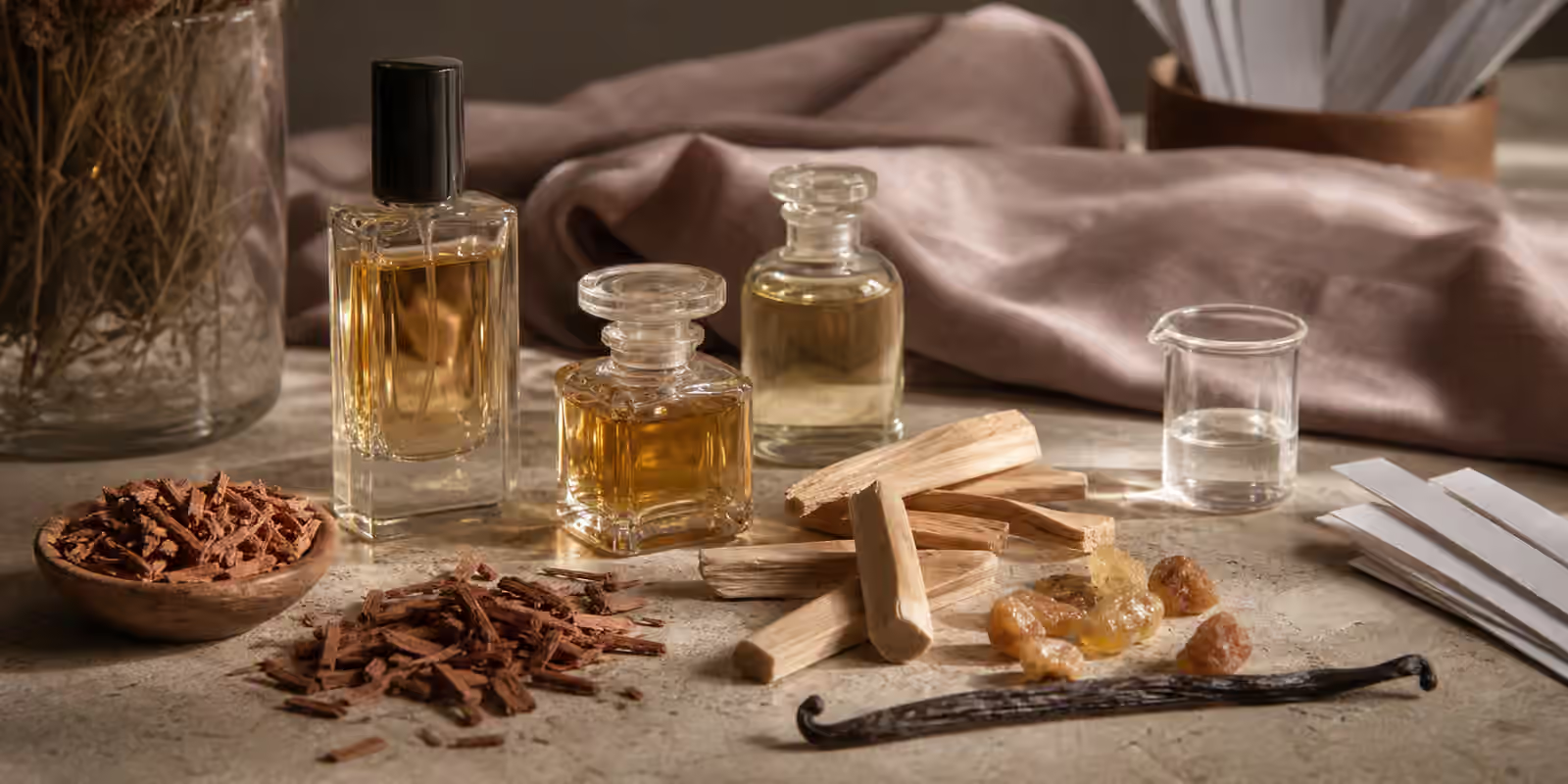
Natural and synthetic are two of the most loaded words in fragrance. They sound as if they should settle the question of quality before anyone smells the perfume. Natural can suggest craft, beauty, gardens, resins, woods, and flowers. Synthetic can suggest precision, modernity, performance, or, to some people, harshness. The problem is that neither word is a verdict. A natural material can be gorgeous, rough, unstable, expensive, limited, or difficult to wear. A synthetic material can be elegant, crude, transparent, radiant, quiet, or essential to making an idea possible.
Perfume becomes easier to understand when those words lose their moral charge. The useful question is not whether a fragrance is natural or synthetic in the abstract. The better question is how the materials smell, how they are balanced, how they behave on skin, and whether the finished perfume fits your life. Fragrance Notes Explained begins with this idea: note names are impressions, not grocery receipts. Material language works the same way. It can guide you, but it cannot replace smelling.
Natural does not mean simple
Natural fragrance materials are often complex. A rose absolute is not one flat rose smell. It can be honeyed, green, spicy, fruity, waxy, metallic, or dark depending on origin, extraction, age, and how it is used. Patchouli can be earthy, camphor-like, chocolatey, woody, or polished. Vetiver can be smoky, rooty, grassy, nutty, damp, or dry. Citrus oils can smell bright and beautiful, but they can also fade quickly because many of their most sparkling facets are volatile.
This complexity is one reason natural materials are beloved. They can bring small irregularities that make perfume feel alive. A natural lavender may carry herbal, floral, hay-like, and camphor facets in one material. A resin may bring sweetness, smoke, dust, and warmth at once. A real botanical material can behave less like a single color and more like a fabric with weave, shade, and texture.
Complexity also means natural materials are not automatically easier. Some are intense. Some have facets that beginners find medicinal, sour, bitter, waxy, earthy, or animalic. Some vary between batches. Some are limited by harvest, cost, environmental pressure, or availability. A perfume made entirely from natural materials can be beautiful, but it can also be dense, short-lived, muddy, or difficult if the formula is not well balanced. Naturalness is an origin story, not a quality guarantee.
Synthetic does not mean fake in the way people fear
Synthetic fragrance materials are often described as fake, but that word hides more than it explains. A synthetic material may recreate a facet found in nature. It may provide a smell that nature offers only in tiny amounts. It may create an effect that is not available as a practical natural extract. It may make a perfume safer to formulate, more consistent, more affordable, more transparent, or more durable. It may also smell harsh if used poorly. The material is not the whole answer. Proportion and context matter.
Many familiar perfume effects depend on synthetics or synthetic-supported accords. Clean musks, airy woods, marine notes, modern amberwoods, transparent jasmine effects, soft laundry accords, smooth sandalwood impressions, and radiant skin scents all rely heavily on materials that are not simply squeezed from a flower or chipped from a tree. Without them, much of modern perfumery would become narrower. A perfume could still be beautiful, but it would lose many of the textures people now recognize as clean, sheer, mineral, musky, ozonic, or weightless.
Synthetic materials can also protect an idea from literalness. A peach perfume does not need peach juice, which would not behave like a stable perfume note. A sea-air scent does not need seawater. A paper accord does not need paper pulp. A cashmere note does not need fabric. Perfume Accords explains how materials work together to create an impression. Synthetics often make those impressions legible, wearable, and lasting.
Most perfumes are mixed worlds
The natural-versus-synthetic debate becomes less useful once you notice that many perfumes use both. A floral fragrance may use natural rose or jasmine material alongside synthetic musks, woods, aldehydes, and supporting floral molecules. A citrus scent may use natural bergamot with modern musks and woody materials to keep it from disappearing too quickly. A gourmand may use vanilla materials from several sources, plus musks, woods, lactonic notes, and aroma molecules that create creaminess or toasted warmth.
This mixed approach is not a compromise in the weak sense. It is often the craft. Natural materials can give richness, irregularity, and recognizable depth. Synthetic materials can give lift, clarity, diffusion, stability, and effects that natural materials cannot provide alone. The perfumer’s work is not to choose a side. It is to make the finished fragrance smell coherent.
A good example is sandalwood. Natural sandalwood materials are prized, but they are expensive and tied to sustainability concerns. Modern sandalwood effects may use aroma molecules and blends that create creamy, milky, clean, or woody impressions. Some smell beautiful and smooth. Some smell thin or scratchy. A note list that says sandalwood does not tell you which version you will meet. Woody Scents is useful because it teaches texture rather than treating the note name as a single object.
Note lists are not ingredient labels
Beginners often expect note lists to reveal whether a perfume is natural or synthetic. They rarely do. A note list is usually a communication tool, not a full formula. When it says rose, it may include natural rose material, synthetic rose materials, a rose accord, or a mixture. When it says amber, it is almost certainly an accord: labdanum-like warmth, benzoin sweetness, vanilla, musks, woods, or amber-like aroma materials. When it says musk, it points to a family of materials and impressions, not one simple ingredient.
This is not deception by itself. Perfume formulas are complex, and the words consumers use are experiential. A person choosing a fragrance needs to know whether it smells like dewy rose, dry cedar, clean musk, salted vanilla, or smoky leather. The full technical formula would not necessarily make that choice easier. The note list is a map for smelling, not a legal or scientific inventory.
The risk is that marketing can make the map sound purer than it is. A brand may emphasize botanical materials because they photograph beautifully. Another may emphasize molecule names because they sound precise and modern. Both can be honest, and both can be incomplete. The nose still has to ask what the perfume does after the first spray, how it dries down, and whether the materials are balanced.
Quality lives in balance
Quality in fragrance is not proven by natural content or synthetic content alone. It shows up in balance, clarity, texture, comfort, and development. A citrus opening should not collapse into nothing unless that lightness is intentional. A vanilla should not become sticky if the perfume is trying to be dry and elegant. A musk should not flatten every other note unless the goal is a simple clean scent. A rose should not feel like a disconnected decoration if the perfume promises depth.
Natural materials can bring beauty but also noise. Synthetic materials can bring polish but also sharpness. A good formula makes the parts relate. Citrus hands off to tea, herbs, musk, or woods. Floral notes sit inside air, spice, green stems, powder, or warmth. Base notes support the perfume without swallowing it. The result feels like a fragrance, not a pile of credentials.
This is why sampling remains more reliable than claims. If a perfume describes itself as natural, wear it and notice whether it has shape after an hour. If a perfume highlights modern aroma molecules, wear it and notice whether it feels elegant or scratchy on your skin. If a brand promises purity, ask whether the perfume is actually pleasant in the situations where you would wear it. How to Sample Fragrances gives the calmer method: paper first, then skin, then a real day.
Safety claims deserve caution
Fragrance comfort is personal, and marketing language can overpromise. Natural does not automatically mean gentle. Synthetic does not automatically mean harsh. Essential oils and botanical extracts can bother some wearers. Synthetic musks or woody materials can bother others. Concentration, dose, skin condition, surrounding products, and individual sensitivity all matter.
The practical habit is simple: follow product guidance, avoid applying perfume to irritated skin, and test cautiously if you know you are sensitive. This is especially important with perfume oils, where the material sits close to skin and may be applied with a rollerball. Perfume Oils covers that format in more detail. The larger lesson is that safety and comfort are not proven by a romantic origin word. They are proven by responsible use and your own evidence.
It is also worth separating skin comfort from smell preference. A perfume may smell sharp, plasticky, oily, medicinal, or dusty without being unsafe. Another may smell soft and natural but still not suit your skin. When something feels physically uncomfortable, stop using it. When something only smells wrong, write down what happened. Those are different lessons.
Sustainability is part of the picture, not a shortcut
Natural materials can connect perfume to agriculture, harvest, land, climate, and craft. That connection can be meaningful. It can also be complicated. Some botanicals are renewable and responsibly produced. Others are scarce, expensive, slow-growing, or vulnerable to overuse. Synthetic substitutes or reconstructions can reduce pressure on certain natural sources, though they have their own manufacturing footprint. The simple claim that natural is always better for the planet does not hold up as a universal rule.
For the beginner buyer, the fairest stance is curiosity without automatic trust. Brands that care about sourcing often explain it with more specificity than a single green word. They may discuss materials, suppliers, certifications, refill systems, packaging choices, or why a certain natural material was replaced by an accord. You do not need to audit every bottle like a supply-chain expert, but you can treat vague purity language as a starting point rather than an answer.
The same applies to animal-derived material claims. Many modern perfumes use synthetic or reconstructed effects for musk, ambergris-style notes, civet-like warmth, and other animalic impressions. If that issue matters to you, look for clear brand information rather than assuming from a note name alone. A note can describe an effect without proving its source.
How to sample beyond the claim
When a perfume is marketed around natural materials, pay attention to texture. Does the citrus feel lively or rough? Does the floral heart have depth or does it become heavy? Does the resin glow or turn sticky? Does the scent feel beautiful after the opening, or did the raw-material story make the first minute more persuasive than the wear?
When a perfume is marketed around synthetics or molecules, pay attention to air and edges. Does it feel transparent, radiant, and clean, or does it scratch at your nose? Does the woody base become elegant or too persistent on fabric? Does the musk make the perfume soft, or does it erase the other notes? These questions are more useful than deciding in advance that modern materials are either superior or suspicious.
Your own journal can become a material education. You may learn that you like natural citrus openings but need musks or woods underneath. You may learn that you love synthetic sandalwood effects when they are creamy but not when they are dry and sharp. You may learn that botanical patchouli is too earthy in one perfume and polished in another. Fragrance Journaling helps turn these reactions into patterns rather than slogans.
Natural and synthetic materials both belong to perfume. One gives no automatic virtue, and the other gives no automatic failure. The finished scent is what matters: how it opens, how it changes, how it sits on skin and fabric, and how it fits the room you wear it in. Once you stop treating material origin as a shortcut, you can smell more clearly. You can enjoy a rose for its petals and a musk for its clean warmth, a resin for its depth and a molecule for its radiance, without needing every good perfume to prove the same point.