Projection and sillage are the parts of perfume that other people meet first. You may think of fragrance as something on your wrist, but a scent is also an invisible shape around the body. It can stay close like warm fabric, hover at conversational distance, trail behind you in a hallway, or fill a small room long after the opening has settled. Learning that shape makes perfume easier to wear because it turns strength into a question of distance rather than ego.
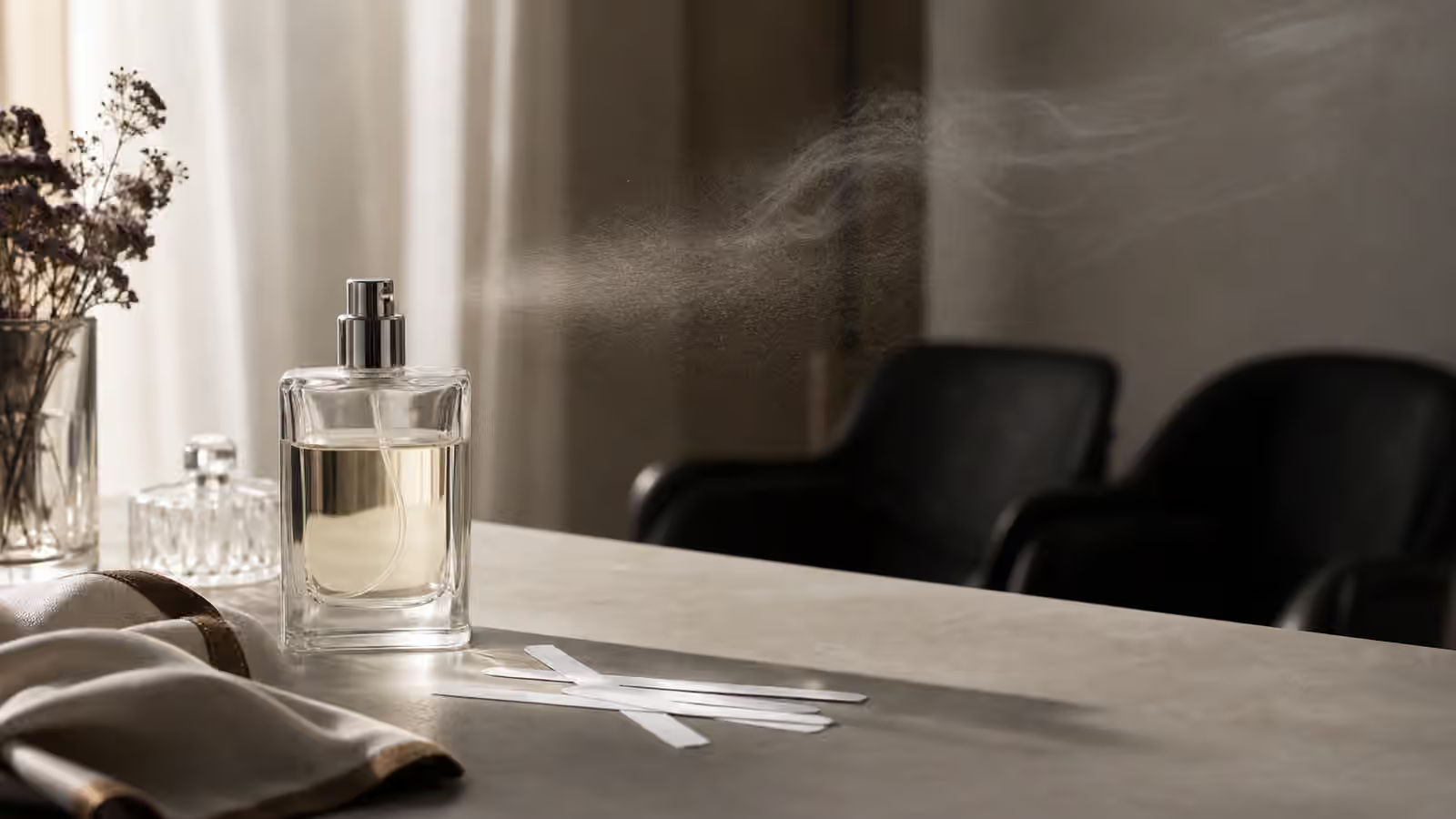
Projection is the space a fragrance occupies while you are wearing it. A perfume with strong projection can be smelled from farther away. A perfume with soft projection stays near the skin. Sillage is the trail a fragrance leaves as you move, the scented wake that lingers briefly after you pass. The two often overlap, but they are not identical. A fragrance can project strongly while you stand still and leave only a modest trail. Another can sit fairly close on the body but cling to a scarf and leave a noticeable trace when you walk by.
These ideas matter because your own nose is the worst measuring tool after the first stretch of wear. You adapt to scent. What seems faint to you may still be obvious to someone sitting nearby. What seems polite outdoors may become huge in an elevator. The goal is not to make every perfume smaller. The goal is to understand the radius you are creating and choose it on purpose.
A scent bubble has size and texture
People often describe performance as if perfume were a battery: it either lasts or it fails. That flattens the real experience. A fragrance has duration, but it also has volume, texture, and movement. A soft musk may last all day as a quiet warmth on clothing. A citrus cologne may project brightly for twenty minutes and then become a clean trace. A dense amber may seem calm after two hours because you stopped noticing it, while everyone at the table still gets vanilla, resin, and patchouli whenever you turn your head.
The useful image is a scent bubble. Some bubbles are small and smooth. They are noticed only at hug distance, which can be ideal for work, transit, appointments, and shared homes. Some are medium and breathable. They sit around the body, noticeable in conversation but not across the room. Some are large and dramatic. They suit open air, evening plans, outdoor gatherings, or moments when scent is part of the occasion. None of these sizes is morally better. The mistake is wearing the wrong size for the room.
Texture matters too. A fresh aromatic scent can project sharply, cutting through air with citrus, herbs, or clean musk. A gourmand may project as sweetness and warmth, becoming bigger in heated rooms. A floral can feel radiant even with few sprays because white flowers and certain modern materials travel well. A woody scent may not shout at first but can leave a persistent drydown on fabric. If you have read Scent Families , think of projection as behavior layered on top of family. The note family tells you what kind of smell you are wearing. Projection tells you how far that smell is going.
Concentration is only part of the answer
It is tempting to assume that eau de parfum always projects more than eau de toilette, or that parfum is automatically the loudest format. Real perfume is messier. Concentration names describe a general style and amount of aromatic material, but materials have their own personalities. A bright EDT with radiant woods and musks may fill more space than a rich extrait that stays close and plush. A body mist can become overwhelming if it is sprayed repeatedly onto hair and clothing. A perfume oil may sit quietly on skin but remain very noticeable to someone who hugs you.
The guide to Perfume Concentration Types is useful because it separates format from fantasy. Stronger is not always louder. Richer is not always farther-reaching. Some high-concentration perfumes are designed for depth rather than distance, and some lighter formats are designed to sparkle in the air. If you are judging projection, pay attention to the actual wearing experience instead of relying on the label.
Spray mechanics also change the result. A fine atomizer creates a wide mist that may project quickly because the fragrance is spread over more surface. A heavy wet spray puts more liquid in one place and may bloom more slowly. A dabber or rollerball keeps the scent concentrated on a small patch of skin. None of these methods is automatically superior. They simply create different shapes.
Application changes the radius
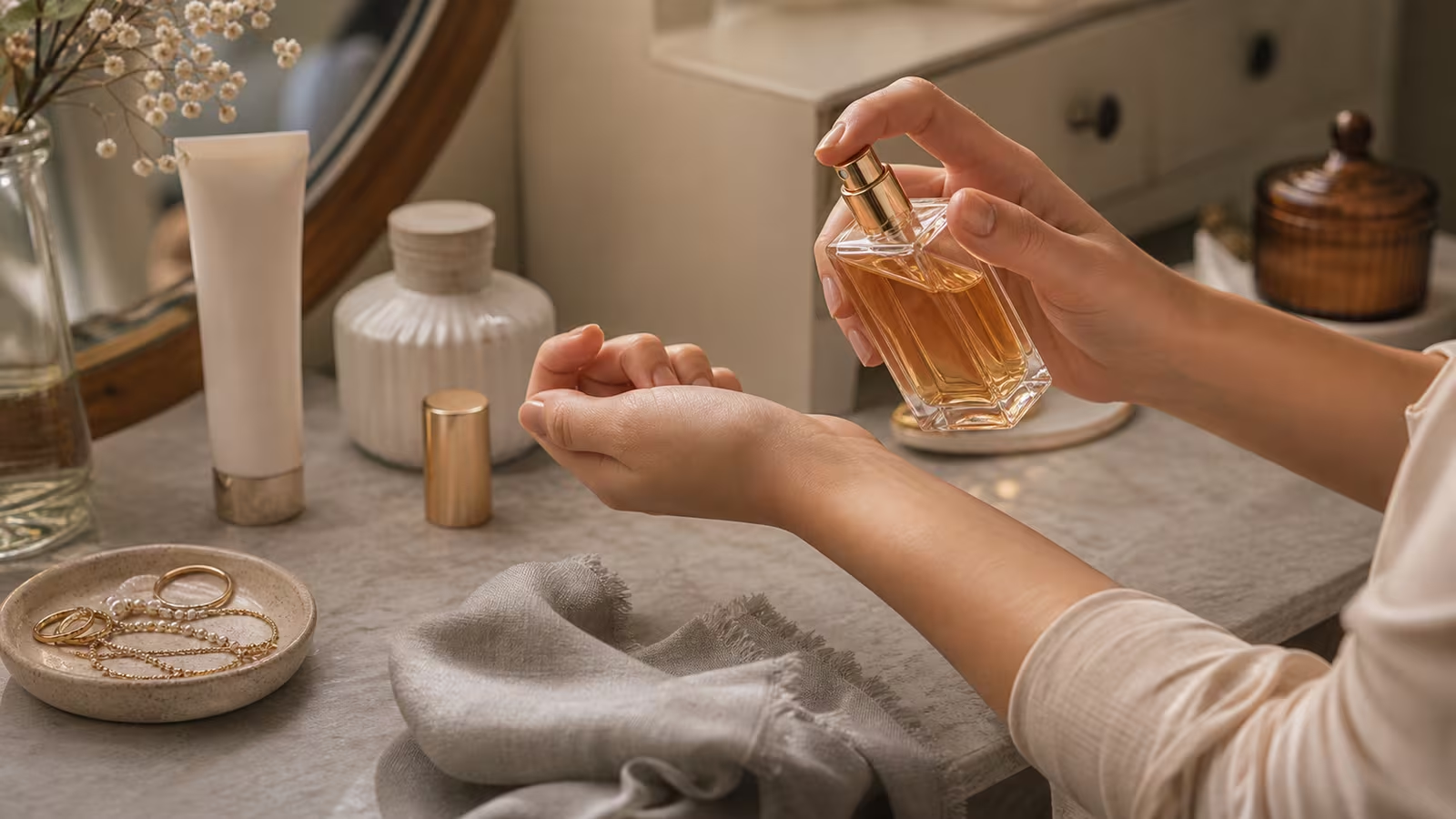
Where you put perfume can matter as much as what you put on. Fragrance on the chest under clothing usually diffuses more softly than fragrance on exposed wrists. The back of the neck can create a gentle trail because it moves as you walk and turn. Inner elbows can bloom with warmth. Hair and scarves can hold scent for a long time, sometimes longer than intended. Fabric is especially important because it does not warm and change fragrance the way skin does, but it can keep base notes alive for days.
If you want a smaller scent bubble, start with fewer sprays and use covered or lower-movement areas. One spray to the chest, a small amount behind the knees for an outdoor dress-up moment, or a light dab from a rollerball can be more controlled than spraying both wrists and the neck. If you want more sillage, movement points matter: the back of the neck, shoulder line, coat collar, scarf edge, or hem of a garment can create a trail. Use fabric carefully, especially with dark oils, delicate materials, and fragrances that may stain.
Overspraying is usually an attempt to solve the wrong problem. Many people add more because they cannot smell themselves, but Fragrance Fatigue and Nose Blindness explains why that perception is unreliable. A better adjustment is to test distance. If a fragrance disappears from your wrist but remains obvious on your shirt and to someone nearby, the scent did not fail. Your brain simply stopped reporting it.
Rooms, weather, and skin change the throw
A perfume does not project in a vacuum. Warmth makes scent materials evaporate faster, which can increase projection and shorten the brightest phase. Cold air can make some scents feel quieter and tighter. Humidity can amplify sweetness, musk, and certain florals. Dry air can make delicate fragrances feel thinner. A perfume that seems tasteful outside in winter may feel heavy in a heated car. A light citrus that feels crisp after a shower may vanish quickly on a hot, dry afternoon.
Skin also changes the story. Moisturized skin often holds fragrance better than dry skin. Very warm skin can make a perfume bloom quickly. Scented lotion, hair products, laundry detergent, and sunscreen can all interfere with how far a perfume seems to travel. The page on Skin Chemistry and Perfume is worth reading beside this one because projection is not only about the formula. It is about the formula meeting a body, a climate, and a routine.
This is why sampling at home matters. A shop can make projection hard to judge because the air is already full of scent. You might dismiss a soft perfume as weak because it cannot compete with the room, or you might buy a loud perfume because it is the only thing that cuts through the noise. The method in How to Sample Fragrances works well for projection testing: wear one fragrance, give it hours, and notice how it behaves while you live normally.
Feedback should be about distance
The most useful feedback question is not whether someone likes your perfume. Taste is personal, and people may answer politely. Ask a distance question instead. Can they smell it from across the table? From a chair away? Only when they stand near you? After three hours, is it gone to them, close to you, or still filling the room? Those answers teach you more than compliments.
It helps to ask at different times. The first fifteen minutes may be louder than the rest of the day. The second hour may show the heart. The fifth hour may reveal whether the base is a quiet skin scent or a persistent trail. You do not need a panel of judges. One honest person at home can help you calibrate more than a dozen online performance claims.
Online reviews can still be useful if you read them carefully. When someone says a perfume is beast mode, enormous, intimate, weak, room-filling, airy, or nuclear, translate the language into questions rather than conclusions. How many sprays did they use? What weather? On skin or clothing? Were they testing among other perfumes? Did other people notice it, or did the reviewer only press their nose to the wrist? Reading Perfume Reviews Without Losing Your Own Nose is especially relevant because projection language tends to become dramatic online.
Choose distance for the day
The right amount of projection depends on the job. A small scent bubble can be perfect for a desk, classroom, clinic, train, airplane, shared car, or dinner table. That is where Close-Space Fragrance becomes etiquette in practice. A medium bubble can work for errands, casual meetings, daytime events, and walks. A larger trail may be enjoyable for outdoor evenings, celebrations, dancing, or cold-weather clothing that can carry a scent without trapping people beside it.
Longevity and projection also need to be separated. How to Make Perfume Last Longer focuses on duration, but duration should not always mean distance. Sometimes you want a fragrance to last close to the body. Sometimes you want a bright scent that projects briefly and then fades. Sometimes reapplication is more graceful than front-loading the morning with too much perfume. The question is not only how long the scent lasts. It is how it behaves during the hours it is present.
The best fragrance wearers learn their bottles as companions with different voices. One perfume is a whisper for close rooms. One is a clean medium presence for ordinary days. One is a trail for coats and cold air. One is beautiful but too large for most indoor plans. Once you know those roles, you stop asking every fragrance to perform the same way.
Projection and sillage are not tricks for being noticed. They are skills for matching scent to space. A perfume is part of how you enter a room, but it is also part of how you share that room. Wear the radius that fits the day, and the fragrance will feel more intentional, more comfortable, and more generous to the people around you.