A fragrance journal sounds formal until you realize what it is really doing. It is not a school assignment, a tasting exam, or a place to perform expertise. It is a memory aid for a sense that changes quickly. Perfume moves from opening to heart to drydown. Your nose adapts. Weather shifts. A review you read before sampling can plant expectations. A bottle you tried in a shop can seem unforgettable, then become oddly vague by dinner. Without notes, the experience blurs into a feeling of liking, disliking, or wanting. With a few ordinary sentences, the blur becomes evidence.
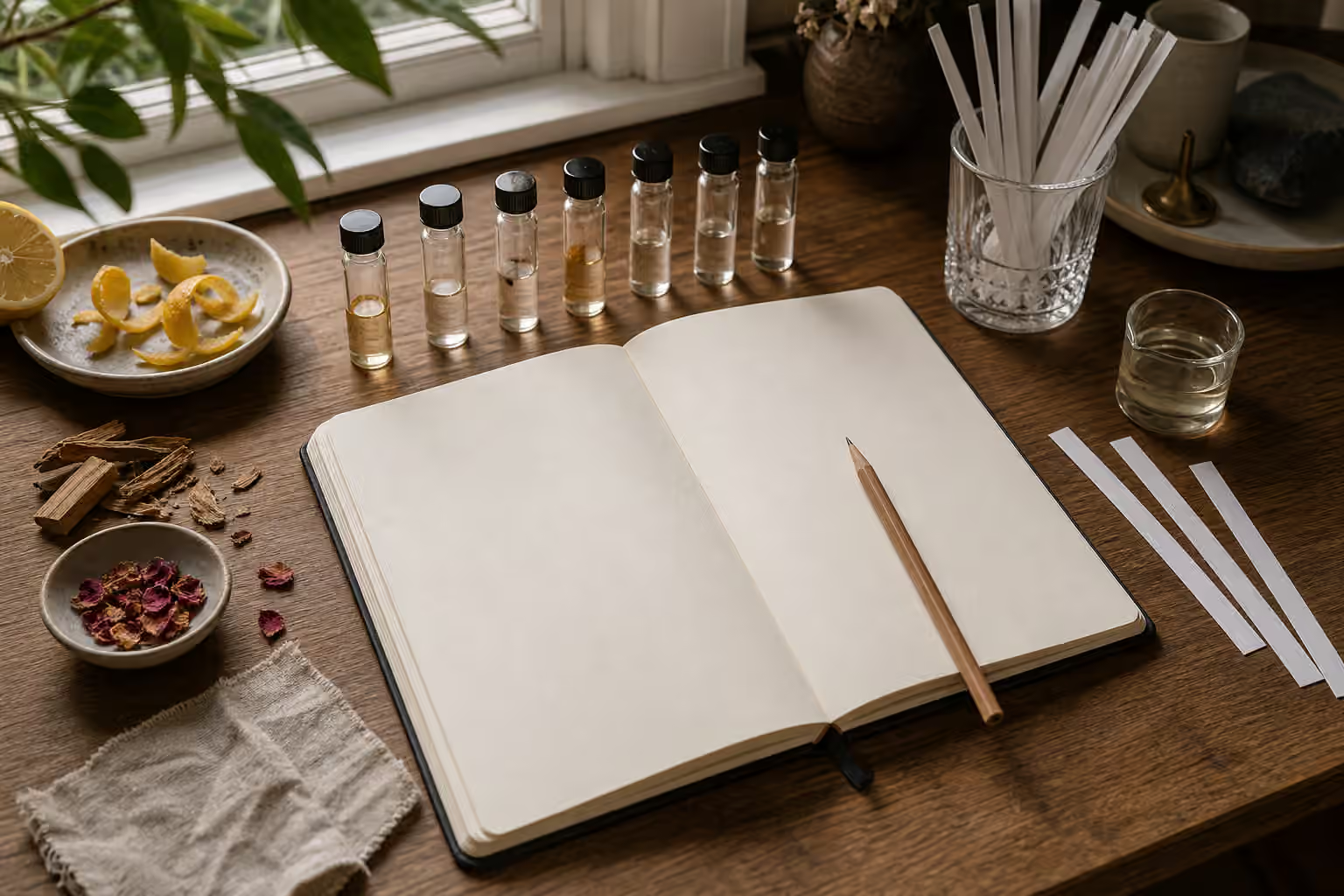
The best fragrance journal is simple enough that you will actually use it. A beautiful notebook can help if it makes the ritual pleasant, but a plain document, phone note, index card, or spreadsheet can work just as well. The value is not in the format. It is in returning to the same questions often enough to notice patterns. What did the scent do first? What did it become after an hour? What was left later? Where did you wear it? Did you want to wear it again when nobody was selling it to you?
Write Behavior, Not Advertising
Perfume language can become decorative fast. It is easy to write that a fragrance is luminous, elegant, addictive, mysterious, or expensive-smelling. Those words may be true as feelings, but they are often weak as records. Six weeks later, they may not tell you why you wanted the scent or why you decided against it. A more useful entry is humbler. It might say that the opening was bitter grapefruit and clean herbs, the middle became sharp white flowers, and the base turned into dry musk on your sweater. That kind of note is not glamorous, but it can guide the next sample.
Try to record behavior before judgment. If you love the first spray, write what you smell before writing that you love it. If you dislike a perfume, write what made it difficult before dismissing it. Sweetness may be syrupy, powdery, creamy, burnt, honeyed, fruity, or vanilla-like. Freshness may be citrus, soap, mint, tea, laundry musk, wet stone, cucumber, or green stems. Woodiness may be cedar pencil shavings, creamy sandalwood, smoky vetiver, damp forest, polished furniture, or dry driftwood. The more specific the behavior, the more useful the opinion becomes.
Fragrance Notes Explained helps here because a note name is only a starting point. A perfume that lists rose may smell like cold petals, jam, soap, lipstick, spice, or something almost woody. A journal lets you build your own dictionary instead of borrowing every meaning from the brand copy.
Give the Drydown a Place to Speak
Many disappointing purchases begin with an excellent opening. A perfume sprays bright, delicious, clean, or dramatic, and the mind starts building a life around it before the base has arrived. The journal slows that down. It gives the opening its sentence, then leaves room for the rest of the day.
The easiest structure is a time story. Write a line after the first few minutes, another after half an hour or an hour, and another near the end of wear. You do not need exact laboratory timing. The point is to separate the first impression from the lived impression. A fragrance might open with sparkling pear and bergamot, settle into shampoo-like florals, then end as sweet musk. Another might begin medicinal and strange, soften into tea and hay, and become beautiful only after lunch. If those stages live in one vague memory, you may buy the wrong thing or reject the right one.
This is also where Skin Chemistry and Perfume becomes practical instead of mysterious. If the same sample smells plush on fabric but sour on skin, write that down. If a citrus lasts only on your shirt collar, write that down. If an amber seems quiet to you but someone nearby notices it hours later, write that down too. The journal is not trying to prove that your skin is unusual. It is trying to show how a fragrance behaves in your actual life.
Record the Room Around the Scent
Perfume is never worn in blank space. It sits over lotion, soap, laundry detergent, sweat, fabric, heat, cold, humidity, and mood. A useful journal entry does not have to document everything, but it should capture the conditions that changed the result.
If you tested after a shower with scented body wash, the sample may have been competing. If you wore wool, the base notes may have clung longer than they would on bare skin. If the day was hot, sweetness and musk may have expanded. If you sampled in a crowded shop after smelling ten blotters, your nose may have been tired before the real test began. These details are not excuses. They are context.
This is why the habits in How to Sample Fragrances and Fragrance Fatigue and Nose Blindness belong beside journaling. A clear note comes from a fair test. A tired nose writes dramatic but unreliable entries. A journal can help you see when the problem was not the fragrance but the session: too many samples, too much re-sniffing, too much noise, or too little time.
Use Reviews as Questions, Then Answer Them Yourself
Reviews are useful when they give you questions to test. If several people say a fragrance becomes powdery, your journal can track whether powder appears on you and whether you enjoy it. If reviewers disagree about projection, your notes can separate what you smell from what others notice. If a note list promises tea, fig, cedar, and musk, your entry can say which of those impressions actually showed up, which vanished, and which became the whole story.
The guide to Reading Perfume Reviews Without Losing Your Own Nose is a good companion because journaling protects you from review pressure. It turns public opinion into a set of private tests. You do not have to decide whether the community is right. You only have to decide what happened on your wrist, in your clothes, in your weather, during your day.
A journal also reveals when you are borrowing someone else’s desire. You may write excitedly before sampling because the reviews sound perfect, then write a much quieter entry after wearing the scent. That contrast is useful. It teaches the difference between wanting the story of a perfume and wanting the perfume itself.
Learn From Dislikes Without Making Grand Rules
Bad samples are often the best teachers. The trick is to avoid turning one dislike into a permanent ban. “I hate vanilla” may be too broad. Your journal may eventually show that you dislike frosting-like vanilla, but love dry vanilla with cedar. “Fresh scents disappear on me” may become more precise when you notice that watery citrus fades quickly, while green tea and vetiver remain comfortable. “Musk goes weird” may become a pattern around laundry musks, not soft skin musks.
Write dislikes with detail and restraint. If a fragrance bothered you, name the behavior. Did it become too sweet, too sharp, too powdery, too smoky, too clean, too loud, too waxy, too sour, too heavy, or too thin? Did the problem appear immediately, or only after the drydown? Did it happen on skin and fabric, or only in one place? Those distinctions keep your taste flexible. They help you avoid repeating mistakes without closing doors that might still lead somewhere good.
Over time, the journal becomes less about single perfumes and more about your own patterns. You may learn that you enjoy citrus only when it has a bitter edge. You may discover that rose works when it is dry and spicy, but not when it is jammy. You may realize that you admire smoky scents from a distance but rarely want them on your body. That kind of knowledge is more valuable than a long wish list.
Turn Notes Into a Wearable Wardrobe
A fragrance journal becomes especially useful when you are deciding what deserves space. It can show which samples you finished quickly, which ones you kept testing because you wanted them to work, and which ones made ordinary days feel better. That evidence matters more than a beautiful bottle or a persuasive sale.
Before buying, read your own entry from the full wearing, not only your memory of the opening. Look for practical signs. Did you enjoy the scent after three hours? Did it fit the setting where you hoped to wear it? Did it repeat a role you already own, or did it fill a real gap? Did you feel relaxed wearing it around people, or self-conscious? Did you reach for the sample again without forcing yourself?
Beginner Fragrance Wardrobes frames a wardrobe as a small set that gets worn. A journal is how you prove what gets worn before committing to a bottle. It can show that your practical gap is not another dramatic evening scent but a quiet workday musk. It can show that you already own enough warm vanillas, but no fresh scent you like in heat. It can also show that a travel size is enough for a perfume you love only in a narrow mood.
Keep the Ritual Light Enough to Last
The only journal system that works is the one that survives an ordinary week. If the entry process feels elaborate, you will use it for two samples and abandon it. Keep the ritual brief. Write in plain language. Leave messy impressions. Do not wait until you can sound knowledgeable. A line written while the drydown is still on your sleeve is more useful than a polished paragraph written from memory three days later.
It helps to reread old entries every so often. Not to judge your past taste, but to watch it become clearer. Early notes may be broad: sweet, clean, strong, pretty, weird. Later notes may notice texture, stage, projection, and setting. That progress is the point. The journal does not make fragrance less emotional. It makes the emotion easier to remember.
Perfume is intimate, temporary, and full of suggestion. A fragrance journal gives that temporary experience a little continuity. It lets you learn from the scent that faded, the sample that surprised you, the review that misled you, and the drydown that quietly became your favorite part. Over time, the notebook becomes less a record of perfumes and more a record of your own nose becoming specific.