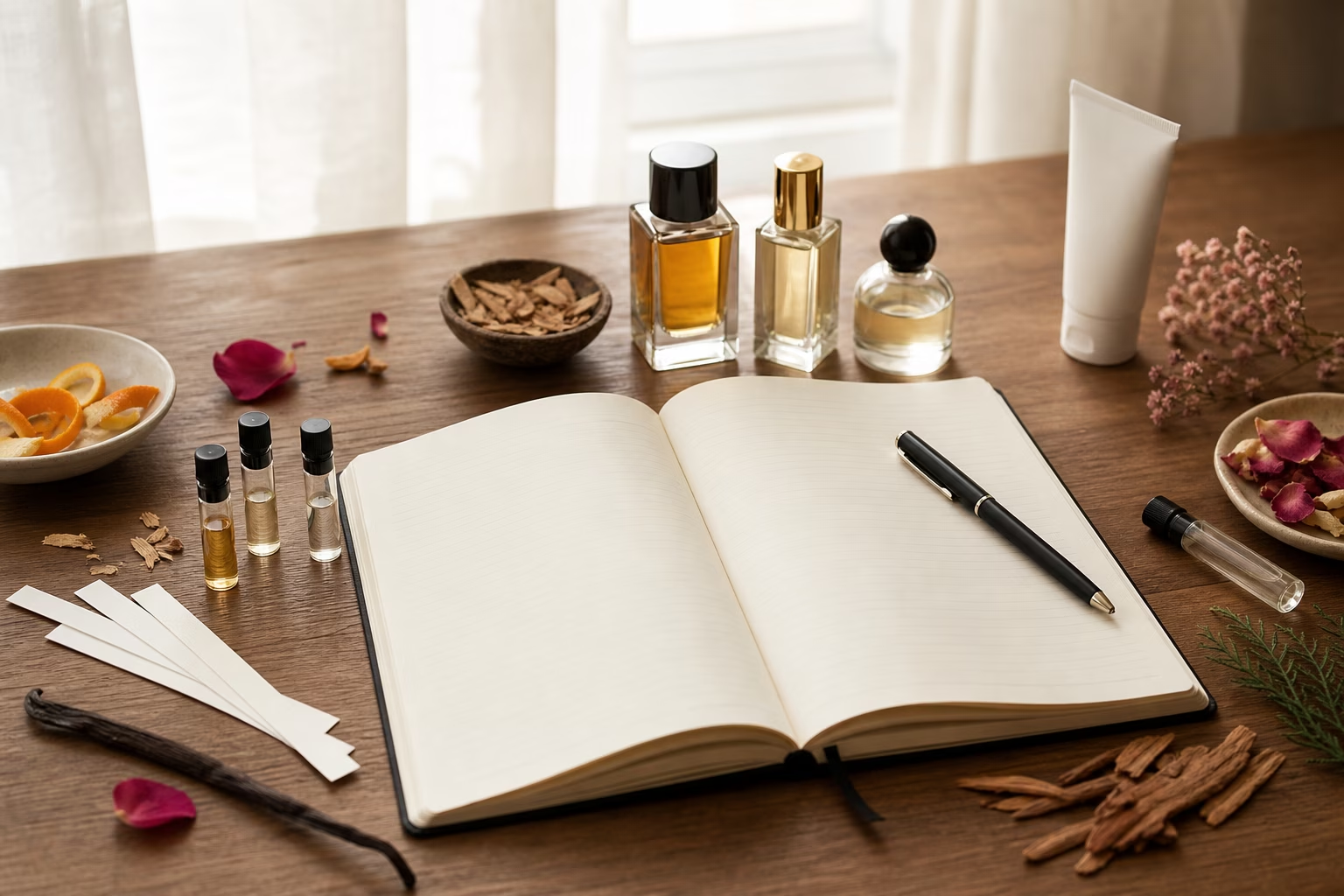
The nose gets tired before enthusiasm does. That is the quiet problem behind many bad fragrance decisions. You begin with a few samples and a clear opinion. Twenty minutes later, every blotter smells louder, sweeter, sharper, flatter, or strangely similar. By the end of the session, the scent you loved at first seems boring, the one you disliked seems interesting, and your notebook reads like it was written by three different people.
Fragrance fatigue is not a character flaw. It is part of smelling. The olfactory system adapts quickly, especially when it is exposed to strong, repeated, or similar materials. A perfume counter, discovery set, or enthusiastic afternoon of sampling can overwhelm the very sense you are trying to use. The result is not only tiredness. It is distorted judgment.
Nose blindness is related but slightly different in everyday use. It is what happens when you stop noticing a scent because your brain has adapted to it. The perfume may still be present to other people, but you no longer perceive it clearly. This is why someone can apply more and more fragrance because they think it disappeared, while everyone near them knows it has not.
Learning fragrance means learning when not to smell more.
Adaptation Is Normal
Smell is built to notice change. If every odor stayed equally vivid all day, ordinary life would become impossible. Your brain would be trapped in the constant smell of your room, your clothes, your shampoo, your lunch, the street, the car, and your own skin. Adaptation filters the familiar so you can detect what is new.
Perfume uses that same system. A bright opening may feel vivid for the first few minutes, then soften as your nose adapts. A strong base note may seem to vanish to you while it remains obvious in the air. A scent worn every day may become nearly invisible to the person wearing it. None of this proves the perfume is weak or strong by itself. It proves that your perception is changing.
This is why fragrance testing requires patience. The first smell is only one chapter. The drydown matters. The distance from skin matters. The room matters. Your own fatigue matters. A perfume that seems gone when you press your nose to your wrist may still be creating a gentle trail. A perfume that feels perfect on paper may become too much after two hours on skin.
The beginner mistake is to treat every moment of perception as objective. A better habit is to ask what your nose has been through before trusting the opinion completely.
Too Many Samples Flatten the Day
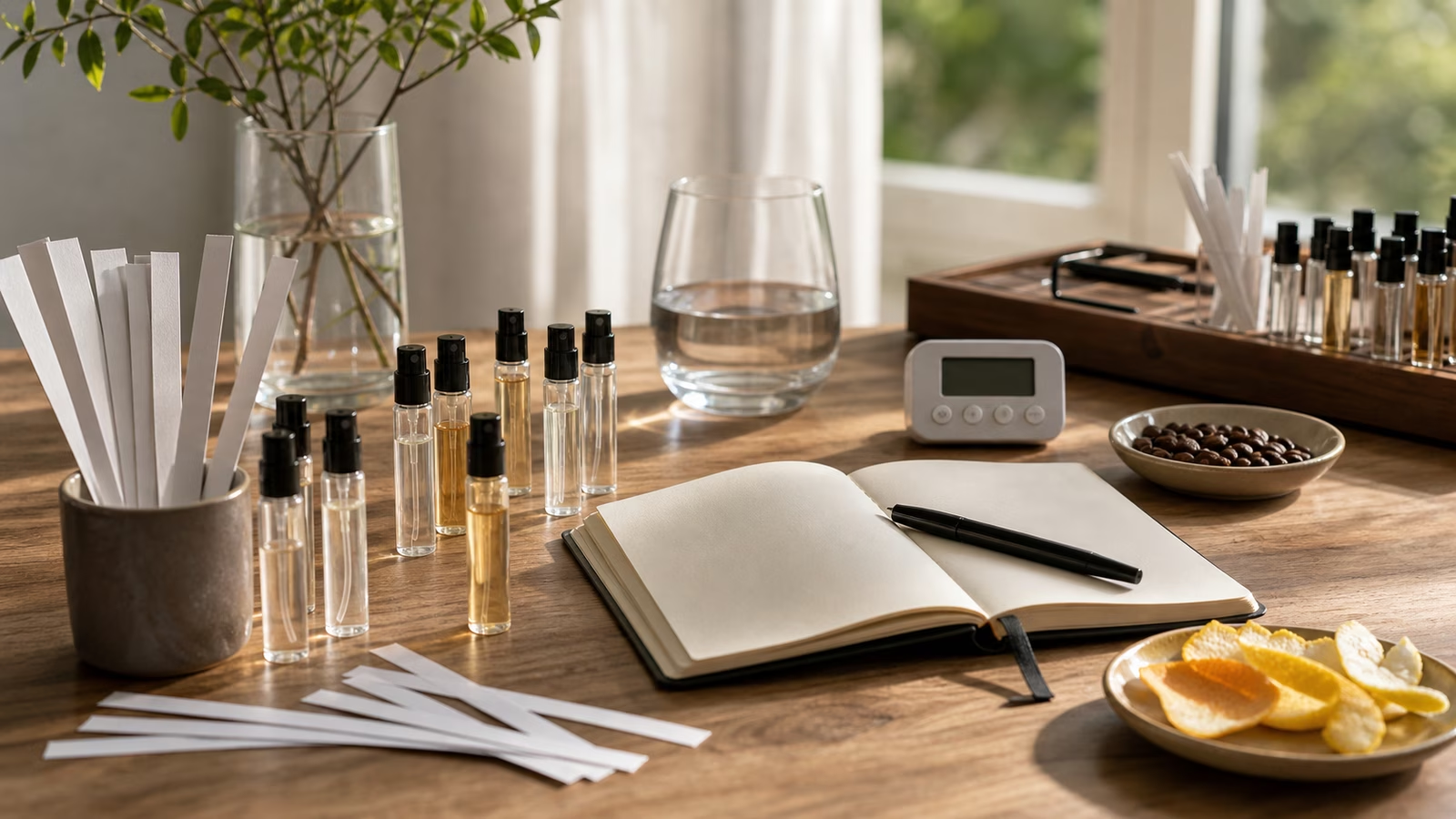
Discovery sets make sampling easy, but they also invite overtesting. Six vials arrive, then twelve, then a drawer of small glass possibilities. Each one deserves attention, but your nose cannot give full attention forever. After several strong fragrances, the differences blur. Sweet notes pile on sweet notes. Woods become generic. Musks become background. Citrus loses sparkle. Ambers become warm fog.
The practical limit varies by person and by perfume style, but many beginners learn more from two or three serious tests than from ten casual ones. A serious test means smelling on paper, waiting, choosing one for skin, living with it, and writing down impressions after time has passed. That may feel slower, but it produces better memory.
There is a difference between browsing and choosing. Browsing can be playful. You smell widely to learn families, vocabulary, and preferences. Choosing requires restraint. If money, space, or daily wear is involved, you need a clearer nose than a crowded sampling session can provide.
The perfume that wins after twelve samples is not always the best perfume. It may simply be the one loud enough to cut through fatigue.
Coffee Beans Are Not Magic
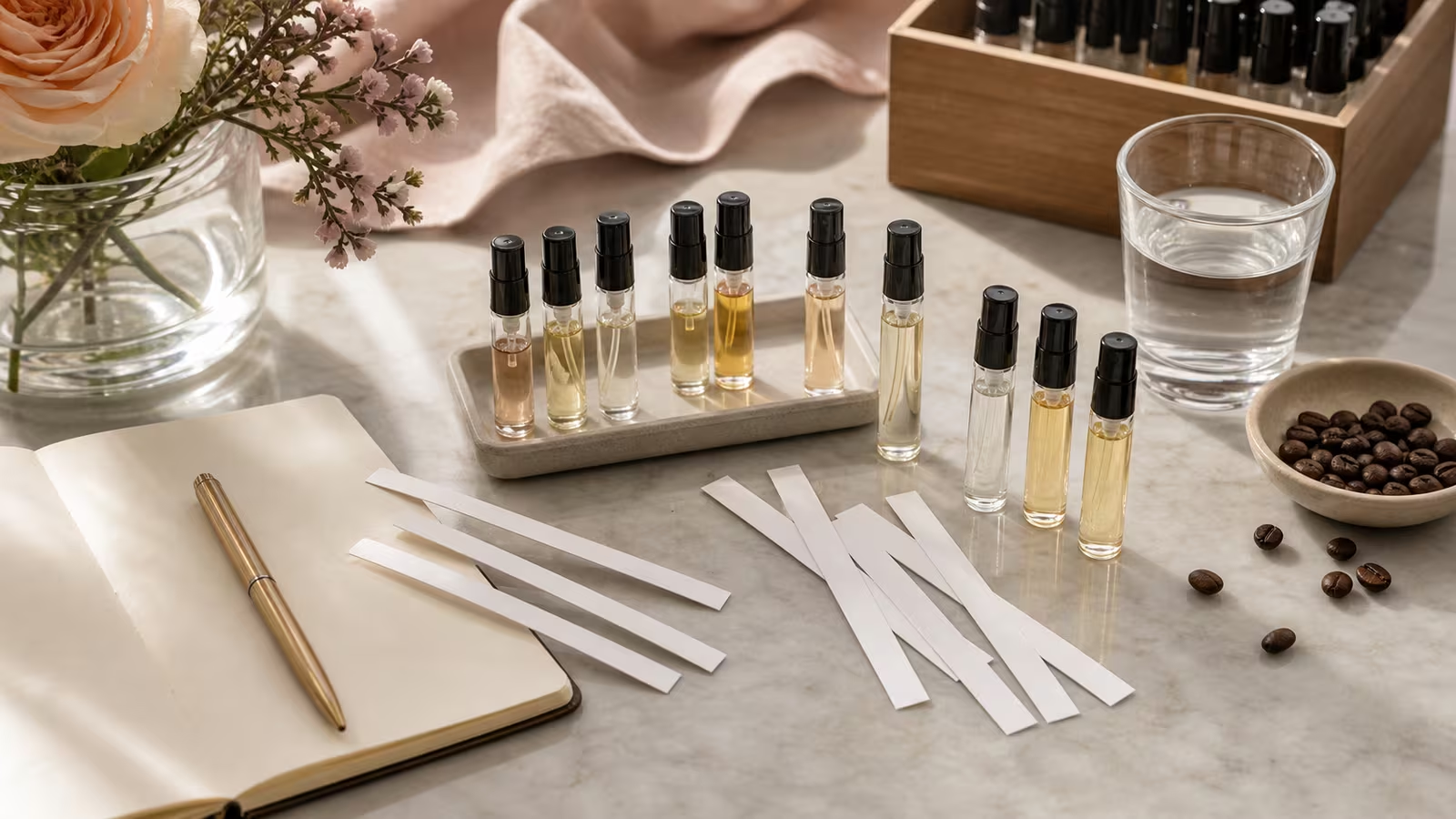
Perfume counters often use coffee beans as a reset, but they are not a magic eraser. Smelling coffee gives your nose a different odor, which can feel like a break from perfume. It does not fully restore olfactory sensitivity or undo fatigue. In some cases, it just adds another strong smell to an already crowded session.
A better reset is often time, fresh air, water, and a neutral environment. Step away. Breathe ordinary air. Stop pressing blotters directly under your nose. Drink water. Let the room quiet down. If you are in a store, walk outside for a few minutes before deciding. If you are at home, close the vials and come back later.
This does not mean coffee beans are useless. They can be pleasant and may help shift attention. The problem is relying on them as permission to keep testing indefinitely. Your nose is not a machine that can be rebooted between every strip.
Rest is part of sampling. It is not wasted time.
Skin Testing Needs Space
Paper strips are useful because they let you compare openings without putting everything on your body. But skin is where most buying decisions should eventually happen. Heat, skin oils, lotion, fabric, weather, and your own perception change how a perfume behaves. The challenge is that skin has limited space.
A beginner may spray one scent on each wrist, another on the inner elbows, another on the back of the hand, and then wonder why everything feels confusing. The scents migrate. You move your arms and mix them. One strong fragrance dominates the others. You forget which is where. The body becomes a noisy test board.
One or two skin tests at a time are usually more useful. Give them distance. Label them in your notes. Do not judge only the opening. Notice the first half hour, the middle, and the late drydown. Step away from mirrors and product descriptions. Wear the scent through ordinary movement: sitting, walking, working, eating, commuting, or being near other people.
The best fragrance for you is not always the one with the most impressive opening. It is often the one that remains pleasant as it becomes part of your day.
Nose Blindness Can Lead to Overapplication
Overapplication often begins innocently. You put on a fragrance, enjoy it, and then stop smelling it. You assume it faded. You add more. The next time, you add a little more again. Soon the fragrance enters the room before you do, while you still believe it is modest.
This is where social awareness matters. If you know a scent is strong, trust the application more than your adapted nose. Ask someone you trust how far it projects after an hour. Test on fabric or a scarf only if the material can handle it and you understand that fabric may hold scent longer than skin. Notice whether people react, move away, open windows, or comment politely in a way that may be doing more work than the words themselves.
Close-space fragrance is a skill. Offices, classrooms, clinics, trains, elevators, shared cars, and dinner tables do not need the same application as an outdoor evening or a loud event. Nose blindness should make you more careful, not more generous with the atomizer.
The goal is not to make fragrance invisible. It is to let it have a reasonable boundary.
Notes Should Capture Conditions
A useful fragrance notebook records more than whether you liked something. It captures the conditions of smelling. How many samples had you tested before this one? Was it on paper or skin? How long after spraying did you write the note? Were you tired, hungry, wearing another scent, in a store, outdoors, in heat, or in a dry room? Did the fragrance seem to disappear, or did you simply stop noticing it?
These details prevent false certainty. A perfume dismissed at the end of an exhausting session may deserve another chance. A perfume loved in the first five minutes may not survive a full day. A scent that seemed weak may have been tested after your nose was already overloaded.
Good notes are plain. Too sweet after an hour. Nice on paper, sour on skin. Loved opening, tired of base by evening. Could not smell after thirty minutes, but sleeve still smelled strong next morning. Better in cool weather. Too loud for office. These observations are more useful than poetic descriptions you cannot interpret later.
Fragrance language can be beautiful, but buying decisions are helped by honesty.
The Clearer Nose Chooses Better
Sampling slowly can feel inefficient, especially when every vial seems like a small door. But fragrance rewards time. A perfume is not only a smell in the first minute. It is a companion through hours of changing perception. Your nose needs enough rest to understand that journey.
Set a small limit. Smell on paper first. Choose fewer skin tests. Take breaks that are real breaks. Do not use coffee beans as an excuse to overdo it. Revisit uncertain samples on a different day. Trust that nose blindness happens, and do not chase vanished scent by adding more.
A clear nose does not make every choice obvious. It simply removes some of the distortion. You begin to notice which fragrances actually suit your life, which ones are exciting only for a moment, which ones tire you, and which ones quietly keep earning their place.
That is the practical art of sampling. It is not smelling everything. It is smelling enough, stopping before your judgment collapses, and returning when your nose can tell the truth again.