A signature scent sounds romantic because it promises recognition. Someone enters a room, a trace of perfume follows, and the scent becomes part of how they are remembered. That can happen, but it rarely happens because a person decided in one afternoon that a bottle would define them. A lasting signature is usually less dramatic. It is the fragrance you keep reaching for because it makes ordinary days feel more like yours. It survives weather, clothing, mood, fatigue, compliments, silence, and the small boredom that arrives after novelty fades.
Forcing a signature scent too early is one of the easiest ways to buy the wrong bottle. Perfume is full of fantasy. A sample can make you imagine a new version of yourself: cleaner, warmer, sharper, softer, more elegant, more mysterious. That fantasy is part of the pleasure, but a signature scent has to live beyond fantasy. It has to work on a plain Tuesday, after the opening settles, when you are not standing at a perfume counter and no one is helping the story along.
A signature is a pattern, not a title
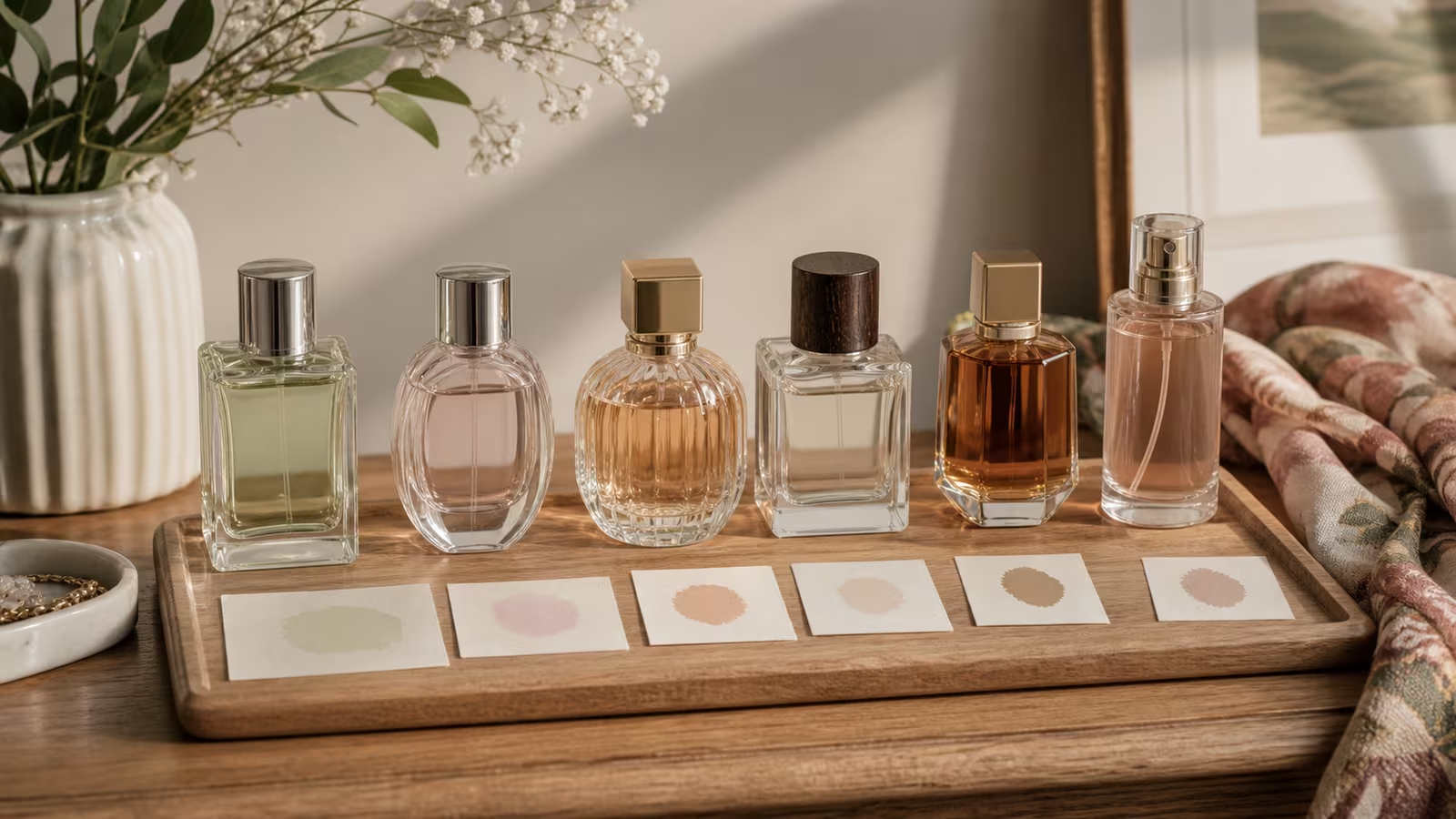
The best starting point is to look at what you already wear without negotiation. A signature scent does not have to be your most impressive fragrance. It may be the one that fits your skin, clothes, schedule, and temperament so naturally that you stop debating it. If you own samples, notice which ones become easy. Which scent do you choose when you do not want to perform taste? Which one survives a commute, a meal, a quiet evening, or a long workday without feeling like too much work?
This is where the Beginner Fragrance Wardrobes guide is useful even if you want only one main perfume. A wardrobe approach teaches function. One scent may be fresh and easy, another warm and comforting, another polished. A signature often emerges from the function you need most. If your life is full of shared rooms, your signature may need to be close and gentle. If you spend more time outdoors, it may tolerate more projection. If you dress simply, a little structure may feel good. If you wear bold clothing, a quiet perfume may give balance.
Do not worry about whether a fragrance is unusual enough. Distinctiveness is not the same as volume or rarity. A soft tea scent, clean musk, citrus chypre, green floral, powdery iris, dry cedar, or transparent vanilla can become memorable through repetition. People remember consistency. They also remember fit. A perfume that suits the wearer beautifully can feel more distinctive than a strange perfume worn only because it is strange.
Test the whole day, not the first compliment
The first hour can be misleading. Some perfumes open with a bright, charming top note and then lose the part you loved. Others begin quietly and become beautiful only after warmth, fabric, and skin bring out the base. A signature scent has to be judged through the drydown because that is the part you will live with longest. The guide to Perfume Drydown is especially important here. The opening is the introduction. The drydown is the relationship.
Wear the candidate on several ordinary days. Try it in cool weather, warm weather if possible, indoors, outside, with a sweater, with a plain shirt, on a day when you feel social, and on a day when you want quiet. Notice not only whether it smells good, but whether it interrupts you. A fragrance can be beautiful and still require too much attention. If you keep checking whether it is too loud, too sweet, too sharp, or too formal, it may be better as an occasional scent than as a signature.
Compliments can help, but they should not lead. People often compliment what projects clearly, what smells familiar, or what they notice in the first hour. That does not mean the perfume is the best fit for you. A loud scent may gather comments and still become tiring. A subtle scent may get fewer remarks and still make you feel exactly right. The real test is whether you like wearing it when nobody says anything.
Match projection to your real distance
A signature scent should respect the spaces you enter often. If you work in close rooms, commute in crowded transit, share a home, or spend time near children, clients, patients, classmates, or scent-sensitive people, projection matters. The scent does not need to disappear, but it should fit the distance. A perfume that feels thrilling at home may become stressful if it fills every meeting room. A scent that is lovely outdoors may be too much in a car.
The Close-Space Fragrance guide frames this well: fragrance is personal, but air is shared. A signature scent is worn repeatedly, so small problems become large. Too much sweetness every day can feel heavy. Too much laundry musk can become a permanent cloud. Too much incense can cling to coats. Too much citrus can feel sharp at breakfast. A modest scent radius is often more sustainable than one dramatic trail.
Application can rescue some candidates. One spray under clothing may make a stronger perfume intimate. A dab from a sample may behave better than a full spray. Fabric can make a soft fragrance last, though it may also keep the scent around longer than intended. If the only way a perfume works is through constant management, be honest about that. A true signature should be easier than a special-event perfume.
Learn your repeatable pleasures
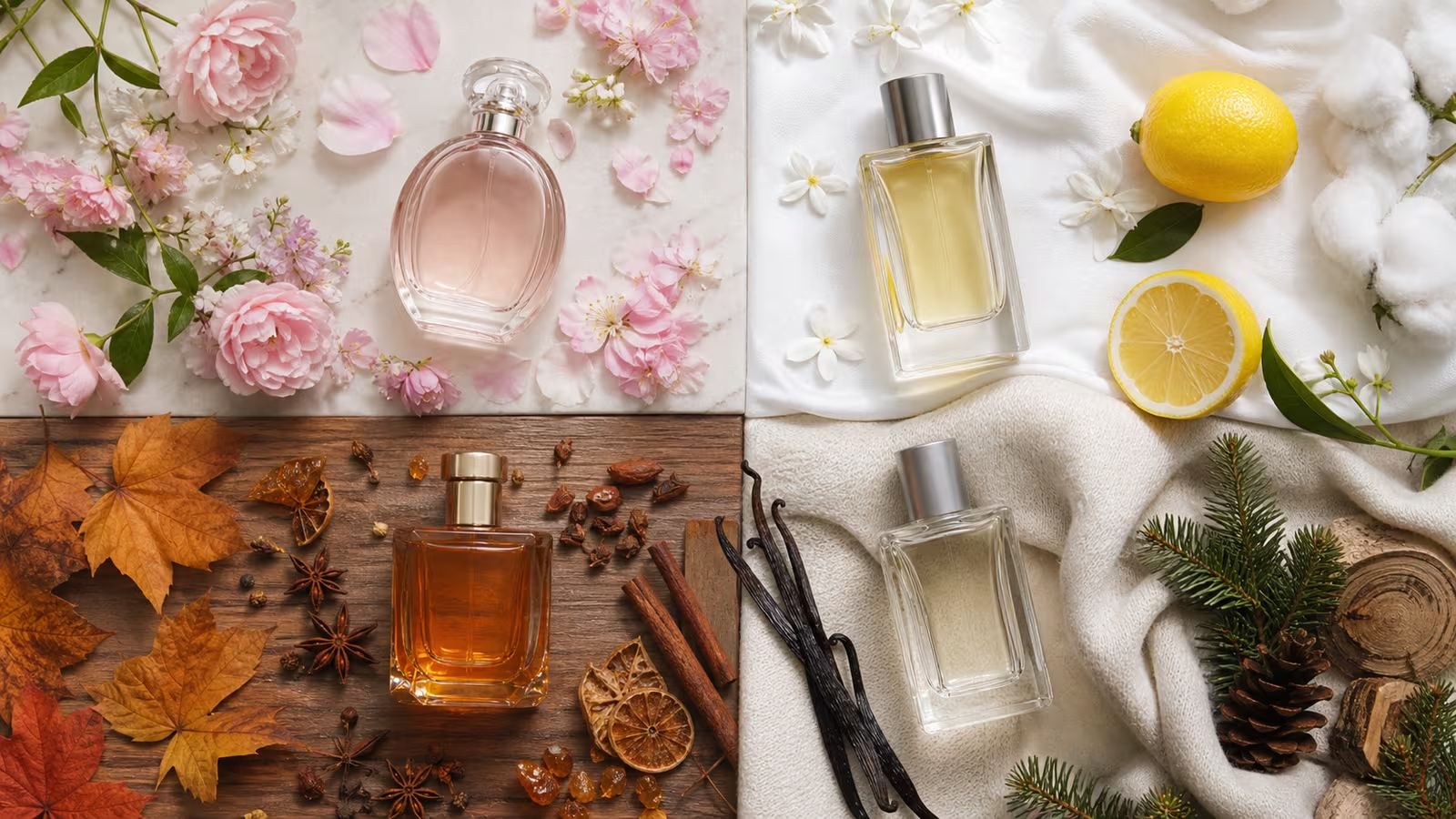
Signature scent searching becomes clearer when you stop asking what perfume says about you and start asking what sensations you like to repeat. Some people want brightness: bergamot, lemon, neroli, herbs, tea, or green leaves. Some want softness: musk, iris, rice, powder, pale woods, or clean cotton. Some want warmth: vanilla bean, amber, sandalwood, tonka, resin, or tobacco leaf. Some want polish: aldehydes, rose, moss, lavender, cedar, or suede. Some want atmosphere: incense, rain, sea air, fig leaf, smoke, or mineral notes.
Those preferences may point toward a family, but they do not have to trap you. If you love Tea Scents , your signature might be green tea and citrus, smoky black tea, creamy matcha, or tea over musk. If you love Woody Scents , it might be clean cedar, soft sandalwood, dry vetiver, or mossy woods. If you love Floral Scents , it might be rose, orange blossom, iris, peony, or a sheer floral musk. The note is less important than the behavior you want to repeat.
Keep a small record, but make it plain. Write what the scent did, where you wore it, what clothing it touched, when you stopped noticing it, and whether you wanted to wear it again. The Fragrance Journaling guide is useful because memory can exaggerate the first impression and erase the ordinary hours. A signature scent should look good in the notes after several wearings, not only in the story you told yourself while opening the sample.
Do not make one bottle do every job
Some people find one scent that works almost everywhere. Many do not, and that is not a failure. Weather, clothing, setting, and mood change too much for a single bottle to carry every situation. A signature can be your most-worn scent without being your only scent. It can be the perfume people associate with you in daily life while you still keep a lighter option for heat, a quieter option for close spaces, or a warmer option for evenings.
This distinction prevents pressure. If you demand that one fragrance be fresh in summer, cozy in winter, polished at work, romantic at dinner, subtle near others, noticeable outdoors, inexpensive to replace, impossible to dislike, and unlike anything else, you will reject many good perfumes for not being miracles. Better to ask what role you want the signature to play most often. It may be your weekday scent, your clean scent, your soft amber, your green floral, or your comfortable woody base.
Season matters too. A scent that feels perfect in cold air may become dense in humidity. A citrus or tea scent that feels ideal in heat may feel thin under a winter coat. If you want one scent year-round, look for balance: moderate sweetness, moderate projection, a drydown you like in several temperatures, and materials that do not become harsh or sticky on your skin. If that balance is hard to find, a seasonal pair may be more honest than a single signature.
Buying slowly protects the magic
A sample can feel urgent when it seems to answer a private wish. That is exactly when patience helps. Finish the sample or wear it enough that the high of discovery softens. Read reviews for context, but do not let them replace wear. The guide to Reading Perfume Reviews Without Losing Your Own Nose is useful here because signature scent decisions often attract too much outside language. Someone else’s masterpiece may be your headache. Someone else’s boring musk may become your quiet favorite.
If you still want the scent after repeated wear, try a travel size or small bottle when available. Living with a smaller amount teaches you whether you reach for it naturally. Full bottles are most satisfying when they confirm a habit, not when they attempt to create one. A perfume that keeps calling you back after the sample is empty has made a stronger case than one that impressed you once.
The right signature scent often feels less like an announcement than a return. You put it on and stop trying to become someone else. It suits your skin, your rooms, your clothes, your appetite for attention, and the kind of days you actually have. When that happens, the scent does not need to prove itself loudly. Repetition does the remembering.