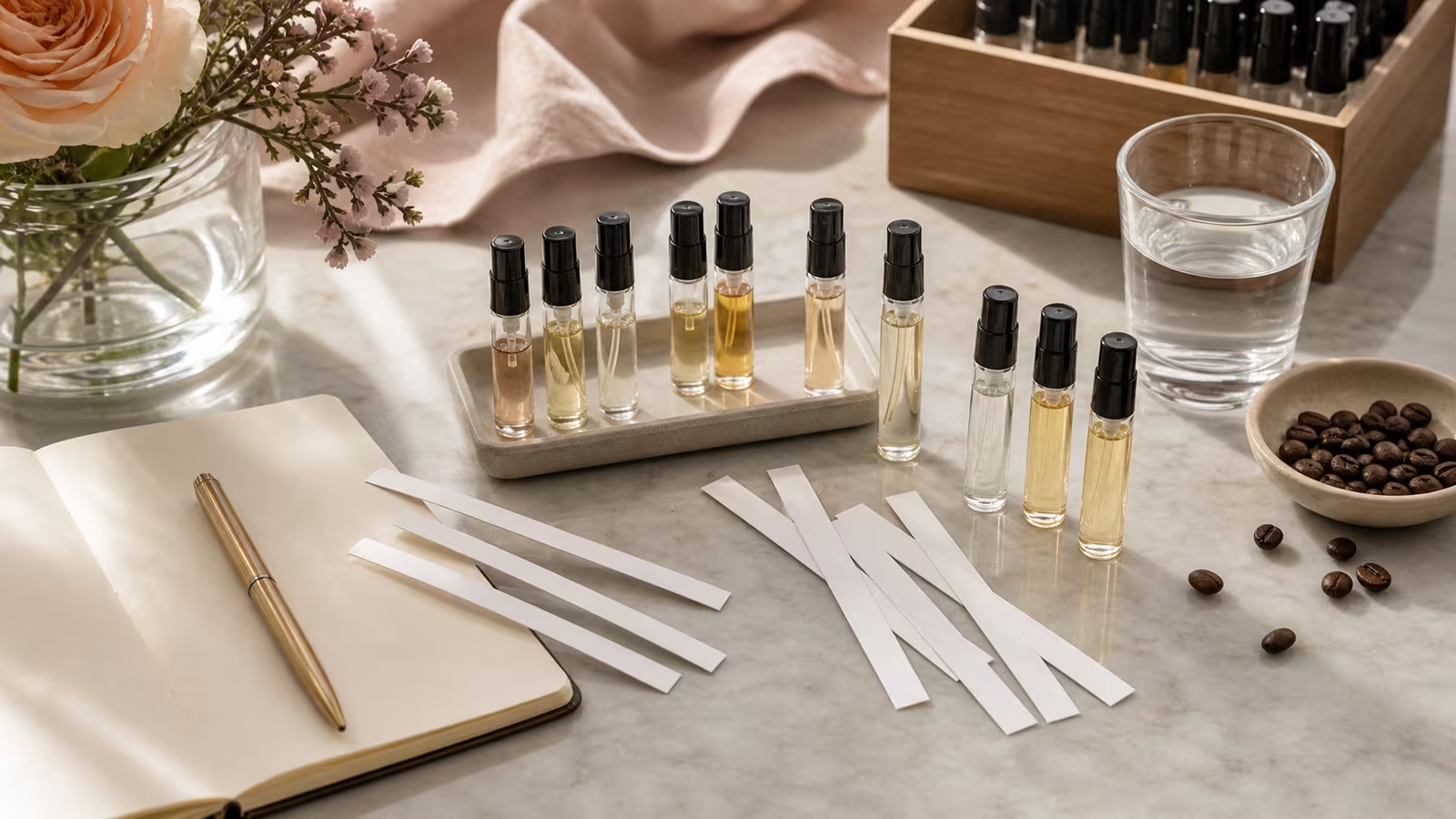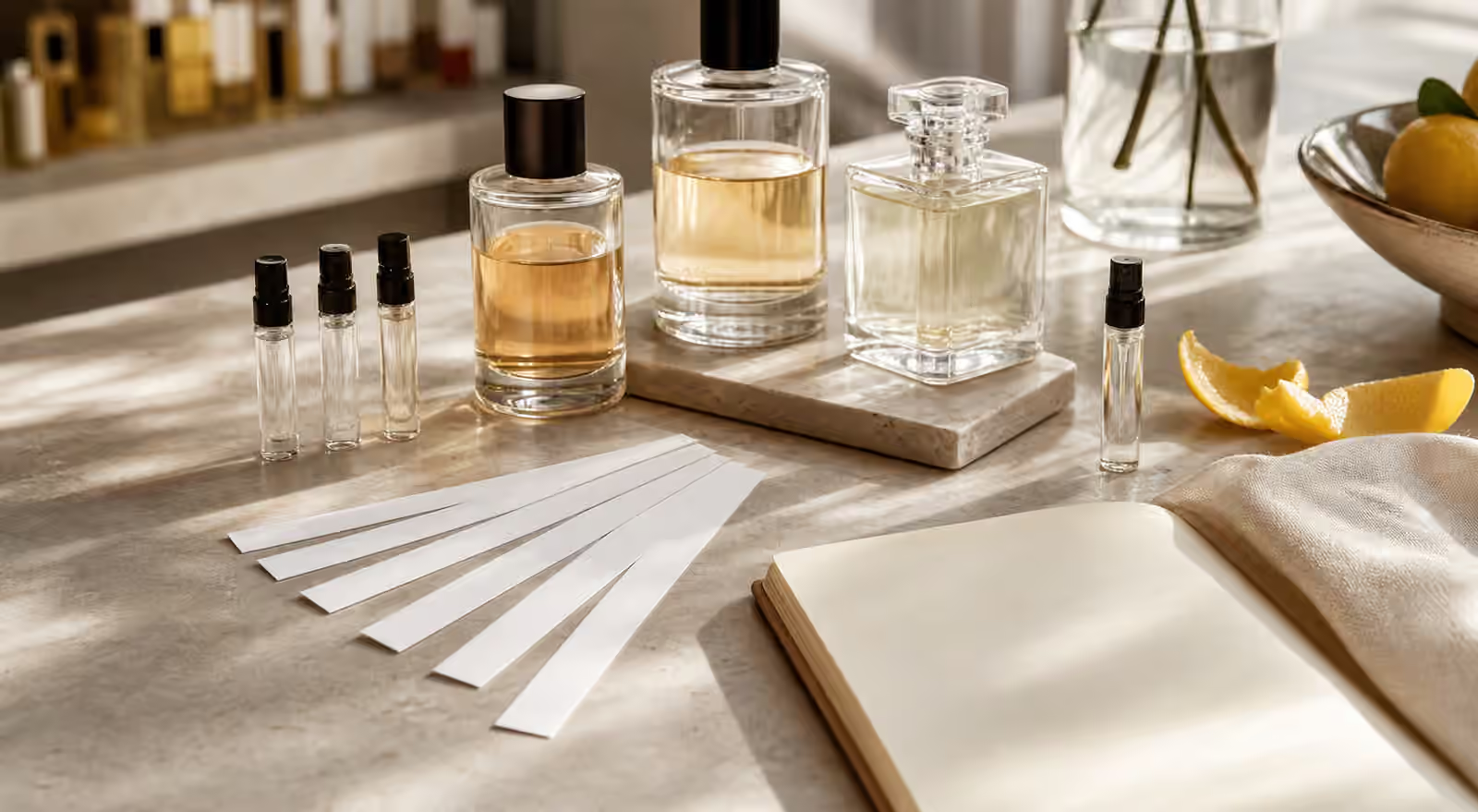
Blotter strips are one of the most useful tools in fragrance, and also one of the easiest to misuse. They make a perfume available before it touches your skin. They let you compare openings, keep a scent away from your clothes, and decide which bottle deserves a real wearing. Used carelessly, they turn a counter visit into a blur of alcohol, sweet musk, and forgotten names. The strip itself is not the problem. The problem is expecting paper to answer questions that only skin, fabric, air, and time can answer.
The better habit is to treat blotters as a first reading. They show the outline of a fragrance. They can tell you whether the opening is citrusy, smoky, floral, green, powdery, sweet, leathery, or sharp. They can show whether a scent has enough interest to follow through the drydown. They cannot tell you whether the perfume will warm beautifully on your wrist, turn sour over your lotion, cling to a wool coat, or feel too loud in a shared room. That is why blotter sampling belongs beside How to Sample Fragrances rather than replacing it.
Let the First Spray Clear
The first few seconds after spraying a blotter can be misleading. Alcohol lift, propellant force from the atomizer, and the shock of a fresh cloud can make even a gentle perfume seem harsher than it is. Spray once onto the end of the strip, keep the wet part away from your fingers, and give it a brief moment in the air before smelling. You do not need to wave the strip theatrically. A little patience is enough.
Distance matters. If you press a wet strip directly under your nose, the opening can feel rough, sour, or chemically bright. Smell from a short distance first, then move closer if the scent is soft. This small change teaches projection too. Some perfumes are quiet until you come close. Others announce themselves before the strip is near your face. A scent that seems beautiful only when the paper is touching your nose may wear more intimately than its dramatic bottle suggests.
The angle of the strip also matters more than people expect. Keep the scented end separate from the clean end. Do not stack wet strips together. Do not slip five fresh strips into one pocket and expect to identify them later. Base notes and sweet musks can migrate through paper, and soon the whole packet smells like the loudest sample.
Label Before Memory Gets Confident
The most common counter mistake is trusting memory. At the first bottle, everything feels clear. By the fourth strip, names, caps, colors, and first impressions start mixing. Write the name on the strip immediately, preferably on the dry end before or just after spraying. If you do not want to write the full name, write a short code and repeat that code in your fragrance journal . The goal is not tidy paperwork. It is protecting your own evidence.
Good labeling also lets you revisit a strip later. A perfume that shouted in the first minute may become beautiful after half an hour. Another may open with charming pear and end as a sticky laundry musk. Paper drydown is not the same as skin drydown, but it can still reveal structure. If a scent becomes dull, thin, or irritating on paper, you may not need to give it skin. If it remains interesting, it earns the next test.
This is especially useful with families that change quickly. Citrus Scents can sparkle and fade. Amber, Resin, and Spice Scents can grow warmer and sweeter. White Floral Scents can move from fresh petals to cream, soap, or indolic depth. A labeled strip gives those changes somewhere to be noticed.
Compare Fewer Scents With More Air
A store counter encourages speed. Bottles are lined up, someone may be waiting, and the desire to find something beautiful can push you into trying too much. But the nose does not reward volume. After several sprays, scents begin to overlap in the air and in your perception. Sweetness gets louder. Freshness gets sharper. Musks disappear to your own nose while still filling the room. The guide to Fragrance Fatigue and Nose Blindness explains why this happens, but the practical answer is simple: leave space.
Three to five blotters can be plenty for one visit. If the counter is crowded or the fragrances are strong, fewer may be better. Step away from the display after spraying. Smell in cleaner air if possible. A quiet hallway, the entrance of the shop, or a bench outside can reveal more than the scented cloud around the counter. Perfume is built to move through air, and the counter air is rarely neutral.
Spacing helps you compare fairly. If you smell a delicate tea musk immediately after a dense oud amber, the tea may seem weak even if it is perfectly wearable. If you smell a bright neroli after several sweet vanillas, it may seem sharper than it would on a fresh nose. Order is never completely neutral, but slower pacing makes it less unfair.
Paper Shows Shape, Not Intimacy
Paper is dry, cool, and relatively neutral. Skin is warm, slightly salty, sometimes oily, sometimes dry, often covered by traces of soap, lotion, sunscreen, fabric softener, or the last fragrance worn. That difference is why paper can only show part of the story. A sandalwood that smells scratchy on paper may become creamy on skin. A musk that seems clean on paper may vanish to your nose once you wear it. A fruit note that feels crisp on a strip may turn shampoo-like over body heat.
The guide to Skin Chemistry and Perfume is useful after blotter testing because it keeps the question grounded. Skin chemistry is not magic, and it is not an excuse for every surprise. It is the ordinary reality that perfume meets a living surface. If a blotter makes you curious, skin gives the next answer.
Choose skin tests sparingly. One scent on each wrist or inner forearm is usually enough. If you put four fragrances up your arm, they will mingle whenever you move. You will also start chasing them with your nose, which speeds fatigue. A blotter can carry the maybes. Skin should carry the serious candidates.
Use Blotters to Reject Gently
Blotters are not only for discovering loves. They are also a kind way to say no. If a scent gives you an immediate headache-like impression, turns unpleasant on paper, or clearly belongs to a family you do not enjoy, you can stop there. You do not owe every perfume your skin. This is especially helpful with very sweet gourmands, dense ambers, smoky scents, or strong white florals. They may be beautiful, but if the strip already feels too present, a skin test may not be useful that day.
Rejecting on paper should still be specific. Instead of writing that a perfume is bad, notice what made it difficult. Was it syrupy, metallic, dusty, sharp, waxy, powdery, smoky, sour, or too clean? That detail keeps your taste flexible. You may dislike one kind of vanilla but enjoy dry vanilla with cedar. You may dislike harsh leather but enjoy suede with iris. A strip can teach the border without turning one sample into a permanent rule.
Reviews can complicate this because a famous fragrance may make you feel obligated to try harder. Reading Perfume Reviews Without Losing Your Own Nose is a good companion here. Public enthusiasm is not a command. A blotter is allowed to tell you that a celebrated perfume is not asking for more of your day.
Carry the Best Strip, Not the Whole Counter
If a fragrance remains interesting after a first pass, keep that strip separate and revisit it later. Put it in a clean envelope, a small paper sleeve, or a notebook page where it will not contaminate everything else. Do not leave scented strips loose in a handbag beside fabric, receipts, and food wrappers. Strong bases can linger, and soon the memory of the sample becomes mixed with the place you carried it.
At home, smell the saved strip again in neutral air. Notice what remains. Some scents collapse into a vague sweet base. Some reveal woods, musk, amber, tea, powder, or leather that was hidden at the counter. Some are still beautiful but clearly not something you want on your body. This second reading is one of the quiet advantages of paper. It gives you a delayed impression without requiring a full wearing.
When a strip keeps calling your attention after several hours, that is a useful signal. It does not mean you should buy the bottle. It means the fragrance deserves a real skin trial, perhaps through a sample, decant, or another store visit with a fresher nose. Blotters are at their best when they slow buying down. They turn a counter rush into a short list.
Let Paper Lead to Better Wear
The final purpose of blotter sampling is not to become excellent at smelling paper. It is to choose better skin tests and, eventually, better wear. A good blotter session leaves you with fewer questions, not more noise. You know which openings attracted you, which bases became tiring, which names you want to sample properly, and which families you can skip for now.
Paper is a helpful witness, but it is not the life of the fragrance. The life happens when the scent warms on skin, brushes fabric, meets weather, and shares air with other people. Use blotter strips to approach that life with more care. Label them, give them air, smell fewer at a time, and let the best ones earn the next step. The whole process becomes calmer, and perfume becomes easier to judge without losing its pleasure.