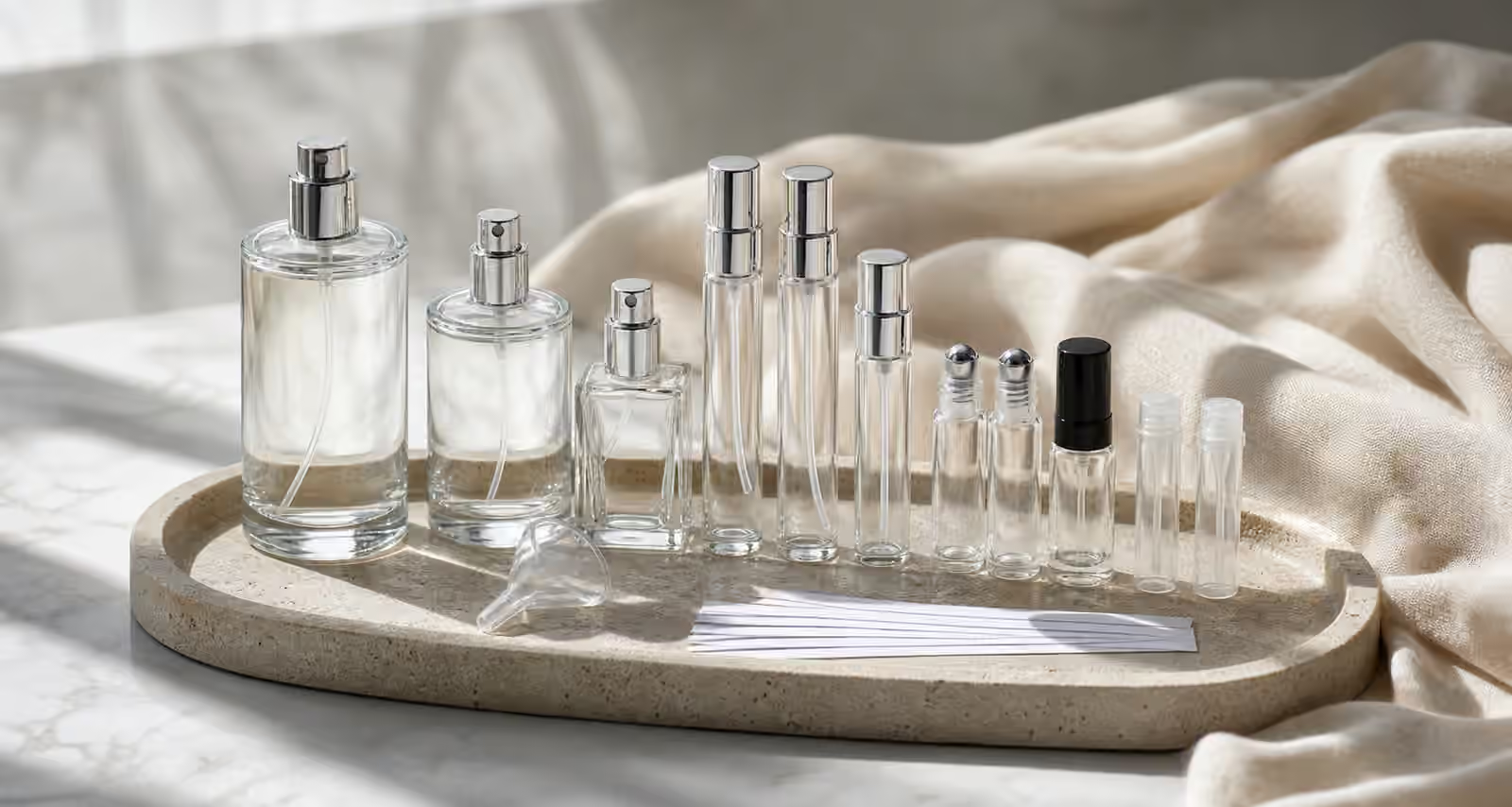
Perfume advice often talks about what to wear and where to apply it, but the container changes the experience before the scent even reaches skin. A fine atomizer makes a soft cloud. A forceful sprayer can put too much fragrance in one place. A dab vial gives a quiet smear. A rollerball lays oil directly on skin. A travel spray may imitate a full bottle well, or it may spit unevenly and make a familiar perfume feel harsher. Format is not a decorative detail. It affects dose, distance, projection, texture, and the confidence of your judgment.
This is why the same perfume can feel different as a shop tester, manufacturer sample, decant, rollerball, oil, travel spray, and full bottle. Sometimes the formula is different, especially with oils or flankers, but often the delivery system is enough to change perception. The guide to Perfume Concentration Types helps with strength labels. Format asks another question: how is the fragrance being placed into the air and onto the body?
A Spray Is a Cloud, Not a Drop
A good atomizer breaks perfume into a mist. That mist spreads through air before settling on skin, hair, fabric, or the surrounding room. This is why a spray can feel more expansive than a dab of the same scent. The perfume is not only sitting in one wet patch. It has been given air. Volatile top notes lift more easily. The wearer gets a halo instead of a dot.
Sprayer quality varies. Some bottles release a wide, even cloud. Some produce a narrow blast. Some travel atomizers sputter when nearly empty. Some sample sprays deliver less liquid than a full bottle, while others are surprisingly generous. If you judge a fragrance from a tiny atomizer, remember that the full bottle may apply more smoothly or more heavily. If you judge from a full bottle, remember that one spray may be more than the sample spray you used at home.
Distance helps control the cloud. Spraying too close can make a wet spot that smells dense at first and may mark fabric. Spraying from a moderate distance gives the mist room to open. This is not about creating rules for every body or bottle. It is about noticing the behavior. A forceful amber may need more distance and fewer sprays than a soft citrus mist. A delicate musk may disappear if sprayed into the air too far from the body.
Dab Vials Make Fragrance More Intimate
Many small samples use dab vials rather than sprayers. A dab vial can be useful because it limits dose and keeps testing quiet. It can also underrepresent projection. When you touch a small amount to the wrist, the fragrance may sit close and seem gentler than it would from a real spray. Some top notes feel muted because they never had much air. Some bases feel heavier because the liquid is concentrated in a small spot.
This does not make dab vials bad. They are excellent for deciding whether a scent is worth more attention. They let you test potent perfumes carefully. They are easier to carry than leaky atomizers. But they should not be treated as a perfect preview of a full wearing. A perfume you liked as a dab may feel larger from a spray. A fragrance that seemed too quiet may simply need a cloud to show its shape.
The guide to Perfume Decants and Discovery Sets is useful here because sample format affects the notes you write. Record whether you dabbed or sprayed. A journal entry that says “beautiful but faint” means something different when the test came from a pinprick vial.
Rollerballs Put the Scent Close to Skin
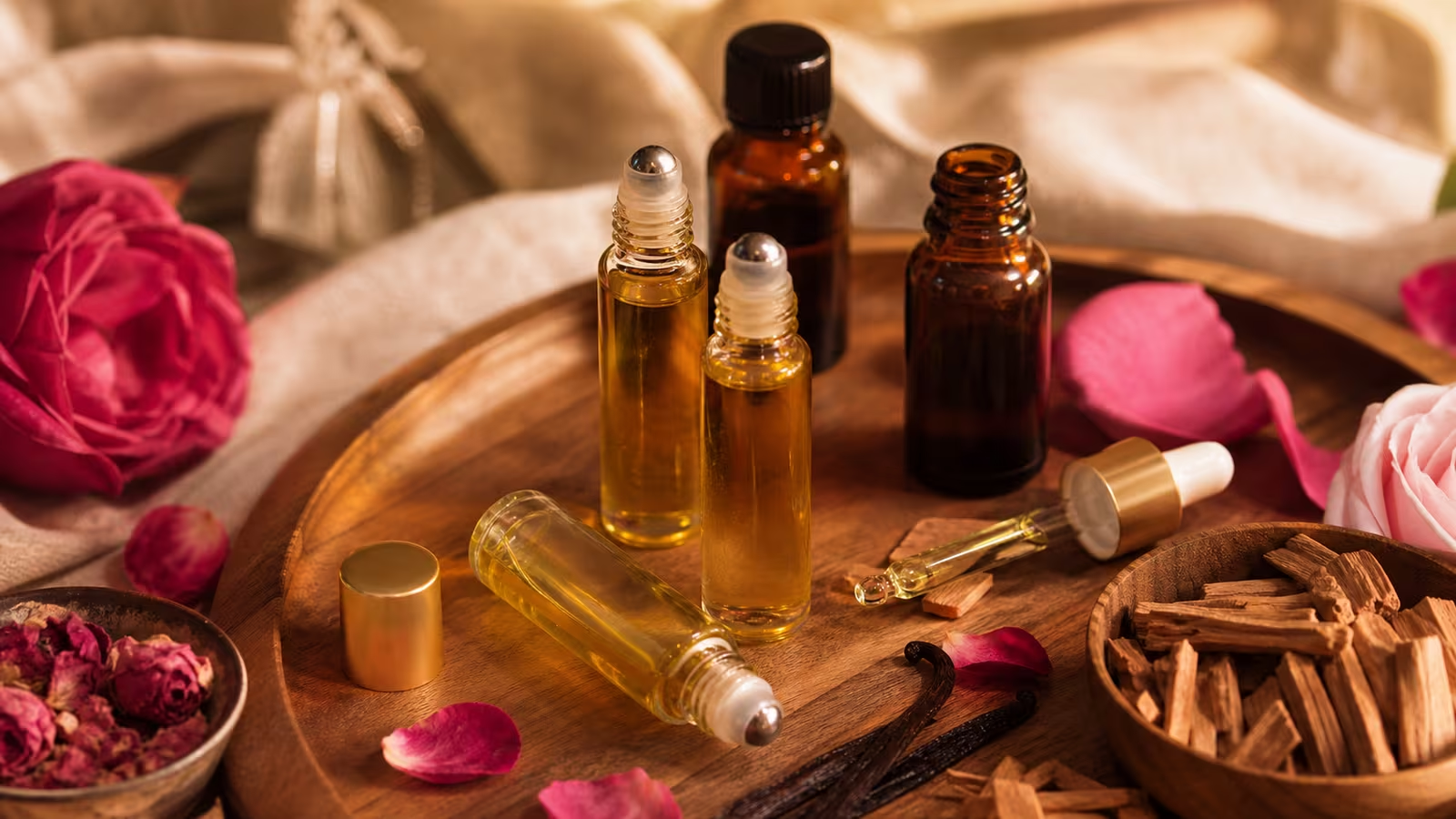
Rollerballs are common with perfume oils and travel formats. They apply fragrance directly to the skin through a rolling bead. That direct contact can feel comforting and controlled. The scent often sits closer, especially when the formula is oil-based. It may not project like an alcohol spray, but it can stay present to the wearer in a personal way. This is part of why Perfume Oils feel different from many sprays.
A rollerball also changes hygiene and layering habits. It touches skin, then returns to the bottle opening. For personal use that may be ordinary, but shared rollerballs are not ideal for testing. If you are sampling in a shop, apply to a disposable card if offered, or use clean skin and avoid sharing directly. At home, keep rollerballs away from lotion residue, sunscreen, and strong fragrances that can cling to the applicator area.
Because rollerballs are quiet, people sometimes overapply them by chasing the scent. Several passes on pulse points can become stronger than expected once the oil warms. The scent may not fill the room, but it can become dense at close range. This matters in intimate settings, office days, and travel, where a scent can be polite from across the room and still overwhelming to someone seated beside you.
Travel Sprays Need a Test Day
Travel sprays are practical, but they deserve a small trial before being trusted in a bag or used as the only evidence for a perfume. Some are excellent miniature atomizers. Others leak, sputter, clog, or release a different amount than expected. A travel spray filled from a decant source may also smell slightly different if the container was not clean, the liquid was exposed to heat, or the spray mechanism carries residue from a previous scent.
Before traveling, test the sprayer at home. Spray once onto a blotter or tissue and watch the pattern. Is it a mist or a stream? Does the cap stay secure? Does the bottle weep around the collar? Does the scent smell clean and familiar? If the sprayer leaks in a drawer, it will not become more reliable in a warm bag. The Traveling With Fragrance guide covers packing and restraint, but the basic format lesson is simple: a travel spray should reduce friction, not add uncertainty.
Travel sprays also encourage refreshing. Refreshing is not wrong, but it should be done with awareness. Your nose may have adapted while the base remains on clothing. One extra spray in a hotel room or restroom can become more noticeable once you step into a smaller car, train, elevator, or meeting room. The guide to Close-Space Fragrance helps keep convenience from becoming accidental excess.
Format Changes Projection and Sillage
Projection and sillage are partly formula behavior and partly application behavior. A sprayed fragrance begins with more air around it, so it often projects more clearly. A dab may stay closer. A rollerball may feel intimate even when the scent lasts. A fabric spray may leave a trail longer than skin. A hair mist may move differently because hair carries scent through motion. None of these formats is automatically better. Each gives the perfume a different social distance.
Projection and Sillage is the best companion for this topic because performance words can become misleading. If someone says a perfume is weak, ask how they applied it. A single dab from a tiny vial is not the same test as two full sprays under a shirt collar. If someone says a fragrance is enormous, ask whether it was sprayed on a scarf, coat, or hair. Fabric and format may be doing as much as the formula.
This also helps with full-bottle decisions. If you sampled from a dab vial and loved the scent, try to smell it from a spray before buying a large bottle if possible. If you sampled from a generous tester and found it too loud, a travel spray or oil version may still be wearable if the formula and format differ. Good sampling keeps the format visible instead of blaming the perfume for every behavior.
Match the Format to the Job
Different routines call for different delivery. A full bottle atomizer is satisfying when you want an even application before leaving home. A travel spray is useful for careful refreshes, testing, or carrying a scent without carrying the whole bottle. A rollerball can be right for quiet personal wear, bedtime, or moments when a large scent cloud would feel wrong. A dab vial is enough for learning, but not always enough for judging projection.
Application location matters too. A spray on the back of the neck behaves differently from a rollerball on the wrist. A mist on a scarf behaves differently from a dab behind the ear. The guide to Where to Apply Perfume gives placement language, while format explains why the same placement can feel different depending on the bottle.
The practical habit is to observe the whole delivery. Notice the container, spray pattern, distance, number of sprays, surface, weather, and setting. Write those details when a test surprises you. “One dab vanished” and “one full spray filled the car” are not contradictions. They are two versions of the same perfume meeting the world through different doors.
Better Format Awareness Makes Better Taste
Learning atomizers and rollerballs may sound technical, but it makes fragrance feel more humane. It explains why a sample disappointed you after a beautiful store test. It explains why a travel spray felt louder than expected. It explains why an oil is comforting but not room-filling, or why a full bottle suddenly seems more powerful than the decant you loved.
Format awareness also gives you more control. You can choose a lighter dose without abandoning a favorite scent. You can reserve a forceful sprayer for open air and use a softer application in close settings. You can understand that a dab vial is an introduction, not a final verdict. The bottle is part of the perfume experience, but it does not have to be a mystery. Once you notice how fragrance leaves the container, you can wear it with more precision and less guesswork.