Animalic notes are some of the most misunderstood words in perfume. They sound severe before they are smelled, as if the whole category must be dirty, loud, or difficult. In practice, animalic effects can be quiet. They can make a floral feel alive, a musk feel warm, a leather feel worn rather than new, or an aquatic scent feel like salt on skin instead of blue soap. The word is less a command to smell wild than a way to describe warmth, breath, body, softness, and the impression that a fragrance has a pulse.
This matters because many beginners meet animalic notes only as warnings in reviews. Someone calls a jasmine indolic, a musk dirty, a leather skanky, or an ambergris accord salty and animalic, and the whole area begins to sound like a test of courage. It is more useful to think of animalic notes as texture. Some are bold, but many are used in small amounts to keep a perfume from smelling flat. The same way a pinch of bitterness can make citrus more elegant, a trace of animalic warmth can make scent feel less like a product and more like skin.
Animalic is a texture, not a dare
Animalic language points toward several different effects. It can mean warm skin, clean musk, salty ambergris-like air, honeyed floral depth, leather, suede, civet-like warmth, castoreum-like dryness, or a faintly bodily shadow under otherwise polished notes. Some of those effects come from modern aroma materials. Some come from plant materials that have animalic facets. Some are accords built to suggest an older perfumery idea without relying on a literal source. Brand practices and ingredient choices vary, so the useful beginner question is not only what the word names. The better question is what the effect does inside the perfume.
At low volume, animalic texture often reads as realism. A rose with no shadow can smell pretty but decorative, like a picture of a flower. A rose with a little musk, spice, patchouli, or warm skin effect can smell more dimensional. A jasmine without indolic depth can feel clean and bright. A jasmine with some indolic warmth can feel humid, creamy, and alive. A leather without animalic or smoky facets may feel like a polished object. A leather with a touch of warmth can feel worn, softened, and personal.
This is why the category crosses so many neighboring guides. Musk and Skin Scents explains the clean and close-wearing side. Leather and Suede Scents shows how texture can become material. Floral Scents explains why jasmine, tuberose, orange blossom, and other white florals can feel more bodily than airy peony or lily of the valley. Animalic notes are not one family standing alone. They are a set of shadows that can move through many families.
Musk can be clean, warm, or quietly human
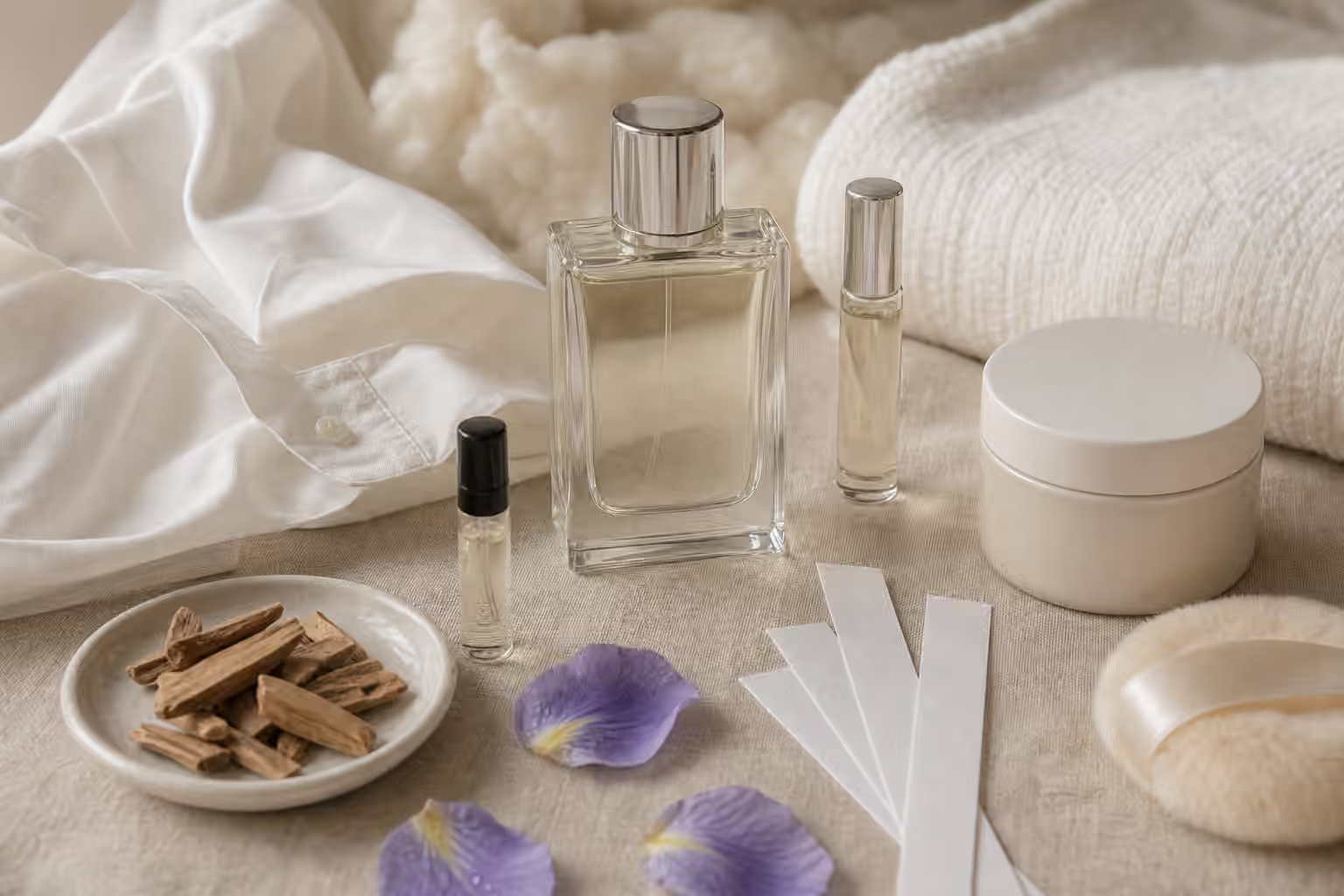
Musk is the easiest entry point because modern musk covers a wide range. Some musks smell like laundry, white cotton, shampoo, and clean towels. Some smell powdery, fluffy, or cosmetic. Some smell like warm skin after a shower. Some add a soft aura that the wearer stops noticing even while other people still sense it. A few lean more animalic, with a warmth that feels less detergent-like and more bodily.
For a beginner, the important distinction is not whether musk is good or bad. It is whether the musk feels clean, powdery, creamy, salty, woody, or intimate. A clean musk may suit workdays and close spaces. A powdery musk may feel elegant with iris or violet. A warm musk may make vanilla, rose, or sandalwood feel more lived-in. If a reviewer complains that a musk is too animalic, ask what they usually wear. Someone who loves crisp citrus may find a soft skin musk too warm. Someone who wears dense amber may find the same musk gentle.
Musk also teaches humility because perception varies. Some people barely smell certain musk materials. Others find them very persistent. Nose blindness can make the wearer spray more than needed. If you are testing a musk with an animalic edge, check it from a normal distance and ask a practical question: does it sit near the body, or does it fill the room after an hour? Projection and Sillage is useful here because animalic warmth can feel larger in shared air than it does from your wrist.
Indolic florals smell alive
Indoles are part of why some white florals feel lush, creamy, humid, or faintly bodily. Jasmine, tuberose, orange blossom, gardenia-style accords, and ylang-ylang can all carry this kind of depth depending on the composition. In tiny amounts, the effect can make petals smell more natural. In larger amounts, it can become challenging for people who prefer sheer florals or clean musks.
This is not a flaw. Real flowers are not always polite in the abstract way perfume marketing suggests. A living bloom can smell sweet, green, creamy, waxy, spicy, honeyed, and strange at once. Perfumery often smooths those edges, but some fragrances keep them because they give the floral heart body. A jasmine that only smells like clean soap may be easy to wear, but it may not have the same radiance as a jasmine with a little warmth underneath.
If indolic florals make you nervous, start with orange blossom, sheer jasmine tea, or white florals softened by musk and citrus. Dense tuberose or heavy jasmine may be better sampled later, when you know your tolerance. Wear only one at a time and give it air. White florals can expand with heat, and an animalic floral that is beautiful outdoors may feel too present in a sealed room. This is a context issue as much as a taste issue.
Ambergris-style effects, salt, and skin
Ambergris-style effects are another animalic neighborhood, though modern perfumes often use accords or aroma materials to suggest the idea. The effect can be salty, mineral, musky, warm, marine, dry, or softly radiant. In a fresh scent, it can make air feel like skin near the sea rather than detergent. In an amber scent, it can add lift and warmth without turning the fragrance sugary. In a woody scent, it can create a smooth glow around the base.
This side of animalic fragrance is often easier to wear than the word suggests. A salty musk can feel clean and intimate. A mineral ambergris-style accord can make Aquatic and Marine Scents feel more believable. A soft skin-salt effect can balance sweetness in fruit, vanilla, and white florals. The danger is that some salty or musky materials become persistent on fabric. A scarf may keep the drydown long after your skin has moved on.
When testing these scents, notice whether the salt makes the perfume feel open or sharp. The best salty animalic effects create space. The difficult ones can turn metallic, sweaty, or scratchy depending on skin, weather, and the surrounding materials. Do not decide from the first minute. Let the accord settle into the base before judging.
Leather, civet-like warmth, and old perfume shadows
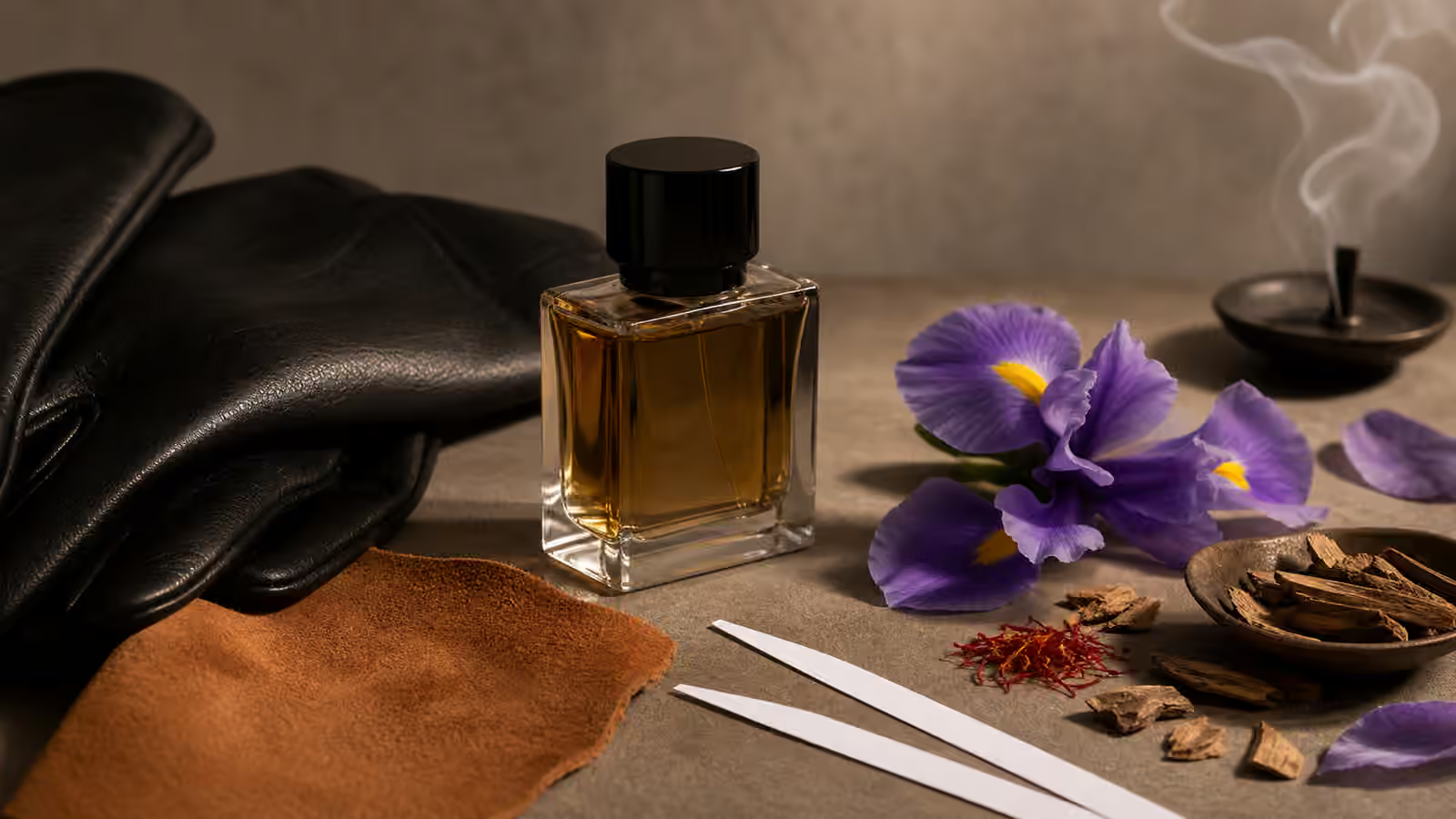
Some animalic effects appear as leather, suede, fur-like warmth, or civet-like depth. These are the notes most likely to scare beginners because reviews often use dramatic language around them. Yet they can be beautiful when handled with proportion. A trace of civet-like warmth can make a chypre feel plush. A castoreum-like dryness can make leather feel textured. A musky shadow can make rose feel less jammy and more adult. These effects do not have to dominate the whole perfume.
They do need patience. Animalic bases often show their true shape after the opening has burned off. A fragrance may begin clean and become warmer. Another may begin rough and settle into suede, moss, and skin. Perfume Drydown is especially important because these materials live in time. The late stage decides whether the note feels elegant, intimate, sour, too persistent, or exactly right.
If you enjoy chypres, fougeres, leather, smoky woods, or dark florals, animalic facets may already be part of what you like. If you prefer fresh citrus, tea, and clean laundry musks, choose gentler versions first. A soft suede musk, salty skin scent, or sheer jasmine may teach the category better than a dense vintage-style composition.
Sampling animalic notes without overwhelming yourself
Animalic scents are poor candidates for crowded testing. Too many musks, leathers, white florals, and ambers at once can turn into a blur. Start on paper, but move to skin only with one fragrance you actually want to understand. Smell from a little distance. If the first impression is difficult, wait twenty minutes before dismissing it. Some of these notes are rough at the edge and beautiful after they settle.
Use ordinary words in your notes. Warm skin, salty musk, clean cotton, animalic jasmine, soft suede, smoky leather, honeyed flower, and too much base are all better than forcing yourself into perfume jargon. Fragrance Journaling helps because the category is subtle in small amounts and polarizing in large ones. Your own record will show whether you dislike all animalic effects or only a few loud versions.
Application should be restrained until you know the perfume. One spray under clothing may be enough for a warm musk or leather. A white floral with animalic depth may need more air and less fabric. A salty musk may seem quiet at first and then keep appearing through the day. The guide to Close-Space Fragrance pairs naturally with animalic notes because they can feel personal in the right radius and intrusive when overapplied.
Animalic perfume is not a contest. You do not need to prove you like difficult materials. The useful goal is precision. Maybe clean musk works and civet-like warmth does not. Maybe jasmine needs a little indolic depth, but leather becomes too much. Maybe salt and skin are beautiful, while smoky bases cling too long to coats. Those distinctions are the real lesson.
When animalic notes work, they give perfume a human temperature. They make a fragrance breathe. They can turn flowers from decorative to alive, musk from sterile to warm, leather from flat to tactile, and marine notes from blue to skin-salty. The category deserves caution, but not fear. Approach it slowly, keep the dose modest, and let the drydown tell you whether the shadow belongs in your wardrobe.