Tension-Set Engagement Rings: Open Structure, Security, and Daily Wear
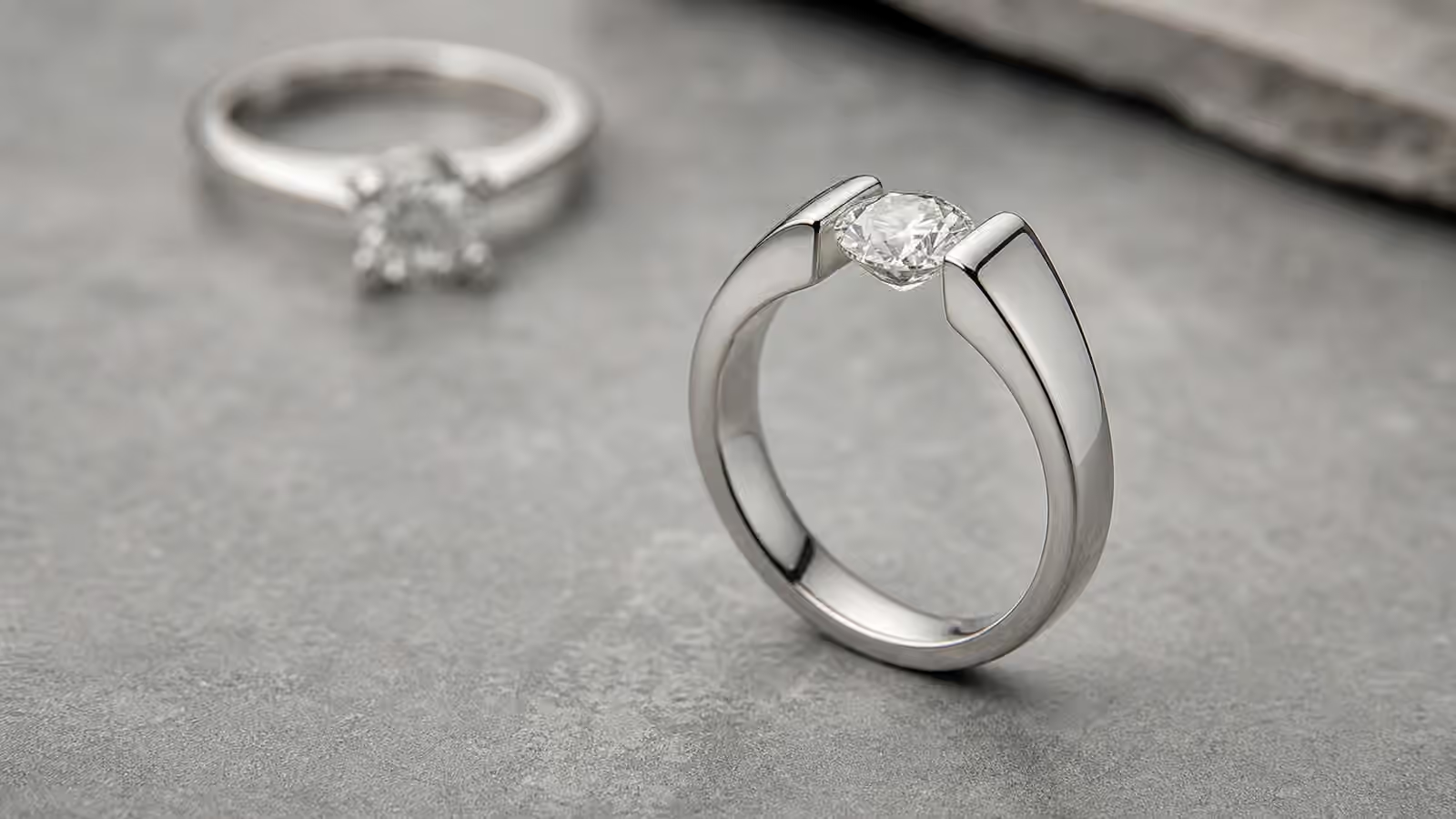
Tension-set engagement rings create a striking illusion: the center stone seems to float between two ends of the band, held without visible prongs, bezel, or halo. The look is modern and sculptural. It appeals to people who want a ring that feels engineered rather than ornate, with metal and diamond sharing equal attention. A tension setting can make even a simple round diamond look unexpected because the setting changes how the eye understands support.
The broader ring settings guide introduces common setting families, but tension settings need special attention because they are not just a style choice. Their structure affects sizing, repair, stone replacement, wedding band fit, and who should work on the ring later. A good tension-style ring is not casual minimalism. It is precise metalwork.
Some rings sold as tension settings are true tension settings, where calibrated pressure from the metal holds the stone in place. Others are tension-style settings with hidden supports, grooves, partial bezels, or bridges that create a similar visual effect while relying on additional structure. Both can be attractive. The important thing is knowing which one you are buying, because the maintenance and resizing conversation may be different.
How the Setting Holds the Stone
In a true tension setting, the metal is engineered so that the two sides of the ring press against the stone with controlled force. The stone sits in precisely cut seats or grooves, and the metal’s spring-like pressure helps hold it. That requires a suitable stone, exact measurements, and careful manufacturing. This is not a setting where a jeweler can simply swap in any diamond that happens to look close.
Tension-style settings may include a hidden support under the stone or small rails that reduce reliance on pressure alone. These designs can be more serviceable and may reassure buyers who like the open look but want extra mechanical support. They can also be more forgiving in daily wear. The tradeoff is that the ring may not have the pure floating effect that drew the shopper to tension settings in the first place.
This is why asking precise questions matters. A jeweler should be able to explain whether the ring is true tension or tension-style, how the stone is seated, what happens if the ring needs resizing, and who can service it later. If the answer is vague, keep looking. The choosing an engagement ring jeweler guide is useful here because tension settings depend heavily on trust in the maker.
Stone Shape and Durability
Not every stone is a sensible candidate for a tension setting. Round diamonds are common because their symmetry works well with the pressure points and their durability is familiar. Princess cuts, marquise shapes, and other stones with vulnerable points need more caution. Colored gemstones may be possible in some designs, but durability, cleavage, and exact fit become more important than the visual concept.
The colored gemstone durability guide is relevant if the center stone is not a diamond or sapphire. A tension setting can leave more of the stone exposed than a bezel or low basket. That openness is part of the beauty, but it also means the stone may meet the world more directly. A gem that is charming in a protective setting may not be ideal in a design that asks it to carry structural stress.
Even with diamonds, clarity and inclusion placement deserve attention. A significant inclusion near the area where pressure is applied can be a concern. The issue is not simply whether the diamond looks eye-clean. It is whether the stone is a good structural match for the setting. The diamond clarity and eye-clean guide explains visibility, while a qualified jeweler should address suitability for the setting.
Resizing Is Not a Small Detail
Many engagement rings can be resized by cutting and adjusting the shank. Tension settings are different. Changing the size can alter the pressure relationship that holds the stone. Some tension rings cannot be resized much, and some may need to be remade rather than adjusted. This is one of the biggest practical reasons to slow down before choosing one.
Accurate sizing matters before the ring is made. A temporary guess, a borrowed ring from the wrong finger, or a rushed mall sizer may not be enough. The ring sizing guide becomes especially important here because later correction may be limited. Finger size also changes with temperature, time of day, and life events. A tension setting asks the buyer to accept less flexibility than a conventional solitaire.
This does not make tension settings a bad choice. It makes them a planned choice. If the wearer already knows their stable size, prefers modern design, and is comfortable returning to the original maker for service, a tension setting can be very satisfying. If surprise sizing is uncertain or future resizing is likely, a tension-style ring with hidden support or a more traditional setting may be wiser.
Comfort, Profile, and Snagging
Tension-set rings often use substantial metal because the shank is part of the structure. That can make them comfortable in one way and noticeable in another. A wider band spreads pressure across the finger and may feel smooth, but it also takes up more space between adjacent fingers. The profile may be sleek from the top yet bulky from the side.
The engagement ring shank width and comfort guide helps frame this decision. A ring that looks elegant in a close-up photo may feel too wide for someone who usually wears delicate jewelry. Conversely, someone who likes stronger bands may find a tension setting more comfortable than a high prong head because the metal flows continuously around the finger.
Snagging depends on the exact design. Many tension settings have fewer prong tips to catch on fabric, which can be pleasant for daily wear. But the exposed stone edge and sculptural shoulders can still contact pockets, gloves, and bags. A low, smooth tension-style ring may be practical. A dramatic high tension design may be more of a statement piece. The active lifestyle engagement rings guide is worth reading if the wearer works with their hands or dislikes removing jewelry often.
Wedding Band Pairing and Visual Weight
Tension settings can be difficult to pair with wedding bands because the engagement ring itself is often wide, sculptural, or asymmetrical. A straight band may sit with a gap. A curved band may need to be custom made. Some wearers choose to wear the wedding band on the other hand or choose a very simple band that allows the tension ring to remain the focal point.
The wedding band pairing guide is helpful before the engagement ring is purchased, not after. Try the ring with bands if possible. Look at the set from the top and side. A tension ring that looks perfect alone may feel crowded when another band is added. That is not a flaw if the wearer likes the result, but it should be an intentional part of the design.
Visual weight is also important. Tension settings often make the metal part of the drama. If the wearer wants the diamond to dominate completely, a solitaire may be better. If they appreciate the ring as a designed object, the balance of metal and stone may be exactly the appeal. The solitaire engagement rings guide gives a useful contrast because a solitaire usually tries to disappear around the center stone, while a tension setting declares itself.
Buying With the Future in Mind
A tension-set engagement ring should come with clear aftercare expectations. Ask who can tighten or inspect the stone, what happens if the ring is bent, whether the maker offers service, and how resizing is handled. Keep documentation. If the ring uses a certified diamond, keep the report. If it is custom made, keep the specifications. The engagement ring warranties and service plans guide explains why service promises should be understood before they are needed.
Insurance deserves a practical look as well. A tension ring may have unique replacement considerations because the stone and setting are closely matched. The ring insurance guide covers documentation habits that are useful for any ring, and they matter even more when the setting is not a generic mounting.
The best tension-set rings feel clean because the engineering is hidden in plain sight. They suit wearers who enjoy modern design, stronger metal presence, and a ring that looks less like a traditional basket. They ask for more care in sizing, stone selection, and service planning. When those tradeoffs are accepted honestly, the result can be elegant in a very specific way: open, deliberate, and built around the idea that structure itself can be beautiful.