Split-Shank Engagement Rings: Shape, Balance, and Comfortable Presence
Split-shank engagement rings use the band itself as part of the design. Instead of one continuous strip of metal reaching the center stone, the shank divides into two or more strands as it approaches the head. That small change can make the ring feel wider, more graceful, more architectural, or more decorative depending on how the split is handled. It is a way to add presence without relying only on a larger center stone.
The ring settings guide covers the main families of engagement rings, but split shanks sit across several of them. A split shank can support a solitaire, halo, three-stone ring, oval, cushion, radiant, or colored gemstone. It is not a center-stone choice. It is a shoulder and shank choice, which means it affects comfort, maintenance, wedding band fit, and how the ring fills the finger.
The appeal is easy to see in photos. A split shank frames the center stone and creates negative space near the head. It can make a ring look more designed than a plain band while avoiding the full ornament of a halo. The practical question is whether that extra width and detail serve the wearer. A split shank that looks elegant from above can feel different once it moves through daily life.
What the Split Does Visually
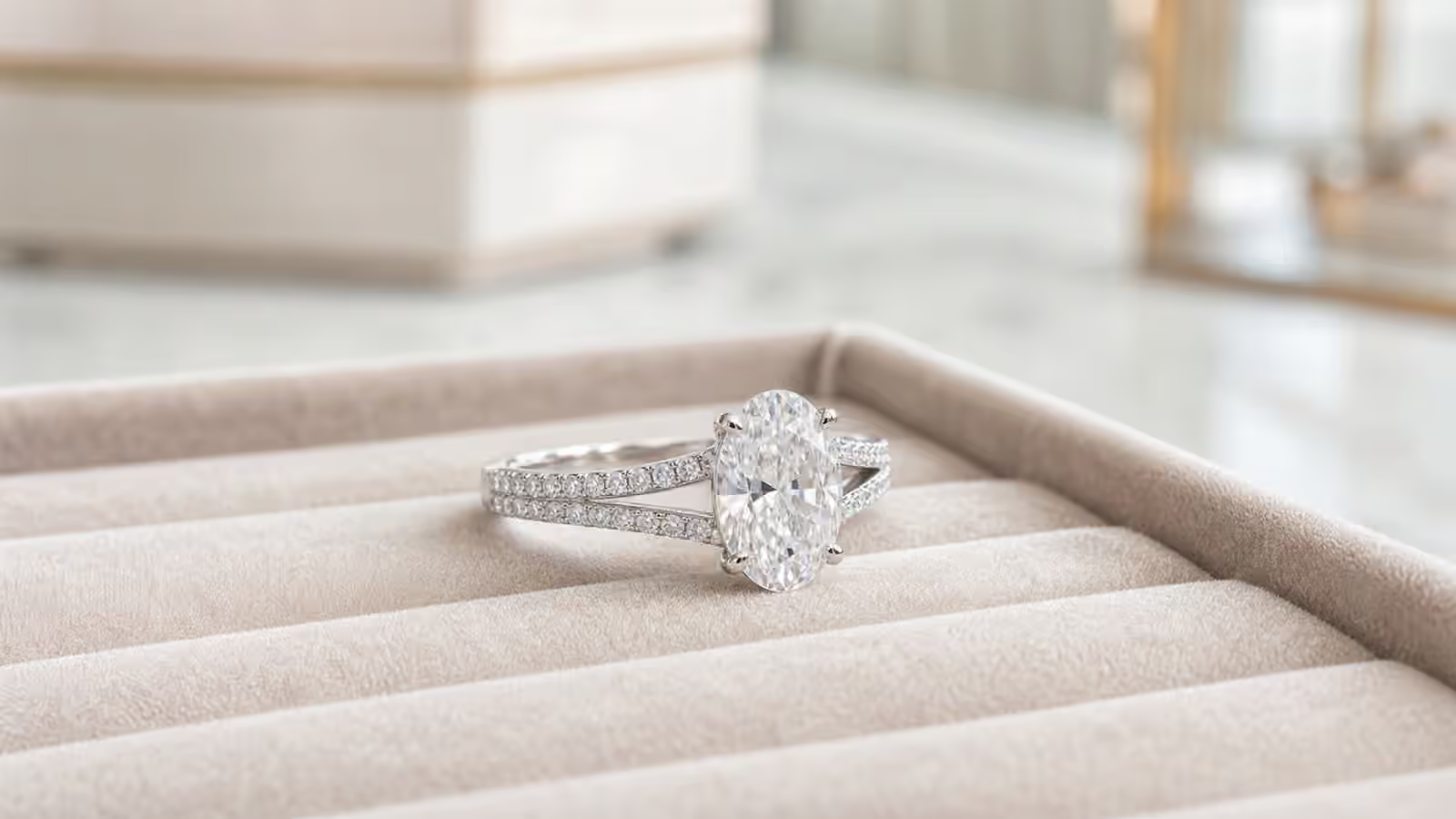
A split shank changes the way the eye approaches the center stone. A plain shank usually points directly to the diamond. A split shank opens as it nears the center, creating a frame. On elongated shapes such as ovals, pears, radiants, and marquises, this can reinforce length and give the ring a balanced footprint. On rounds and cushions, it can make the center feel more substantial without changing the stone itself.
Spacing is important. A narrow, delicate split can read as a subtle detail. A wide split can make the ring feel almost like a bypass or cocktail design. Neither is wrong, but the design should match the wearer’s taste and hand. A very wide split may look impressive on a tray and too much on a finger that usually wears slim jewelry. A very narrow split may disappear unless viewed up close.
The split also affects perceived size. By widening the shoulders around the center stone, it can make the ring cover more of the finger. That can be useful if the wearer wants presence but prefers not to increase carat weight. The diamond carat weight and face-up size guide explains why visual spread is not only about the center stone. Metal can shape presence too.
Center Stones That Pair Well
Split shanks are especially common with elongated stones because the open shoulders can echo the stone’s length. Ovals often look natural in split shanks, particularly when the strands meet the head gracefully instead of crashing into the sides. The oval engagement rings guide helps if the center stone is oval, because bow-tie contrast and ratio still matter more than the shank style.
Cushions and radiants also suit split shanks when the proportions are controlled. A cushion can look romantic and soft with a divided band, while a radiant may look more glamorous and angular. Princess cuts can work, but the split should not distract from the square outline or leave the corners visually unsupported. Step cuts such as emeralds and Asschers often look best with cleaner split designs because their quiet facet pattern can be overwhelmed by busy shoulders.
Colored gemstones can be beautiful in split shanks, especially sapphires. The surrounding metal can make the center color feel more intentional. Still, the colored gemstone durability guide should come first for softer or more included stones. A decorative shank does not protect a vulnerable center if the head is not chosen carefully.
Plain Splits, Pave Splits, and Maintenance
A plain split shank adds shape without adding many small stones. This is often the most practical version. The negative space gives the ring design interest, while the smooth metal remains easier to clean and inspect. It can be a strong compromise for someone who wants more than a solitaire but does not want the upkeep of pave shoulders.
Pave split shanks add sparkle along each strand. They can look beautiful because the divided band becomes a pair of glittering lines leading to the center. The tradeoff is maintenance. More small diamonds mean more tiny settings that can catch grime, wear down, or loosen over time. That does not make pave a mistake, but it does make aftercare part of the decision. The pave engagement rings guide explains how those small stones change cleaning and inspection habits.
The transition point where the shank splits deserves close inspection. The metal should feel intentional, not thin or pinched. If the strands look delicate near the head, ask how the ring will wear over years of knocks, resizing, and cleaning. A split shank can be airy without being weak, but only if the maker leaves enough metal where the structure matters.
Comfort and Finger Coverage
Split shanks can feel wider than their measurements suggest because the finger experiences the combined spread of the strands near the top. Some wearers love that stability. The ring may spin less because the upper shank has a broader footprint. Others find the width noticeable between fingers, especially if the split begins far down the sides.
The underside matters. A split shank that rejoins into a comfortable solid band at the bottom is usually easier to wear and resize than a design that remains complex all the way around. The engagement ring shank width and comfort guide is useful because comfort is not decided only by the narrowest part of the band. Height, thickness, edge shape, and where the ring widens all contribute.
Try to view the ring from the side as well as from above. Some split shanks rise dramatically toward a high center stone, while others stay low and smooth. Height changes snagging and wedding band fit. The low-profile engagement rings guide helps if the wearer wants a ring that sits close to the hand.
Wedding Band Pairing
Wedding band pairing is one of the easiest places to be surprised by a split shank. The engagement ring may have wide shoulders, a low basket, or a split that begins near the band line. A straight wedding band may sit with a visible gap or rub against the outer strands. A contoured band may fit better, but it also ties the wedding band more closely to the engagement ring’s exact shape.
The wedding band pairing guide should be read early if a split shank is on the shortlist. Do not wait until the engagement ring has already been worn for a year. Ask to try plain, pave, and contoured bands next to the ring. Look at how the pair feels when the hand closes, not only how it photographs on a tray.
Some split-shank rings look best with a little air between the engagement ring and wedding band. That can be part of the style. Others need a custom band to feel complete. Neither approach is automatically better. The right answer is the one that lets the set look intentional and remain comfortable.
When a Split Shank Makes Sense
A split shank is a good choice when the wearer wants extra presence, a framed center stone, or a ring that feels designed from the shoulders inward. It can soften a geometric stone, add movement to an elongated diamond, or give a solitaire more personality without surrounding the center with a full halo.
It may be less suitable for someone who wants the simplest possible maintenance, a very slim feel between the fingers, or an easy future band pairing. It also deserves caution if the ring is very delicate, heavily pave-set, or made with minimal metal at the split. The style should not be used to disguise weak construction.
When it works, a split-shank engagement ring feels balanced rather than busy. The divided band gives the center stone a setting to inhabit, not just a stem to sit on. Look for clean transitions, comfortable width, enough metal, and a wedding band plan. Those details let the design keep its grace after the showroom lighting is gone.