Solitaire Engagement Rings: Quiet Settings, Real Choices
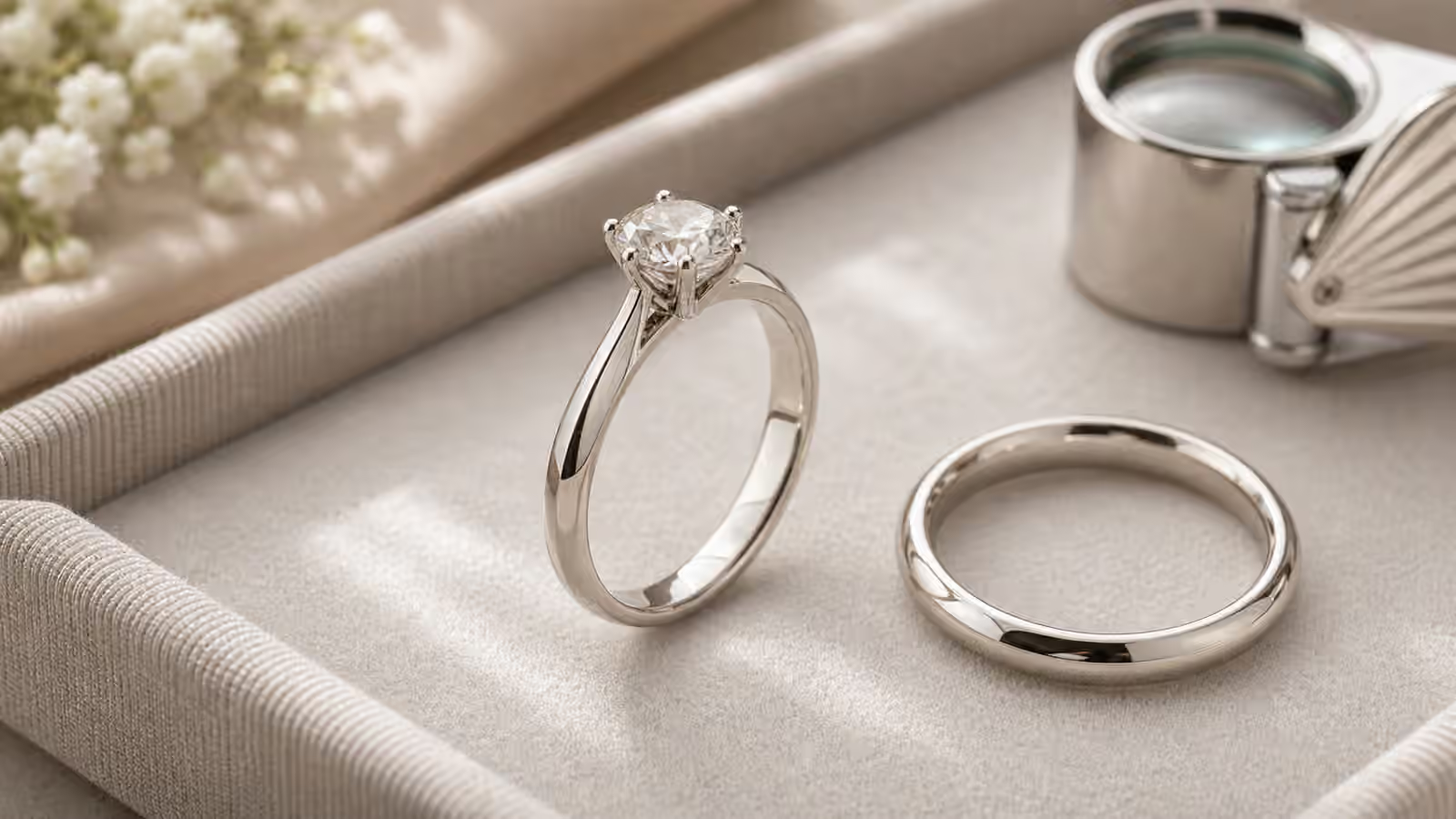
A solitaire engagement ring looks simple because it has one visible job: hold the center stone and let it be seen. That simplicity is the reason many people trust it. There is no halo to adjust the outline, no side stones to balance, no pave shank to add maintenance, and no decorative story trying to compete with the diamond or gemstone. The ring is metal, stone, finger, and light.
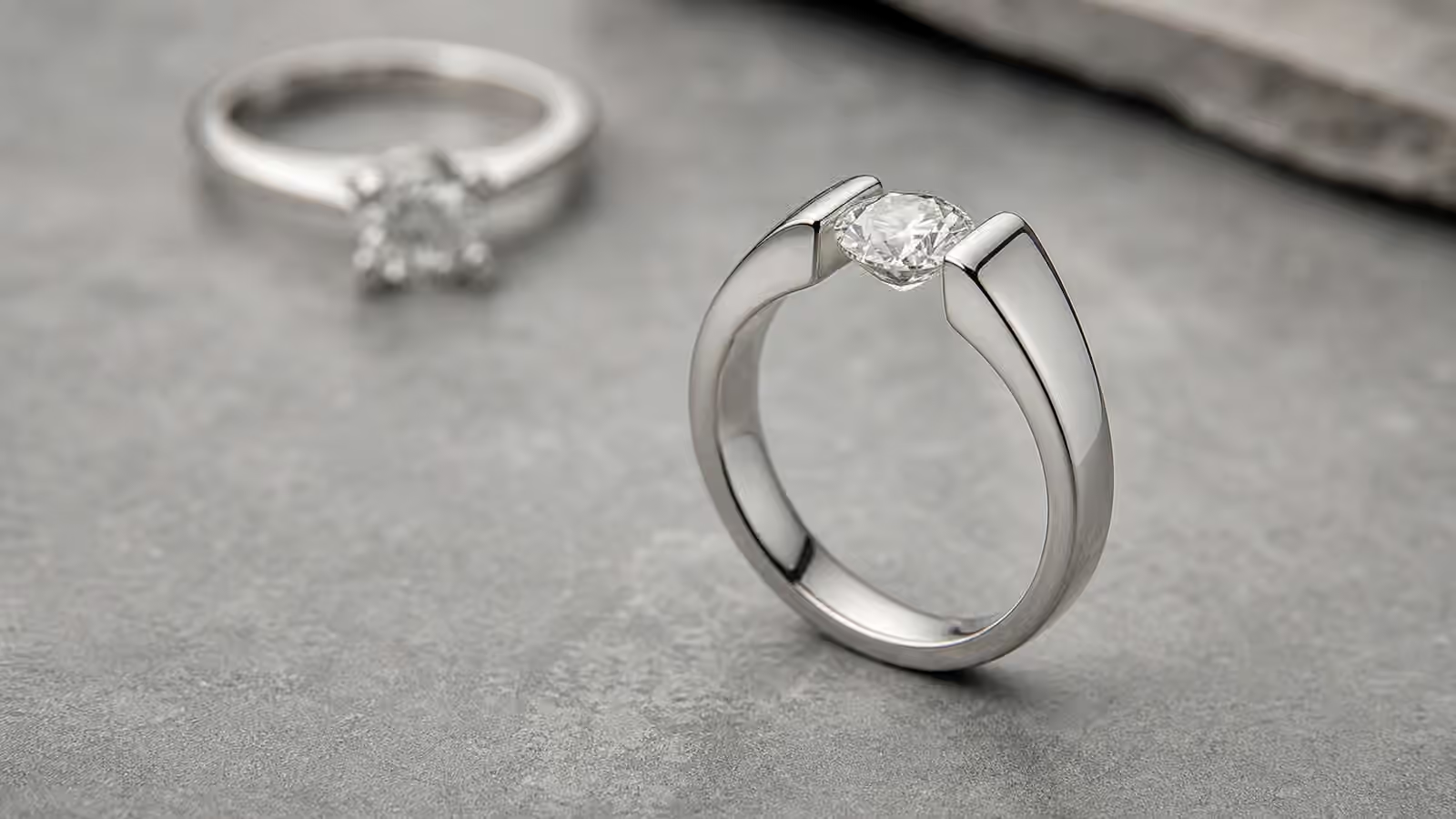
That does not make a solitaire a default choice without decisions. A solitaire can be tall or low, delicate or substantial, modern or traditional, smooth or architectural. Two rings may both be called solitaires while wearing very differently. One catches on sleeves because the head sits high and exposed. Another feels easy every day because the basket is low and the shank has enough weight. One makes a round diamond look open and bright. Another crowds the same stone with heavy prongs. The category is quiet, but the details are not.
The broader ring settings guide introduces solitaires beside bezels, halos, three-stone rings, pave bands, and other setting families. This guide slows down inside the solitaire itself, where small choices in construction decide whether the ring feels spare, elegant, fragile, sturdy, or unfinished.
What a Solitaire Reveals
A solitaire gives the center stone very little cover. That is part of its appeal. The eye goes straight to the diamond, sapphire, moissanite, or other gem, then to the shape of the metal around it. If the stone has strong light return, a clean outline, and pleasing proportions, a solitaire makes those strengths obvious. If the stone is dull, poorly matched to the setting, or awkwardly proportioned, the ring has fewer decorative elements to distract from the problem.
This is why diamond cut quality matters so much in a solitaire. In a halo or three-stone ring, surrounding diamonds may add enough light that the whole ring sparkles even if the center stone is not the liveliest option. In a solitaire, the center has to carry the room by itself. A smaller well-cut diamond can look more satisfying than a larger stone that leaks light, especially when the setting is plain enough that brightness and contrast are easy to see.
Shape is just as visible. A round solitaire feels balanced almost automatically because the outline is even from every angle. An oval solitaire can look graceful and elongated, but it asks for careful attention to bow-tie contrast and length-to-width ratio. An emerald cut solitaire looks calm and graphic, with fewer flashes and more broad steps. A pear or marquise solitaire needs tip protection because the points sit exposed. The diamond shapes decision is not only a style choice here. It tells the solitaire what kind of protection and proportion the setting must provide.
Prongs Set the Tone
Most solitaires use prongs, and those small metal tips do more visual work than buyers expect. Four prongs leave more of the stone’s edge visible and can make a round diamond read slightly squarer from above. Six prongs create a rounder outline and add a sense of security, though they also place more metal around the girdle. Claw prongs feel lean and precise. Rounded prongs feel softer and more classic. Double prongs can look tailored on cushions, radiants, and larger ovals, but they may overwhelm a small center stone.
The engagement ring prongs guide goes deeper into count, shape, and security. For a solitaire, the key is proportion. Fine prongs can look elegant, but they still need enough metal to be useful. Thick prongs can feel reassuring, but they can make a diamond look smaller or a delicate ring look heavy. A good prong should look intentional from above and sturdy from the side. It should touch the stone cleanly, sit evenly with its companions, and feel smooth enough that the wearer is not constantly catching fabric.
Prong placement should respect the shape. A pear needs meaningful protection at the point. A princess cut needs corner protection. An oval should not have prongs placed so awkwardly that they make the outline look pinched. On a round stone, four and six prongs are both reasonable, but the choice changes the personality of the ring. A solitaire is not hiding behind ornament, so the prong geometry becomes part of the design language.
Basket, Height, and Side View
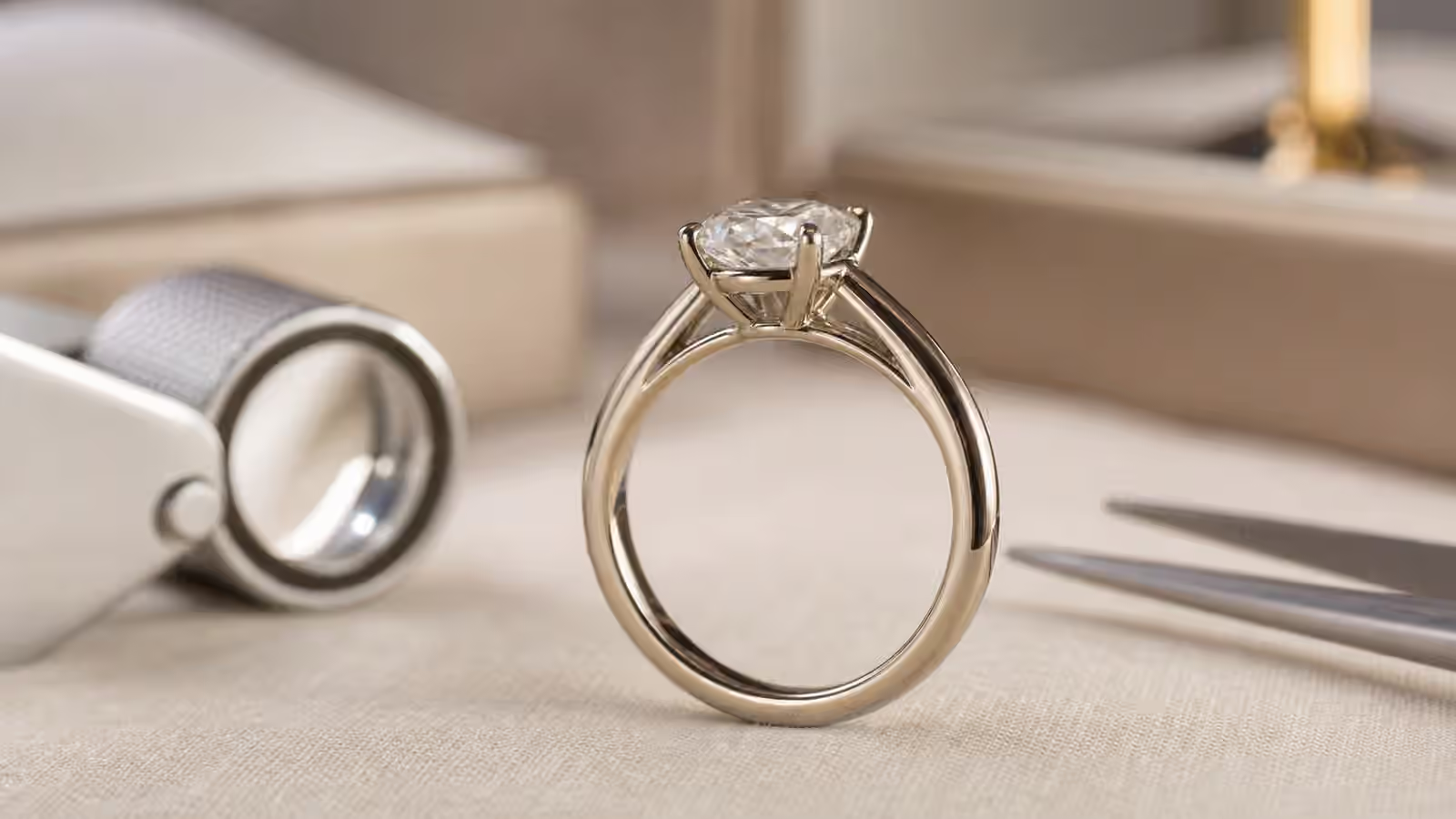
The top view may sell the ring, but the side view decides much of the daily experience. The basket, head, or gallery is the structure beneath the stone. It determines how high the center sits, how much the ring snags, how easy it is to clean, and whether a wedding band can sit close to the engagement ring.
A high solitaire can look airy and dramatic. It may let more light reach the stone and create space for a straight wedding band. It also places the stone farther from the finger, where it meets sleeves, bags, gloves, countertops, and door handles first. A low basket usually feels calmer in daily wear because the stone sits closer to the hand. The tradeoff is that a low head may block a straight band or make cleaning the underside of the stone tighter.
The low-profile engagement rings guide is useful if the wearer works with hands, wears gloves, cares for children, travels often, or simply dislikes noticing the ring during ordinary tasks. Low does not automatically mean dull, and high does not automatically mean graceful. The best profile is the one that gives the stone presence without asking the wearer to treat every sleeve like a hazard.
Cathedral shoulders are one way to give a solitaire structure. The band rises toward the center stone in arched supports, which can make the ring feel more architectural and protect the head from the side. A peg head, where the setting is attached more directly to a plain shank, can look clean and minimal, but the quality of construction matters. The ring should not look as if the center has been dropped onto the band as an afterthought. In a solitaire, the transition from shank to head is one of the few places craftsmanship has room to speak.
Shank Width Changes the Whole Ring
Many solitaire shoppers want a thin band because it makes the center stone look larger by comparison. That instinct is understandable. A slim shank can make the ring feel delicate and let the eye stay on the stone. But the band is also the ring’s foundation. If it is too thin for the center stone, profile height, or wearer’s habits, the ring may spin, bend, or feel less stable over time.
The engagement ring shank width and comfort guide explains why width affects both feel and structure. In a solitaire, width is especially visible because there are no accent stones to interrupt the line of metal. A very thin shank can create a floating, modern look around a modest center stone. A medium shank can feel more balanced with a larger diamond or elongated shape. A softly rounded shank may feel smoother between the fingers than a sharp-edged one, even at the same width.
Taper can solve a common problem. The ring can look slim near the center while keeping more metal at the base, where strength and resizing matter. Knife-edge shanks can make a solitaire feel crisp and refined, but some wearers dislike the sensation. A comfort-fit interior may make a slightly wider band easier to wear. These are quiet details, but they decide whether the ring is admired only in photos or enjoyed at the end of a long day.
Metal Color Is Not Just Background
Because a solitaire has so little decoration, the metal color becomes a strong frame. Platinum and white gold create a cool outline around a white diamond and can make the ring feel crisp. Yellow gold softens the look and can make slightly warmer diamonds feel intentional rather than compromised. Rose gold adds warmth that can flatter some skin tones and colored stones, though it may change how a near-colorless diamond appears.
The ring metals guide covers durability, maintenance, patina, and color in more depth. For a solitaire, think of metal as part of the stone’s visual environment. A white metal head on a yellow gold shank can keep the diamond looking bright while giving the ring a warmer overall mood. A full yellow gold solitaire can look rich and classic, especially with antique-inspired shapes. Platinum can feel substantial and quiet, with a different aging pattern from white gold.
Metal also affects prong visibility. White prongs can disappear against a white diamond. Yellow or rose prongs can become part of the design, which may be beautiful or distracting depending on the stone and the wearer. If the solitaire will use a colored gemstone, view the actual stone against the actual metal. Color is relational, and a ring with one center stone gives that relationship nowhere to hide.
Wedding Band Pairing Starts Early
Solitaires are often described as easy to pair with wedding bands, and many are. A plain prong solitaire with enough lift may accept a straight band cleanly. A low basket may create a gap. A cathedral solitaire may leave space under the head, while a wider gallery may ask for a contour band. The word solitaire does not guarantee a flush set.
Try band ideas before committing when possible. A straight plain band, a pave band, a curved band, and a spacer can all change the mood of the solitaire. Some people love a small gap because it keeps the engagement ring visually separate. Others want a close, tailored stack. The wedding band pairing guide belongs in this conversation before the engagement ring is finalized, not only months later when the wedding band is being ordered.
This matters even more if the solitaire has a hidden detail, a gallery rail, a low head, or a center stone shape that extends across the finger. An oval or marquise may sit close to the band in a different way from a round. A pear may point toward or away from the wedding band depending on orientation. A solitaire looks simple from above, but the stack is built in profile.
Maintenance Is Simpler, Not Absent
A solitaire usually has fewer small parts than a pave, halo, or three-stone ring. That can make it easier to clean and inspect. There are fewer accent stones to loosen, fewer grooves to trap residue, and fewer design elements to complicate resizing. This is one reason solitaires suit people who want a ring that feels straightforward over many years.
Still, a solitaire is not maintenance-free. Prongs wear. Stones can loosen. A thin shank can bend. Soap and lotion can dull the underside of a diamond. The habits in ring care still matter, especially professional inspections for the prongs and head. The simplicity of the design makes maintenance easier to understand, but it does not make metal permanent.
If the ring starts to snag, click, spin more than usual, or feel sharp against fabric, have it checked. Those small signals are easier to notice on a solitaire because there are fewer places for trouble to hide. Treat that as an advantage. A clean, simple ring gives clear feedback when something changes.
Choosing the Right Kind of Simple
The best solitaire does not feel empty. It feels edited. The center stone has been chosen well enough to stand alone. The prongs protect without crowding. The basket gives the ring an honest profile. The shank has enough width for comfort and strength. The metal suits the stone rather than merely holding it.
This is why a solitaire can be both the safest choice and a very personal one. One wearer may want a round diamond in six prongs on platinum, lifted enough for a straight band. Another may want an east-west oval in yellow gold with a low basket and a softly rounded shank. Another may choose a sapphire solitaire because color needs no additional decoration. All are solitaires, but none are the same ring.
When a solitaire works, the simplicity lets the wearer forget the design language and notice the ring itself. The stone looks alive. The metal feels resolved. The profile suits daily life. The ring does not ask for attention by adding more. It earns attention by making one choice clearly and then supporting that choice with care.