Side Stones and Accent Diamonds in Engagement Rings
Side stones are easy to underestimate because they rarely get the language reserved for the center stone. The main diamond has a shape, a carat weight, a grading report, and a starring role in every appointment. The smaller stones often arrive as atmosphere: a little sparkle on the shoulders, a pair of tapered baguettes, a halo around the center, a row of tiny diamonds visible only from the side. Yet those details can change the whole ring. They affect how large the center stone appears, how formal the design feels, how often the ring needs inspection, and how comfortably it will live next to a wedding band.
The best accent work does not feel added after the fact. It gives the ring rhythm. It draws the eye toward the center stone, softens a sharp outline, adds light to the band, or gives a plain design a private detail that the wearer notices in motion. The weakest accent work does the opposite. It competes with the center stone, traps dirt, complicates resizing, or makes a delicate ring look busier than the person wearing it ever wanted.
Thinking about side stones means moving beyond the question of more sparkle. The better question is what the extra stones are supposed to do. Some accents are there for scale, making a modest center stone feel more substantial. Some are there for shape, helping an oval, emerald cut, or round diamond sit naturally on the hand. Some are there for texture, turning a simple shank into a river of light. And some are there for sentiment, such as birthstones, heirloom diamonds, or small stones from family jewelry worked into a new design.
Side Stones Are Part of the Setting, Not Separate Decoration
A ring with side stones should still be judged as a whole setting. The extra diamonds are held by metal, and that metal has thickness, height, edges, and maintenance needs. A pair of tapered baguettes may look sleek from above, but the gallery beneath them may determine whether the ring sits low or high. A pave shank may look delicate in a photograph, but the tiny beads holding the stones must survive daily wear. A hidden halo may be invisible from the top, but it can affect cleaning and wedding band clearance from the side.
This is why the broader ring settings decision still matters. Side stones do not rescue an underbuilt setting. If the shank is too thin, the prongs are too fine, or the accent stones are squeezed into weak metal, the ring may look graceful at first and become frustrating later. Good accent work begins with enough structure to hold every stone securely without making the design heavy.
There is also a visual hierarchy to protect. In most engagement rings, the center stone should remain the clear focus. Side stones can frame it, echo it, or extend its shape across the finger, but they should not make the eye uncertain about where to look. This is especially important with smaller center stones. A strong halo or wide pave band can add presence, but if the accent stones are too bright, too large, or too numerous, the center can look swallowed rather than celebrated.
Three-Stone Rings Need Proportion Before Symbolism
Three-stone rings are often described through meaning: past, present, and future. That symbolism is real for many couples, but the ring succeeds or fails first through proportion. The side stones must be large enough to feel intentional and small enough to support the center. When they are too tiny, the design reads as a solitaire with afterthoughts. When they are too large, the ring becomes a row of stones with no clear lead.
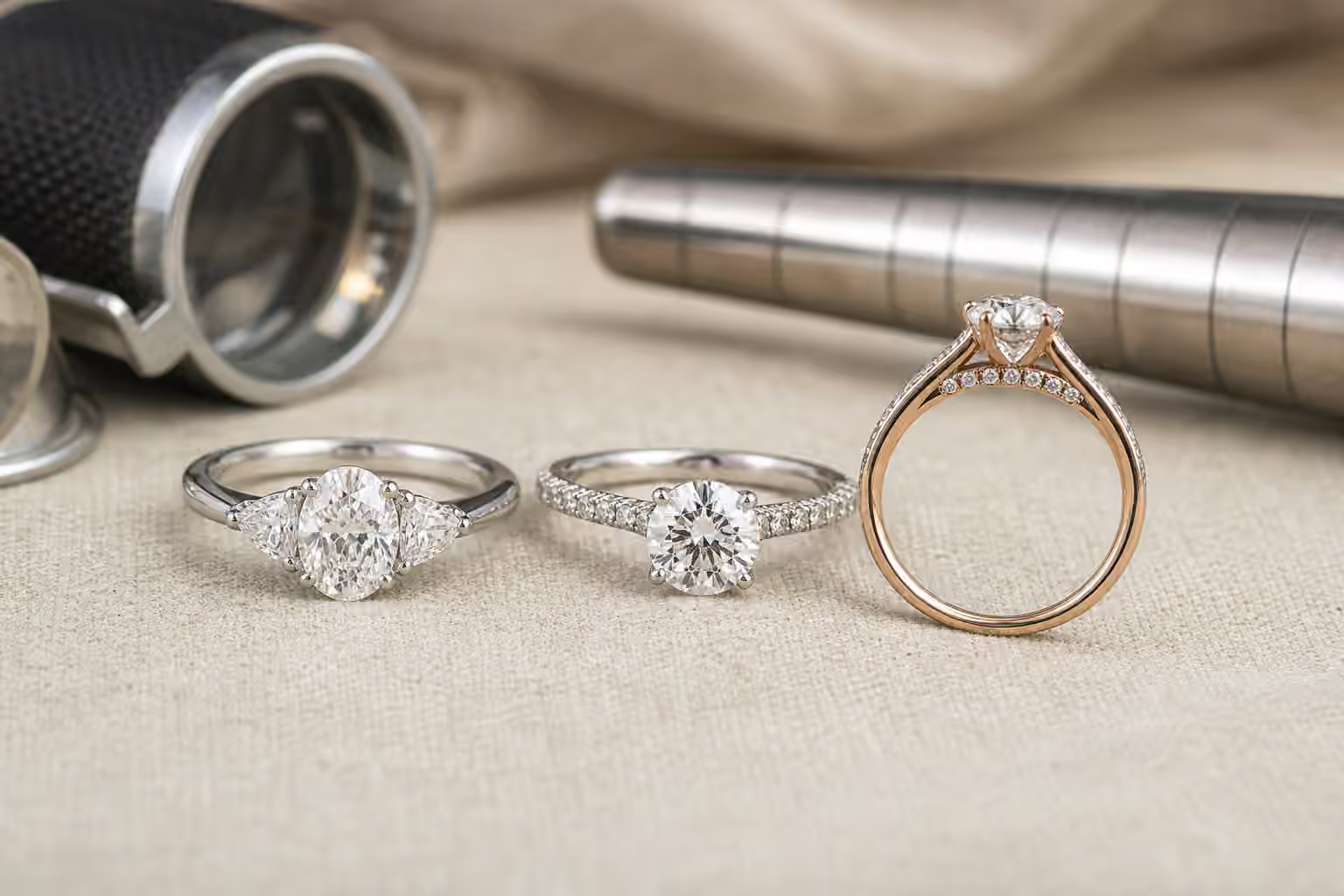
Classic three-stone designs usually use side stones that are noticeably smaller than the center. The exact relationship depends on shape. Round side stones beside a round center create a soft, traditional look. Pear-shaped side stones can make an oval or round center feel more elongated and graceful. Tapered baguettes beside an emerald cut or round diamond bring a tailored, architectural mood. Trillion side stones give a sharper geometric frame, especially beside princess, radiant, or cushion cuts.
Matching matters, but not in the way many shoppers assume. The side stones do not always need the same clarity grade as the center, because they are smaller and less visually exposed. They do need to look compatible. A very icy pair of side diamonds beside a warmer center can make the center look tinted by comparison. Side stones with a different cutting style can be beautiful, but the contrast should feel designed. A step-cut center with step-cut sides feels calm and linear. A brilliant center with brilliant sides feels lively. Mixing the two can work when the shapes explain the choice, but it should not feel accidental.
The side stones also change the way the center stone appears on the hand. A one-carat center diamond in a three-stone setting can have more finger coverage than a larger solitaire. That can be good value if the wearer wants presence without a single large stone. It can also feel wide between the fingers, especially on smaller hands. The center stone’s outline, described in the diamond shapes guide, should be considered together with the side stones rather than chosen first and decorated later.
Pave Should Be Delicate, But Not Fragile
Pave bands attract people who want sparkle in motion. The center stone flashes when the hand turns, but pave catches light along the finger during smaller gestures: reaching for a glass, fastening a coat, typing at a desk. Done well, it gives a ring a refined shimmer without increasing the center stone size. Done poorly, it creates the most common kind of engagement ring maintenance complaint: tiny missing stones.
The tension in pave is that buyers often want it as thin as possible. A very narrow diamond band can look airy and elegant in photographs, but there must be enough metal to hold the stones. Each accent diamond needs a seat, beads or prongs to secure it, and enough surrounding structure to resist bending. If the band is extremely thin and covered in stones on several sides, resizing becomes harder and long-term wear becomes less forgiving.
There are many styles within the pave family. Traditional bead-set pave shows small metal beads between the diamonds. French pave uses small V-shaped cuts that expose more of each stone and create a brighter, more open look. Shared-prong settings can show very little metal, but each prong may be doing more work. Micro-pave creates a fine glittering surface, though it depends heavily on skilled setting. None is automatically best. The question is whether the construction suits daily wear and whether the jeweler will stand behind the accent stone work.
Pave also changes cleaning habits. Soap, lotion, sunscreen, and hand cream settle around the small stones and in the tiny grooves between them. A dirty pave band can look dull even when the center stone is clean. The habits in ring care are especially relevant here, because accent work rewards gentle regular cleaning and periodic professional inspection. The point is not to make the ring feel fussy. It is to recognize that a ring with many small stones has many small points of contact with the world.
Halos and Hidden Halos Solve Different Problems
A visible halo surrounds the center stone with smaller diamonds, making the ring look larger and more luminous from the top. It can be a smart design choice when the wearer wants presence but the budget or taste does not point toward a larger center diamond. A well-proportioned halo follows the center stone’s outline closely, leaving enough metal to secure the small stones without creating a clumsy border.
The trouble begins when the halo becomes too heavy for the center. A small round diamond inside a thick halo can look more like a cluster ring than an engagement ring with a clear center stone. That may be exactly the desired vintage effect, but it should be chosen knowingly. Halos also emphasize outline, so any mismatch between the center stone and the halo shape becomes visible. An oval halo around a slightly uneven oval diamond can make asymmetry easier to see.
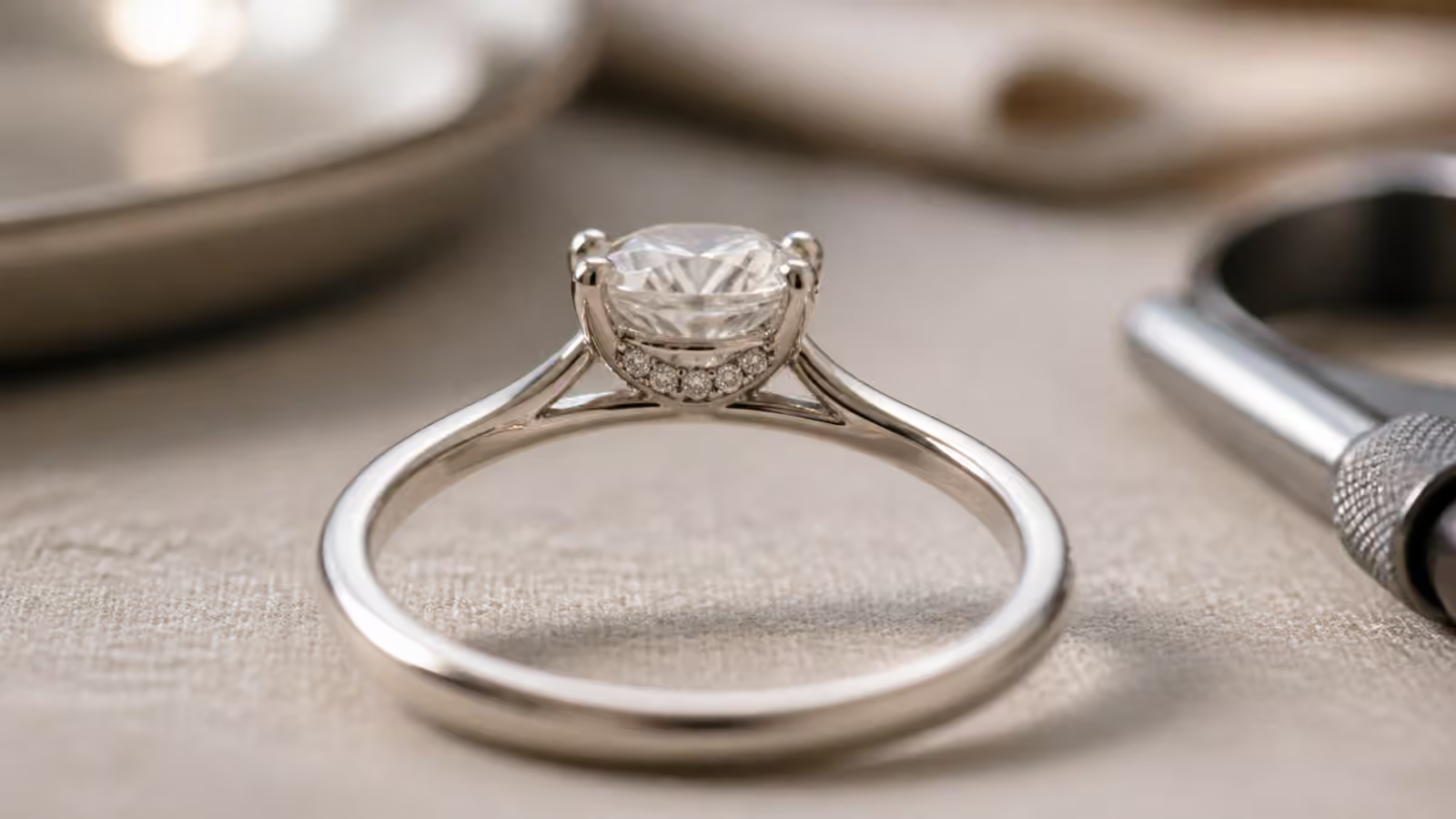
Hidden halos are different. They sit below the center stone, usually around the basket or gallery, and are seen mostly from the side. They do not usually make the center stone look larger from above. Their appeal is more private and architectural. The wearer sees a flash of diamonds when the ring turns. Someone across the table may never notice.
Because hidden halos live in the side profile, they belong in the same conversation as setting height and wedding band fit. A hidden halo can occupy the exact space where a straight wedding band would otherwise sit. It can also add tiny stones to an area that collects residue. If the ring is meant to sit low and smooth, read the low-profile engagement rings guide before assuming a hidden halo is a harmless detail. It may be beautiful, but it changes the architecture.
Accent Stones Affect Metal, Sizing, and Future Bands
The more stones on a ring, the less the metal can behave like a plain band. A simple gold or platinum shank can be resized with relative ease by a skilled jeweler. A shank covered in pave, channel-set diamonds, or patterned side stones gives the jeweler less blank metal to work with. Resizing may disturb stones, change spacing, or require rebuilding part of the band. That does not make accent stones a mistake, but it does make accurate sizing more important from the beginning.
Metal choice also influences how accent work ages. Platinum is dense and holds small settings well, though it develops a patina. White gold offers a bright look but may need rhodium replating, and that maintenance should be done carefully around small stones. Yellow gold can make warmer accent diamonds feel intentional, while rose gold can soften the look of a diamond-heavy design. The ring metals guide is useful because accent stones multiply the places where metal choice shows up in daily wear.
Wedding bands are another practical constraint. A three-stone ring may need a contoured band if the side stones sit low and wide. A halo may create a gap. A pave engagement ring may look too busy beside a pave wedding band, or it may create a matched set that feels exactly right. The important thing is to try the idea early. The wedding band pairing guide covers the fit problem in detail, but side stones deserve special attention because they often extend beyond the center head and into the space where a band wants to sit.
Spend on Craft Before Quantity
Accent diamonds can make a ring look more expensive, but they can also hide weak priorities. A buyer may accept a duller center stone because the setting has more diamonds, or choose a thin pave shank because it looks delicate in a tray. Over time, the ring will reward the opposite approach. First choose a center stone with a pleasing shape and light performance. Then choose accent stones that support it. Then make sure the metalwork is strong enough to hold everything.
Small diamonds do not need the same laboratory attention as a major center stone, but they should be well matched and cleanly set. If the ring uses larger side stones, ask how they are graded or documented. If the accents are natural or lab-grown, the seller should disclose that clearly. If the center diamond has a grading report, remember that the report does not describe every small stone in the finished ring. That distinction is part of reading a diamond grading report carefully.
There is no moral advantage to a plainer ring and no automatic excess in a ring with many stones. The right amount of accent sparkle is the amount that serves the wearer. Someone who dresses simply may love a hidden halo because it feels personal rather than showy. Someone who wears bold jewelry every day may find a solitaire underwhelming and feel completely at home in a three-stone ring with pave shoulders. The design should be honest about the person’s style, not merely optimized for a product photo.
Side stones are at their best when they make the center stone seem more inevitable. The ring looks balanced from above, comfortable from the side, and considered when paired with the band that may someday sit beside it. The small diamonds do not feel small in the final effect. They do the quiet work of scale, rhythm, and light, making the whole ring feel more like it belongs on one particular hand.