Salt-and-Pepper Diamond Engagement Rings: Character Without Guesswork
A salt-and-pepper diamond makes inclusions part of the look. Instead of chasing a stone that appears clear and bright in the usual way, the buyer chooses a diamond with visible internal features, scattered dark marks, cloudy zones, gray body color, or a stormy pattern. The appeal is not that the stone hides its nature. The appeal is that the stone has a recognizable character of its own.
That character can be beautiful, but it should not replace judgment. Salt-and-pepper is a style description, not a grading standard. One stone may be mostly transparent with a few dramatic black crystals. Another may be opaque, heavily fractured, and fragile at the edge. Both might be sold under the same casual name. Buying well means learning to separate intentional appearance from durability risk.
The diamond clarity and eye-clean guide explains the conventional clarity conversation. Salt-and-pepper diamonds turn part of that conversation upside down because visible inclusions are expected. The practical question becomes not “Can I see anything?” but “What am I seeing, where is it, and can this stone be set and worn safely?”
The Look Comes From Inclusion Pattern
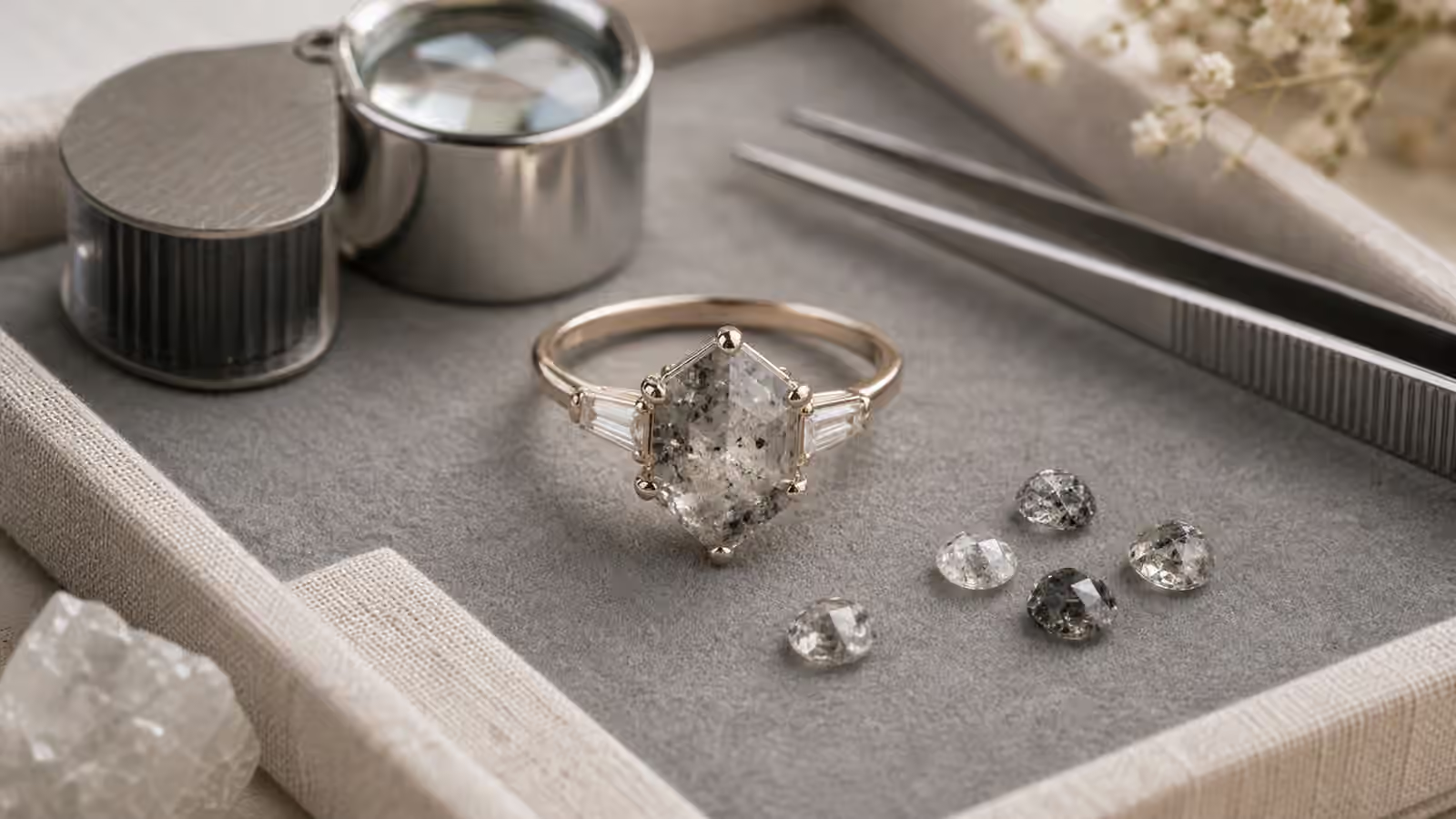
Salt-and-pepper diamonds vary widely. Some are pale gray with fine speckling. Some are icy and transparent with a few sharp black inclusions. Some are smoky, milky, or heavily patterned. Some show geometric crystals that feel graphic. Others look soft and cloudy. The right choice depends on whether the wearer wants subtle texture or obvious contrast.
Lighting changes these stones more than shoppers expect. A salt-and-pepper diamond may look moody under soft light, lively near a window, and flatter under harsh case lighting. It may show dark inclusions from one angle and a silvery glow from another. Video is helpful, but ordinary viewing is better. If possible, see the stone on the hand, not only in tweezers.
Cut also matters, though not always in the same way it does for a classic white diamond. Many salt-and-pepper stones are rose cut, portrait cut, shield shaped, kite shaped, pear shaped, hexagonal, or rustic oval. These cuts may prioritize pattern and outline over maximum brilliance. That can be exactly right. A heavily included rose cut can look like a small piece of weather held in gold. But if the wearer expects the sharp sparkle of a modern round brilliant, the difference should be clear before purchase.
Visible Inclusions Are Not Automatically Harmless
Because visible inclusions are the point, sellers sometimes talk about them as if they are only aesthetic. That is too simple. Many inclusions are harmless in daily wear, but some deserve a closer look. Surface-reaching feathers, cavities, large breaks near the girdle, or fractures near points can affect setting and durability. A dramatic black crystal in the middle of the stone may be mostly visual. A break running to a thin edge may be structural.
The diamond inclusions, durability, and setting risk guide is the most important companion for this topic. It explains why location matters as much as inclusion type. With salt-and-pepper diamonds, the same principle applies with more urgency because the stone may have many visible features. Ask the jeweler to identify which features are decorative and which require caution.
Do not assume that a lower price makes risk acceptable. A fragile stone can be costly in another way if it chips during setting, needs a special mounting, or cannot be repaired cleanly after damage. The goal is not to avoid every included stone. It is to choose one whose inclusions suit the design and whose vulnerable areas are protected.
Shape and Setting Should Protect the Stone
Salt-and-pepper diamonds often appear in fancy shapes because unusual outlines suit the alternative look. Kites, shields, elongated hexagons, pears, and marquises can be striking. They also create points and corners that need protection. If the stone has visible inclusions near those areas, the setting conversation should slow down.
Bezel and partial bezel settings are common for good reason. They can frame the stone, protect an irregular outline, and make a rustic diamond feel intentional. Prongs can also work if they are placed carefully and shaped to guard points. A very open setting may show more of the stone, but it may also expose edges. The bezel engagement rings and engagement ring prongs guides help compare those approaches.
A salt-and-pepper diamond should not be forced into a generic mount. Many of these stones are cut in nonstandard proportions. A setting made for a calibrated brilliant-cut diamond may not fit well. Custom or semi-custom work can be worth it because the ring must hold the actual stone, not an idealized outline.
Color and Metal Should Work Together
The metal choice changes the mood of a salt-and-pepper diamond. Yellow gold often warms the gray and black pattern, making the ring feel earthy or antique. Rose gold can soften a stormy stone. White gold or platinum can make the same diamond feel cooler, sharper, and more graphic. None is universally better. The best metal supports the stone rather than trying to make it look like a conventional white diamond.
Side stones require care. Bright white diamonds can create strong contrast around a gray center. That can be beautiful, but it can also make the center look dull if the main stone has little transparency. Warm side stones, champagne diamonds, or colored gemstones may harmonize better. The side stones and accent diamonds guide is useful because accent stones shape how the center is perceived.
If the ring uses a halo, inspect the relationship closely. A halo of bright melee around an included center can either frame the stone or make it look muddy. A simpler bezel, solitaire, or three-stone design may give the center more dignity. The right answer depends on the specific diamond.
Grading Language Can Be Loose
Salt-and-pepper diamonds are often sold with less formal grading language than traditional white diamonds. Some may have reports, but many do not. A report can identify that the stone is diamond and describe basic characteristics, but it may not capture the visual pattern that makes the stone appealing. Conversely, a romantic product description may say little about treatment, durability, or actual measurements.
Ask plain questions. Is the stone natural diamond? Has it been treated to change color or clarity? Are there surface-reaching features? What are the dimensions, not only the carat weight? Has the stone already been inspected for setting? If buying online, ask for clear video and return terms. The buying an engagement ring online guide matters because these stones are hard to judge from a single polished photo.
Responsible sourcing claims should be handled with the same care used for any diamond. An alternative look does not automatically answer sourcing questions. The responsible engagement ring sourcing guide gives a calmer way to ask for documentation without turning the purchase into a slogan.
Maintenance Is About Edges and Residue
Some salt-and-pepper stones have open features, textured-looking inclusions, or cuts with broad shallow facets. They may show residue more quickly than a highly brilliant white diamond. Lotion and soap can make a gray diamond look flatter. Gentle cleaning helps, but aggressive cleaning is not wise if the setting is delicate or the stone has vulnerable features.
The ring care guide covers ordinary cleaning habits. For salt-and-pepper diamonds, add a habit of looking at the edges and points after wear. If a point catches, a bezel looks lifted, or the stone seems to have a new chip, have it checked. Do not assume that every dark mark was already there. Familiarity with the stone’s pattern helps you notice real changes.
Insurance and appraisal can be trickier because the stone’s value is tied to character, not only conventional grade. Photographs and a detailed description can help. The engagement ring appraisals guide is useful after purchase because a replacement should reflect the same kind of diamond, not a generic low-clarity stone.
When the Choice Makes Sense
A salt-and-pepper diamond suits someone who genuinely likes visible natural pattern. It is not a budget substitute for a white diamond unless the wearer likes the look on its own terms. The stone will not behave like a classic high-brilliance diamond, and it should not be judged by pretending that it will.
It may be the wrong choice for someone who wants crisp white sparkle, easy resale comparison, or a ring that looks conventional from every angle. It can be a strong choice for someone who prefers texture, asymmetry, gray tones, unusual cuts, or a ring that feels less standardized.
The best salt-and-pepper diamond engagement rings are honest. They do not apologize for inclusions, but they do not ignore them either. The stone has a pattern worth seeing, the setting protects the areas that need protection, and the buyer understands why this particular diamond belongs in a ring meant for daily life.