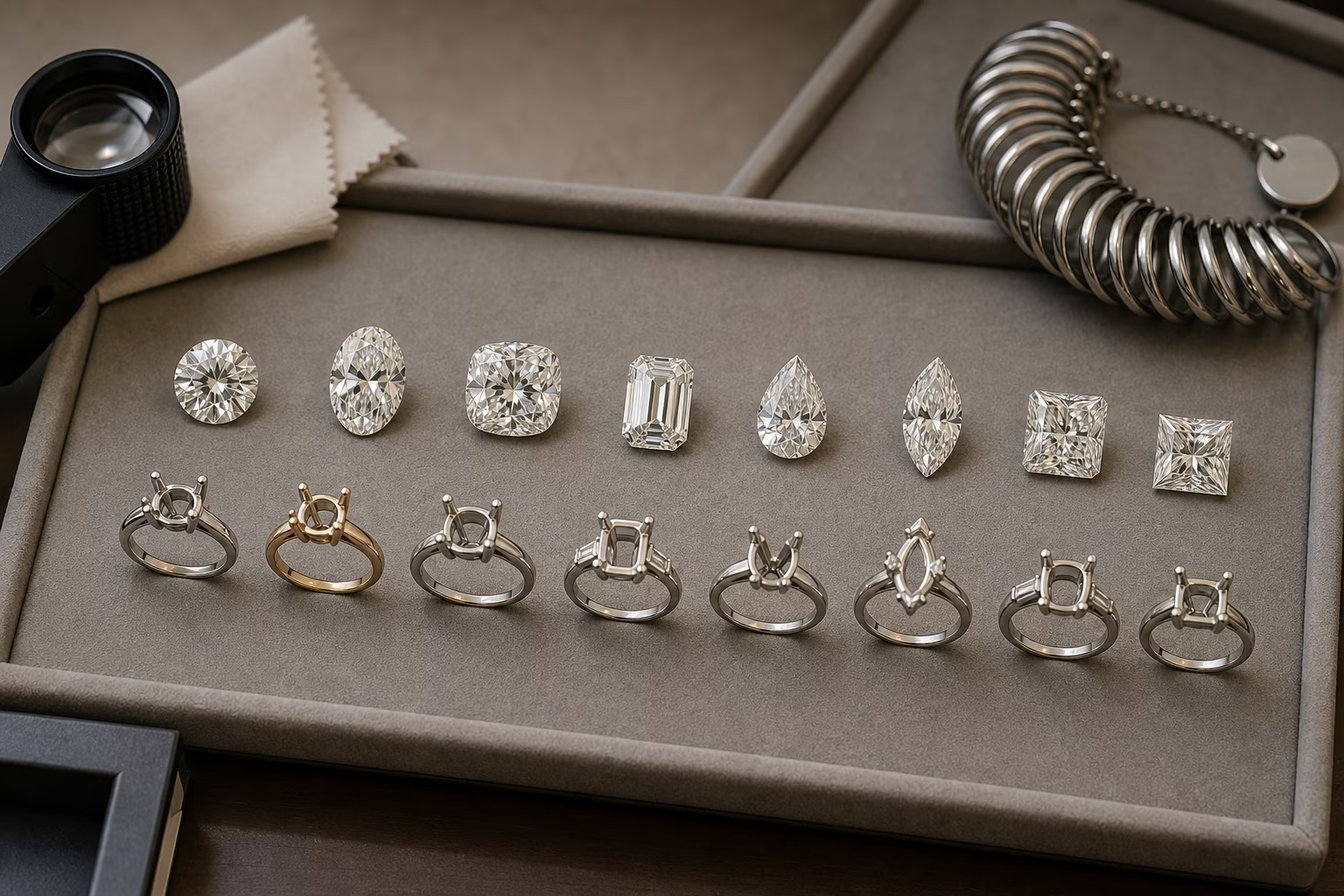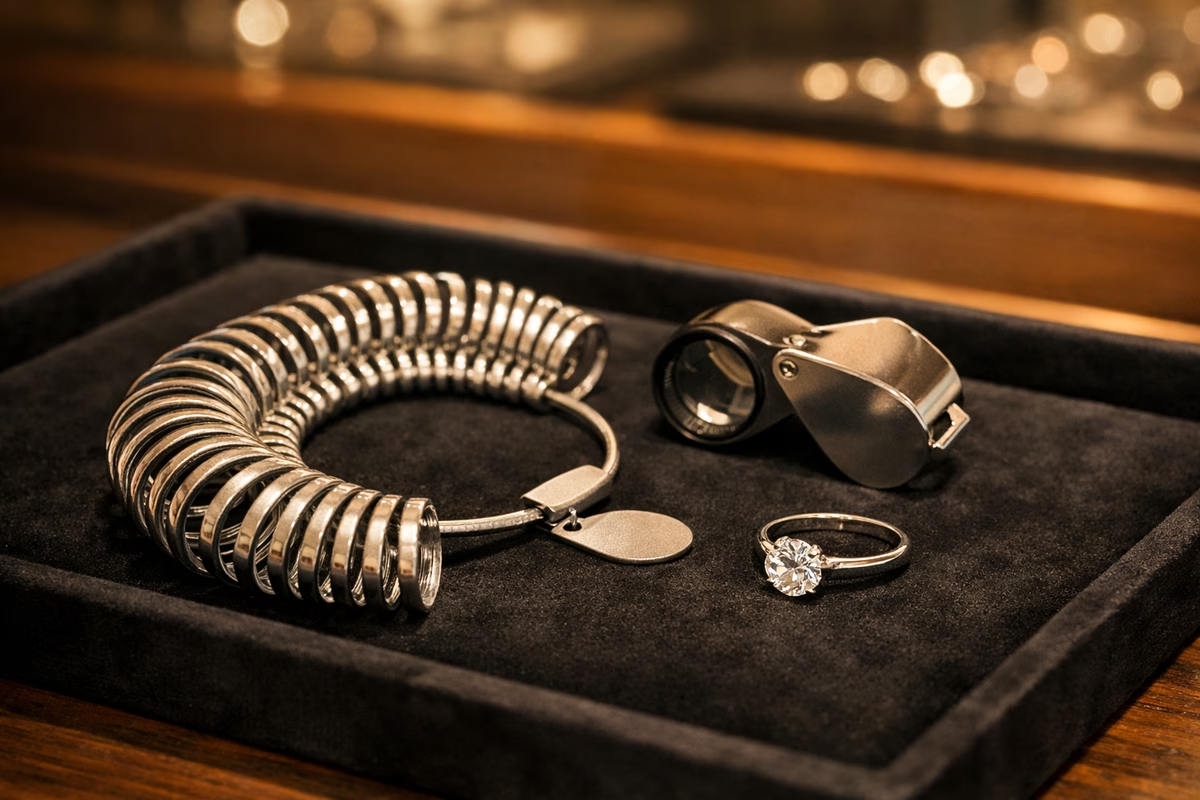
Most engagement ring shopping starts with a bit of panic. You want the ring to be beautiful, meaningful, and wearable, but the internet makes it sound like there is one right answer and a lot of wrong ones.
The simplest way to steady the process is to remember what a ring is. It is a small object that will be worn, bumped, washed, and seen in ordinary light. A ring that looks perfect on paper but feels awkward in daily life stops being special pretty fast. The goal is not to win a spec sheet. The goal is to buy something that feels right every time it is on the hand.
Start with priorities. If your partner cares most about sparkle, pay attention to cut and to settings that show the stone. If they care more about craft, look at proportions, metal choice, and how the setting sits on the finger. If ethics and value matter most, lab-grown stones or recycled metal may be the better fit. None of those choices is less romantic than the others. Romance is paying attention.
Set the budget before you start shopping. It is not there to shrink the moment. It keeps the decision clear and keeps the rest of your life intact.
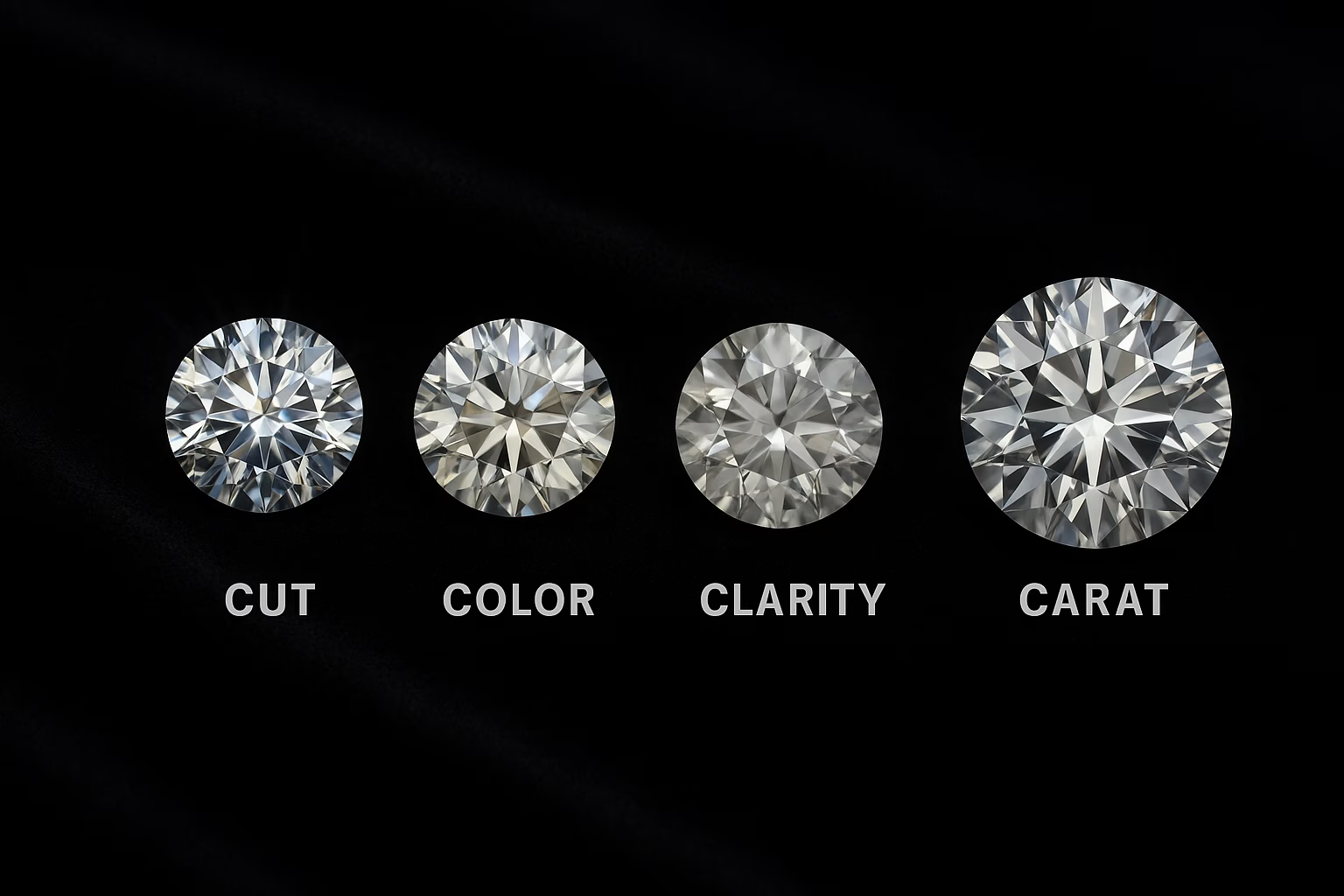
Once you look at stones, cut starts to matter more than people expect. It is not the same thing as shape. Cut is how well the stone returns light, which is why one diamond can look alive while another with similar stats feels flat. You do not need every grading detail. You just need a stone that looks bright and lively in normal light.
Carat is weight, not face-up size. Two stones with the same carat can look different depending on depth and shape. Clarity matters too, but not as much as the sales pitch makes it sound. If a stone looks clean to the naked eye, small inclusions are usually not a problem.
Then you try on settings, and the choice becomes real. A halo can feel bold or busy. A solitaire can feel clean or too plain. A thicker band can feel solid. A thin band can feel light but need more care. Prongs can catch on sweaters. This is where you stop shopping in theory and start shopping for how the ring will actually live.
Look at the ring in daylight and in ordinary indoor light, not just under store spotlights. Bright lighting can hide problems. If it still looks good when the lights are normal, you are close to the right answer.
Treat lab-grown and natural diamonds as a values choice, not a status choice. Lab-grown usually gives more size for the money. Natural stones carry rarity and a different resale story. Pick the one that matches what matters to you.
By the time you buy, the best feeling is relief. You can explain the choice in a few plain sentences. It fits the hand. It matches the person. It looks good in normal light. It stays inside the budget. That is enough.
If you want the deeper guides behind this, read The 4Cs of Diamonds and Ring Settings .
Slow the decision down
A ring decision can carry money, symbolism, family expectations, style, ethics, and daily comfort all at once. For Buying an Engagement Ring, the useful move is to slow the process until the practical and emotional parts can both be seen. A beautiful ring still has to fit a hand, a budget, a lifestyle, and a story.
Start with the wearer rather than the display case. Notice jewelry habits, metal preferences, hand use, sensory comfort, work constraints, and whether surprise matters less than confidence. A ring that looks perfect online may be wrong for someone who works with gloves, dislikes height, or wants low maintenance.
Then separate choices that are reversible from choices that are not. Sizing, insurance, cleaning routines, and wedding band pairing can be adjusted. Stone shape, setting style, metal, vendor, and budget deserve slower thought.
Use documentation as kindness. Keep receipts, grading reports when relevant, appraisal notes, care instructions, and resizing policies together. The paperwork is not romantic, but it protects the romantic object from confusion later.
Buying an Engagement Ring should help the purchase feel more humane: less pressure, clearer tradeoffs, and a ring chosen for the person who will actually wear it.
Notice what the story needs
After reading Buying an Engagement Ring, return to the person, not the showcase. The useful question is what this ring needs to do in daily life and in memory. It may need to survive hands-on work, sit low under gloves, pair with a future band, honor a family stone, stay inside a budget, or leave room for a proposal that feels like the couple rather than the market.
Write the non-negotiables in plain words. Comfort, metal color, stone shape, height, durability, ethics, insurance, return policy, and resizing can all matter. Once those are visible, the shopping process becomes less vulnerable to pressure.
If a detail is uncertain, pause before turning uncertainty into cost. Try on similar shapes, compare settings in real light, ask about maintenance, and read documents carefully. A slow decision is not less romantic. It is often more respectful.
The ring should carry affection, not confusion. A clear process gives the object a better chance of becoming part of daily life with ease.
Use the idea once
After reading Buying an Engagement Ring, choose one practical use for the guide. A single grounded action teaches more than rereading a list of terms, steps, or options.
Write what you tried and what changed. The note can be brief, but it should connect the page to a real object, taste, routine, purchase, or decision.
If the result is unclear, repeat the experiment more simply. Good learning often comes from removing variables, not adding them.
The point is practical fluency. The guide should make the next choice easier to see and easier to repeat.