Most engagement ring shopping begins in the same emotional weather: excitement with a chance of panic. You want the ring to be beautiful, meaningful, and “right,” but the internet turns the process into a maze of contradictory rules. Buy bigger. Buy better. Buy vintage. Buy lab-grown. Buy from a famous house. Buy from a local jeweler. Don’t get upsold. Don’t be cheap. Don’t be fooled. It’s easy to feel like there’s a correct answer you’re about to miss.
The easiest way to calm the whole experience is to remember what a ring is. It’s not a spreadsheet. It’s a small object that will be worn, handled, knocked into doorframes, rinsed at sinks, and looked at in ordinary light. A ring that wins on paper but fails in daily life becomes a strange kind of disappointment. So the goal isn’t to “maximize” a spec. The goal is to buy a ring that feels quietly right every time it lands on the hand.
The first real decision is not about diamonds. It’s about priorities. You sit down and decide what you’re optimizing for. If your partner cares most about sparkle and presence, you prioritize cut quality and design that shows the stone. If they care about subtlety and craft, you might prioritize proportions, metal choice, and a setting that feels intentional rather than loud. If they care about ethics and value, you might lean toward lab-grown or recycled metal. None of these priorities is more romantic than the others. Romance is choosing with attention.
Then you decide what you’re willing to spend, not as a performance, but as a boundary that protects the rest of your life. A budget is not a limitation; it’s a tool that turns shopping into selection. Without one, every showroom becomes a place where you can always be made to feel slightly behind.
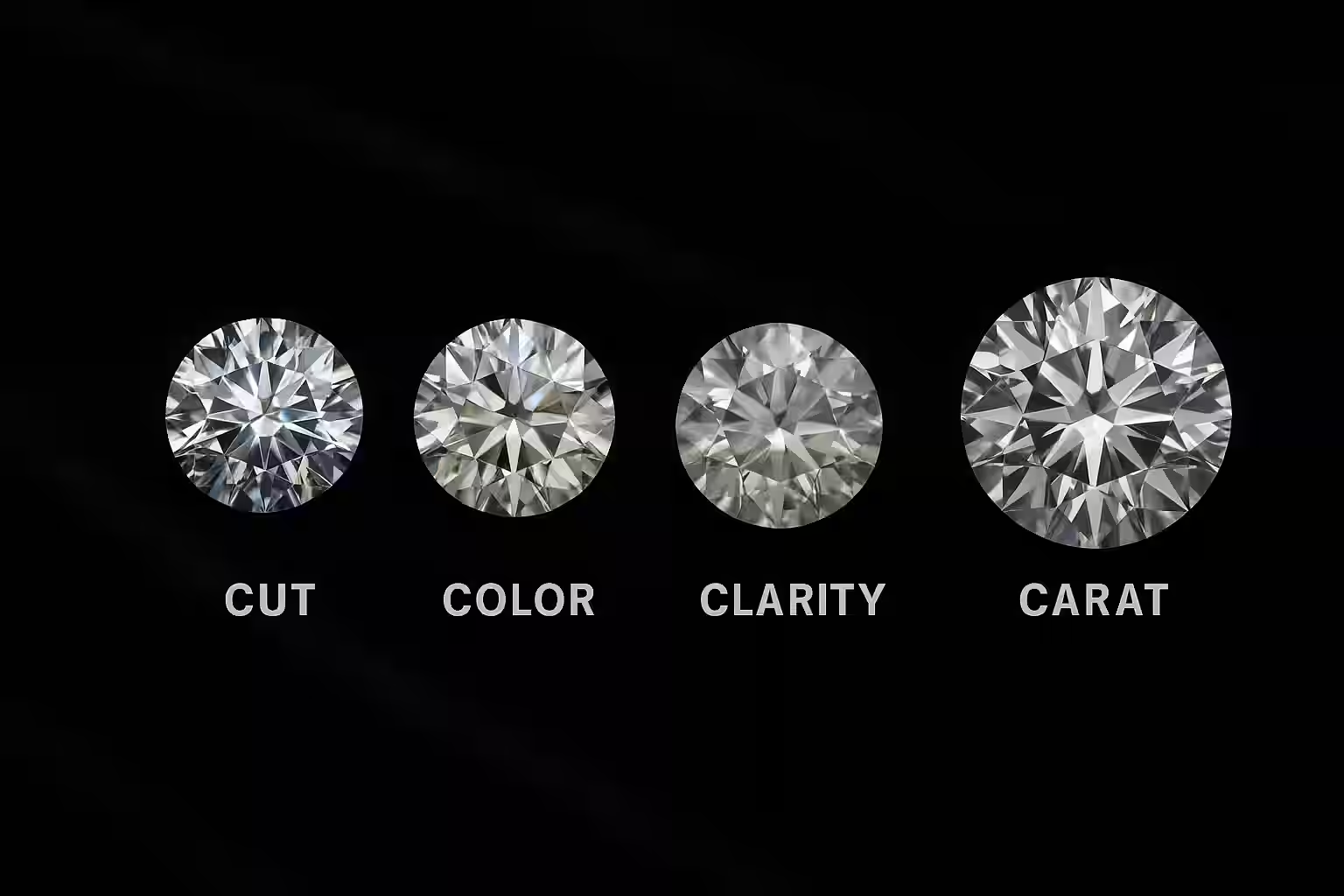
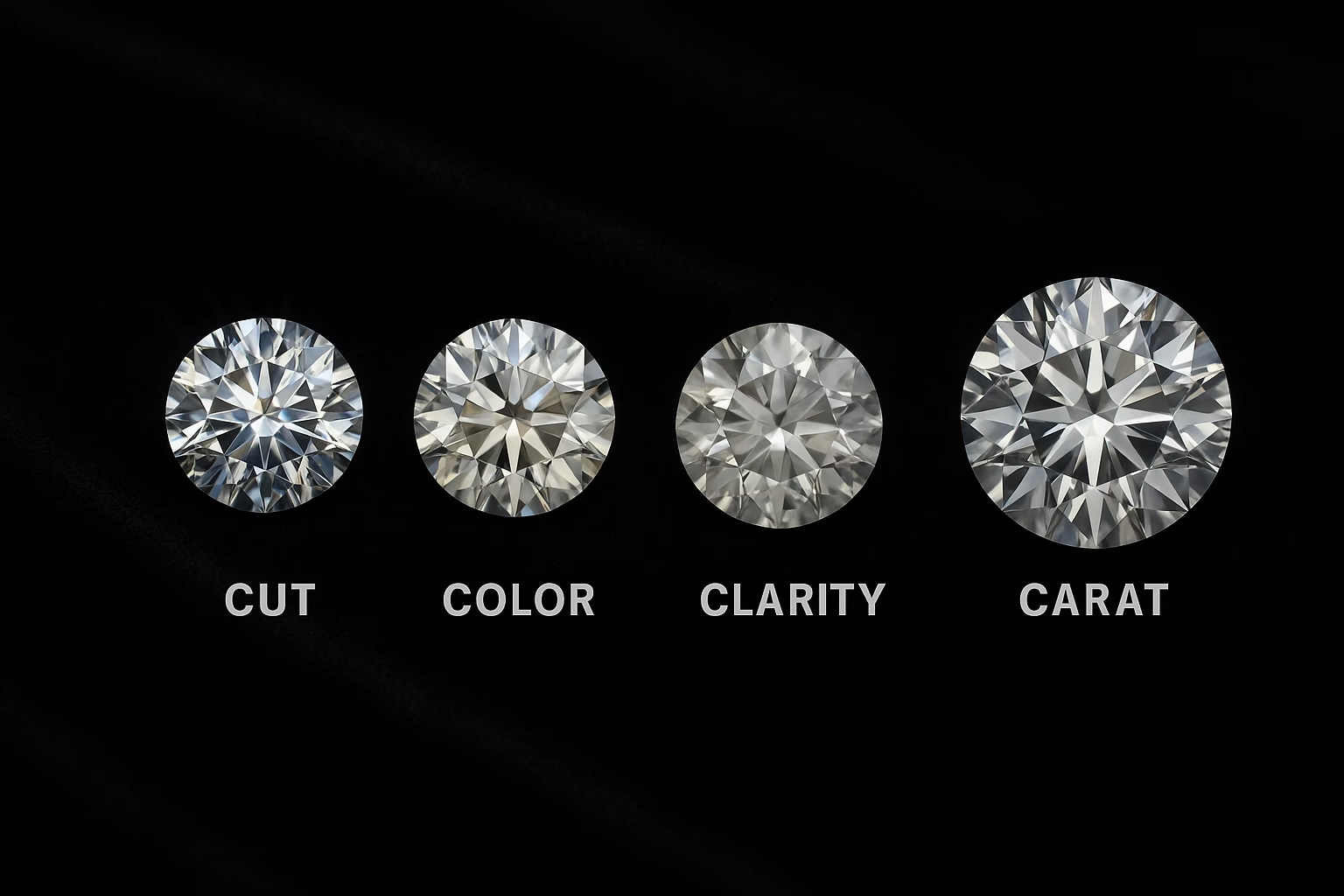
When you finally look at stones, you learn a counterintuitive truth: most of what you think you see is cut. Cut is not the shape. Cut is how well the stone returns light. It’s why one diamond looks alive and another looks sleepy even if the carat weight is similar. This is why two diamonds with the same “stats” can feel completely different on the hand. You don’t need to memorize every grading nuance. You just need to insist on a stone that looks bright and lively in normal light, not just under showroom spotlights.
You also learn that size is not a single number. Carat is weight, not face-up spread. Two stones can weigh the same and look different in size depending on how they’re cut and how deep they are. The most satisfying rings often come from choosing a stone that wears well rather than one that merely sounds impressive in a sentence.
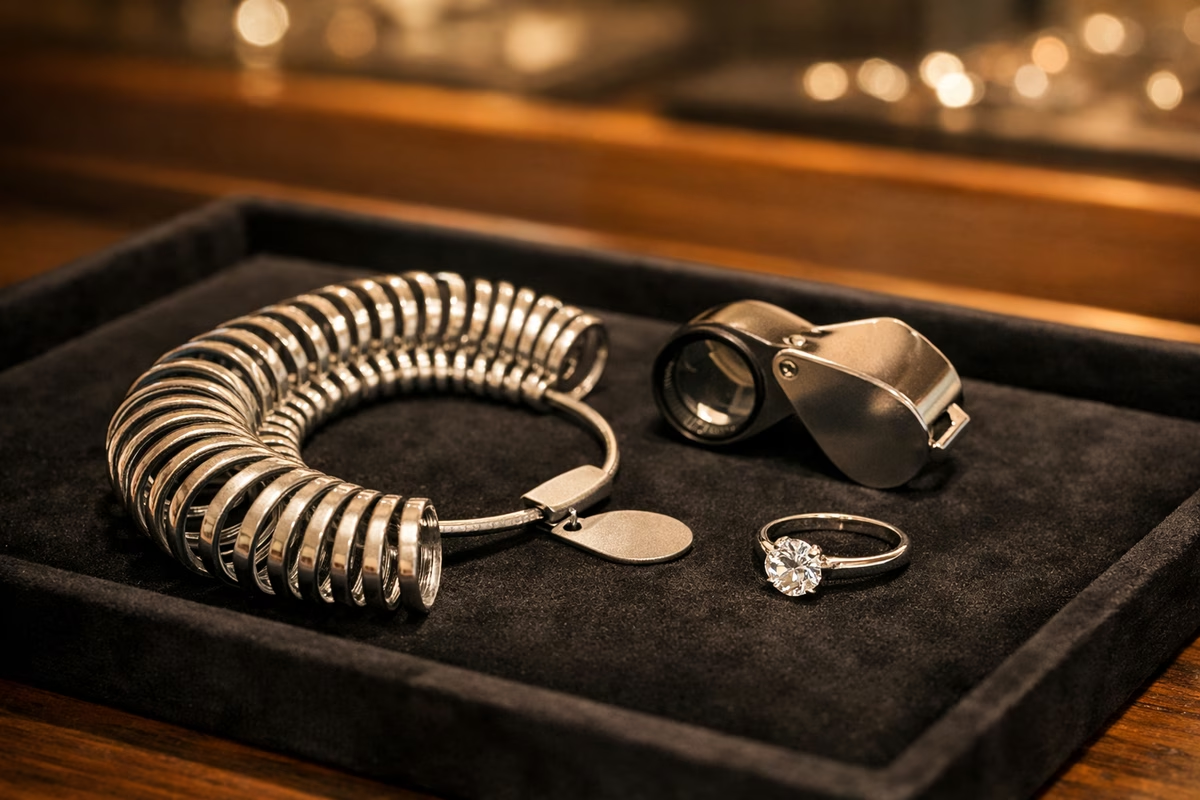
At some point the salesperson brings out a loupe or a microscope, and you feel the urge to become a forensic investigator. It’s okay to look, and it’s okay to care, but remember what the ring will be: a wearable object seen mostly at arm’s length. Tiny inclusions that are invisible to the naked eye do not ruin a ring. In many cases, choosing a slightly lower clarity that still looks clean is a smart way to put budget into what actually shows—cut quality and design.
Then you try on settings, and the shopping becomes real. The hand has opinions that the mind didn’t predict. A halo can feel too busy or it can feel like a frame that makes the center stone glow. A solitaire can feel timeless or too simple depending on personality. A thicker band can feel modern and secure; a thinner band can feel delicate but may demand more care. Prongs can feel invisible until you notice they catch on sweaters. This is where you stop shopping for a ring in abstract and start shopping for a ring in life.
If you have one moment of discipline, let it be this: look at the ring in ordinary light. Step away from the jewelry counter’s spotlight theatrics. A ring that looks good in soft daylight and indoor room light is the ring you will love long-term. A ring that only looks incredible under the store’s lighting can be a costly illusion.
When you decide between lab-grown and natural, treat it as a values decision, not a status decision. Lab-grown diamonds can offer excellent value and are chemically the same material; natural diamonds carry geological rarity and a different resale story. Either can be a thoughtful choice. The “right” option is the one that aligns with what you and your partner actually care about.
By the time you’re ready to buy, you want one feeling above all: relief. Not because you’re escaping the process, but because the decision is coherent. You can explain it simply. You chose a ring that fits the hand. You chose a design that matches your partner’s style. You chose a stone that looks alive. You stayed inside a budget that keeps the rest of your life generous.
That is what buying well feels like. Not triumph. Not maximization. Just calm certainty.
If you want the structured deep dives that support this story, read The 4Cs of Diamonds and Ring Settings.