Engagement ring etiquette used to be simple: he buys a ring, he proposes, she says yes, she wears it on her left hand. Deviation from the script was rare.
That script is still available. Millions of people follow it happily. But millions of others are writing new versions—couples who shop together, partners who propose to each other, people who skip the diamond, families who contribute, and traditions from cultures that do things entirely differently.
This guide covers both the traditional etiquette and the modern variations. Not to tell you which is “correct” (there is no correct), but to give you the information to navigate proposals, purchases, and social expectations with confidence—whatever version of the tradition you choose.
Who Buys the Ring?
The Traditional Answer
The person proposing buys the ring. Historically, this was the man. The ring was both a romantic gesture and, in older legal frameworks, a form of financial guarantee—a pledge of intent that had monetary value.
The Modern Landscape
Today’s reality is more varied:
- One partner buys solo. Still the most common arrangement. The proposer selects and purchases the ring, sometimes with guidance, sometimes as a surprise.
- Both partners shop together. Increasingly popular. The couple selects the ring together (or the recipient chooses the ring), and the proposer handles the purchase. This eliminates the risk of choosing something unwanted while preserving the proposal moment.
- Both partners contribute. Some couples split the cost, especially when the ring is expensive or when both partners value financial equity. This is pragmatic, not unromantic.
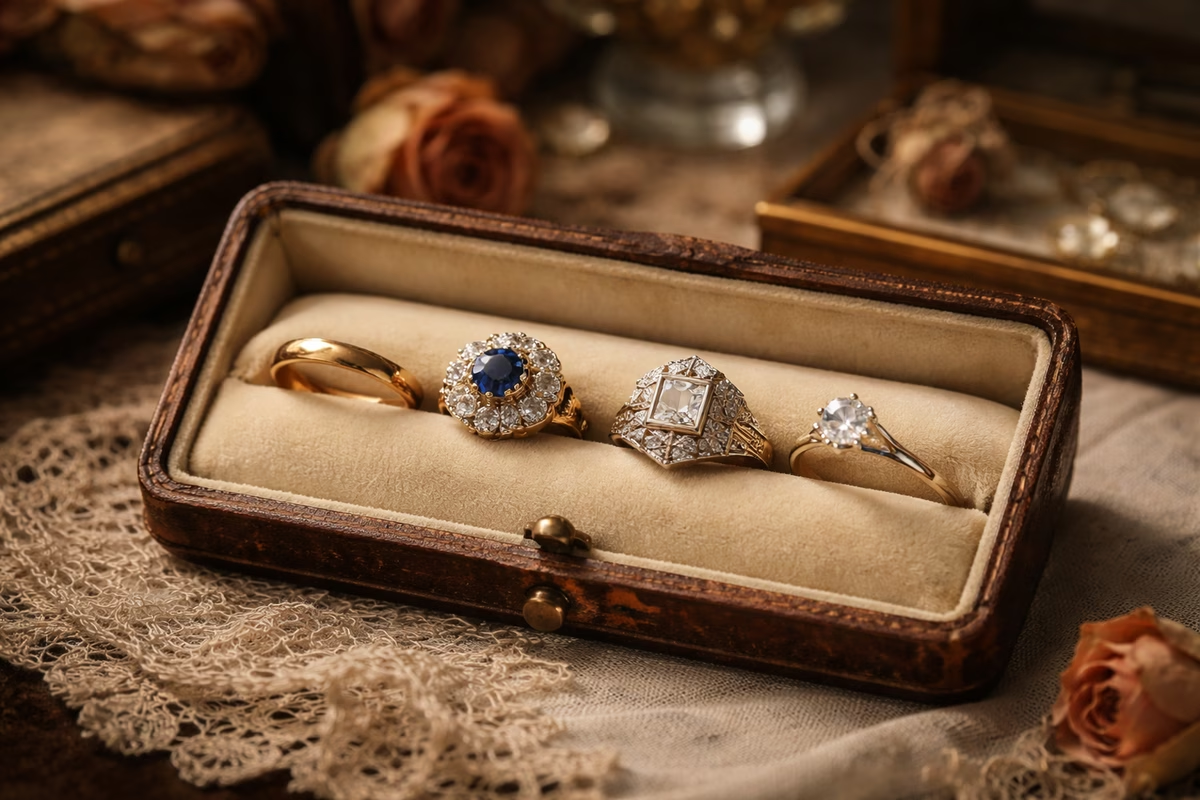
- Family rings. An heirloom ring passed down through a family carries meaning that money can’t replicate. Using a family ring is traditional in many cultures and avoids the purchasing question entirely—though the ring may be reset or resized.
- Each buys for the other. In mutual-proposal scenarios (increasingly common in same-sex and egalitarian relationships), each partner buys a ring for the other.
The Proposal: Traditions and Variations
Asking Permission
Traditional: The proposer asks the recipient’s father (or parents) for permission or blessing before proposing.
Modern variation: Many couples have moved from “asking permission” (which implies the recipient is property to be given) to “giving a heads-up” or “asking for a blessing” (which respects family relationships without implying ownership). Some skip this step entirely—particularly when the couple has been living independently as adults.
The thoughtful approach: If your partner’s family is close and traditional, a conversation with the parents shows respect and makes them feel included. If your partner values independence, asking might feel patronizing. Follow your partner’s likely preference, not a rule.
The Surprise Factor
Fully surprised: The proposal—ring, timing, and all—is a complete surprise. Romantic if you know your partner’s taste well. Risky if you don’t.
Semi-surprised: The couple has discussed marriage (and possibly the ring), but the specific proposal moment is a surprise. This is the most popular approach: the decision is mutual; the moment is a surprise.
Not surprised at all: Both partners know exactly when and how. Some couples propose to each other simultaneously. Some make a joint decision with no formal proposal. Not less romantic—just differently romantic.
The Knee
Going down on one knee is a Western European tradition that became an American standard. It’s cinematic, recognizable, and emotionally powerful. It’s also completely optional. Propose standing, sitting, walking, in bed, in the car, over coffee—whatever feels true to your relationship.
Which Hand, Which Finger?
In the United States and UK
Left hand, fourth finger (the “ring finger”). This convention traces back to the ancient Roman belief in the vena amoris—a vein running from that finger to the heart. The anatomy is false, but the tradition persists.
After the wedding, most Americans and Brits wear both the engagement ring and wedding band on the same finger, with the wedding band closer to the heart (put on first, engagement ring on top).
Around the World
| Culture / Country | Engagement Ring Hand | Notes |
|---|---|---|
| US, UK, France, Australia | Left hand | Most common Western convention |
| Germany, Russia, India, Norway | Right hand | Engagement on right; may move to left at wedding |
| Brazil | Right hand during engagement | Switched to left at wedding |
| Sweden | Both partners wear a ring | Simple band for both during engagement |
| Ireland | Claddagh ring tradition | Heart facing out = engaged; heart facing in = married |
| Many Middle Eastern cultures | Varies | Gold, gemstones, and designs vary by region and family |
There is no universal rule. Wear the ring on whichever hand and finger feels right for you and your culture.
After the Proposal: Wearing and Announcing
When to announce
Announce when you’re ready. Some couples tell family immediately. Others wait days or weeks to enjoy the news privately first. There’s no “correct” timeline.
Social media: Many couples announce on social media. There’s no obligation to. If you do, be aware that posting the ring invites commentary on the ring—which you may or may not want.
Wearing the ring at work
In most professional settings, wearing an engagement ring is completely normal. If you work in a field where a ring is impractical (healthcare, food service, manufacturing, sports), consider a silicone band for work and the ring for other times.
When people ask about the ring
People will ask about the ring. Some will ask about cost. You are never obligated to share the price. Polite deflections: “It was perfect for us,” “I love the design,” or simply a warm “Thank you” to the compliment. Talking about ring cost is considered poor etiquette in most contexts.
What Happens If the Engagement Ends?
This is uncomfortable but important.
Legal perspective (varies by jurisdiction)
In many US states, an engagement ring is considered a “conditional gift”—given in anticipation of marriage. If the marriage doesn’t happen, the ring may legally belong to the giver. But laws vary significantly by state and country. Some states treat it as an unconditional gift. Some consider who “caused” the breakup.
Practical perspective
Common outcomes:
- Returned to the giver. The most traditional approach.
- Kept by the recipient. More common when the giver ended the relationship.
- Family rings returned to the family. Nearly universal expectation for heirloom rings.
- Negotiated. Some couples discuss and agree, especially if both contributed financially.
The best approach: have an honest conversation. If that’s impossible, consult local legal norms.
Cultural Traditions Worth Knowing
The Irish Claddagh
A ring featuring two hands holding a heart beneath a crown, representing friendship, love, and loyalty. How it’s worn signals relationship status: heart facing out on the right hand means the wearer is single; heart facing in on the right means they’re in a relationship; heart facing in on the left means they’re married.
Jewish Traditions
Traditionally, a plain gold band without gemstones—symbolizing the hope that marriage will be simple and unbroken. The ring is placed on the index finger during the ceremony and often moved to the ring finger afterward. Modern couples may supplement with a gemstone engagement ring.
Indian Traditions
Engagement customs vary enormously across Indian cultures and religions. In many Hindu traditions, the engagement ceremony (sagai or ring ceremony) involves exchanging rings, often gold. In some traditions, the groom’s family presents jewelry to the bride. Specific customs depend on the family’s regional, religious, and personal traditions.
Chinese Traditions
Gold jewelry (rings, bracelets, necklaces) is traditionally given during the betrothal process (guo da li), often by the groom’s family. Western-style diamond engagement rings have become common in urban China alongside traditional gold gifts.
Same-Sex Couples
Same-sex couples navigate engagement rings without the traditional gendered script—which is both a freedom and a blank page. Common approaches: matching bands, distinct individual rings, one partner proposing with a ring while the other responds in kind, or non-ring tokens of commitment. There are no rules because the tradition is still being written.
Modern Etiquette Questions
Can the recipient choose their own ring?
Yes. This is increasingly common and often practical. The recipient knows their own taste better than anyone. Shopping together or communicating preferences directly produces better outcomes than guessing.
Is it okay to skip the ring entirely?
Yes. Some couples use tattoos, other jewelry, or no physical symbol at all. An engagement ring is a cultural convention, not a requirement for a valid engagement or marriage.
Should wedding guests comment on the ring?
A compliment is always welcome. Asking about cost, carat weight, or whether the diamond is “real” is not. If someone asks, a vague positive answer is fine. You don’t owe details.
What about engagement rings for men?
Men’s engagement rings are growing in popularity. Simple bands, signet-style rings, and subtle gemstone rings are common choices. Some men wear the engagement ring on the right hand and move it (or replace it with a wedding band) at the ceremony.
Next Steps
- Read The History of Engagement Rings for how we got here
- See Ring Shopping Without Losing Your Mind for the practical buying narrative
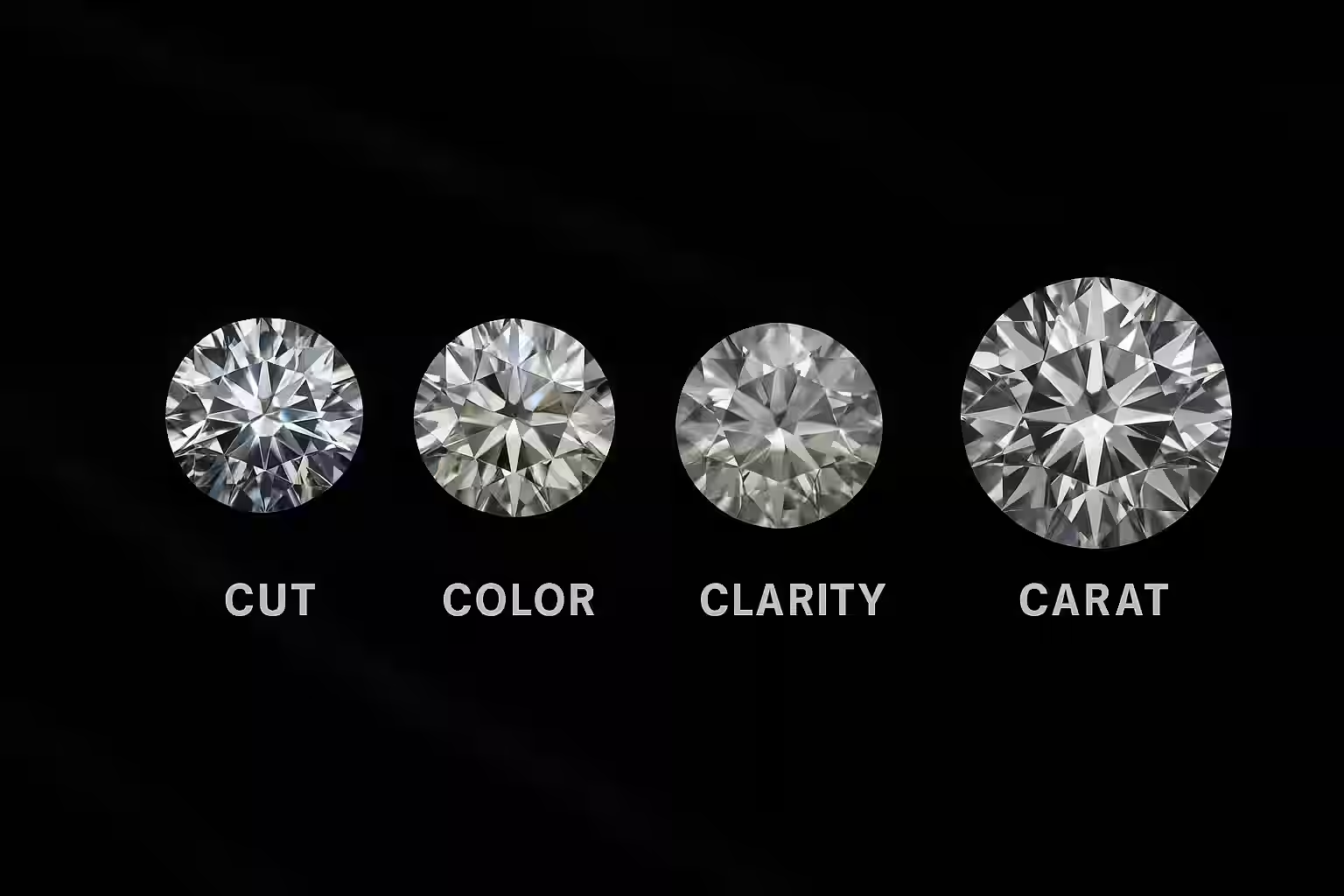
- Explore The 4Cs of Diamonds for understanding what you’re buying
- Try Ring Settings Guide for understanding design options
- Check Ring Care and Maintenance for keeping the ring beautiful long-term