Radiant-Cut Engagement Rings: Bright Facets, Corners, and Shape Balance
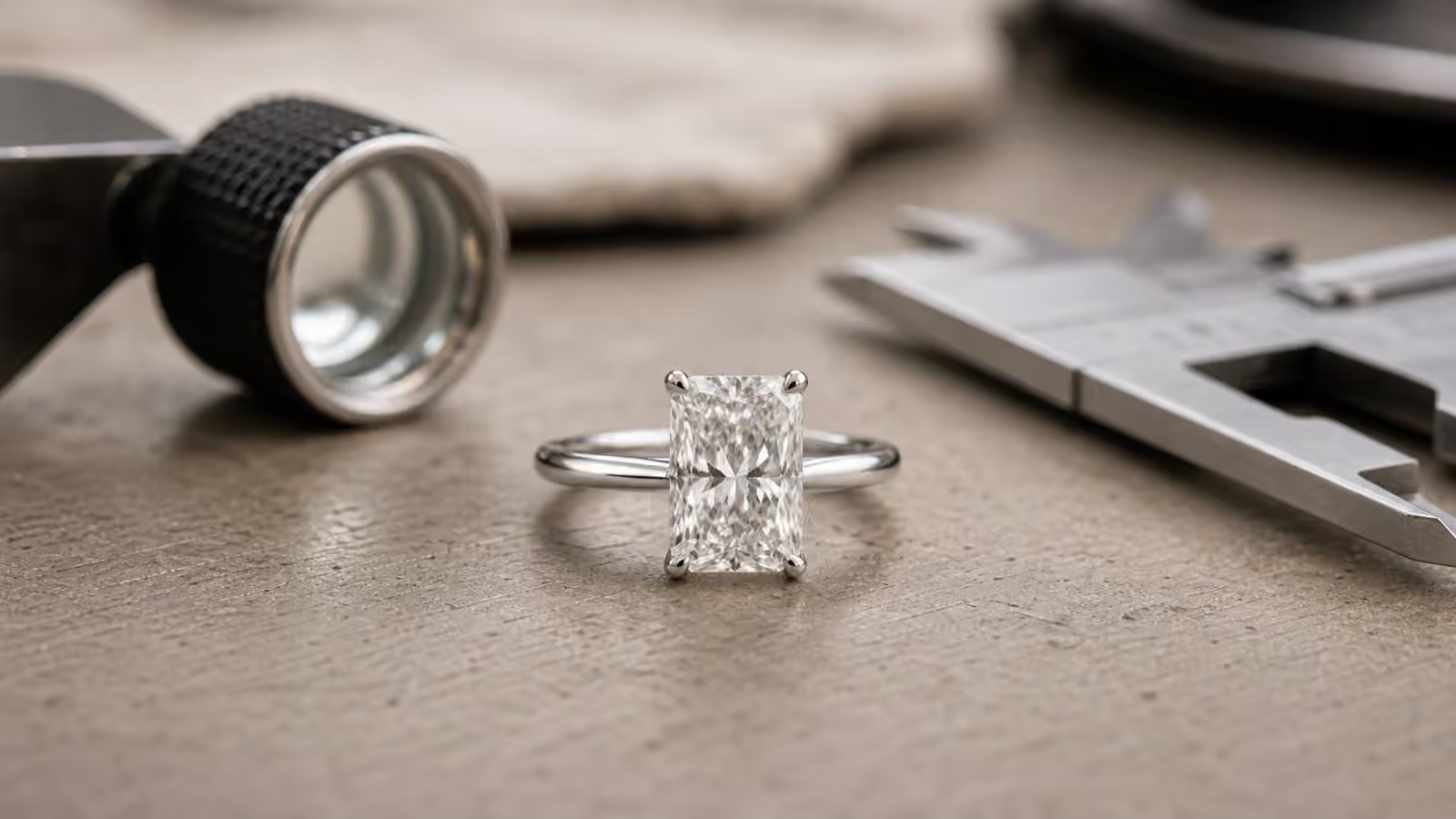
Radiant-cut engagement rings appeal to people who like straight edges but do not want the quiet mirror effect of an emerald cut. A radiant has a square or rectangular outline with cropped corners and a brilliant-style facet pattern. It can look crisp from the top, lively in motion, and substantial on the hand. In the right setting, it feels modern without being cold. In the wrong proportions, it can look glassy, busy, or smaller than its carat weight suggests.
The general diamond shapes guide places radiants among the major fancy shapes, but the radiant category is worth its own guide because shoppers often confuse it with emerald, princess, cushion, or elongated cushion cuts. The outline may be rectangular like an emerald cut, but the sparkle is different. The corners may be softened like a cushion, but the sides are usually straighter. The effect is a diamond that borrows from several families while keeping its own personality.
A radiant is also a practical shape in many settings. The cropped corners make it less vulnerable than a sharp-cornered princess cut, though the corners still need good prong coverage. The brilliant facets can hide some inclusions better than a step cut. The rectangular versions can give strong finger coverage. The buyer’s job is to decide which version of radiant beauty matters most: square balance, elongated elegance, bold sparkle, or a setting that turns the straight outline into a full ring design.
Square and Rectangular Radiants
Radiant cuts come in square and rectangular proportions. A square radiant can feel compact, balanced, and slightly architectural. It works well in a solitaire, halo, or three-stone setting because the center does not create a strong vertical or horizontal direction. A rectangular radiant, especially an elongated one, gives more finger coverage and often feels more dramatic. It can be a good choice for someone who likes emerald-cut proportions but wants more sparkle.
Length-to-width ratio gives a rough sense of the outline, but it does not describe everything. Some rectangular radiants have elegant proportions with clipped corners that feel intentional. Others look narrow or stretched, with a center pattern that struggles to keep up with the length. Square radiants can also vary: one may look like a crisp square, while another may read almost cushion-like because of stronger corner softness.
Face-up measurements are important because radiants can carry weight in depth. A stone may have an appealing carat number but appear smaller than expected from above. Another radiant slightly under a popular weight threshold may spread beautifully and look nearly the same size in a ring. The diamond carat weight and face-up size guide is useful when comparing radiants because visible millimeters often matter more than the emotional pull of a round number.
What Radiant Sparkle Looks Like
Radiants are brilliant-cut fancy shapes, but their sparkle is not identical to a round brilliant. The facet pattern can look bold and organized, or it can look more splintery and crushed-ice-like. Some radiants show a clear central brightness with lively flashes toward the corners. Others have a busier pattern across the whole stone. Preference matters, but dead areas are still a concern. A radiant should not rely on store spotlights to look alive.
Look at the center first. Because the radiant shape has straight sides and clipped corners, the middle of the stone carries much of the visual weight. If the center looks watery, flat, or persistently dark, the ring may not satisfy even if the outline is attractive. Move the stone slowly under diffuse light, not only under the brightest jewelry-case lighting. The diamond cut quality and light return guide explains why a diamond’s performance has to hold up away from theatrical lighting.
Online videos can help if they are honest. Ask for a face-up video, slow movement, and a neutral background. Compare more than one radiant at once if possible. A single stone can look impressive until it is placed beside another radiant with cleaner light return. The best comparison uses similar size, color, and setting context so the facet behavior can speak clearly.
Color and Clarity in Radiants
Radiant cuts often hide small inclusions better than emerald cuts because their brilliant facets create more movement. That can make them a strong choice for buyers who want value without choosing a high clarity grade they cannot see. Still, inclusions near the corners, under prongs, or in the center should be inspected carefully. A feature that disappears in a video may become visible in softer light or from a certain angle.
The diamond clarity and eye-clean guide is a good frame for radiant shopping. The question is not whether a report has the prettiest clarity abbreviation. It is whether the stone looks clean to the wearer at normal viewing distance, whether any inclusion affects transparency, and whether the setting can hold the diamond safely. If a jeweler suggests hiding an edge inclusion under a prong, ask whether that placement is only visual or also structurally sensible.
Color can be more visible in some radiants than buyers expect, especially in elongated stones and larger carat weights. Warmth may gather toward the ends or show from the side. This is not necessarily a flaw. A radiant in yellow gold can look rich and intentional with a warmer diamond. A radiant in platinum may call for a color range that suits the wearer’s preference for whiteness. The diamond color grades guide helps connect the lab grade to metal color and real viewing conditions.
Corners, Prongs, and Setting Structure
Radiants have cropped corners, and those corners are part of the shape’s strength. They reduce the sharp vulnerability of a true square corner while preserving a geometric outline. Even so, the corners need proper protection. Four-prong settings often place prongs at or near the corners, and double-prong settings can look tailored on larger radiants. The prongs should look even, smooth, and proportionate, not bulky enough to turn the outline into a rounded rectangle.
The engagement ring prongs guide is useful because radiant prongs affect both security and style. Claw prongs can sharpen the outline and create a refined look. Rounded prongs can make the ring feel softer. Double claws can add a custom or vintage note. A bezel can also work, especially for someone who wants a smoother daily-wear profile, but it changes the open sparkle and gives the ring a stronger metal frame.
Radiants can sit beautifully in solitaires, halos, three-stone rings, and side-stone designs. A solitaire emphasizes the straight sides and clipped corners. A halo can make the ring look larger, but the halo must follow the radiant outline cleanly. A poorly proportioned halo can make the center look smaller or blur the corners. Tapered baguettes, trapezoids, or slim side stones can support a rectangular radiant without crowding it, though they add complexity and maintenance.
Radiant vs. Emerald, Cushion, and Princess
Many buyers arrive at radiant cuts by comparing them with other shapes. Against an emerald cut, the radiant is usually brighter and busier. Emerald cuts have step facets that flash in broad, quiet mirrors and reveal clarity more openly. Radiants have brilliant facets that create more sparkle and can hide small features. If you love the outline of an emerald cut but want livelier sparkle, radiant is a natural comparison. The emerald-cut engagement rings guide helps clarify that difference.
Against a cushion cut, the radiant often feels straighter and more geometric. Cushions have rounded corners and softer sides; radiants usually hold a more defined rectangle or square. If the wearer likes romantic softness, a cushion may win. If they like clean edges with movement, the radiant may feel better. Against a princess cut, the radiant’s cropped corners can be easier to protect, and the outline may feel less severe. The princess cut can look sharp and contemporary, but the radiant offers a slightly more forgiving geometry.
These comparisons should happen on the hand, not only in search filters. A rectangular radiant can make a finger look longer. A square radiant can feel balanced and easy to wear. A cushion may look softer with the same setting. The best shape is the one whose outline, sparkle, and practical setting choices still feel right after the first moment of brightness.
Band Pairing and Daily Wear
Radiant-cut rings are usually straightforward to pair with wedding bands if the center stone sits high enough or the basket is designed with band clearance. Low-profile settings may be more comfortable but can create a gap with a straight band. A halo or side-stone radiant may need extra planning because the ring’s shoulders can widen near the center. The wedding band pairing guide helps you test this before the engagement ring design is locked.
Daily wear depends on height, prong smoothness, and metal structure. A radiant solitaire with a sturdy head can be quite wearable. A high-set radiant with delicate pave shoulders asks for more attention. Accent stones, hidden halos, and thin shanks all add beauty but also add small places where maintenance matters. The ring should match the wearer’s habits rather than assuming every delicate detail will be treated gently forever.
Choosing the Radiant That Holds Your Attention
Radiant cuts are at their best when the outline and light behavior agree. The stone should have the shape the wearer wants, not merely the carat weight the listing promotes. It should look lively in normal light. The corners should be protected without being swallowed. The color and clarity should make sense for the setting and budget. When those details align, a radiant engagement ring has a satisfying dual nature: straight-edged and sparkling, structured and energetic, distinctive without feeling unfamiliar.