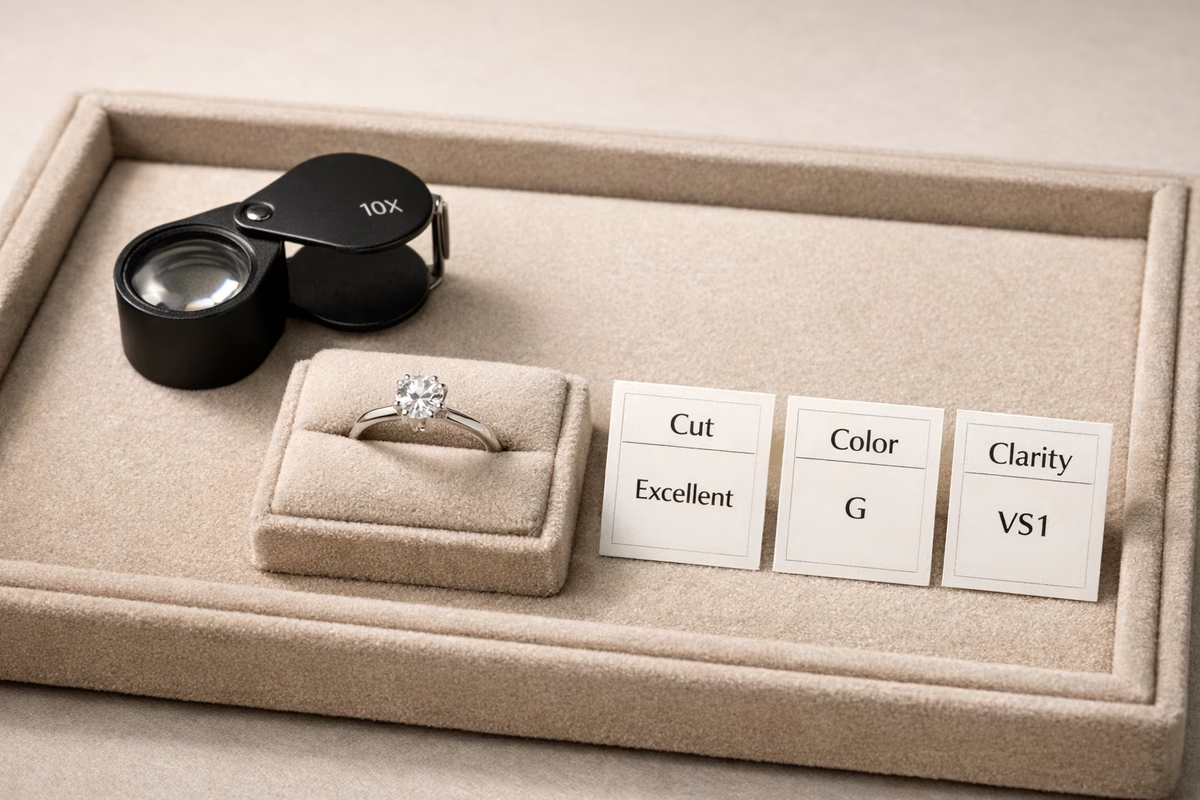
Engagement Ring Shopping: 30-Minute Quickstart
There’s a particular kind of overwhelm that settles in the moment you decide to buy an engagement ring. The world suddenly seems full of carats and clarity grades, of prong settings and pavilion angles, of choices that feel impossibly consequential for something you’ve never done before. Take a breath. In the next thirty minutes, you’re going to learn everything you need to walk into any jeweler with confidence—and perhaps even a bit of excitement.
The Foundation: Understanding What You’re Actually Buying
At its heart, an engagement ring is beautifully simple: a setting crafted from precious metal that holds a center stone, usually a diamond. That’s it. Everything else—the halo of smaller diamonds, the intricate filigree, the paved band—is elaboration on this fundamental partnership between metal and stone.
Before you fall in love with any particular ring, establish your budget. This isn’t unromantic; it’s wise. The jewelry industry once convinced a generation that two months’ salary was the standard, but that number was marketing, not tradition. Your budget should reflect what you can comfortably afford while remembering that this ring is just one chapter in a larger story that includes the proposal, the wedding, and the life you’re building together. Most couples spend somewhere between three and ten thousand dollars, but the ring that matters is the one that feels right for your circumstances.
The Language of Light: Understanding the Four Cs
Diamonds are graded on four characteristics, and understanding these will transform you from a nervous shopper into an informed buyer.
Cut reigns supreme among the four Cs—it determines how brilliantly your diamond captures and returns light to the eye. A masterfully cut diamond becomes a living thing, dancing with fire and brilliance as it moves. The grades descend from Excellent and Ideal through Very Good, Good, Fair, and Poor. Never compromise here; a well-cut diamond of modest size will outshine a larger stone with inferior proportions every time.
Color measures something counterintuitive: the absence of color. The scale runs from D (perfectly colorless, like frozen water) to Z (noticeably tinted). Here’s a secret that will save you money—the human eye struggles to distinguish between D and H when a diamond is set in a ring and viewed under normal conditions. The premium you pay for those top grades often buys you nothing visible.
Clarity assesses the tiny natural birthmarks within a diamond, called inclusions. The scale spans from Flawless down through various grades of Slightly Included and Included. The revelation that liberates most shoppers is this: if you can’t see the inclusions with your naked eye, they don’t diminish the diamond’s beauty. An “eye-clean” SI1 or SI2 diamond looks identical to a flawless one when worn on a hand.
Carat refers to weight, not size, though the two are related. One carat equals two hundred milligrams. There’s nothing magical about round numbers—a 0.9-carat diamond looks nearly identical to a 1.0-carat stone but often costs fifteen to twenty percent less.
The hierarchy to remember: Cut matters most, Color second, Clarity third, and Carat last. This priority order will guide every smart decision you make.
The Art of Intelligent Compromise
Here lies the path to extraordinary value: choosing specifications that look identical to premium options but cost significantly less.
Seek out diamonds graded G or H in color. These near-colorless stones appear white to the eye yet cost twenty to thirty percent less than their D-F counterparts. Pursue eye-clean SI1 or SI2 clarity grades—why pay for microscopic perfection that requires magnification to appreciate? Never waver on Excellent or Ideal cut, for this is where sparkle lives. And consider the shy carat weights—0.9 instead of 1.0, 1.4 instead of 1.5—where prices jump disproportionately at psychological thresholds.
What you should avoid is equally clear: never sacrifice cut quality for size, never pay premiums for internally flawless clarity you cannot perceive, and think twice before choosing trendy settings that may not age gracefully.
The Essential Questions
When you stand before a jeweler, three questions will tell you nearly everything you need to know.
First, ask to see the GIA or AGS certificate. These independent laboratories provide unbiased assessments of diamond quality. If a jeweler cannot produce certification from one of these institutions, thank them for their time and leave. No certificate, no trust.
Second, inquire about the cut grade. Accept nothing less than Very Good, but prefer Excellent. This single grade determines more about your diamond’s beauty than any other factor.
Third, for SI1 and SI2 diamonds, ask whether the stone is eye-clean and verify this yourself. Look at the diamond from a normal viewing distance. If you see no flaws, you have found your sweet spot of value.
Choosing Your Diamond’s Shape
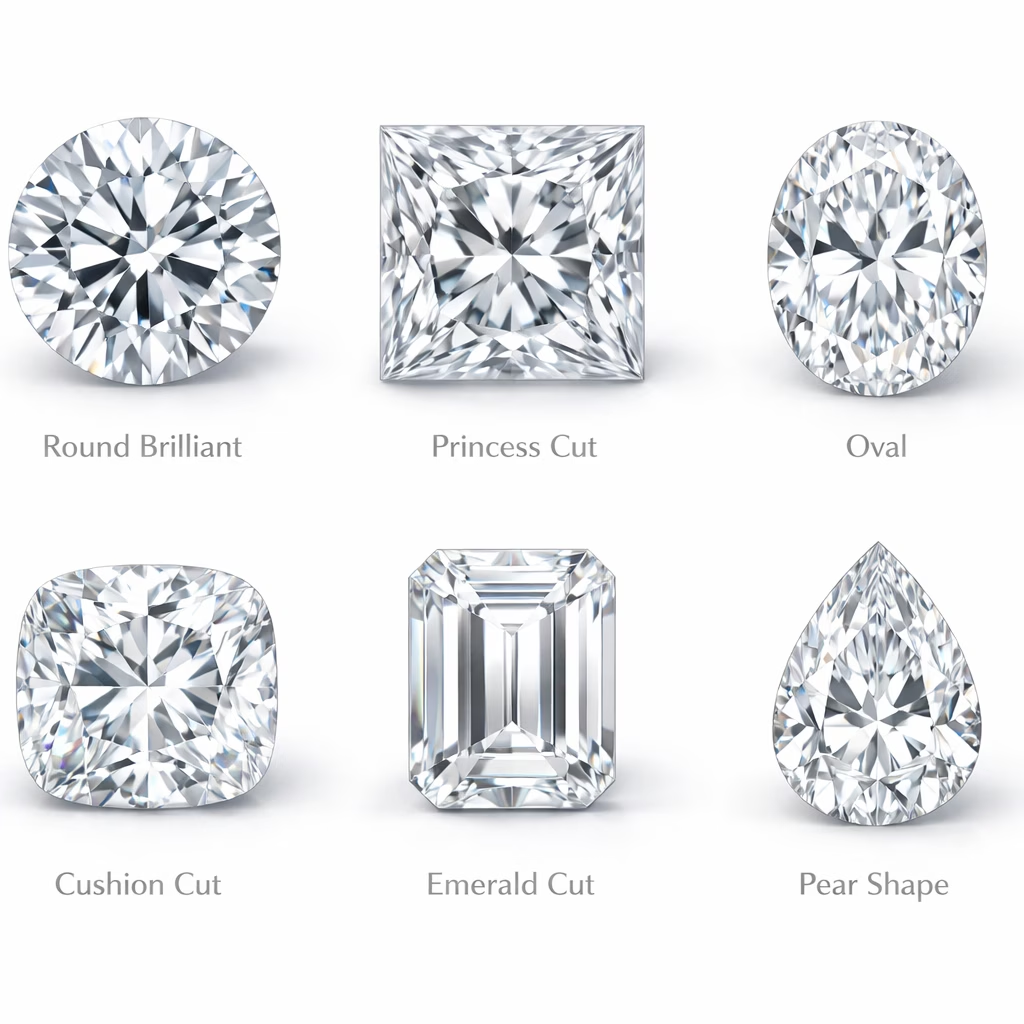
The shape you choose says something about the wearer’s style, and each has its own character.
The round brilliant claims sixty percent of all engagement diamond sales, and for good reason. Its fifty-seven facets are mathematically optimized for maximum light return, creating unparalleled sparkle. It flatters every hand, pairs with every setting, and holds its value beautifully. Its only drawback is price—demand commands a premium.
The princess cut offers a modern, architectural alternative. Its square silhouette sparkles brilliantly, typically costs about twenty-five percent less than rounds of equal weight, and feels distinctly contemporary. Those sharp corners require protective V-prongs to prevent chipping.
Ovals and cushions are enjoying a moment, and deservedly so. They appear larger than rounds of the same weight due to their elongated profiles, and they offer something genuinely different. When shopping for these shapes, examine each stone carefully for the “bow-tie” effect—a dark shadow that can appear across the center of poorly proportioned fancy shapes.
Emerald and Asscher cuts belong to a different aesthetic family altogether. These step-cuts create a hall-of-mirrors effect rather than fiery brilliance, evoking art deco elegance and architectural refinement. Because their large, open facets hide nothing, they demand higher color and clarity grades than brilliant cuts.
Match the shape to her sensibility: round for the classicist, princess for the modernist, cushion or emerald for the vintage lover, oval or pear for the individualist.
The Setting: Your Diamond’s Stage
The setting is where metal meets stone, where engineering serves beauty.
The solitaire remains timeless precisely because it asks nothing of the viewer except to appreciate a beautiful diamond. A single stone, held by four or six slender prongs, rising from a simple band—this is engagement ring as Platonic ideal. Solitaires pair with any wedding band, never compete with the diamond, and cost between three hundred and fifteen hundred dollars for the setting alone.
The halo surrounds your center stone with a circle of smaller diamonds, creating the illusion of greater size while adding significant sparkle. A well-designed halo can make a one-carat diamond appear closer to one and a half carats. This is the choice when you want presence without paying for a larger center stone.
The three-stone setting tells a story—past, present, and future. The symbolic weight of this design resonates with many couples, and the flanking stones add substantial visual impact.
Pavé bands line the ring’s shoulders with tiny diamonds set like cobblestones, adding sparkle without overwhelming the center stone. They require occasional maintenance as those small stones can work loose over years of wear.
For metal, consider your options thoughtfully. White gold offers bright contemporary appeal but requires rhodium replating every few years to maintain its color. Platinum costs more but never needs replating, holds stones more securely, and develops a beautiful patina over time. Yellow gold brings warmth and tradition. Rose gold adds romance and uniqueness while proving surprisingly durable thanks to its copper content.
The Mistakes That Cost Money and Heartache
Learn from others’ errors.
Never purchase without independent certification—GIA or AGS only. Never buy from the first jeweler you visit; comparison shopping is essential when spending thousands of dollars. Don’t overpay for clarity grades invisible to the naked eye. Research her style before shopping—examine her Pinterest boards, notice the jewelry she wears, and discreetly consult her closest friends. Don’t forget ring sizing—borrow a ring she wears on her left ring finger if you can do so without detection. Insure the ring immediately after purchase. And always confirm the return policy before buying.
Walk away from any jeweler who cannot produce GIA or AGS certification, who refuses to let you examine the diamond under magnification, who pressures you aggressively, or who presents deals that seem impossibly good. Trust your instincts; the diamond industry, like any other, has its share of operators seeking to exploit the uninformed.
Your Action Plan
Now translate knowledge into action.
Today, determine your true budget—not what the internet says you should spend, but what you can genuinely, comfortably afford. This week, research her style through every channel available to you: social media, her existing jewelry, her friends’ insights. This weekend, visit two or three jewelers. Handle different rings, ask questions, and get quotes. You’re not buying yet; you’re learning.
When you finally find the ring that feels right, invoke the twenty-four-hour rule. Sleep on it. Compare the price online using the certificate number. Verify the return policy in writing. Then make your purchase with confidence rather than impulse.
The Sweet Spot: Maximum Beauty, Minimum Premium
If you want a formula, here it is: a 0.9 to 1.0 carat round brilliant diamond, G color, VS2 or SI1 clarity (eye-clean verified), Excellent cut, set in a solitaire or simple halo on fourteen-karat white gold. This combination looks virtually identical to a diamond costing forty to fifty percent more. Budget four to six thousand dollars and you’ll hold something that appears worth eight to ten.
For tighter budgets, seek a 0.5 to 0.7 carat stone with H or I color and eye-clean SI clarity. A simple solitaire in fourteen-karat gold can deliver genuine beauty for two to three thousand dollars.
For those with more to spend, a 1.5 carat F-color VS1 diamond in a halo or three-stone platinum setting enters luxury territory while remaining sensible—substantial presence without ostentation.
A Final Word
You now possess more knowledge than most first-time engagement ring shoppers. You understand the four Cs and their hierarchy of importance. You know where to save and where to splurge. You can spot warning signs and ask the right questions.
But remember this: the ring is a symbol, not the thing itself. The thought and care you invest in choosing it matter more than the specifications on any grading report. The love you’re celebrating doesn’t require perfection—just intention, consideration, and the courage to ask someone to share a life with you.
The diamond industry has spent decades trying to convince people that love has a price tag. It doesn’t. The perfect ring is simply the one that reflects your love for this particular person, chosen thoughtfully within your means. Whether it costs two thousand dollars or twenty thousand, its value lies in what it represents: a promise, a question, a beginning.
Go forth with confidence. You’ve got this.