Princess-Cut Engagement Rings: Sharp Corners, Bright Sparkle, and Practical Settings
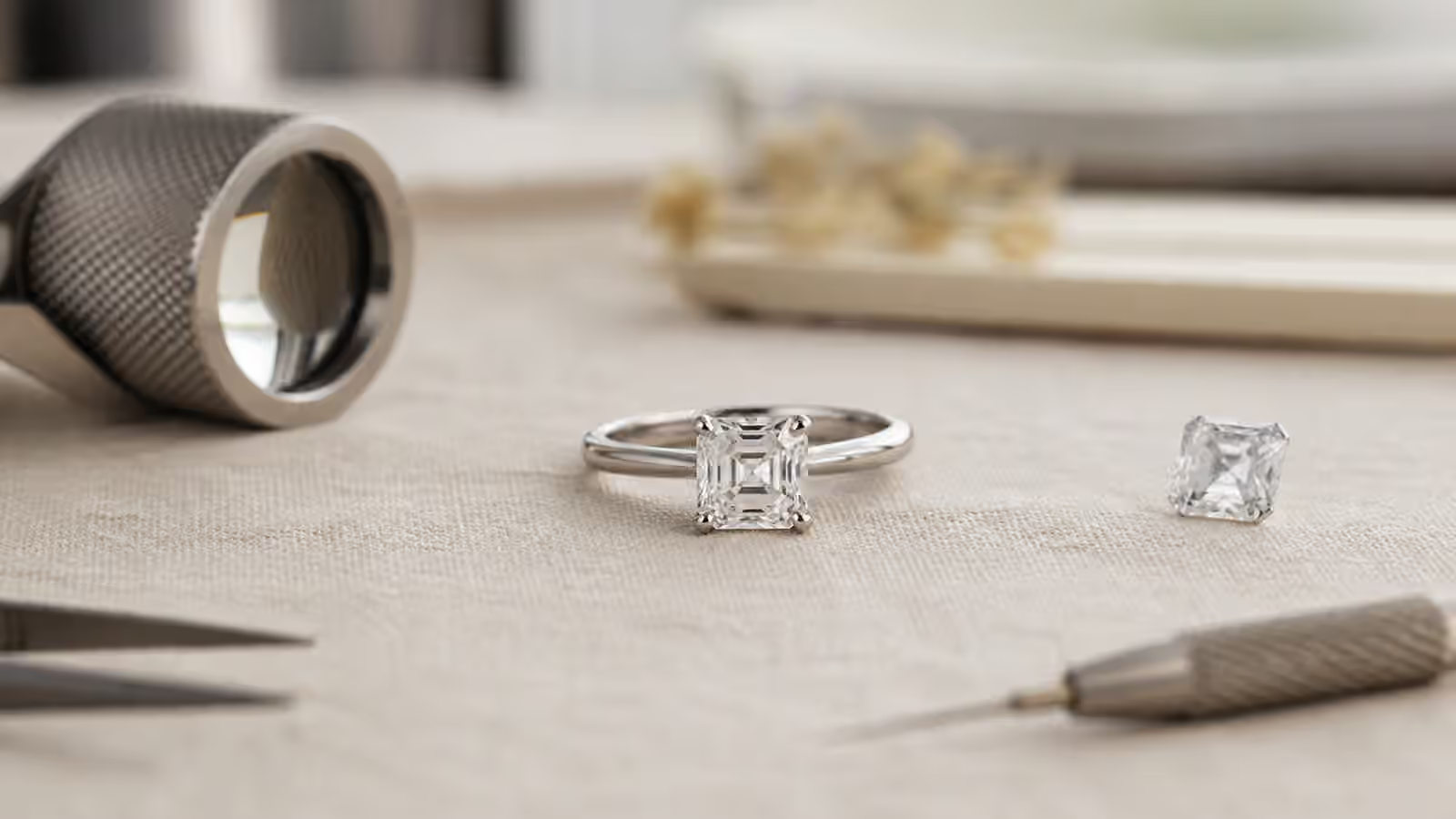
Princess-cut engagement rings appeal to people who want a crisp square outline without giving up lively sparkle. The shape feels modern, direct, and architectural. It can look clean in a solitaire, sharp in a channel-set design, or bold in a halo. Unlike a step-cut square such as an Asscher, a princess cut is built for brilliance. It flashes in smaller, quicker bursts, which is why it can feel energetic even in a simple setting.
The diamond shapes guide covers princess cuts as one major option, but the shape deserves its own page because the corners change everything. A princess-cut diamond has pointed corners that need serious protection. Its sparkle pattern can hide some inclusions, but its geometry can also make a poor setting choice obvious. The right ring lets the square outline stay crisp while keeping those corners out of trouble.
Princess cuts became popular because they offered a square alternative to the round brilliant. That remains their core appeal. They can feel less traditional than a round, less soft than a cushion, and less quiet than an Asscher. For a wearer who likes clean lines but still wants visible sparkle, the shape can be a strong fit. The buying process is not difficult, but it rewards attention to proportion, corner protection, and setting quality.
The Square Outline Needs Protection
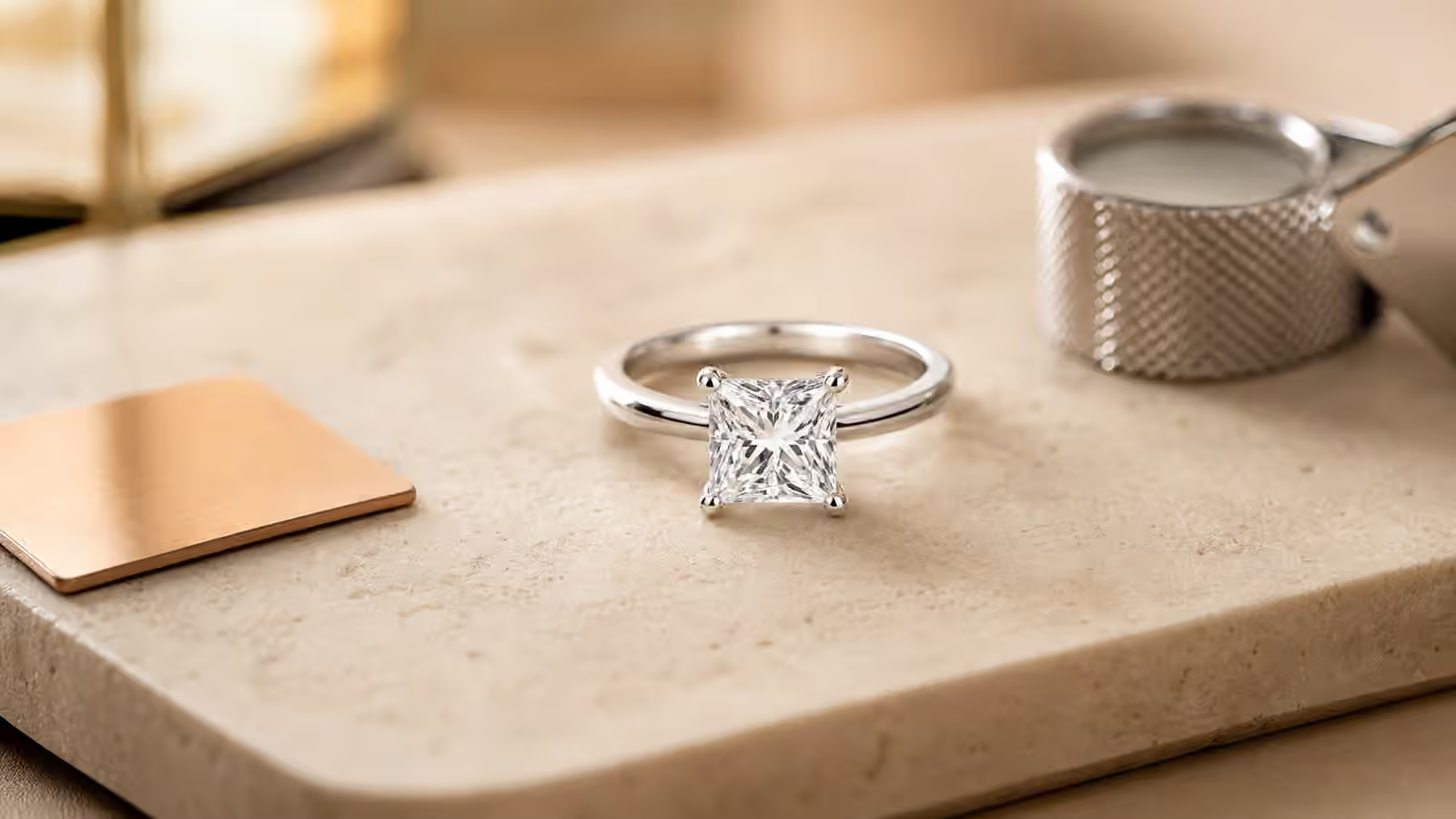
The pointed corners are the princess cut’s signature and its weak spot. Diamond is hard, but hardness does not make a sharp corner immune to chipping from pressure or impact. A princess-cut engagement ring should never leave the corners feeling casually exposed. Protective prongs, V-prongs, or a well-made bezel are not decorative extras. They are part of the engineering that makes the ring wearable.
Many princess-cut rings use four prongs, one at each corner. That can work well when the prongs are substantial enough and shaped cleanly. The prongs should cover the points without swallowing the square outline. If the prongs are too bulky, the stone can look more like a rounded cushion. If they are too thin, the ring may look delicate in a photograph but feel less reassuring for real life.
The engagement ring prongs guide is worth reading before choosing a princess setting. V-prongs can shield corners more deliberately than simple rounded tips. A bezel can protect the entire perimeter, though it changes the look by making the ring feel more graphic and enclosed. The right answer depends on the wearer, but ignoring the corners is not a sensible option.
Proportion Changes the Feeling
A princess cut is usually expected to look square, but not every stone does. Some are slightly rectangular. A small difference may disappear once the stone is set, while a larger difference can make the ring feel off-balance. If the wearer wants a true square, look at the diamond face-up and check the measurements rather than relying on the label.
Depth and spread also matter. Some princess cuts carry weight in depth, which means the stone may not look as large as its carat weight suggests. Others face up generously but lose life if the proportions are poorly judged. The diamond carat weight and face-up size guide helps here because it teaches the difference between weight, millimeter dimensions, and visual presence.
Sparkle should be evaluated in normal movement. A princess cut should not look dead in the center or dark at the corners. Some contrast is normal and can give the stone pattern, but a stone that only looks lively under intense jewelry lighting may disappoint later. The diamond cut quality and light return guide explains why cut is not only a report line. It is how the diamond handles light when the hand moves.
Clarity and Color in a Brilliant Square
Princess cuts often hide small inclusions better than step cuts because their facet pattern is busier. That can make them good candidates for value-minded clarity choices. The goal is an eye-clean diamond, not a flawless report. Still, the placement of inclusions matters. A feature near a vulnerable corner deserves more caution than one tucked where it is invisible and structurally unimportant.
The diamond clarity and eye-clean guide is useful because princess cuts can tempt shoppers to focus only on the grade. Ask where the inclusions are, then look at the stone without magnification from a normal distance. If the stone is eye-clean and the inclusion placement does not raise setting concerns, a lower clarity grade may be perfectly reasonable.
Color judgment depends on metal and preference. Princess cuts can show color differently from rounds, but they are not as revealing as many step cuts. A near-colorless stone can look bright in white metal, while a slightly warmer stone may feel harmonious in yellow or rose gold. The diamond color grades guide gives a practical way to compare stones in context instead of paying for letters that may not change the ring’s appearance.
Settings That Work With Princess Cuts
Princess cuts look strong in solitaires when the head is well made. A clean shank and protected corners let the square shape stay central. A very thin band can make the stone look dramatic, but it may not give the ring enough visual or structural support if the center is large. The engagement ring shank width and comfort guide helps judge that relationship before the ring is reduced to a top-view photo.
Three-stone settings can also suit princess cuts, especially with tapered baguettes, trapezoids, or smaller princess-cut side stones. The geometry needs careful proportion. If the side stones are too large, the ring can become blocky. If they are too small, they may look like afterthoughts. The three-stone engagement rings guide covers the balance between meaning, shape, and daily wear.
Halos can make a princess cut feel larger and more formal. A square halo preserves the outline, while a softer halo can round the visual effect. The maintenance tradeoffs are real because small accent stones add more tiny settings to inspect. Halo engagement rings and side stones and accent diamonds are good companions if the design includes many small diamonds.
Bezel settings are less common for princess cuts than prong settings, but they can be excellent for someone who wants a secure, low-profile ring. A well-executed bezel gives the square outline a clean frame and protects the corners fully. The style becomes more modern and graphic, which can be either the reason to choose it or the reason to avoid it.
Wedding Bands and Everyday Motion
Princess-cut rings can pair easily with wedding bands if the head is raised enough, but a low basket or wide corner structure may create a gap. A gap is not automatically bad. It can look intentional and make the engagement ring feel more separate. The question is whether the wearer likes it and whether the rings rub in a way that causes wear. The wedding band pairing guide helps turn that into a fitting conversation before purchase.
Daily habits matter too. A princess cut in a tall, delicate setting may snag more often than expected. A low bezel may feel smoother but change the ring’s visual lightness. Someone with active hands may prefer stronger prongs, a slightly sturdier shank, or a setting that does not lift the corners high above the finger. The active lifestyle engagement rings guide is helpful when durability is part of the style brief.
A well-chosen princess-cut engagement ring feels crisp without being severe. It gives square geometry and real sparkle in the same object. The best examples protect the corners, show lively light return, keep proportions honest, and use a setting that supports the stone rather than only displaying it. When those details are handled carefully, the princess cut remains what made it popular in the first place: bright, modern, and unmistakably shaped.