Pave Engagement Rings: Tiny Diamonds, Durability, and Maintenance
Pave engagement rings are built on a seductive idea: the center stone is not the only part of the ring that can catch light. Small diamonds set along the shank can turn every hand movement into a soft shimmer. The ring sparkles when the wearer reaches for a glass, writes a note, adjusts a sleeve, or rests a hand on a table. Pave can make a simple solitaire feel dressed, and it can make a modest center stone feel more present without changing the center diamond itself.
The broader side stones and accent diamonds guide explains how small stones affect scale, budget, and maintenance. Pave deserves its own page because it concentrates many tiny settings into the part of the ring that takes daily wear. A single center stone may be held by strong prongs or a bezel. A pave shank may have dozens of small diamonds, each relying on tiny beads, prongs, or shared metal to stay in place.
A good pave ring can be durable enough for regular wear, but it is not the same maintenance proposition as a plain band. The question is not whether pave is too delicate. The better question is whether the design has enough metal, good workmanship, sensible sizing, and aftercare that matches the way the wearer actually lives.
Pave Is a Setting Method, Not Just a Look
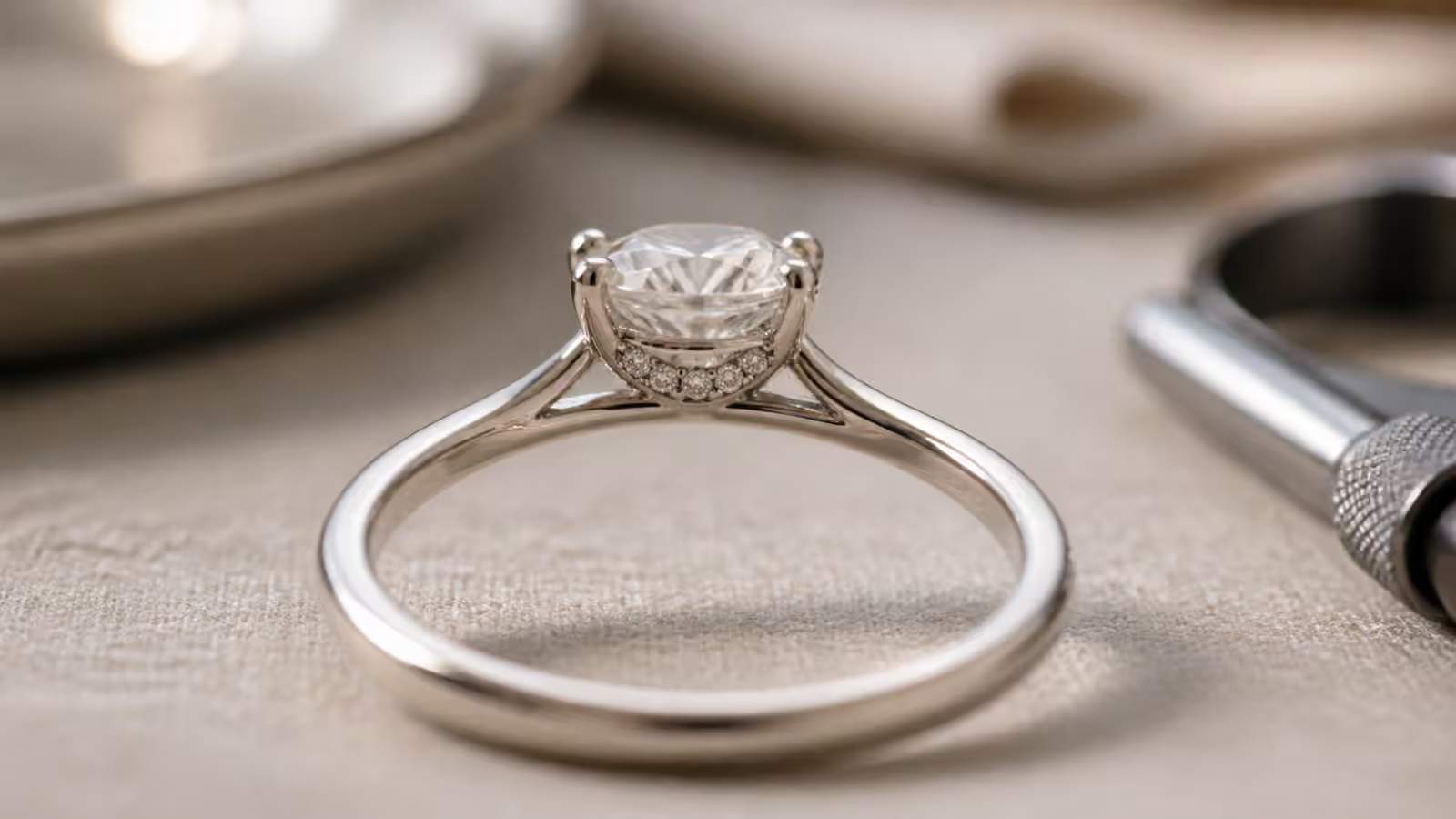
Pave comes from the idea of a surface paved with small stones. In jewelry, it usually means small diamonds set close together so the band appears to shimmer with minimal visible metal. The tiny diamonds are not glued in. They sit in carefully prepared seats and are held by small beads, prongs, or shared bits of metal shaped over the stones.
Traditional bead-set pave shows small rounded beads between the diamonds. Micro-pave uses very small stones and very fine metalwork, creating a delicate glittering surface. French pave uses small V-shaped cuts that can expose more of each stone and make the setting look bright and airy. Shared-prong styles can show less metal, but the shared points may be doing more work between neighboring stones.
Those names are useful, but they do not guarantee quality. A well-made bead-set band can outlast a poorly made micro-pave band. A delicate-looking setting can be sound if it has enough structure. A heavier-looking setting can still lose stones if the seats are weak or the metal is poorly finished. Pave should be judged with eyes and questions, not just terminology.
Look closely at the rows. The stones should sit evenly, the beads should look consistent, and the shank should not appear starved of metal. If the band looks like diamonds have been squeezed into a wire-thin strip, ask how the ring will handle resizing, polishing, and years of friction.
Thin Pave Is Where Beauty and Risk Meet
Many people want the thinnest possible pave band because it makes the center diamond look larger and the ring look refined. A slim shimmer beside a bright center stone can be beautiful. The danger is treating thinness as an unlimited virtue. At some point, there is not enough metal to support both the center setting and the small diamonds along the shank.
The engagement ring shank width and comfort guide explains why width is structural, not merely visual. That point becomes sharper with pave. Every small diamond needs space, and every space cut into the metal removes some material. A plain narrow shank may still have continuous strength. A narrow pave shank has holes, seats, beads, and edges all along the area that bends and rubs.
This does not mean a pave band must be thick or bulky. It means the proportions should be honest. A delicate center stone on a slim pave shank may be reasonable. A large center diamond, high head, hidden halo, and ultra-thin pave shank may ask too much from too little metal. If the ring is top-heavy, spins often, or is worn hard, the small stones are more likely to experience stress.
Taper can help. A band may be slightly stronger at the base while narrowing near the center stone. The shoulders may carry pave only partway down the shank, leaving plain metal where resizing is more likely. These choices are less dramatic than adding more diamonds, but they often make the ring easier to own.
Full, Half, and Partial Pave
Pave does not have to go all the way around the finger. In fact, many practical engagement rings use partial pave only on the top half or shoulders. This keeps the sparkle visible from the top while leaving plain metal at the bottom of the shank. That plain section can make resizing easier and reduce wear where the ring touches desks, handles, weights, and daily surfaces.
Full pave or full eternity-style shanks have diamonds around the entire ring. They can look luxurious because sparkle continues from every angle, even as the ring rotates. The tradeoff is serviceability. Resizing can be difficult, expensive, or impractical because there is no blank metal to cut and adjust. Stones on the underside of the finger also experience more abrasion than stones on the top. They rub against surfaces, neighboring rings, and the inside of the hand.
Half pave is often the practical middle. It gives visible sparkle where the eye sees it and leaves the underside stronger and easier to service. If the wearer has a larger knuckle and the ring rotates, partial pave may reveal plain metal on top at times, but that may still be preferable to the maintenance burden of stones all the way around.
Before choosing full pave, think about finger size stability. The ring sizing guide covers fit in more depth, but pave adds a simple warning: the harder a ring is to resize, the more important the first size becomes. Seasonal swelling, future size changes, and stacked bands should all be considered before stones are set around the entire shank.
Cleaning and Inspection Are Part of the Design
Pave rewards clean habits. Lotion, soap, sunscreen, makeup, and dust collect around tiny stones and beads. A ring that looked like a river of light in the case can look dull if residue fills the spaces between diamonds. Gentle cleaning at home and periodic professional cleaning keep the small stones doing their job.
The ring care guide gives the broader maintenance rhythm. For pave, inspection matters as much as cleaning. Tiny beads can wear down. A small diamond can loosen before it falls out. If a stone is caught early, the repair may be simple. If the stone is lost and the seat is damaged, the work becomes more involved.
Snagging deserves attention. A pave band should feel smooth enough for regular wear. If it scratches neighboring fingers, catches fabric, or feels rough along the sides, the issue may be workmanship or wear. Do not dismiss a snag as normal just because the stones are small. A skilled jeweler can often identify a lifted bead or rough edge before it becomes a lost stone.
Insurance and warranties often treat small accent stones differently from center stones. Some jewelers include limited replacement for pave stones during an initial period, while others do not. Some insurance policies focus on accidental loss or damage and exclude ordinary wear. The ring insurance guide is useful here because pave has many small parts that can blur the line between damage, defect, and wear.
Pave Beside Wedding Bands
A pave engagement ring rarely lives alone forever. When a wedding band joins it, the two rings begin to rub against each other. If the engagement ring has pave on its side walls or the wedding band has diamonds facing the engagement ring, the set can wear faster than expected. Diamonds are hard enough to scratch metal, and metal can abrade tiny settings over time.
The wedding band pairing guide explains gaps, contours, and stack comfort. With pave, the side profile is especially important. A smooth-sided pave band is easier to pair than one with exposed diamonds wrapping around the edges. A plain wedding band may protect the visual balance of a detailed engagement ring. A matching pave band can look cohesive but may increase maintenance if the stones rub.
A thin spacer band can sometimes reduce contact, but it changes the look and adds another ring to manage. A contour band may fit neatly around the engagement ring, though it can limit future flexibility. The goal is not to avoid all contact forever. It is to choose a stack that does not grind delicate settings against each other every day.
Metal color also shapes the effect. Pave in white metal can make diamonds look continuous and bright. Pave in yellow or rose gold creates more contrast between stones and metal. The ring metals guide helps frame the maintenance and aging side of that choice. Since pave has so many tiny metal surfaces, the way a metal wears and patinas will be visible over time.
Choosing Pave With Clear Eyes
Pave is not a shortcut to a better ring. It is a design choice with its own strengths. It can add texture, movement, and presence. It can make a classic solitaire feel more personal. It can help the whole ring catch light, not only the center stone. But it should never compensate for a dull center diamond, a weak shank, or a setting that will not suit the wearer’s life.
Ask where the pave stops, how the stones are set, what repairs are covered, how resizing would be handled, and how often the ring should be inspected. Look at the band from the side, not only from above. Feel the edges. Imagine the ring beside a wedding band, under a winter glove, after hand lotion, and at the end of a normal workday.
The best pave rings feel delicate without being careless. They have enough metal to hold their sparkle, enough plain structure to be serviced, and enough restraint to let the center stone remain the focus. When those pieces are in balance, the tiny diamonds do not feel like extra decoration. They become the ring’s quiet movement, catching light in the small gestures that make the piece part of daily life.