Marquise Engagement Rings: Elongated Shape, Point Protection, and Fit
Marquise engagement rings are not shy. The diamond stretches to two pointed ends, widening through the middle and narrowing with theatrical precision. That elongated outline gives strong finger coverage, often making the stone look larger than its carat weight suggests. It can feel vintage, regal, modern, or slightly rebellious depending on the setting. It can also look awkward if the proportions are too narrow, the bow-tie is too heavy, or the points are not protected properly.
The diamond shapes guide introduces marquise diamonds as one of the classic fancy shapes, but marquise rings deserve focused attention because they exaggerate many engagement ring tradeoffs. They offer visible size, but they have two vulnerable tips. They elongate the hand, but they can dominate a small finger. They can sit north-south in the traditional direction or east-west for a more contemporary line. Every choice changes the ring’s balance.
The shape’s confidence is exactly why some wearers love it. A marquise does not disappear into the category of safe solitaires. It has a profile, a direction, and a history. Shopping for one should feel equally deliberate. You are not only choosing sparkle. You are choosing how much length, how much drama, and how much practical protection belongs in the ring.
Length, Width, and the Shape of the Belly
The most important visual question is proportion. A marquise that is too narrow can look sharp and severe, with little softness through the center. A marquise that is too wide may lose the elegant sweep that makes the shape special. The middle, sometimes called the belly, should feel full enough to support the points. The tips should align with each other, and the two sides should mirror each other gracefully.
Length-to-width ratio helps describe the outline, but it cannot tell the whole story. Two marquise diamonds with similar ratios may look different because one has fuller shoulders and another has a flatter side curve. Look at the stone face-up and ask whether the outline feels natural. If one side appears to bulge or one tip seems off center, the eye may keep returning to that imbalance after the ring is made.
Marquise diamonds are known for impressive face-up size. Their length spreads carat weight across the finger, which can make them look larger than many other shapes at the same weight. That is a real advantage, but it should not become the only goal. A stone chosen only for length may sacrifice brightness, symmetry, or durability. The diamond carat weight and face-up size guide is a useful reminder that visible millimeters matter most when the diamond still looks beautiful.
Bow-Tie in Marquise Diamonds
Like ovals and pears, marquise diamonds often show some bow-tie effect. A dark band or pair of shadows may appear across the center because of the way the elongated facet pattern interacts with light and the viewer. A slight bow-tie can give contrast and depth. A heavy bow-tie can make the middle look dull while the tips sparkle separately.
The bow-tie should be judged in motion. Tilt the stone slowly under soft light and then under brighter light. If the dark area shifts, opens, and becomes part of the diamond’s sparkle pattern, it may be acceptable or even attractive. If it stays fixed and heavy, it may bother the wearer. The oval engagement rings bow-tie guide applies well here because marquise diamonds have the same elongated-light challenge in a sharper outline.
Cut quality matters deeply in a marquise. Fancy shapes do not always give shoppers a simple overall cut grade, so visual comparison becomes essential. Watch whether the tips go dead, whether the center has life, and whether the stone remains bright away from jewelry-case spotlights. The diamond cut quality and light return guide explains how to compare real stones without getting lost in numbers alone.
Protecting Both Points
The two pointed ends are the marquise diamond’s most vulnerable areas. They are also the feature that defines the shape, so the setting has to protect them cleanly. V-prongs are common because they cup each point with metal rather than leaving it covered by a tiny dot. This protection should look intentional and even. If the V-prongs are bulky, they can make the diamond look shorter or clumsier. If they are too thin, they may not give the confidence the shape needs.
Side prongs hold the belly and shoulders, and their placement affects the outline. Four-prong and six-prong variations can both work depending on the stone and setting. The prongs should not make the middle look pinched, and they should not leave long stretches of edge unsupported on a larger diamond. The engagement ring prongs guide is important reading for marquise rings because prong shape is not decorative here. It is part of the survival plan for the points.
A bezel can be an excellent marquise choice for the right wearer. A full bezel protects the entire edge and can make the ring feel sleek, modern, or vintage depending on the metal. It may reduce snagging and create a smoother daily-wear profile. It also changes the look substantially because the metal outline becomes prominent. If the wearer loves the airy look of exposed diamond edges, a bezel may feel too framed. If they value security and a clean silhouette, it may be ideal.
North-South, East-West, and Diagonal Designs
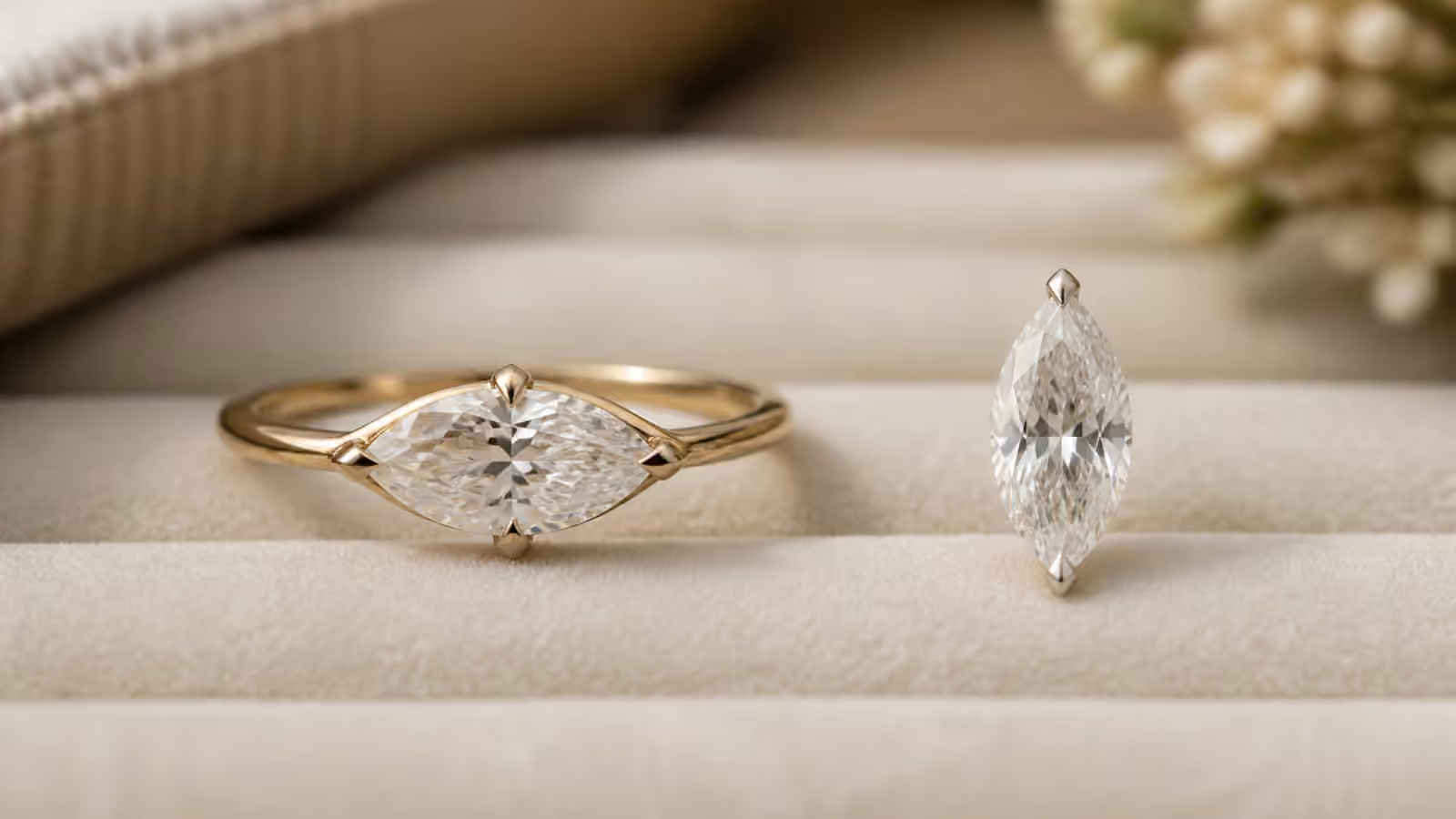
The traditional marquise engagement ring places the points toward the fingertip and the hand. This north-south orientation lengthens the finger and emphasizes the stone’s dramatic sweep. It can be elegant and flattering, especially in a simple solitaire. It also creates a ring with strong vertical presence, which may feel too formal or too large on some hands.
East-west marquise rings turn the stone sideways. The result is more contemporary and often lower in profile. An east-west setting can give the ring width across the hand without extending far toward the knuckle. It may feel easier to wear for someone who likes unusual shapes but wants a less traditional silhouette. The east-west engagement rings guide goes deeper into orientation, finger coverage, and setting height.
Diagonal marquise settings exist too, especially in custom and vintage-inspired designs. They can look fluid and artistic, but they should be approached carefully. A diagonal stone changes how the ring catches on objects, how the wedding band fits, and how the eye reads symmetry. The design can be beautiful when deliberate, but it should not be a workaround for a stone that looks awkward in simpler orientations.
Color, Clarity, and Visual Balance
Marquise diamonds can reveal color toward their points, especially in larger stones or warmer color grades. This does not automatically mean you need a high color grade. A yellow gold setting can make warmth feel cohesive. A white metal setting may call for a diamond that appears whiter to the wearer. Look at the stone from the side and end-on, not only from above. The points can tell you how color behaves in the shape.
Clarity should be judged by visibility and location. Brilliant facets can hide some inclusions, but the long outline gives the eye places to rest. Features near the points deserve careful inspection because those areas are already more vulnerable. A prong may cover an inclusion visually, but the jeweler should also be comfortable with the structural implications. The diamond clarity and eye-clean guide helps keep the clarity conversation practical rather than report-driven.
Because the shape is so visible, balance matters. A very large marquise in a delicate shank can look exciting but may feel top-heavy. A narrow marquise in a heavy halo can look swallowed. The setting should support the stone’s length without pretending it is a round diamond. Tapered shoulders, a slim bezel, or a clean solitaire head often work better than details that fight the outline.
Wedding Bands and Daily Wear
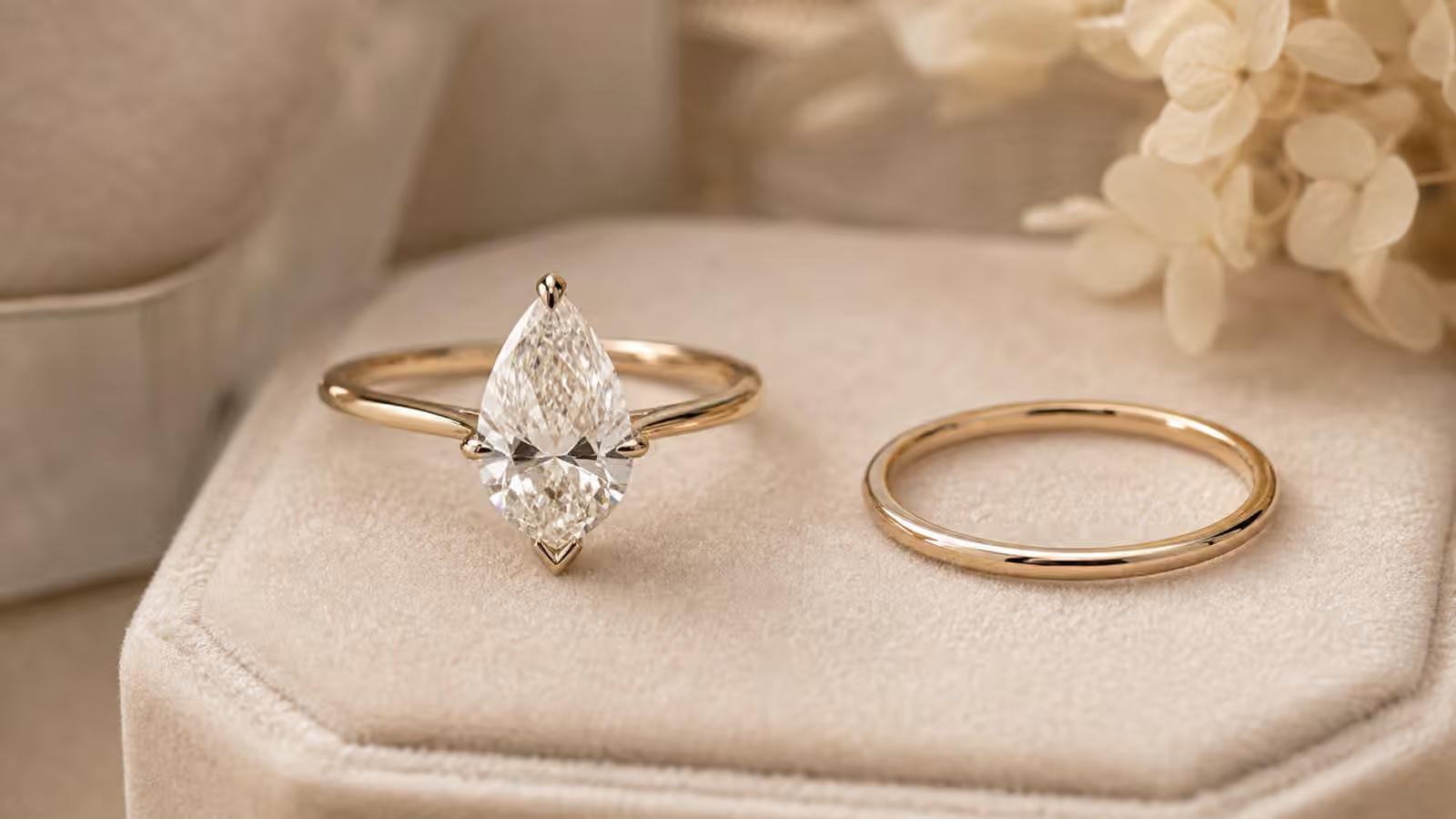
Marquise rings can create band-pairing questions. A north-south marquise may extend down toward the wedding band, especially in a low setting. If the basket sits close to the finger, a straight band may leave a gap. Some wearers enjoy the negative space. Others prefer a curved, chevron, open, or custom band that follows the point. The wedding band pairing guide is worth reading before choosing the setting height.
Daily wear depends on point protection and profile. A high-set marquise solitaire looks dramatic but may be more exposed. A lower bezel or east-west setting may feel smoother. The wearer should be comfortable checking prongs, removing the ring for rough tasks, and bringing it in for inspection if the tips snag or the stone feels loose. These habits are part of owning any engagement ring, but the marquise shape makes them more visible.
Choosing the Marquise That Feels Intentional
A good marquise engagement ring does not apologize for being distinctive. It uses the shape’s length, points, and movement on purpose. The diamond has balanced shoulders, protected tips, and a bow-tie the wearer accepts in real light. The setting supports the orientation rather than forcing it. The band plan is considered early. The result is a ring with presence, not just size.
For the right wearer, the marquise offers something few shapes can match: dramatic coverage with a light footprint, vintage association with modern styling potential, and a silhouette that changes the entire hand. Choose it with care and it will look less like a trend and more like a clear point of view.