Low-Profile Engagement Rings: Setting Height, Comfort, and Daily Wear
The height of an engagement ring is one of those details many people notice only after the ring is already on the hand. A ring can look graceful in the case, sparkle beautifully under the counter lights, and still feel awkward once it starts moving through ordinary life. The center stone catches a sweater. The setting taps against a desk. The ring turns sideways because the head is heavy. A wedding band leaves a gap that did not seem important during the first appointment.
Setting height is not a minor technical footnote. It changes how the ring feels, how secure the stone seems, how often the ring needs cleaning, and how easily it pairs with future bands. The question is not simply whether low or high is better. The better question is what kind of height serves the person who will wear the ring every day.
A low-profile engagement ring keeps the center stone close to the finger. A high-profile ring lifts the stone above the band, often to expose more of the diamond and create a dramatic side view. Both can be beautiful. Both can be durable when well made. The difference is how they negotiate beauty with use.
What Profile Height Actually Means
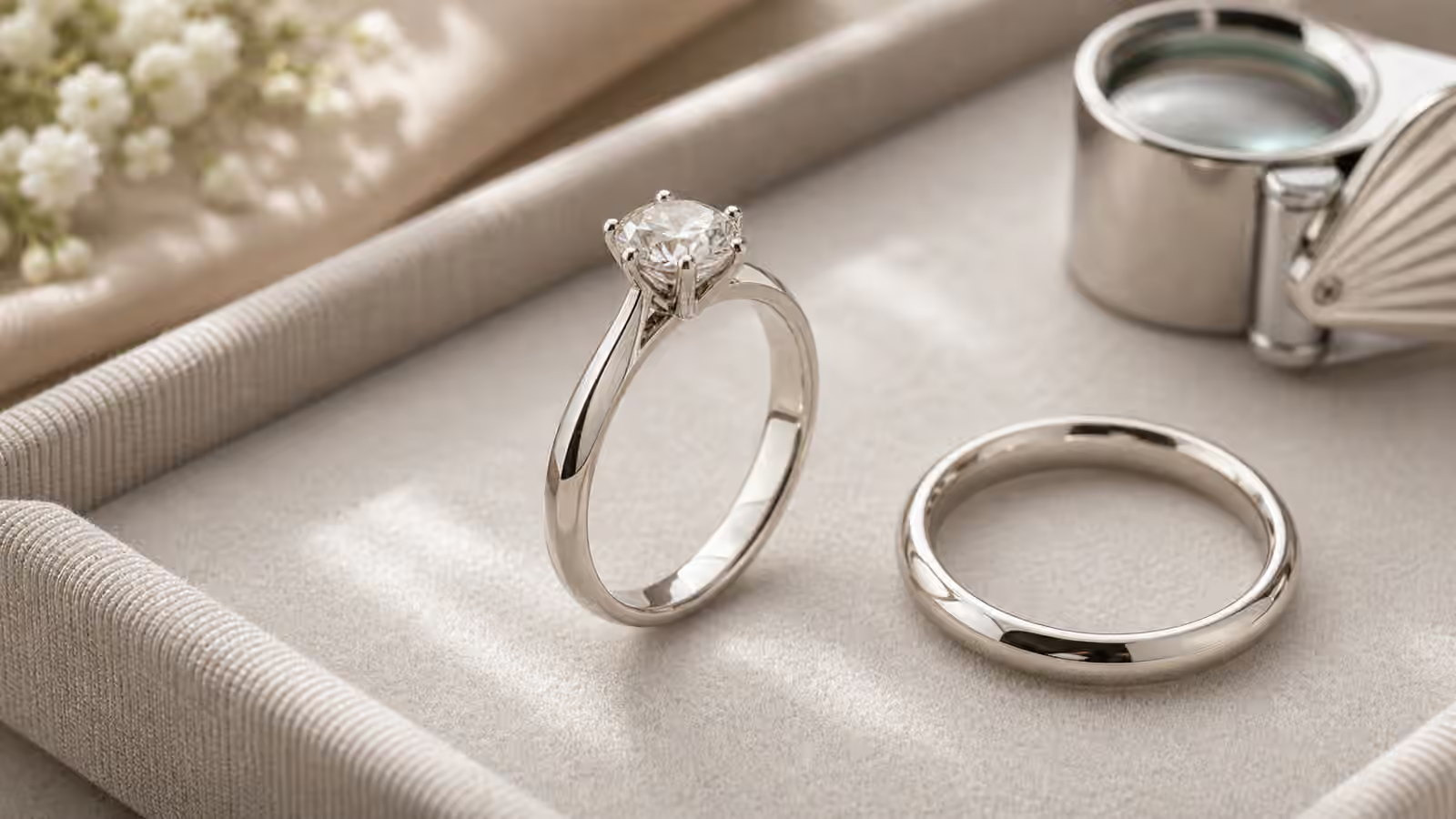
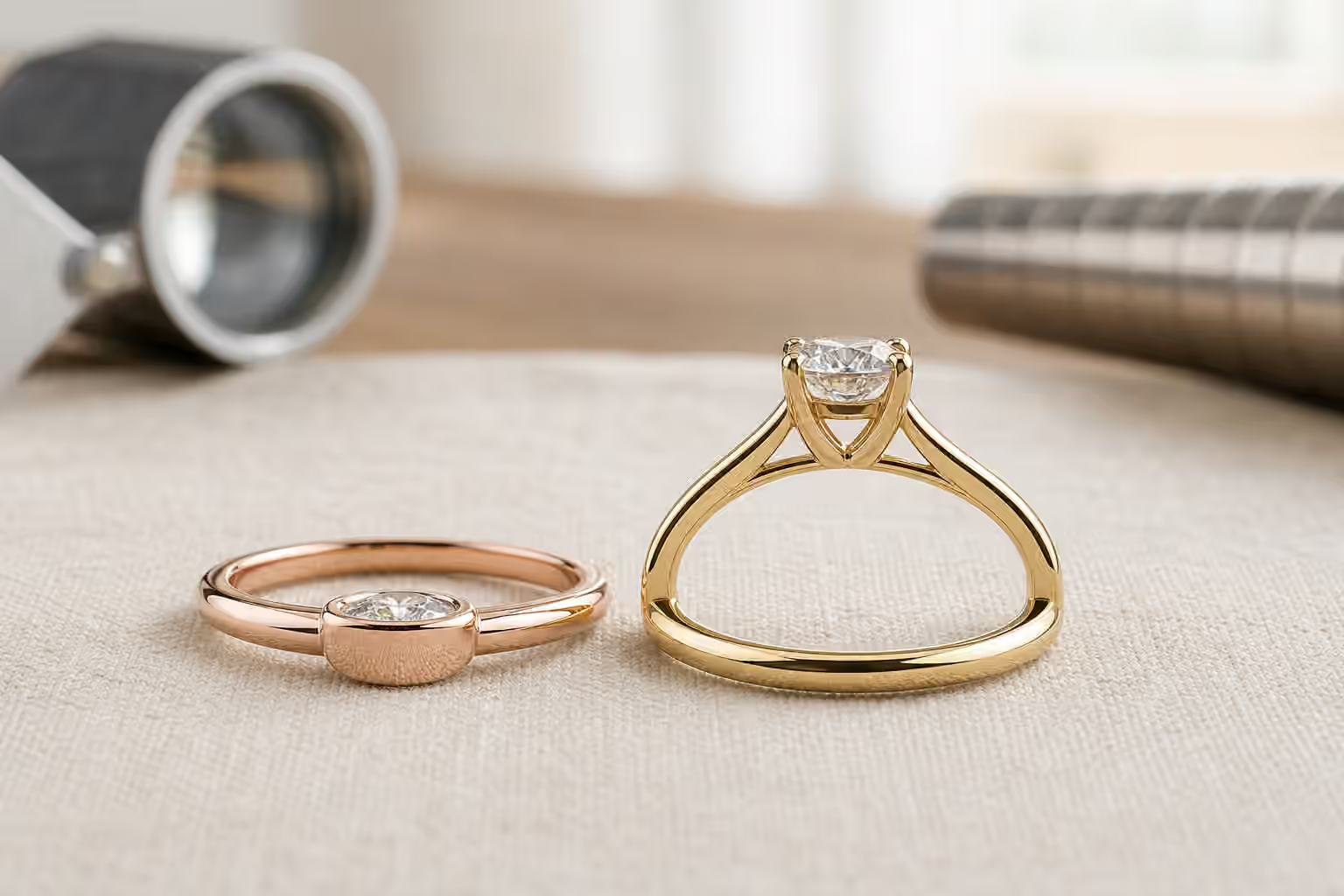
When jewelers talk about profile, they usually mean the ring’s side view. Look at the ring from the side rather than from above and you can see how the center stone sits in relation to the shank. Some stones rest close to the band in a compact basket, bezel, or low prong setting. Others rise on a peg head, cathedral shoulders, or a taller basket that creates open space beneath the stone.
This side view reveals things the top view hides. From above, two round solitaires may look nearly identical. From the side, one may sit low and smooth while the other lifts the diamond high enough for a straight wedding band to slide underneath. One may have protective metal around the stone’s edge. The other may leave the girdle more exposed but allow more light and a cleaner band fit.
Profile height is not the same as style, though the two overlap. A bezel is often low, but it does not have to be flat. A cathedral setting is often higher, but some cathedrals are modest and practical. A solitaire can be tall, medium, or low depending on the head, prongs, and basket. The broader ring settings decision tells you the family of design. Profile height tells you how that design will live on the hand.
Why Low-Profile Rings Feel Easier
The strongest argument for a low-profile ring is comfort. A setting that sits close to the finger is less likely to snag on clothing, gloves, hair, towels, or bag straps. It is less likely to knock against surfaces during small daily motions. For people who work with their hands, care for children, wear medical gloves, garden, cook often, or simply dislike jewelry that announces itself physically, a lower setting can feel calmer.
Low settings also tend to spin less when the ring is properly sized. Any ring can rotate on a cold day or on fingers with larger knuckles, but a tall center setting adds leverage. The stone becomes a small weight above the finger, and gravity has more influence. A lower head keeps the ring’s mass closer to the hand, which can make it feel more stable. If fit is already tricky, the ring sizing conversation becomes even more important before choosing a tall design.
Security is another reason buyers lean low. A full bezel wraps metal around the stone’s perimeter, protecting the girdle and presenting a smooth edge to the world. A low basket can reduce the chance of a hard sideways impact because the stone does not stand as far above the hand. This does not mean a low ring is indestructible. Prongs can still wear. Bezels can still dent. Diamonds and gemstones can still chip under the wrong force. But low settings often reduce the number of everyday moments where the ring catches or collides.
The visual effect is quieter. A low-profile ring tends to look integrated with the finger rather than perched above it. That can suit someone who prefers tailored clothing, understated jewelry, or a ring that feels intimate rather than theatrical. It can also make colored gemstones and antique stones feel more protected, especially when the stone has corners, inclusions, or a softer mineral structure that deserves thoughtful setting.
The Tradeoffs of Staying Low
Low-profile rings ask for compromise. The most common tradeoff is wedding band fit. When the center stone sits close to the finger, there may not be enough clearance for a straight wedding band to sit flush against the engagement ring. The band may hit the stone basket, bezel, gallery, or hidden halo, leaving a visible gap. A gap can look intentional and charming, but it should be a choice rather than a surprise.
Some low settings work best with a contoured or notched band. Others pair nicely with a thin spacer or a custom band shaped to follow the engagement ring’s outline. Those solutions can be beautiful, but they reduce flexibility. If you imagine a plain straight wedding band tucked neatly against the engagement ring, bring that band conversation into the first design appointment. The wedding band pairing guide is especially relevant when a low setting is on the table.
Cleaning can also be more demanding. A compact setting has less open space under the stone, so lotion, soap, and dust may collect in tight corners. Diamonds need light and clean surfaces to look lively. If the underside of the stone becomes packed with residue, even a well-cut diamond can look subdued. A low bezel or basket may need regular soaking and gentle brushing to keep the pavilion clear. This is not a reason to avoid low settings, but it is a reason to build the habits described in ring care from the beginning.
There is also an optical consideration. Tall prong settings can expose more of the diamond, giving light more paths into and out of the stone. Low settings can cover more of the girdle or sit close enough to the finger that less light reaches the pavilion. With a well-cut diamond, the difference may be subtle in real life. With some stones, especially darker colored gems or diamonds with less lively cut quality, the setting can make the stone feel a little more enclosed. The only honest answer is to compare rings in person and move them away from the brightest counter lights.
Why High-Profile Rings Still Appeal
A taller setting can make a diamond feel important. It lifts the center stone into view, creates a more dramatic silhouette, and gives the side of the ring its own architecture. Cathedral shoulders can make the ring look elegant from every angle, not only from above. A classic prong solitaire with a raised head can make the diamond appear airy, bright, and visually separate from the band.
High-profile settings are also useful for wedding band clearance. When the center stone rises high enough, a straight band can often slide underneath the basket and sit flush against the engagement ring. This is one reason many traditional solitaires are taller than buyers expect. The design is not only about sparkle. It is also about making the future set easier to build.
Some diamond shapes benefit from lift. Elongated stones such as ovals, pears, and marquises can look especially graceful when the setting gives their outline room to breathe. Step cuts such as emerald cuts and Asschers can show off their geometry in a clean raised basket. Larger center stones may also need enough structure beneath them to look balanced rather than squeezed into the band. If you are still deciding on the center stone outline, the diamond shapes guide helps explain how shape and setting protect each other.
The drawback is exposure. A taller ring meets the world first. It is more likely to catch, knock, and twist. Prongs on a high setting deserve regular inspection because they are doing visible work in a vulnerable position. A high setting can be perfectly reasonable for someone who is comfortable removing the ring during rough activity and checking it periodically. It is less ideal for someone who wants to put the ring on in the morning and forget about it until night.
Matching Height to Daily Life
The best profile choice begins with an honest picture of daily motion. Not the proposal day, not the photograph, not the ten minutes in the showroom. Think about the hands that will wear the ring. Do they wear gloves often? Do they lift weights, work in healthcare, use tools, style hair, knead dough, carry toddlers, climb, paint, or garden? Do they already remove rings before activity, or do they prefer jewelry that stays on through most routines?
For someone with high hand activity, a low bezel, low basket, or smooth semi-bezel can make sense. It gives up some airy drama in exchange for fewer interruptions. For someone with a gentler routine and a taste for classic diamond presentation, a medium or high prong setting may be worth the additional awareness. Most people do not need an extreme. A medium-profile setting, with a secure basket and enough clearance for a band, often gives a practical balance between comfort and presence.
Finger shape matters too. A very tall setting on a loose ring can rotate and feel top-heavy. A very low, wide setting can feel broad between the fingers if the shoulders are bulky. A ring should be tried on long enough to reveal these issues. Close the hand. Pick up a phone. Slip on a jacket. Rest the hand flat on a table. Small movements tell the truth faster than a mirror does.
What to Ask a Jeweler
Instead of asking only whether a ring is low profile, ask how high the center stone sits in millimeters and what that height means for a wedding band. Ask whether a straight band will sit flush, whether a contour band is likely, and whether the setting can be made slightly lower or slightly higher without weakening the design. Ask how the prongs or bezel protect the stone’s girdle. Ask whether the ring can be resized without disturbing accent stones or changing how the band fits.
If the ring has a hidden halo, decorative gallery, or intricate undercarriage, look carefully at the side. These details can be beautiful, but they often occupy the same space a wedding band would need. A hidden halo can also add cleaning points and tiny stones that need inspection. None of that is automatically bad. It simply belongs in the decision before money changes hands.
For custom work, profile sketches and wax models are useful, but physical samples are better. A jeweler may be able to show an existing ring with a similar height even if the design details differ. Seeing height on a real hand clarifies scale in a way drawings rarely do. If a ring is being designed around a specific stone, make sure the stone’s depth is part of the conversation. A deep diamond may force a taller setting than expected, while a shallower stone may allow a lower basket.
The Ring Should Disappear Until It Sparkles
A good engagement ring has two lives. It has the visible life, where the diamond catches light across a table and the design says something about the wearer. It also has the private physical life, where the ring is washed, bumped, slept near, cleaned, insured, resized, stacked, and worn through ordinary days. Profile height sits at the meeting point of those two lives.
Choose a low-profile ring when ease, protection, and quiet wear matter most. Choose a taller ring when diamond presentation, side-view elegance, and flush band pairing matter more. Choose a middle height when the wearer wants a little of both and does not want the setting to become the most demanding part of the ring.
The right height is the one the wearer stops noticing for the right reasons. It does not catch constantly. It does not make the hand feel guarded. It does not turn every sweater cuff into a test. It simply sits where it belongs, close enough to live with and beautiful enough to keep looking at.