Hidden Halo Engagement Rings: Side Sparkle, Profile, and Maintenance
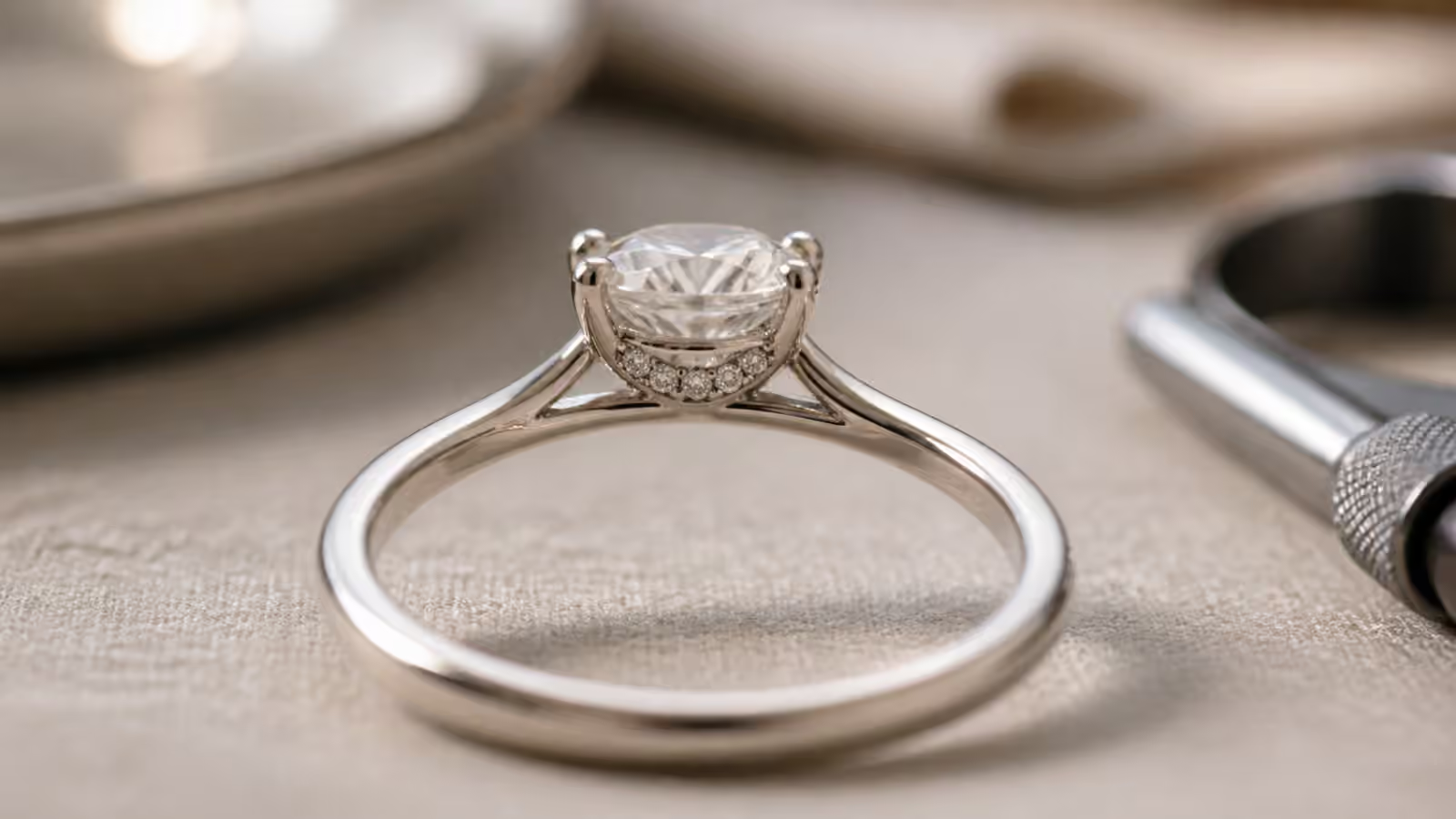
A hidden halo is a small row of accent stones set beneath the center diamond or gemstone, usually visible from the side rather than from straight above. It is a quiet detail with a surprisingly strong effect. From the top, the ring may look like a solitaire or a simple center-stone design. When the hand turns, a thin band of sparkle appears under the crown of the stone. That surprise is the appeal. It gives the ring a private flash without turning the face-up view into a traditional halo.
The halo engagement rings guide explains the classic halo that surrounds the center stone from above. A hidden halo works differently. It does not usually make the center stone look much larger face-up. It does not create the same framed outline. Its main contribution is side-profile interest, extra sparkle in motion, and a sense that the ring has detail waiting to be discovered.
That subtlety can be beautiful, but it is not free. A hidden halo adds small stones, tiny prongs or beads, extra cleaning surfaces, and often more height under the center stone. It can affect wedding band fit and future maintenance. The right question is not whether a hidden halo is pretty. Most of them are. The question is whether the added detail supports the wearer’s style and daily habits.
What a Hidden Halo Actually Changes
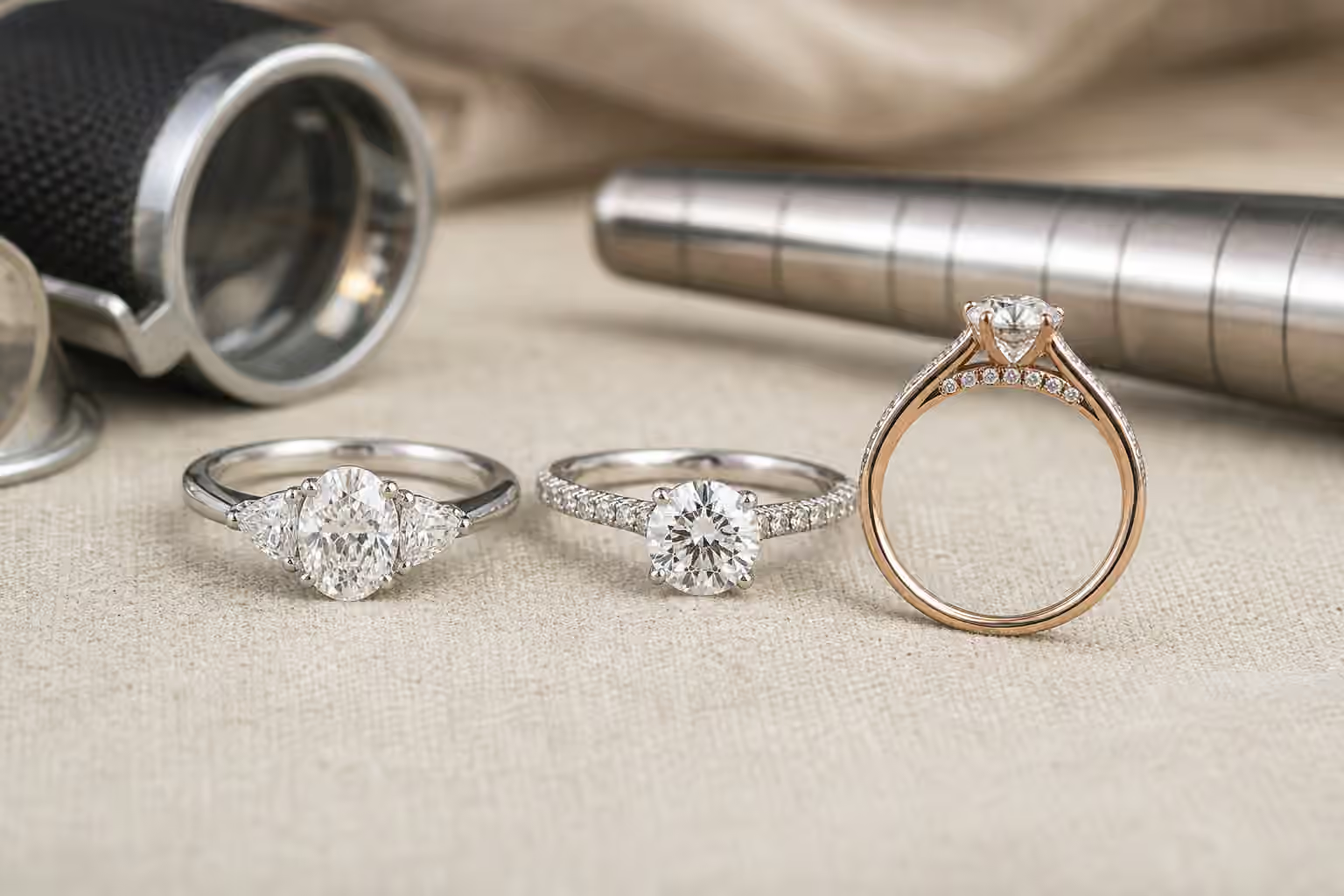
From above, many hidden halo rings still read as solitaires. The center diamond remains the main shape, and the accent stones may be almost invisible unless the ring is tilted. From the side, the hidden halo creates a bright rim below the center. It can make the gallery feel more finished and give the ring a custom look without adding a large face-up frame.
The effect depends on placement. Some hidden halos sit tightly under the girdle of the center stone. Others wrap around the basket lower down. Some are visible only from a low angle, while others peek out slightly from above and behave almost like a delicate halo. The more visible the hidden halo is from the top, the more it changes the center stone’s outline. If the wearer wants a true solitaire look from above, the detail should stay tucked into the profile.
This is why side view matters. A ring that looks simple in a product photo may have a busy gallery when turned sideways. That can be charming, but it should suit the wearer. Someone who loves clean, minimal rings may prefer a plain basket. Someone who likes small construction details may find the hidden halo makes the ring feel complete.
Center Stone Shape and Hidden Halo Fit
Hidden halos can work with round, oval, cushion, pear, radiant, emerald, and other center stones, but the shape affects the execution. A round hidden halo is usually straightforward because the accent stones follow a continuous curve. An oval hidden halo must follow an elongated outline and may be more visible along the long sides. A cushion hidden halo can soften the corners or make the stone appear more rounded if the proportions are not careful.
Pointed shapes require extra thought. Pears and marquises need point protection first. A hidden halo should not distract from the V-prongs or create fragile detail near the most vulnerable ends. Emerald cuts and other step cuts often have a quieter visual personality, so a hidden halo can either add welcome contrast or feel too glittery beneath a calm center. The setting should respect the center stone rather than treating every shape as a platform for the same ring head.
The diamond shapes guide is useful before choosing a hidden halo because outline controls both the top view and the side structure. If the center stone is elongated, the hidden halo may make the ring feel wider or longer from some angles. If the center stone is small, overly bright accent stones can visually overpower it. Scale is everything.
Height, Cleaning, and Daily Wear
A hidden halo often adds depth to the ring head. The center stone may need to sit high enough for the accent stones and their metalwork to fit underneath. That height can be elegant because it shows the side detail clearly. It can also make the ring more exposed. A taller ring may catch more often on pockets, gloves, towels, and hair, especially if the prongs or gallery edges are not finished smoothly.
Cleaning is another practical issue. Small diamonds set under the center stone collect lotion, soap, dust, and everyday residue. Because the detail sits in the gallery, it may be harder to reach with a simple brush. A hidden halo that looks bright in the store can dull if the wearer rarely cleans the underside. The ring care guide becomes more important when the ring has many small stones and tight spaces.
Maintenance should be expected. Accent stones are small, and small settings rely on tiny pieces of metal. A well-made hidden halo is not automatically fragile, but it has more parts than a plain solitaire. Ask how the accent stones are set, how inspections work, and what repairs would involve if one stone loosens. The engagement ring warranties and service plans guide can help you ask about coverage without assuming every small-stone issue is handled the same way.
Prongs, Basket Design, and Security
A hidden halo lives close to the center-stone setting, so it should not compromise the main stone’s security. The prongs still need enough metal, good contact, and a smooth finish. The basket still needs to support the diamond or gemstone properly. If the hidden halo forces the prongs to become too thin or decorative, the design is backwards. The accent detail should serve the ring, not weaken the part that holds the center.
Look at the ring from the side and underneath. The hidden halo should appear even, with stones seated consistently and metalwork that feels intentional. The center stone should not look perched on a fragile decorative collar. If the ring uses claw prongs, they should be shaped cleanly and matched to the center stone. If it uses a cathedral setting, the arches should meet the head gracefully rather than fighting with the hidden halo for space. The ring settings guide helps name the structures you are looking at.
The engagement ring prongs guide also matters because many hidden halo rings are sold through photos that emphasize sparkle over construction. A close side view is not just a glamour angle. It is where you can see whether the head looks sturdy, whether the prongs are balanced, and whether the accent stones are set in a way that a jeweler can maintain later.
Wedding Band Fit
Hidden halos often affect wedding band pairing because they change the ring’s gallery and lower profile. A straight band may sit flush if the center head is raised and the shank allows clearance. It may leave a gap if the hidden halo or basket extends outward near the finger. Some wearers like a gap because it shows the engagement ring’s side profile. Others want a tight stack and may need a curved, open, or custom band.
Do not assume a hidden halo solitaire will pair like a plain solitaire. The face-up view may be similar, but the underside is different. Try the ring with bands before buying if possible, even if the wedding is far away. If the ring is custom, ask the jeweler to model or show how a straight band will sit. The wedding band pairing guide is a useful checkpoint because small gallery details can decide whether a future band feels effortless or awkward.
Band style also changes how visible the hidden halo remains. A tall diamond band may compete with it. A plain low band may let the side sparkle stand out. A contoured band can frame the center but may make the set feel more ornate. The goal is not to maximize every sparkle source. It is to create a ring set with a clear hierarchy: center stone first, hidden detail second, band support third.
When a Hidden Halo Makes Sense
A hidden halo makes sense for someone who likes a mostly clean top view but wants the ring to feel special from the side. It can be a good compromise between a solitaire and a traditional halo. It can also make a custom or semi-custom ring feel more considered without changing the center stone budget. The detail is especially appealing for wearers who notice gallery design, side profiles, and small surprises.
It may not be the best choice for someone who wants the lowest possible setting, the easiest cleaning routine, or the fewest small stones. It may also be unnecessary if the ring already has pave shoulders, a decorative basket, or a halo from above. Too many accents can make the center stone feel like one sparkle source among many. Restraint is often what lets a hidden halo work.
The best hidden halo rings are not trying to make a solitaire look expensive by adding hidden glitter. They are using the side profile as a design surface. When the center stone is secure, the accent stones are scaled properly, the height suits the wearer, and the band plan is understood, the hidden halo earns its place. It gives the ring a second view worth noticing, which is exactly what the detail was meant to do.