The diamond had been in a drawer for eleven years.
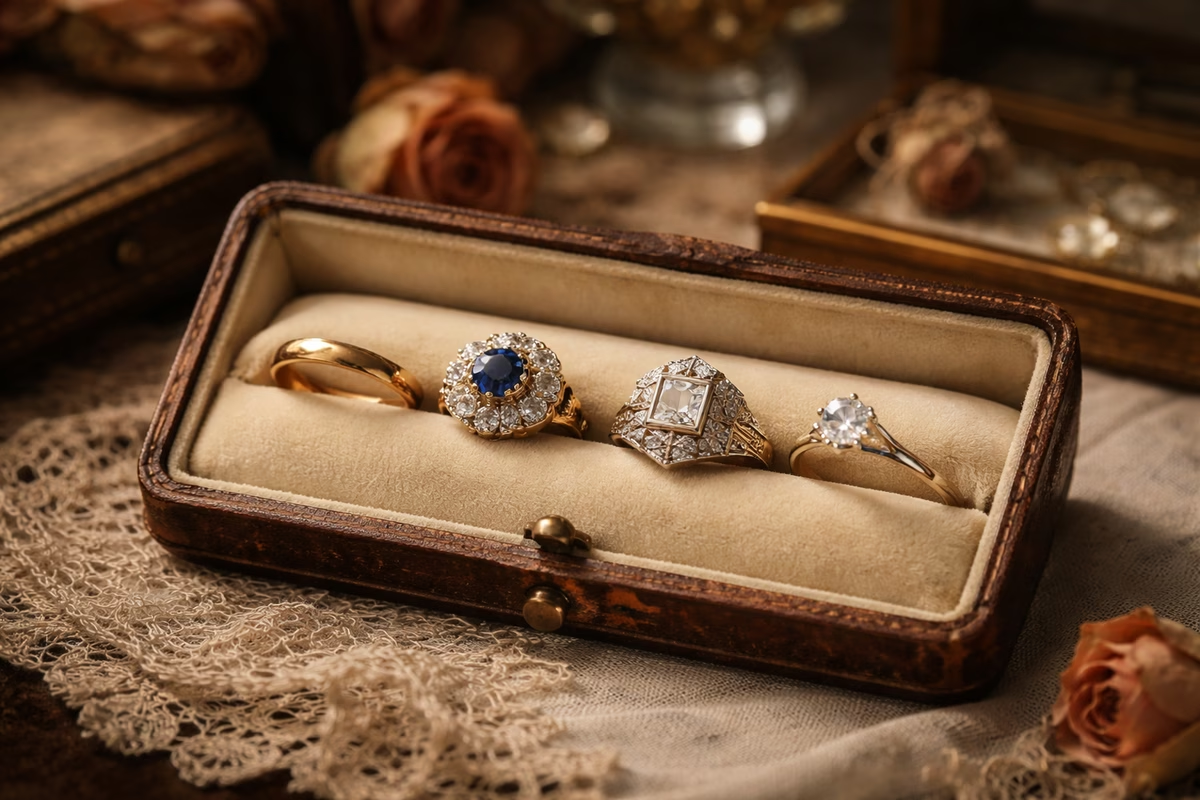
It was my grandmother’s—a 0.82-carat old European cut, set in a yellow gold ring with six prongs and a thin, worn band that had been on her finger for forty-three years. When she passed, my mother inherited the ring. When my mother decided it wasn’t her style, she put it in a velvet pouch in her jewelry drawer and forgot about it.
I found it while looking for something else entirely. The velvet pouch was wedged behind a tangle of costume necklaces. Inside, the ring looked small and dated—the yellow gold was scratched, the prongs were thin, and the setting sat high in a way that seemed precarious.
But the stone. When I held the ring up to the window light, the stone did something that made me stop looking for whatever I’d originally been searching for.
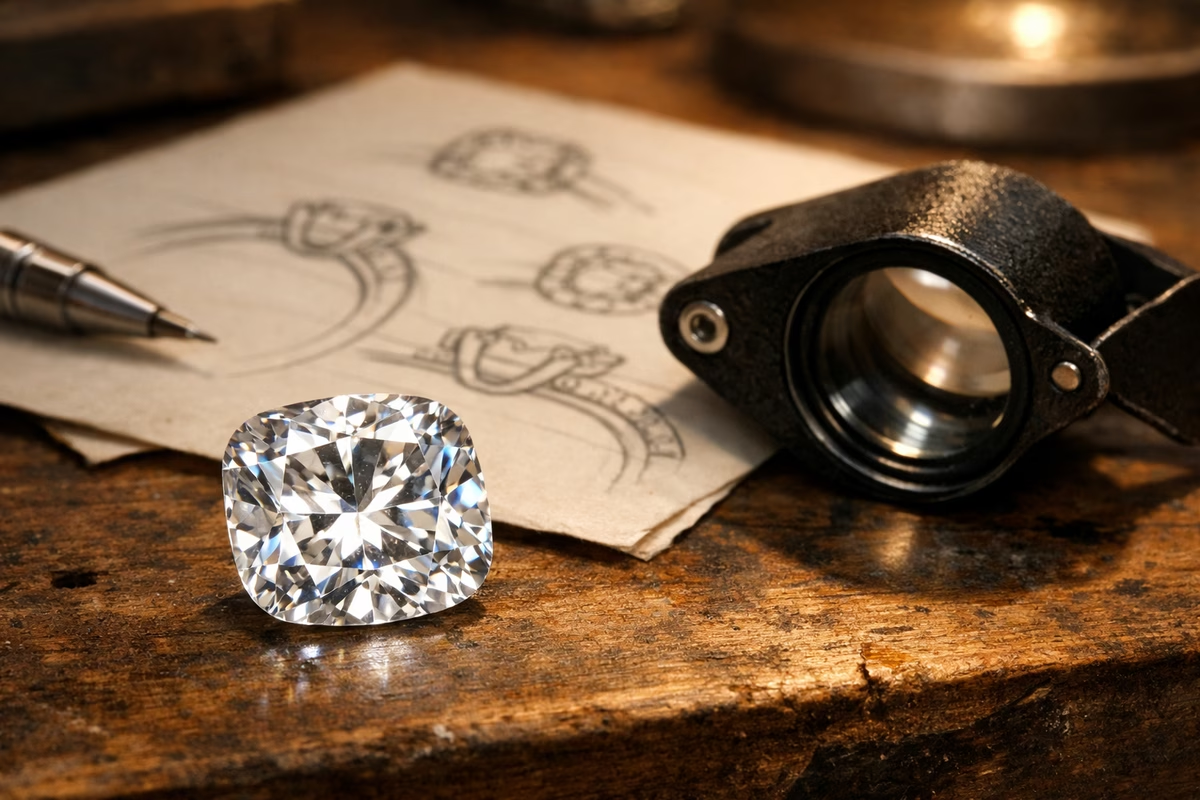
Old European cut diamonds don’t sparkle the way modern brilliants do. They don’t throw tiny flashes of rainbow fire across every surface. Instead, they glow—broad, warm flashes of light and dark, almost like candlelight flickering inside the stone. The facets are larger, fewer, less precise than a modern cut, and the result is something organic, intimate, and unmistakably old.
I put the ring back in the pouch and called my partner. “I think I found our engagement ring,” I said. “But we’re going to need a new setting.”
The decision: honor the stone, reimagine the ring
Using a family stone for a new ring is equal parts practical and emotional.
The practical case: A 0.82-carat diamond of good quality, already paid for, eliminates the single largest cost of an engagement ring. Resetting an existing stone into a new setting typically costs $800–$3,000, compared to $3,000–$10,000+ for a comparable new diamond and setting.
The emotional case: The stone carries history. My grandmother wore it for four decades. It witnessed her marriage, her children, her daily life. Putting it in a new setting doesn’t erase that history—it extends it. The stone gets a second chapter.
The design challenge: Old European cuts look different from modern cuts. They have different proportions (a smaller table, a larger culet, different crown angles) and behave differently in light. A setting designed for a modern brilliant might not flatter an old European cut, and vice versa.
This meant we couldn’t just pick a setting from a catalog. We needed to design around the specific character of this specific stone.
Step 1: The appraisal
Before designing anything, we needed to know what we were working with.
I took the ring to a Graduate Gemologist (GG) at an independent jewelry shop—someone with no financial incentive to upsell. She examined the diamond under a loupe and a gemological microscope.
The report:
- Cut: Old European cut, approximately 1920s
- Weight: 0.82 carats
- Color: J (warm—slightly yellowish in certain lighting, which is common and often desirable in antique cuts)
- Clarity: VS2 (very slightly included—small inclusions visible under 10× magnification, invisible to the naked eye)
- Proportions: 58% table, 16% crown height, visible culet
- Condition: No chips, no cracks, prongs worn but stone secure
The gemologist said something I appreciated: “This is a lovely stone. It’s not trying to be a modern diamond, and it shouldn’t. Design the ring to celebrate what it is.”
Step 2: Finding the right jeweler
Not every jeweler is equipped to work with heirloom stones. You want someone who:
- Has experience with antique cuts. Old European cuts and mine cuts have different setting requirements than modern brilliants. A jeweler who only works with new stones may not understand how to showcase an OEC’s broad light patterns.
- Does custom design. This isn’t a stock setting with a dropped-in stone. The setting needs to be designed (or at least selected) specifically for this stone’s dimensions and character.
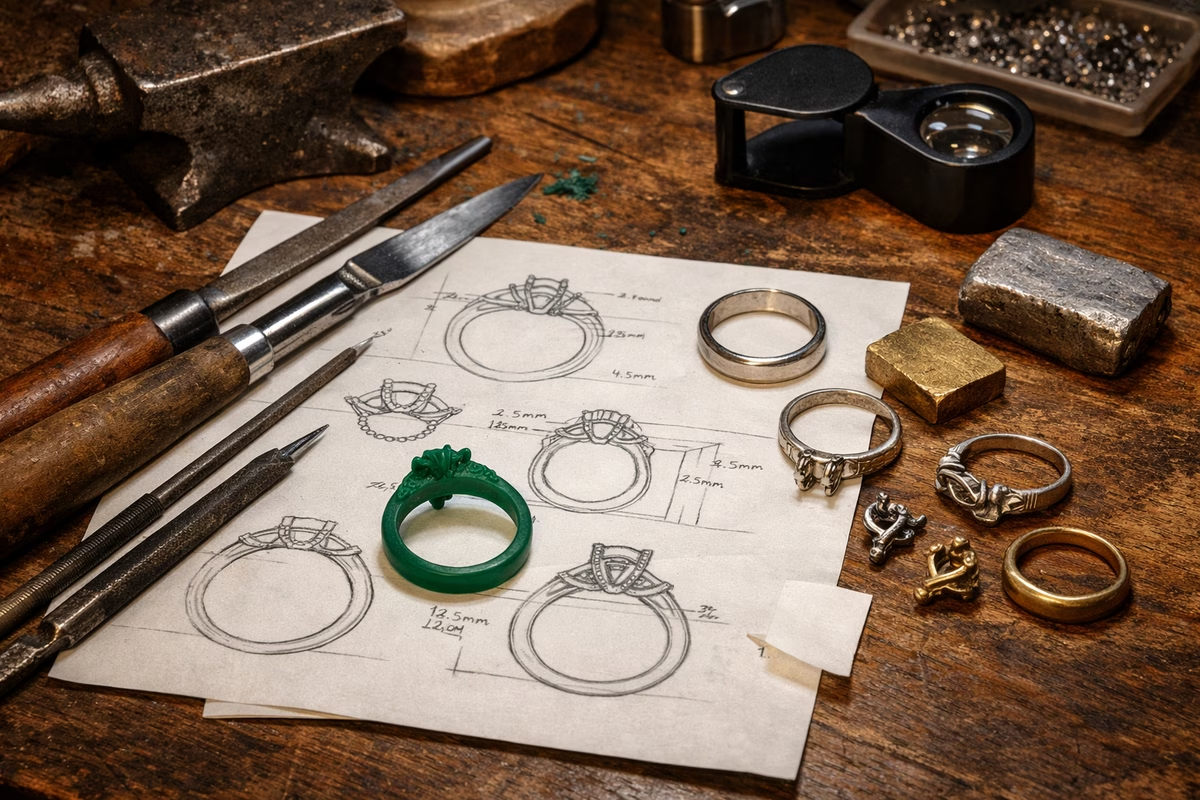
- Will show you their process. Wax models, CAD renderings, or hand-carved prototypes—some way to see and approve the design before metal is committed.
We found a bench jeweler—a one-person shop in a small storefront—who had been making custom rings for twenty years. She looked at the stone, held it up to her loupe, and said: “I love old Europeans. Let me show you some ideas.”
Step 3: Designing the setting
The design process took three weeks and four conversations. Here’s what we considered:
Metal color
The original ring was yellow gold, which complemented the stone’s warm J color by making it appear whiter by contrast. But my partner preferred the look of white metal.
The jeweler offered a solution: platinum head with a yellow gold band. The platinum prongs hold the stone in a cool, neutral frame (letting its warmth read as character, not deficiency), while the yellow gold band adds warmth and connects visually to the stone’s era.
Setting style
We looked at several options:
Solitaire with four prongs: Clean, minimal, lets the stone speak. But the OEC’s high crown and visible culet needed prongs tall enough to protect the edges without obscuring the light return.
Bezel setting: A metal rim encircling the stone. Extremely secure and sleek, but it would hide the stone’s distinctive facet pattern and reduce light entry.
Low-profile halo: Small accent diamonds surrounding the center stone. This can make a smaller stone appear larger—but it also changes the aesthetic from vintage to modern, which felt wrong for this particular stone.
We chose the four-prong solitaire on a thin, rounded band—the simplest setting, because the stone’s character was the story and the setting’s job was to not compete with it.
Band details
The band was 1.8mm wide, rounded (comfort fit), in 18k yellow gold. No accent stones, no engraving—just a smooth, warm band that let the platinum-set diamond float above.
The jeweler produced a wax model of the ring, with a cubic zirconia stand-in for the diamond, so we could see the proportions and try it on before committing to metal.
It looked right. Simple, warm, and old in the best way.
Step 4: The unset and reset
Setting day was the most nerve-wracking hour of the process.
The jeweler removed the diamond from my grandmother’s ring by carefully bending back the old prongs—thin, worn after decades—until the stone lifted free. For a moment, it sat loose on the bench: a small, bright thing without a home.
Then she seated it in the new platinum head, adjusted each prong with a burnisher, and checked the security under magnification. Each prong was tipped with a small, rounded bead that held the stone firmly without covering any of its crown.
The whole process took about forty minutes.
When she handed me the finished ring, I held it up to the window. The stone did the same thing it had done in my mother’s drawer—that warm, broad glow, light and dark shifting across the facets—but now it was in a setting designed to showcase exactly that quality.
It looked like a new ring with an old soul.
What to know about resetting heirloom stones
Insurance and documentation
Before the stone leaves the original ring, get it appraised and photographed. Note any identifying features (inclusions, culet size, fluorescence) that prove the stone in the new ring is the same stone. Update your insurance to reflect the new setting.
Ring care for antique cuts
Old European cuts are no more fragile than modern cuts—diamond is diamond. But the settings require attention:
- Check prongs every 6–12 months. Prongs can wear thin over time, especially platinum prongs, which are softer than most people realize. A jeweler can retip or rebuild prongs before they fail.
- Clean gently. Warm water, mild dish soap, a soft brush. Avoid ultrasonic cleaners unless your jeweler confirms the stone has no fracture-filled inclusions (rare in antique stones, but possible).
- Be aware of the culet. The visible culet in an OEC is a potential chip point if the ring is struck hard from below. A properly designed setting protects the culet, but daily awareness helps.
For more, see Ring Care and Maintenance.
What to do with the original ring
Don’t discard it. Even with the stone removed, the original ring is a piece of family history. Options:
- Keep it as-is. The empty setting is a meaningful artifact.
- Set a new stone in it. A colored gemstone (sapphire, garnet, tourmaline) in the original setting creates a second wearable ring.
- Melt and reuse the gold. Some jewelers can incorporate the original metal into the new ring’s band—literally melding old and new. Ask about this if it appeals to you; not all jewelers offer it, and the metallurgy can be tricky.
The ending: the moment it was given
A Saturday morning in October. Breakfast at the kitchen table—coffee, toast, the newspaper neither of us was reading.
I brought out the ring in the box the jeweler had given me—a simple hinged box, no velvet theater. Opened it.
My partner picked up the ring and held it to the light. The old European cut flashed its broad, warm glow—the same glow it had shown my grandmother for forty-three years, and my mother in a drawer, and me by a window.
“This was hers?” my partner said.
“The stone was. The ring is ours.”
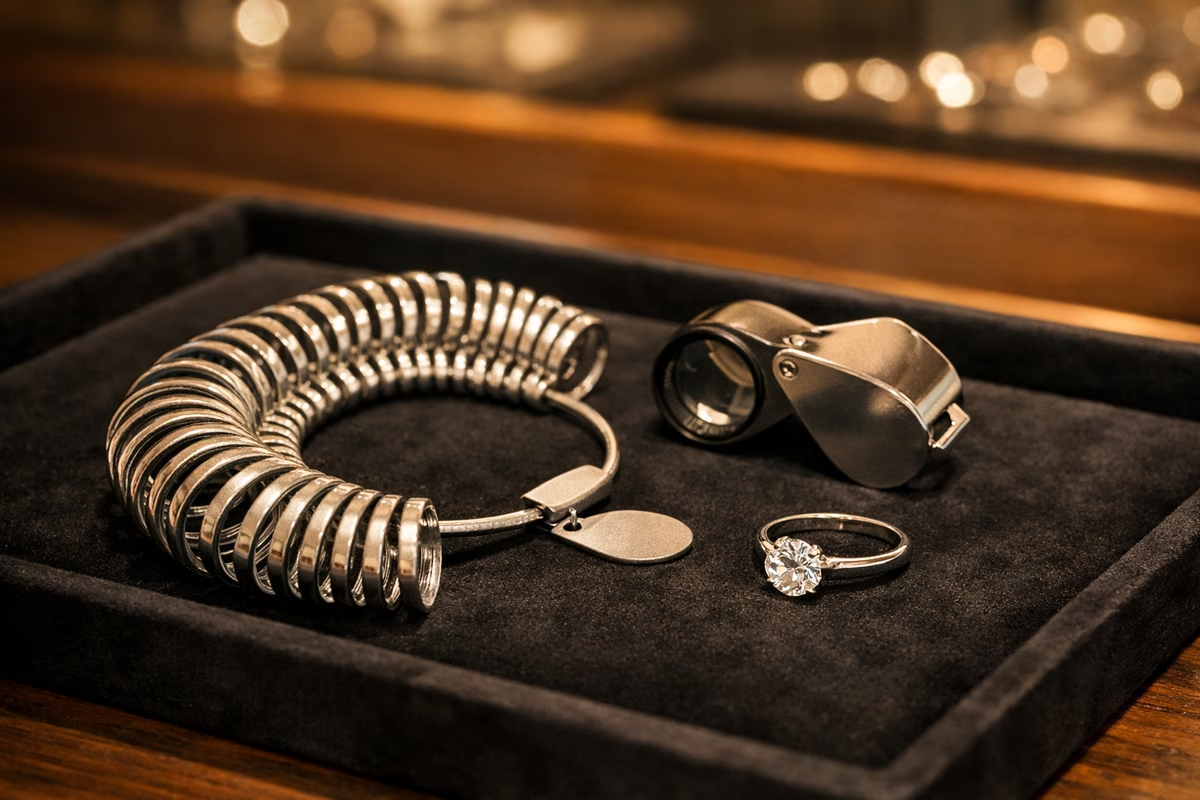
It fit perfectly. We’d sized it to my partner’s finger using the measurement guide and one of the jeweler’s ring mandrels.
The diamond had been in a drawer for eleven years. Now it was on a hand, catching morning light, starting its second chapter.
Next steps
- Read Ring Settings: A Visual Guide for the full range of setting styles
- Explore Ring Metals for understanding gold, platinum, and alternatives
- See The 4Cs of Diamonds for what each quality dimension means
- Try Designing a Custom Ring for the full custom creation process
- Check Ring Insurance for protecting your heirloom investment