Halo Engagement Rings: Proportion, Maintenance, and Center-Stone Fit
A halo engagement ring changes the first impression of a center stone. Instead of one stone ending cleanly at its own edge, a border of small diamonds or gemstones carries the outline outward. The ring looks larger, brighter, and more detailed from the top. A modest diamond can gain presence. An oval can look more dramatic. A cushion can lean vintage or romantic. A colored gemstone can feel framed rather than solitary.
That extra presence is the reason halos remain popular, but it is also the reason they need careful judgment. A halo is not only more sparkle. It is a new edge around the center stone, a new set of tiny stones to maintain, a new side profile to fit beside a wedding band, and a new color comparison around the gem. When the proportions are right, a halo looks like it belongs to the center. When they are wrong, the center can look swallowed, tinted, or forced into a shape it does not really have.
The broader side stones and accent diamonds guide explains how small stones affect scale, durability, and budget across many ring styles. This guide focuses on the halo itself, especially the decisions that make the difference between a graceful frame and a busy border.
A Halo Is a Frame Before It Is a Size Trick
Many shoppers hear that a halo makes a center stone look larger, and that is often true. A row of small diamonds adds visible diameter, especially around a round, oval, cushion, or pear center. From normal viewing distance, the eye may read the center and halo together as one larger field of light. That can be useful when the wearer wants finger coverage without putting the whole budget into a larger center diamond.
But a halo works best when it is treated as a frame, not a disguise. The center stone should still have its own identity. A well-cut round should still look round. An oval should not disappear into an overly thick oval border. A cushion should not be forced into a shape so different that the outline looks confused. The small stones should support the center’s shape and light, not create a ring where the eye cannot tell what the main stone is.
This is especially important with smaller centers. A delicate halo around a modest stone can look balanced and charming. A heavy halo around the same stone can tip into cluster-ring territory. That may be a beautiful vintage effect if chosen intentionally, but it should not happen by accident. The most useful question is not how much larger the halo makes the ring look. It is whether the center still feels like the center.
Proportion Depends on Stone Shape
Round halos are forgiving because the outline is symmetrical. The small stones can circle the center evenly, and the ring will usually look balanced if the halo is close-fitting and the melee is scaled to the center. The danger is thickness. If the halo is too broad, the ring can look like a bright disk rather than a diamond with a frame.
Oval halos need more scrutiny. Ovals vary in length-to-width ratio, shoulder shape, and bow-tie contrast. A halo that fits one oval beautifully may look awkward around another. If the halo is too round, it can fight the elongation. If it is too narrow or pinched, it can exaggerate unevenness in the stone. The oval engagement rings guide is a useful companion because the center’s shape must be strong before the halo starts repeating it.
Cushion halos can lean in several directions. A rounded cushion halo around a round diamond can create a softer, antique-inspired outline. A close cushion halo around a cushion center can feel plush and romantic. A sharper cushion halo can make the ring more geometric. None of these is automatically better. What matters is whether the halo’s corners, curve, and stone size match the mood of the center.
Pear and marquise halos add drama, but they also highlight vulnerable points. The halo should protect the pointed ends without making them look bulky or blunt. The center still needs proper prong or V-prong protection, because a halo is not a substitute for securing the main stone. The engagement ring prongs guide matters here, since the center stone and the halo have separate security needs.
Color Contrast Can Help or Hurt
A halo creates immediate comparison between the center stone and the small stones around it. If the halo diamonds are much whiter than the center, a slightly warm diamond may look warmer than it would alone. Sometimes that contrast is useful, especially if the center has a soft vintage warmth and the whole ring is set in yellow gold. Sometimes it makes the center look unintentionally tinted.
The diamond color grades guide explains why metal color and comparison stones change how body color is perceived. In a halo, that comparison is constant because the accent stones touch the center visually. If the wearer wants a crisp white look in platinum or white gold, the center and halo should be checked together rather than chosen as separate line items. If the wearer likes warm gold, antique cuts, or a softer look, a slightly warmer center may harmonize beautifully as long as the halo is not icy by contrast.
Colored gemstones need the same attention from another angle. A blue sapphire in a diamond halo can look classic and bright. An emerald in a halo may need gentler setting protection and cleaning habits. A ruby in a diamond halo can become very vivid, which may be exactly the point or too intense for daily wear. The colored gemstone durability guide helps separate the color choice from the wearability question.
Small halo diamonds do not need the same grading emphasis as the center stone, but they should be well matched to one another. Uneven accent color or inconsistent cutting can make the halo look patchy. Because the stones are small and close together, tiny mismatches may either disappear or become surprisingly visible. Look at the ring in softer light, not only under case lighting, and see whether the halo reads as a clean frame.
Visible Halos and Hidden Halos Solve Different Problems
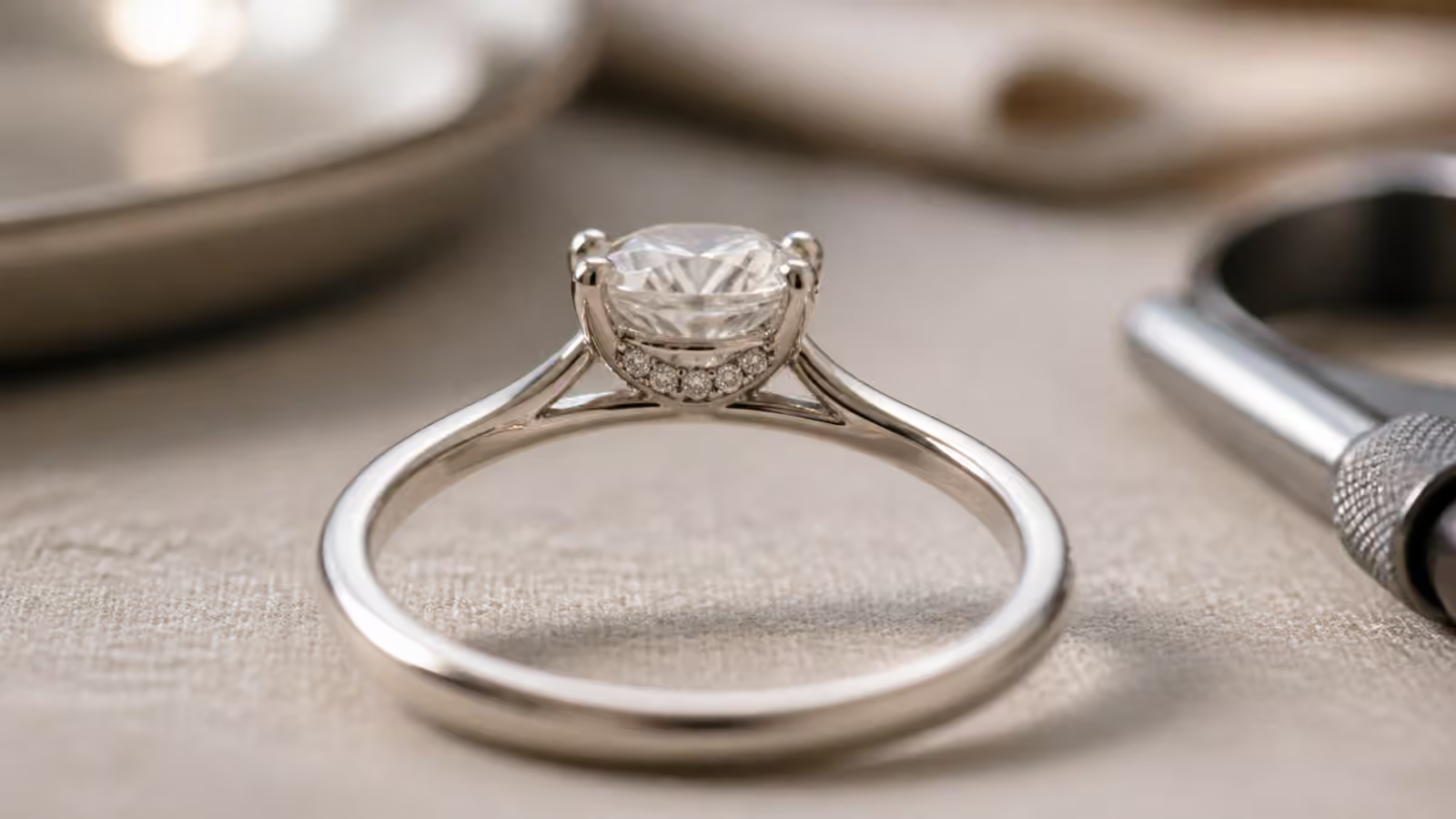
A visible halo changes the face-up outline of the ring. It adds diameter, brightness, and detail from the top. It is a design commitment that everyone will see. A hidden halo is different. It usually sits beneath the center stone, around the gallery or basket, where it flashes from the side as the ring moves. It rarely makes the center stone look larger from above. Its appeal is more private, architectural, and motion-based.
Confusing the two leads to disappointment. If the goal is more finger coverage, a hidden halo is usually not the tool. If the goal is a clean solitaire top view with a little side sparkle, a visible halo may be too much. A ring can have both, but that adds more stones, more cleaning surfaces, and a more complex profile. More detail should earn its place.
Hidden halos also affect wedding band fit more often than shoppers expect. A row of diamonds beneath the center may occupy the exact space where a straight wedding band would like to sit. It can create a gap, force a contour band, or cause the wedding band to rub against delicate side details. The wedding band pairing guide should be part of the halo conversation before the ring is ordered.
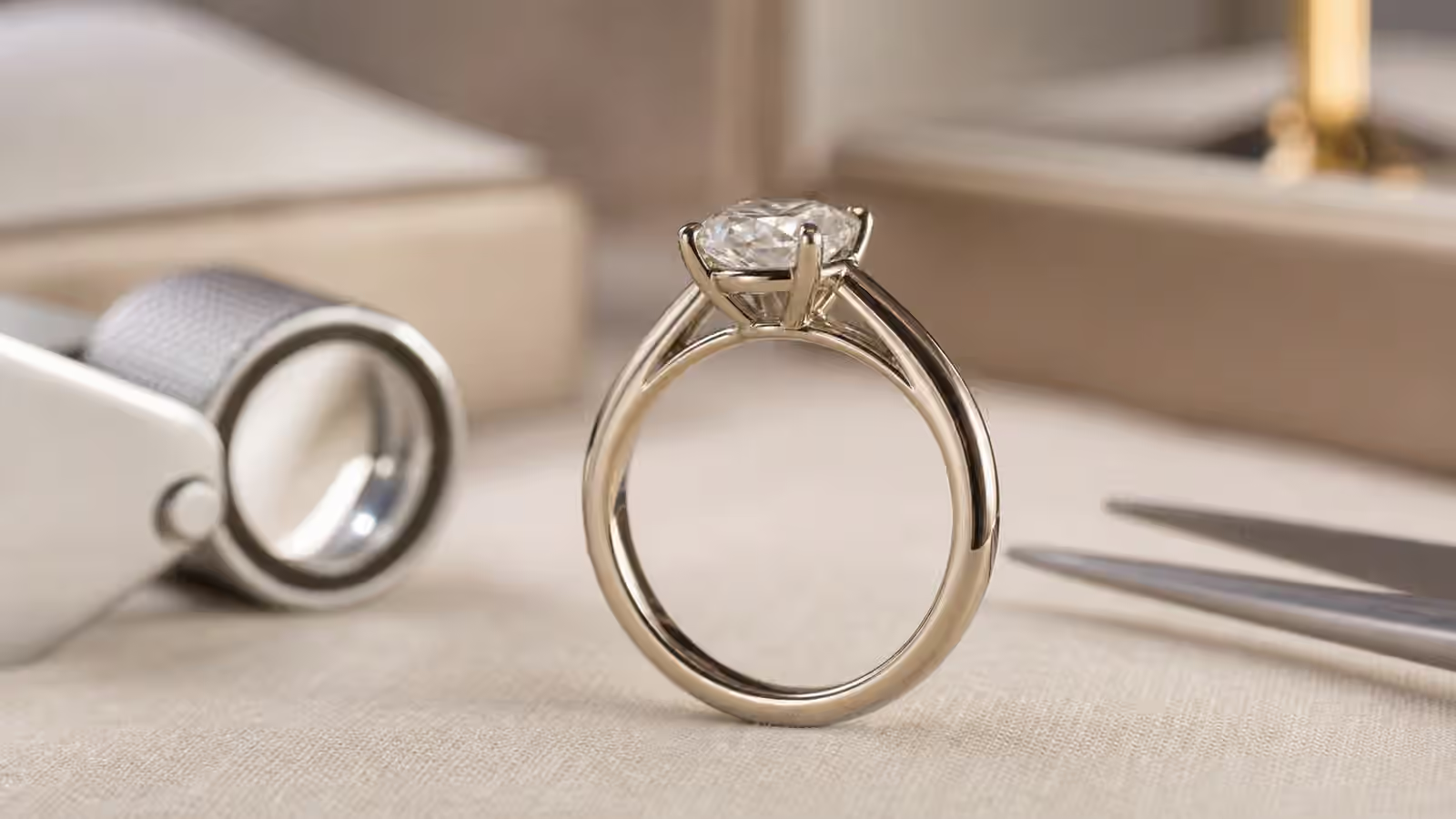
Side view matters with visible halos too. Some halos sit flat and low around the center stone. Others lift the center higher, with the halo tucked under the stone’s edge or tilted slightly upward. A tilted halo may show more sparkle from the top, but it can also raise the profile. A very low halo may feel smooth and wearable, but it may make cleaning beneath the center more difficult. The low-profile engagement rings guide helps connect this profile choice to daily wear.
Maintenance Comes With the Sparkle
A halo has many small stones, each held by small beads, prongs, or shared metal. Those settings are not decorative only. They are working parts. Over years of wear, tiny stones can loosen, beads can wear down, and residue can collect around the center. A halo ring can be perfectly practical, but it asks for more inspection than a plain solitaire.
The maintenance rhythm is similar to pave engagement rings because both styles rely on small accent stones. Gentle cleaning matters because lotion, soap, sunscreen, and dust gather around tiny diamonds. Professional inspections matter because a loose halo stone is easier to tighten before it is lost. If the ring starts catching fabric or if one small stone looks dull, tilted, or lower than the others, the ring should be checked.
Construction quality is the quiet difference. A delicate halo can last well if the stones have proper seats and enough metal. A heavy-looking halo can still be weak if the setting work is careless. Look for even spacing, consistent stone height, smooth edges, and a center stone that sits level. The halo should not feel sharp against neighboring fingers or rough when a fingertip passes over the edge.
Insurance and warranty conversations should be specific. Some jewelers cover small accent stone loss for a limited period, while others treat it as wear. Some insurance policies distinguish accidental damage from ordinary maintenance. The ring insurance guide is useful because a halo has more small parts that may need documentation, inspection, or repair over time.
A Halo Changes the Budget Conversation
Halos can make a ring look larger without buying a much larger center stone, but the value is not automatic. A halo adds labor, small stones, and more complex setting work. A poorly made halo around a weak center diamond is not a better ring than a simpler setting with a livelier stone. The center still needs to be beautiful enough to justify framing.
If the budget is fixed, decide what the halo is supposed to achieve. If the wearer wants a bold outline and loves detail, spending on a well-made halo may be worthwhile. If the wearer mostly wants the center diamond to sparkle, the money may be better spent on cut quality, a cleaner shape, or a setting with stronger construction. The diamond carat weight and face-up size guide is helpful because visual size is not only about carat or halo diameter. Cut, shape, spread, and setting all work together.
The smallest accent diamonds can be relatively efficient, but setting them well is skilled work. A halo that looks inexpensive because the metal is thin, the stones are uneven, or the outline is clumsy will not become satisfying simply because it adds sparkle. In a halo ring, craftsmanship is visible at the edge of the center stone, exactly where the eye spends the most time.
When a Halo Is the Right Choice
A halo is strongest when the wearer genuinely likes a detailed ring, not only the idea of making the center look bigger. It suits someone who wants light across the whole top of the ring, enjoys a defined outline, and is comfortable with periodic maintenance. It can be especially beautiful around colored gemstones, antique-inspired cuts, elongated shapes, and center stones that benefit from a little more finger coverage.
A halo may be the wrong choice when the wearer prefers clean lines, wants the easiest possible maintenance, dislikes busy sparkle, or needs a very smooth low-profile ring for daily work. In those cases, a solitaire engagement ring , bezel, or simple three-stone design may feel better over time. The question is not whether halos are fashionable or practical in general. The question is whether this halo serves this stone and this hand.
Try to see the ring in normal light and from several angles. From above, the halo should follow the center gracefully. From the side, it should not create surprise bulk or an impossible band pairing. On the hand, it should feel like a ring, not a small platform. In motion, the small stones should add life without making the center disappear.
When a halo works, it feels generous rather than crowded. The center stone remains clear, the frame adds scale, and the metalwork looks deliberate. The ring gains presence without losing hierarchy. That balance is the whole art of a halo: more light around the stone, while still letting the stone lead.