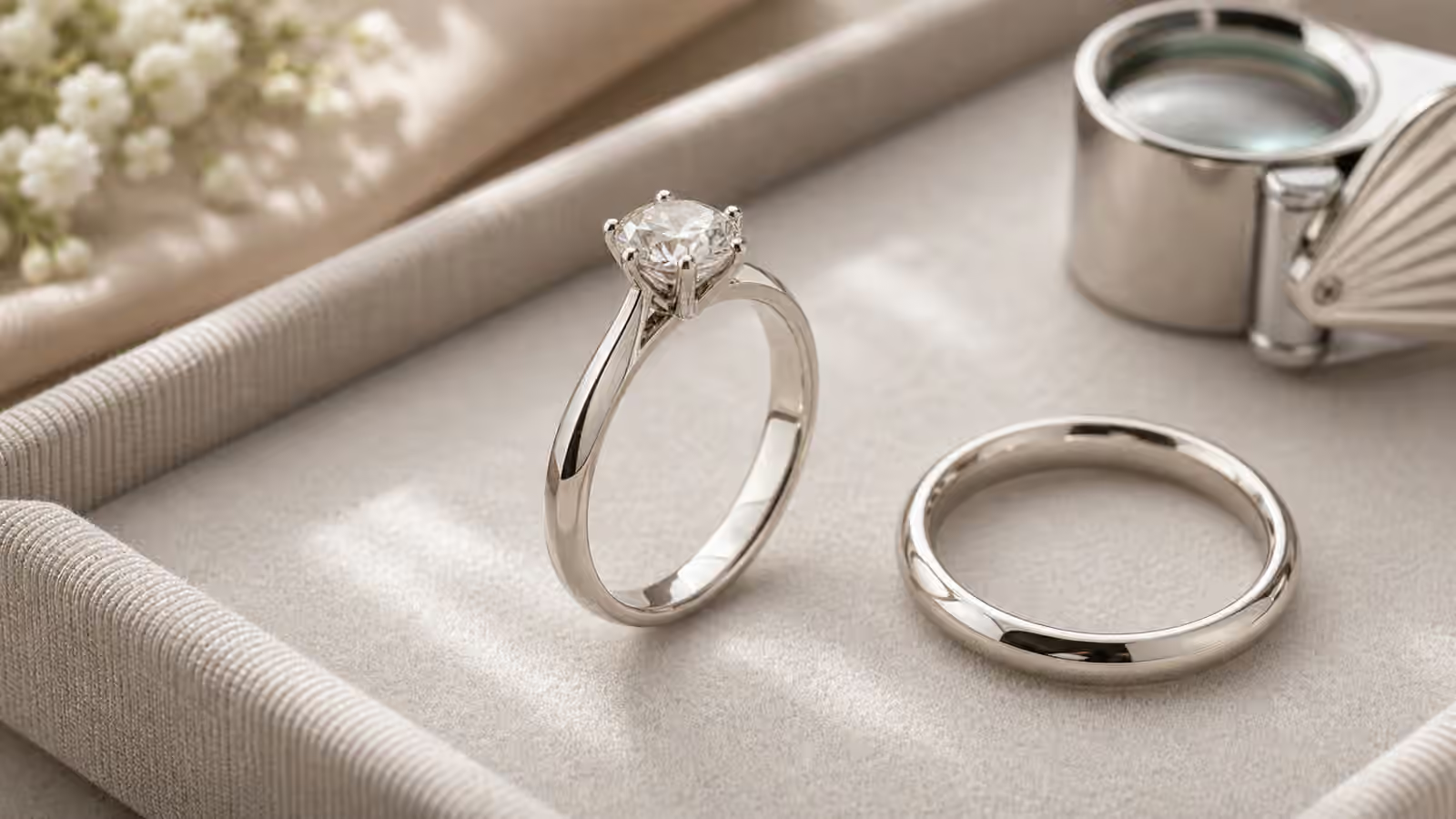
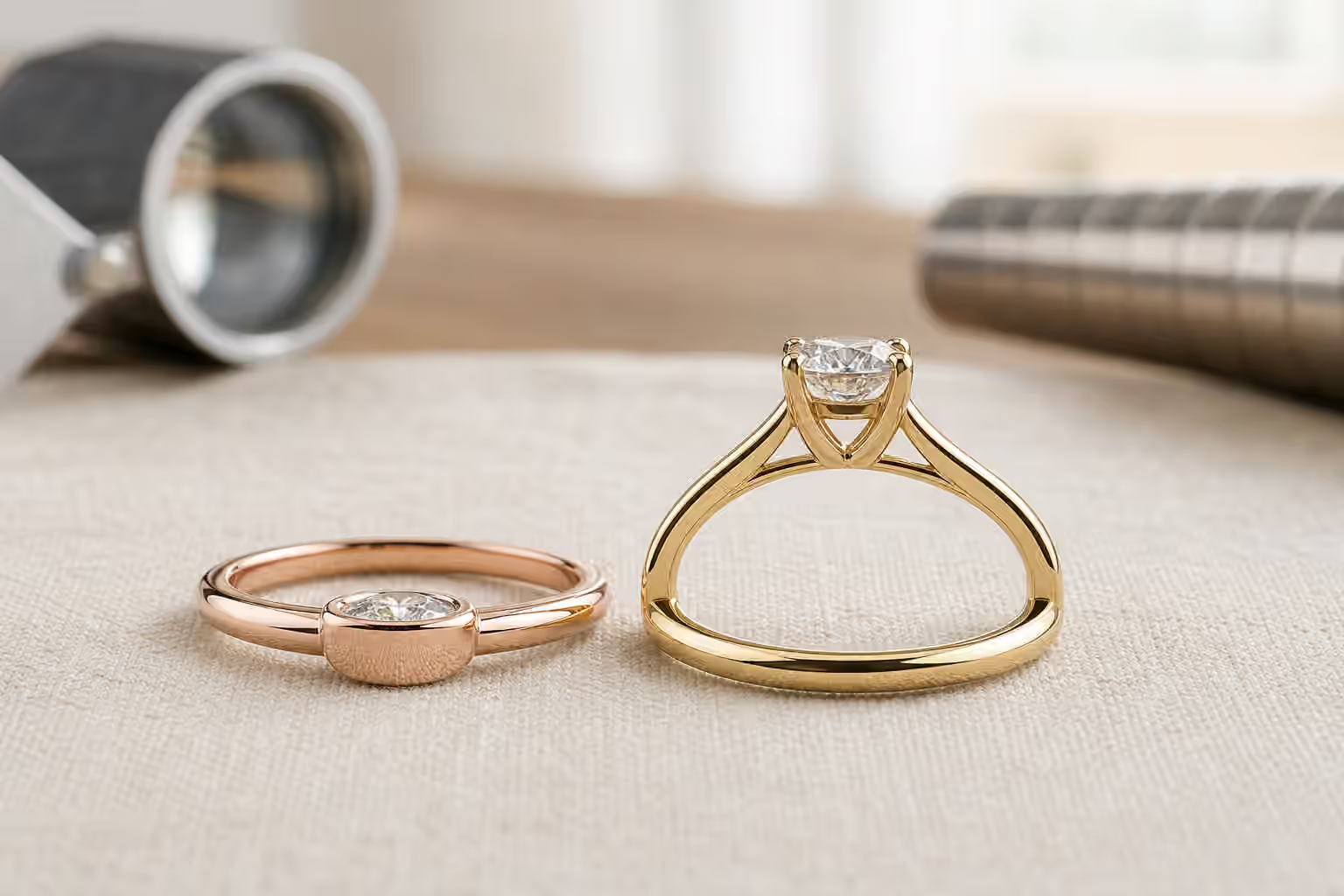
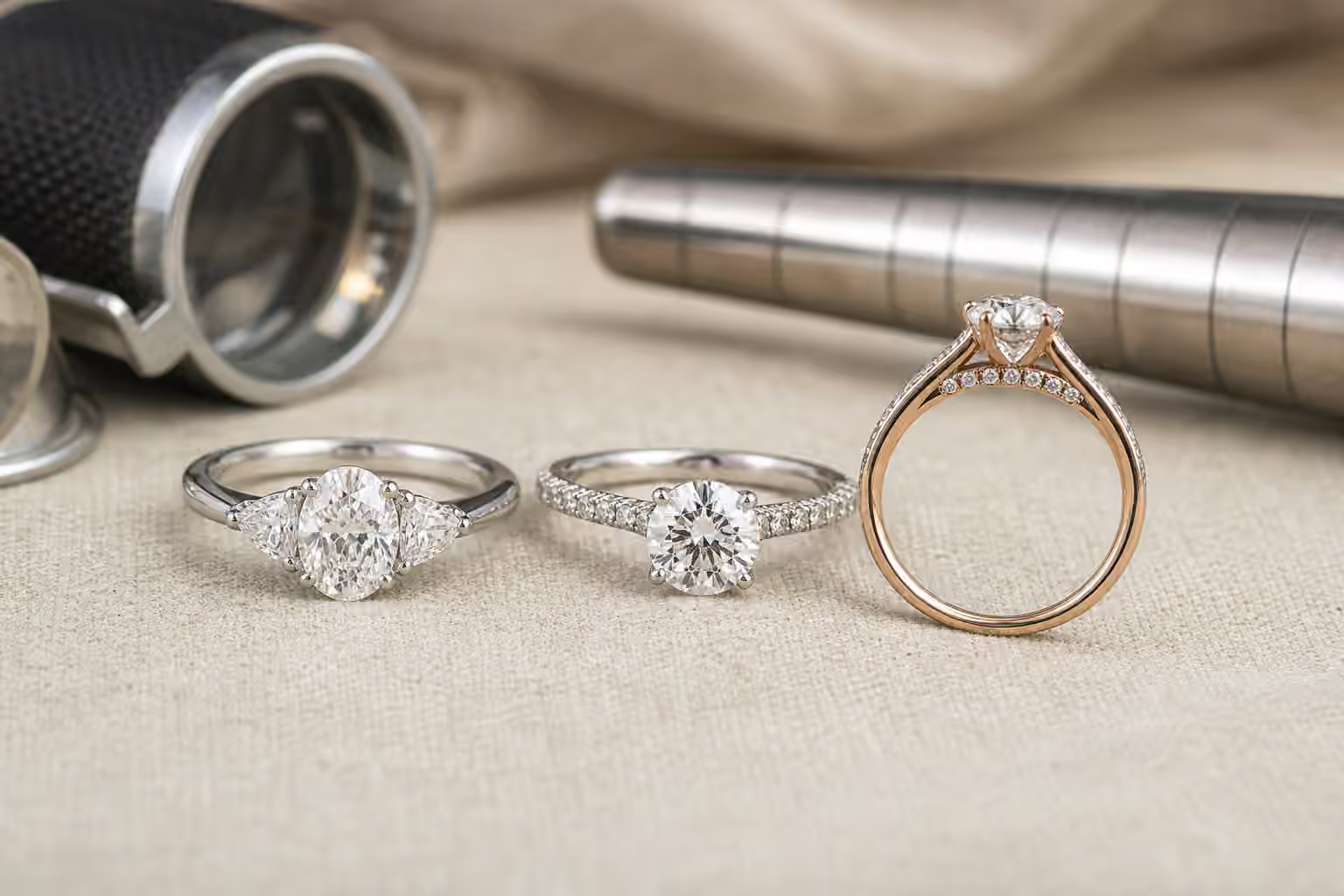
Engagement Ring Shank Width and Comfort
The shank is the part of an engagement ring people notice least in the case and most on the hand. It is the circle of metal that carries the center setting, balances the stone, meets the wedding band, and presses against neighboring fingers all day. A ring can have a beautiful diamond, clean prongs, and the right metal color, yet still feel wrong if the shank is too thin, too wide, too flat inside, or too top-heavy for the stone it carries.
Most shoppers talk about setting style first: solitaire, halo, bezel, three-stone, cathedral, low-profile. That language matters, and the broader ring settings guide gives useful structure for it. Shank width is quieter. It usually appears as a small measurement in millimeters or as a design adjective such as delicate, tapered, knife-edge, comfort fit, or wide band. Those words sound secondary, but they shape how the ring behaves in ordinary use.
The Shank Is Structural, Not Just Visual
A shank does more than complete the circle. It gives the ring its strength. It keeps the head from twisting too easily. It provides enough metal for future resizing, polishing, and repair. It also decides how much surface area touches the finger, which affects comfort as much as the numerical size does.
Very slim shanks look graceful because they leave visual space around the center stone. A narrow band can make a diamond appear larger by contrast, and it can suit a minimalist solitaire beautifully. The risk is that delicacy can become underbuilding. If the shank is extremely thin, especially near the shoulders where it meets the head, it may bend more easily over years of wear. That bending can loosen prongs, disturb accent stones, or make the ring feel oval instead of round.
A wider shank solves some of those problems. More metal can distribute pressure, resist twisting, and support a larger center stone. It can also look intentional on a hand that wears strong jewelry well. But width is not free. A wide band can feel tighter than a narrow band in the same size because it covers more finger and has more contact with skin. It can press against adjacent fingers, trap moisture, and make seasonal swelling more noticeable.
This is why there is no perfect width in isolation. The right width is the one that gives the ring enough structure without making the wearer constantly aware of the band.
Width Changes the Size Conversation
Ring size is not only a number on a mandrel. It is the relationship between the finger, the inside shape of the ring, the width of the metal, and the way the ring passes over the knuckle. The ring sizing guide covers the measurement side in detail, but shank width deserves special attention because it can change the fit even when the official size stays the same.
A narrow solitaire may slide over the knuckle easily and settle at the base of the finger with little pressure. A wide shank in that same size may feel snug because more metal is touching the finger at once. This is why jewelers often size wide bands slightly differently after testing them on the actual hand. The difference may be small, but it matters when the ring will be worn through heat, cold, exercise, travel, and ordinary daily swelling.
Knuckle shape complicates the decision. Someone with a larger knuckle and a narrower finger base may need a size that clears the knuckle but allows the ring to rotate at the base. A slightly wider shank can reduce spinning because it has more contact with the finger. A very top-heavy ring, however, can still rotate if the head is tall or the center stone is large. In that case, width helps but does not solve everything. Profile height, center stone weight, and shank shape all work together.
The best sizing appointment includes movement. The wearer should close the hand, type, pick up a phone, and let the ring sit for several minutes. A ring that feels fine for ten seconds may reveal pressure on neighboring fingers or rotation after small motions.
Thin Bands Need Honest Limits
Delicate shanks are popular for good reasons. They make the center stone feel prominent, they pair easily with many wedding bands, and they create a refined line on the finger. The problem is not thinness itself. The problem is pretending that a very thin band can behave like a sturdier one.
Metal choice affects the limit. Platinum and gold age differently, and the ring metals guide explains those tradeoffs more fully. Platinum can be dense and secure, while gold alloys vary in hardness and maintenance needs. But no metal removes the need for adequate mass. A shank that looks barely there may also have very little material to absorb daily stress.
The most vulnerable thin shanks are often the ones carrying more than they admit. A slim plain solitaire with a modest center stone can be reasonable when well made. A similarly slim shank carrying a large center diamond, a high head, pave shoulders, and a hidden halo is asking much more from very little metal. The ring may photograph beautifully and still require more maintenance than the buyer expected.
Resizing is another concern. A plain thin shank can usually be sized within limits, but repeated sizing removes and adds stress to an already small structure. If the band has pave or engraving around the shank, the work becomes more delicate. If future size changes are likely, it is worth choosing a shank with enough plain metal to make service realistic.
Taper Can Make Width Feel Lighter
A shank does not need to be the same width all the way around. Many engagement rings taper, becoming narrower as they approach the center stone or wider near the head for support. Taper is one of the most useful tools in ring design because it can combine visual lightness with practical strength.
A shank that is wider at the base can feel stable on the finger while narrowing near the diamond to keep the top view delicate. A shank that widens near the shoulders can support a larger head without making the entire band feel broad. A cathedral or split-shank design can distribute the visual weight of the center stone across more metal, though it may change how a wedding band sits beside it.
Taper also affects style. A uniform narrow shank feels clean and modern. A soft taper can look classic and balanced. A bold taper can make the center stone feel architectural. A knife-edge shank, with a raised ridge down the center, can look crisp from above but may feel different between the fingers than a rounded band. These are not only aesthetic choices. They are tactile choices.
From the side, taper can reveal whether the ring is well resolved. The shoulders should rise into the head naturally, without looking pinched or abruptly attached. If the shank narrows dramatically under a heavy setting, ask how the design keeps the ring from twisting and how much metal supports the head.
Inside Shape Matters More Than It Sounds
Two rings with the same outside width can feel different because their inside surfaces are shaped differently. A flat inside sits against the finger with a broader edge. A comfort-fit inside is slightly rounded, which can make the ring slide over the knuckle more easily and feel softer during long wear. This rounding is especially noticeable on wider bands.
Comfort fit is not automatically better for every engagement ring. On a narrow shank, the difference may be subtle. On a wide or heavy ring, it can be significant. The rounded interior can also make the ring feel a touch looser at the same nominal size, which is why sizing should be done with a ring or sizer that resembles the final band width and inside profile.
Edges matter too. The outside edges of the shank should not feel sharp against neighboring fingers. Engraving, milgrain, or decorative shoulders should be finished cleanly enough that they do not scratch or irritate. A jeweler may describe a ring as handmade, vintage inspired, or detailed, but the wearer’s fingers will care more about polish and edge quality than vocabulary.
Wedding Bands Add More Width Later
An engagement ring is often chosen before the wedding band, but the hand will eventually experience the combined width of both. A two-millimeter engagement ring beside a two-millimeter wedding band feels different from a four-millimeter engagement ring beside a matching band. Add a spacer, anniversary band, or contour band, and the stack can change sizing and comfort again.
The wedding band pairing guide focuses on fit, gaps, and matching. Shank width is part of that same planning. A wide engagement ring may look complete on its own and pair best with a very narrow plain band. A thin solitaire may welcome a stronger wedding band for balance. A pave engagement ring may become visually busy beside another diamond band unless the proportions are calm.
Try the future idea early, even if the exact wedding band will be chosen later. A jeweler can place sample bands beside the engagement ring so the wearer can feel the total width. This matters especially for people who are sensitive to rings between fingers or who do not usually wear stacked jewelry.
Width Should Match the Wearer’s Life
The most durable ring is not always the heaviest, and the most comfortable ring is not always the thinnest. A person who removes jewelry during rough activity and prefers delicate style may be happy with a slim, well-built solitaire. Someone who works with their hands, wants a larger center stone, or dislikes spinning may prefer a slightly wider shank with a lower center of gravity. Someone drawn to bold jewelry may find a wider band more natural than a narrow one that looks timid on the hand.
Lifestyle should be discussed without exaggeration. No engagement ring is meant to absorb every impact. Even a substantial shank needs sensible care, and the habits in ring care still apply. But the ring should not require the wearer to become a different person. If they already dislike fragile jewelry, a whisper-thin shank will not become practical because it looks elegant in a tray.
A good shank disappears into use. It supports the stone, fits through seasonal changes, accepts reasonable maintenance, and feels like it belongs between the fingers. When width, thickness, taper, and inside shape are chosen carefully, the ring does not merely look balanced. It lives balanced.