Engagement Ring Prongs: Count, Shape, and Stone Security
Prongs are small enough to be overlooked and important enough to decide how a ring wears for decades. They are the tiny pieces of metal that rise around the center stone, bend over its edge, and keep it seated through all the motions of ordinary life. A buyer may spend weeks comparing diamond color, clarity, and carat weight, then accept whatever prongs happen to come with the setting. That is backwards. The prongs are where the stone and the ring become one object.
The broader ring settings guide explains the major families: solitaire, bezel, halo, three-stone, pave, cathedral, and more. Prongs sit inside many of those families. A solitaire may use four, six, or double prongs. A halo may still rely on prongs to hold the center. A three-stone ring may need one prong style for the center stone and another for the side stones. When the prongs are well chosen, they almost disappear. When they are wrong, the ring can snag, look clumsy, expose a vulnerable point, or make future maintenance harder.
Thinking about prongs does not require bench-jeweler training. It requires looking at the ring from the side, from the top, and through the life of the person who will wear it. The shape of the stone, the height of the setting, the metal choice, and the wearer’s habits all matter.
What a Prong Is Actually Doing
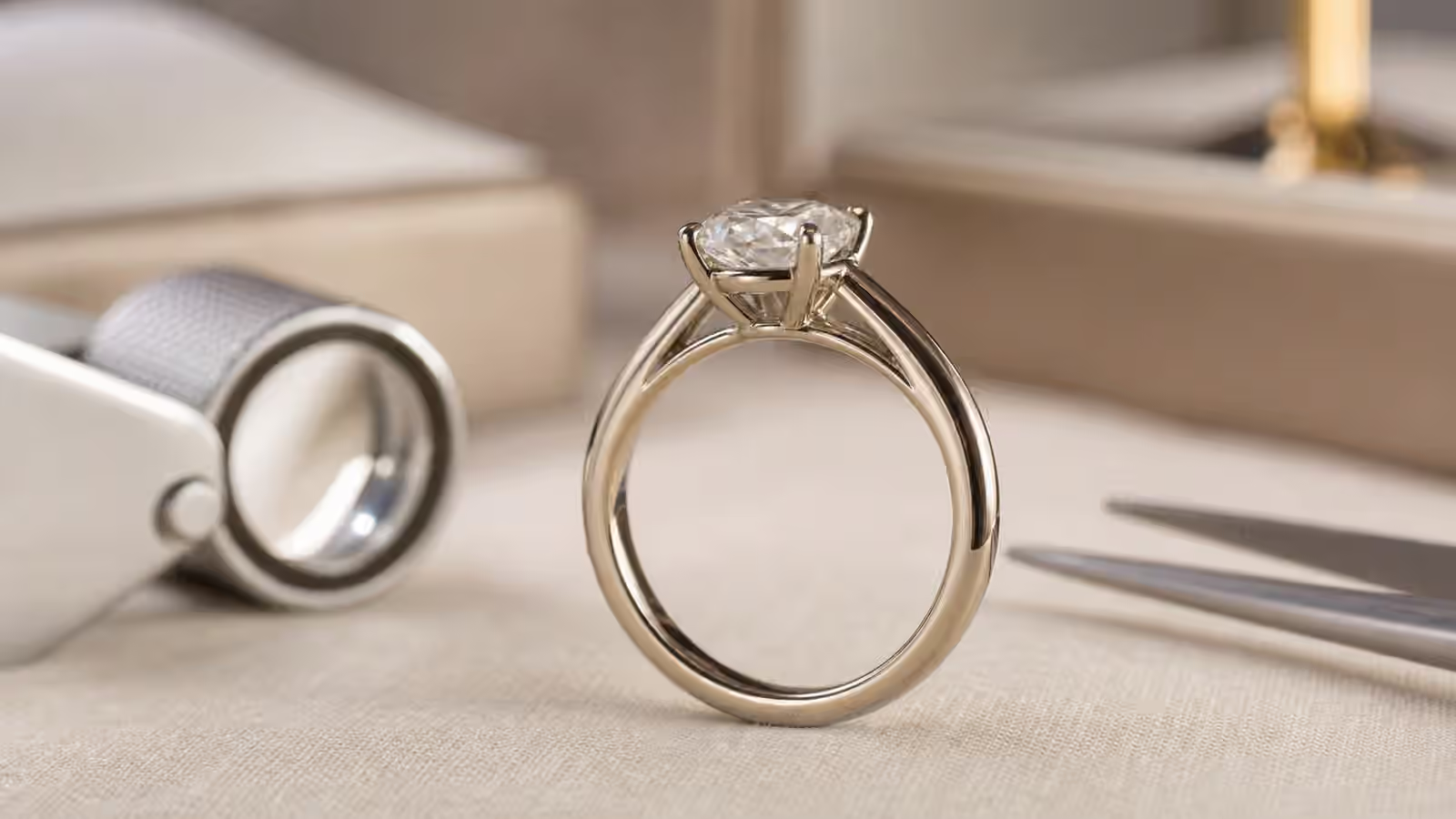
A prong is not only a visible tip on top of a diamond. It begins lower in the setting, rises from the basket or head, and is shaped around the stone’s girdle. The visible end is only the part most shoppers notice. A strong prong has enough metal below the tip to resist bending, enough contact with the stone to hold it securely, and a finished surface smooth enough not to catch constantly on fabric.
Good prongs grip without bullying the stone. They should sit evenly, with each tip making clean contact and no obvious gap between metal and gem. From above, the prongs should look balanced. From the side, they should not appear thin, crooked, or barely attached to the setting. A delicate ring can still be well made, but delicate should not mean starved of metal where the stone is being held.
This matters even with diamonds. Diamond hardness resists scratching, but it does not make the stone immune to chips, pressure, or a hard knock at the wrong angle. The metal is also part of the security system, and metal wears. Years of brushing against desks, pockets, gloves, towels, and other rings can thin prong tips. The habits in ring care are not decorative advice; they are how small metal parts keep doing their job.
Four Prongs, Six Prongs, and the Shape of the Stone
Four-prong settings show more of the diamond. On a round stone, four prongs can make the outline look slightly squarer because the metal points sit at the corners of the visual frame. They also leave more open space around the edge, which many people like because the stone feels less covered. A four-prong head can be elegant, clean, and bright, especially on smaller stones where six prongs might feel crowded.
Six-prong settings give a round diamond a more circular outline and add redundancy. If one prong is damaged, five still remain, at least temporarily. That does not mean a loose or broken prong can be ignored, but six prongs can feel more reassuring on a ring that will be worn heavily. The tradeoff is visual. Six tips cover a little more of the edge and can make a very small stone look busy if the prongs are thick.
Fancy shapes change the question. Ovals often use four prongs, sometimes with prongs placed near the narrower ends and shoulders. Pears usually need protection at the point, often with a V-prong that cups the tip rather than a simple dot of metal. Marquise diamonds have two points, so both ends deserve serious protection. Princess cuts and other square shapes need corner protection because sharp corners are vulnerable. The diamond shapes guide is useful here because outline is not only a style decision. It tells the setting where the stone is weakest.
There is no universal winning prong count. A small round solitaire may look best with four neat prongs. A larger round diamond worn by someone with active hands may benefit from six. A pear or marquise may need fewer visible prongs along the sides but better protection at the points. The right question is not how many prongs sound safest in theory. It is whether this exact arrangement protects this exact stone without making the ring feel heavier than it needs to be.
Rounded Prongs, Claw Prongs, and Double Prongs
Prong shape changes the mood of a ring. Rounded prongs look soft and classic. They are common on traditional solitaires and can make the setting feel calm, familiar, and durable. If they are too large, they can look like beads sitting on the diamond. If they are shaped well, they read as quiet metalwork rather than decoration.
Claw prongs taper to a finer point. They can make a ring look more refined because less metal appears to cover the stone. On elongated diamonds, pointed claws often echo the stone’s geometry and make the whole setting feel more intentional. The risk is not the claw shape itself. The risk is poor execution. A claw that is filed too thin, catches on sweaters, or fails to make solid contact is not better because it looks fashionable in a photo. Fine prongs need fine workmanship.
Double prongs place two small prongs close together at each position. They are often used on cushions, radiants, ovals, and larger stones where a single prong might look too sparse. Double prongs can add a tailored, antique, or architectural feeling, and they spread the holding points across more of the edge. They also add more tiny places that need cleaning and inspection. On a small stone, double prongs may overwhelm the outline. On a larger cushion or elongated diamond, they can look balanced and secure.
V-prongs deserve their own attention because they are functional before they are aesthetic. A V-prong protects a point by wrapping around it like a small metal shield. Pears, marquises, and princess-cut corners often benefit from this kind of structure. A pointed diamond left with a minimal decorative prong may look airy in the case, but the point is the part most likely to suffer if the ring takes a sharp impact. Beauty should not depend on leaving the most vulnerable part exposed.
Prongs and Daily Wear
The daily life of prongs is mostly friction. They pass through sleeves, pockets, sheets, hair, gloves, and towel loops. They knock lightly against tables and door handles. They collect lotion and soap where the metal bends over the stone. A prong setting does not have to be fragile, but it asks the wearer to notice the small signals of wear before they become dramatic.
A ring that snags constantly may have a bent or lifted prong, not just an inconvenient design. If one tip feels sharp against fabric or skin, a jeweler should inspect it. If the center stone clicks faintly when touched, the ring should come off until it can be checked. These are not reasons to panic. They are reasons to treat the prongs as working parts rather than permanent sculpture.
Profile height affects prong wear too. A tall setting brings the stone and prongs farther into the world. It may look graceful and allow a wedding band to sit flush, but it is more exposed. A lower basket may reduce snagging, though it can also make cleaning tighter and band pairing more complicated. The low-profile engagement rings guide covers that side-view decision in more depth. Prongs should be judged together with height, not as isolated little tips.
Metal choice matters, but not in a simplistic way. Platinum and gold wear differently. White gold may need rhodium maintenance, while platinum develops a patina and can hold small details in its own way. Yellow and rose gold change the visual contrast between metal and diamond, which can make prongs either disappear softly or become part of the design. The ring metals decision should include the prongs, because they are the metal the eye sees most clearly around the center stone.
How Prongs Affect Sparkle and Style
Prongs are popular partly because they expose more of the stone than a full bezel. Light can reach the diamond from more angles, and the edge of the stone remains visible. This openness is one reason classic prong solitaires still feel bright and direct. The setting gives the diamond room to perform.
Still, prongs cannot rescue a weak stone. A poorly cut diamond will not become lively simply because less metal surrounds it. The diamond cut quality guide should come before any assumption that an open setting solves sparkle. What prongs can do is avoid getting in the way of a stone that already handles light well.
Prongs also frame the diamond’s outline. A round stone with six rounded prongs feels traditional. The same stone with four pointed claws may feel leaner and more modern. An oval with claw prongs can look elongated and precise. A cushion with double claws may lean vintage or custom. These are small differences in metal, but they change the ring’s expression because the prongs touch the most important visual boundary: the line where stone meets air.
Accent work complicates the picture. A ring with a halo, pave shoulders, or side stones has more small settings to inspect. The center prongs need to harmonize with those details rather than compete with them. If the center uses bold rounded prongs and the band uses delicate micro-pave, the contrast may feel charming or mismatched depending on execution. The side stones and accent diamonds guide is a useful companion because every small stone adds its own miniature version of the security question.
What to Inspect Before Saying Yes
Before choosing a prong-set ring, look at it slowly from more than one angle. From above, the prongs should be symmetrical and appropriate to the stone’s shape. From the side, they should appear anchored into the head rather than perched on top of it. The stone should sit level. The prong tips should be smooth, even, and in contact with the gem. If the ring has points or corners, those areas should look deliberately protected.
Ask the jeweler how often the prongs should be inspected, whether resizing will affect the head, and what kind of maintenance is included after purchase. If the center stone has an inclusion near the edge, ask whether a prong will cover it visually and whether that placement is safe. The diamond clarity conversation sometimes intersects with prong placement, especially when a feature sits close to the girdle.
A good prong decision feels practical and quiet. The ring looks like itself, not like a list of engineering compromises. The stone feels secure without being crowded. The metal tips suit the shape rather than fighting it. The wearer can imagine the ring moving through ordinary days without treating every sleeve as a hazard.
Prongs are not glamorous in the way a diamond is glamorous. They are the small promise the ring makes to the stone: stay here, stay visible, stay protected. When that promise is made with enough metal, careful shaping, and honest maintenance, the wearer gets the best version of a prong setting: open, bright, graceful, and ready for real life.