Emerald-Cut Engagement Rings: Step Facets, Clarity, and Quiet Drama
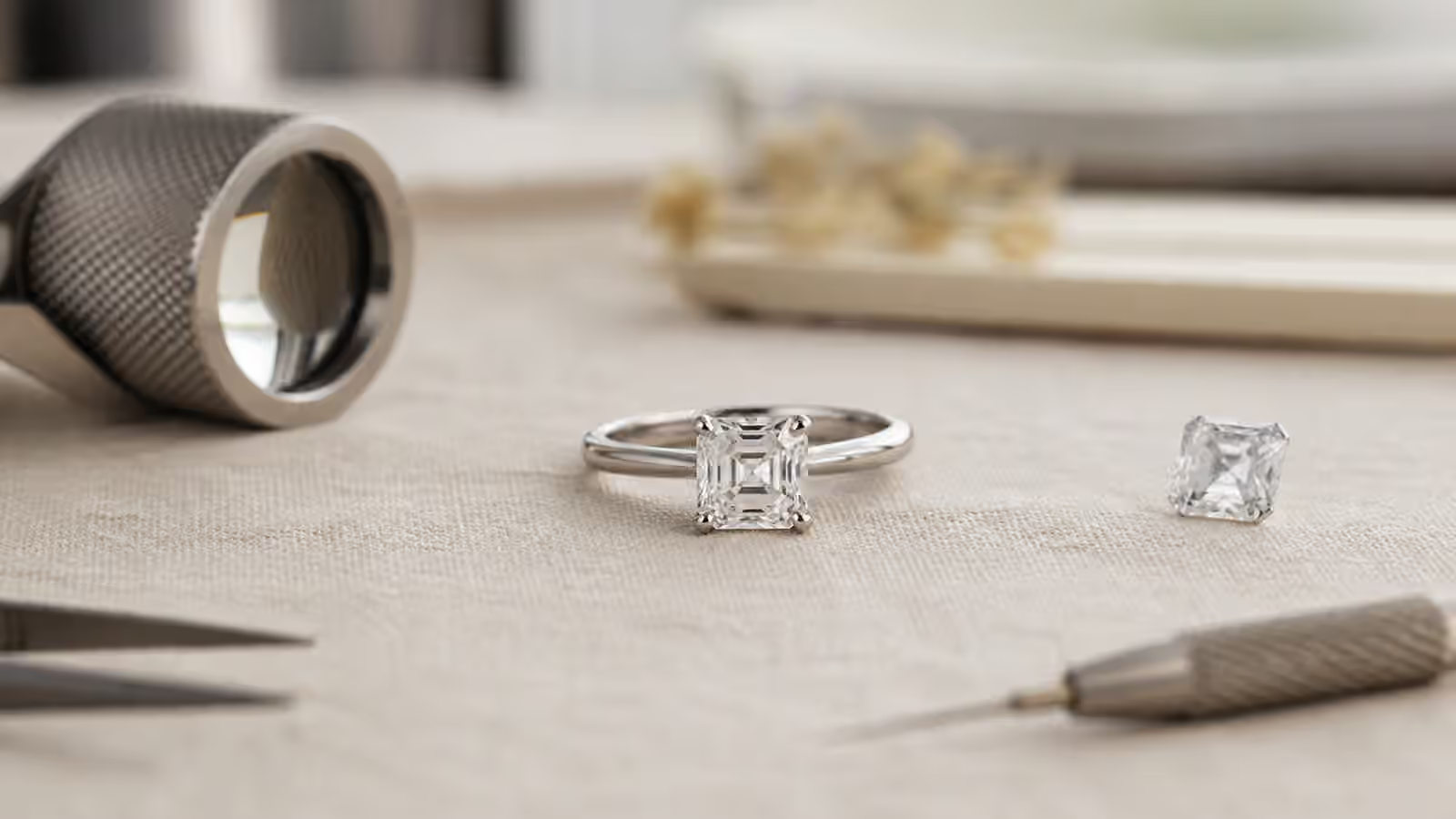
An emerald-cut engagement ring does not sparkle like a round brilliant, and that is exactly the point. Instead of many small flashes, an emerald cut gives broad steps of light. It turns on and off in long reflections, like a hall of mirrors held inside a diamond. The look is quieter, more architectural, and often more revealing than shoppers expect when they first compare shapes.
The diamond shapes guide introduces emerald cuts as one option among many, but this shape rewards slower attention. A round brilliant can hide small inclusions and slight cutting compromises behind lively scintillation. An emerald cut is more candid. Its large table, open facets, clipped corners, and clean lines make the stone easy to read. That honesty is beautiful when the diamond is well chosen. It is also why the same specification shortcuts that work for some brilliant cuts can disappoint here.
What Step-Cut Sparkle Looks Like
Step cuts use long, parallel facets arranged like steps around the stone. The effect is not a shower of tiny sparks. It is a pattern of broad flashes, dark mirrors, and bright windows that shift as the ring moves. A strong emerald cut feels crisp and composed. It should have life across the length of the stone, not only at the ends, and it should avoid a large dead area that sits flat in the center.
This difference matters because many buyers use the word sparkle for every kind of diamond light. If the wearer wants constant glitter, an emerald cut may feel too restrained. If the wearer loves clean geometry, vintage restraint, or a ring that looks elegant without shouting, the step-cut personality can be exactly right. The best comparison is not an emerald cut against an idealized idea of diamond brightness. It is an emerald cut against other emerald cuts, seen in the same light and at the same pace.
Ask to move the stone slowly. Under strong spotlights, almost any diamond can produce impressive reflections. In softer light, the step pattern becomes easier to judge. Look through the table. Watch whether the facets alternate in an orderly way or whether the stone seems watery. A good emerald cut does not need to be frantic. It needs to hold attention.
Clarity Is More Visible Here
Clarity deserves extra respect in emerald cuts because the large open facets do less hiding. Inclusions near the center, dark crystals, feathers that reach vulnerable areas, or anything visible under the table may be easier to see than the same inclusion in a round or oval brilliant. That does not mean every emerald cut must be a high-clarity trophy stone. It means eye-clean should be judged with your own eyes, not assumed from the grade.
The diamond clarity and eye-clean guide explains why location and visibility matter more than the grade alone. With emerald cuts, this advice becomes practical. View the diamond face-up at normal distance, then closer, then at a slight angle. Look in daylight-like conditions and away from the most flattering case lights. A small inclusion near the edge may disappear once the stone is set. A dark mark under the table may bother the wearer every time the ring catches light.
The clarity plot on a grading report can help you know where to look, but it cannot tell you how distracting an inclusion feels in person. Video helps for remote shopping if the seller shows the stone plainly. A slow, face-up video is more useful than a glamour spin under sharp lighting. If the seller can provide magnified views, use them to understand the stone, then step back and ask the real question: does the diamond look clean when worn?
Color Reads Through the Stone
Emerald cuts can show body color more openly than some brilliant cuts. Their broad facets and larger table give the eye more uninterrupted material to read. A near-colorless grade can look beautifully white, especially in platinum or white gold. Warmer grades can also be handsome, particularly in yellow or rose gold, where a little warmth may feel intentional rather than like a compromise.
The diamond color grades guide is useful before choosing a color target, because metal color, stone size, and personal preference all change the result. In an emerald cut, compare color face-up and from the side. The side view can reveal warmth that is less obvious from above. A setting with a yellow gold shank and white metal prongs can soften the transition if the wearer wants warmth in the ring but a cooler face around the diamond.
Side stones complicate color choices. Tapered baguettes, trapezoids, or step-cut side diamonds should harmonize with the center. They do not need to match invisibly, but a cooler side stone next to a warmer center can make the center look warmer by contrast. If the ring uses a halo or brilliant-cut accents, the difference in sparkle style can also make color differences more noticeable. Ask to see the full composition, not only the center diamond.
Ratio Sets the Mood
Emerald cuts can look nearly square, long and elegant, or somewhere in between. Ratio is the relationship between length and width, and it changes the ring’s personality before any setting is added. A shorter emerald cut can feel strong, balanced, and almost Asscher-like. A longer one can feel graceful and slender. Extremely long stones may give dramatic finger coverage but can be harder to set securely and may show more obvious dark or watery areas if the cut is weak.
There is no single correct ratio. The right choice depends on the wearer’s hand, style, and setting. A long emerald cut in a simple solitaire can look severe and beautiful. A medium ratio with tapered baguettes can feel classic. A shorter shape in a bezel can read modern and grounded. The diamond carat weight and face-up size guide helps connect ratio to visible spread, because two diamonds with the same weight can look quite different on the finger.
Try not to chase length only for size. An emerald cut that faces up large but leaks light through the middle will not feel luxurious over time. A slightly smaller stone with cleaner steps and better life can look more expensive because it behaves better in ordinary light. With this shape, elegance comes from proportion as much as scale.
Settings Should Protect the Corners
The clipped corners of an emerald cut are part of its design, but corners still need protection. Prongs should be placed cleanly and evenly, often at the corners, with enough metal to hold the stone without overwhelming its outline. A bezel can be beautiful for an emerald cut because it reinforces the geometry and protects the edges, though it changes the light and gives the ring a stronger frame. The engagement ring prongs and bezel engagement rings guides are useful companions when comparing those approaches.
Emerald cuts pair naturally with side stones. Tapered baguettes, trapezoids, bullets, and half-moons can extend the architecture of the center. Brilliant-cut rounds or pears create more contrast. Neither approach is automatically better. Step-cut sides make the ring feel composed and tailored. Brilliant sides add shimmer around the quiet center. The important part is proportion: side stones should support the center, not make it look narrow, dark, or underpowered.
Wedding band fit should be considered early. A low basket may be comfortable but create a gap with a straight band. A higher setting may allow a flush band but feel more exposed. The wedding band pairing guide helps translate this into a practical appointment question before the ring is already made.
Choosing With Confidence
An emerald-cut engagement ring is a good choice for someone who likes restraint, structure, and visible craftsmanship. It is less forgiving than many brilliant cuts, but that is not a flaw. It simply means the purchase should be deliberate. Compare real stones. Ask for clear videos. Read the grading report, then use the report as a map rather than a verdict. Study clarity under the table, color through the body, and the way the steps move in ordinary light.
When the right emerald cut appears, it has a calm authority. It does not need a halo to explain itself, although it can wear one well. It does not need constant glitter, because the flashes it gives are larger and more deliberate. It can look antique, modern, minimal, or glamorous depending on the setting. The beauty is in the discipline. Every line is visible, so every choice matters.