East-West Engagement Rings: Orientation, Finger Coverage, and Fit
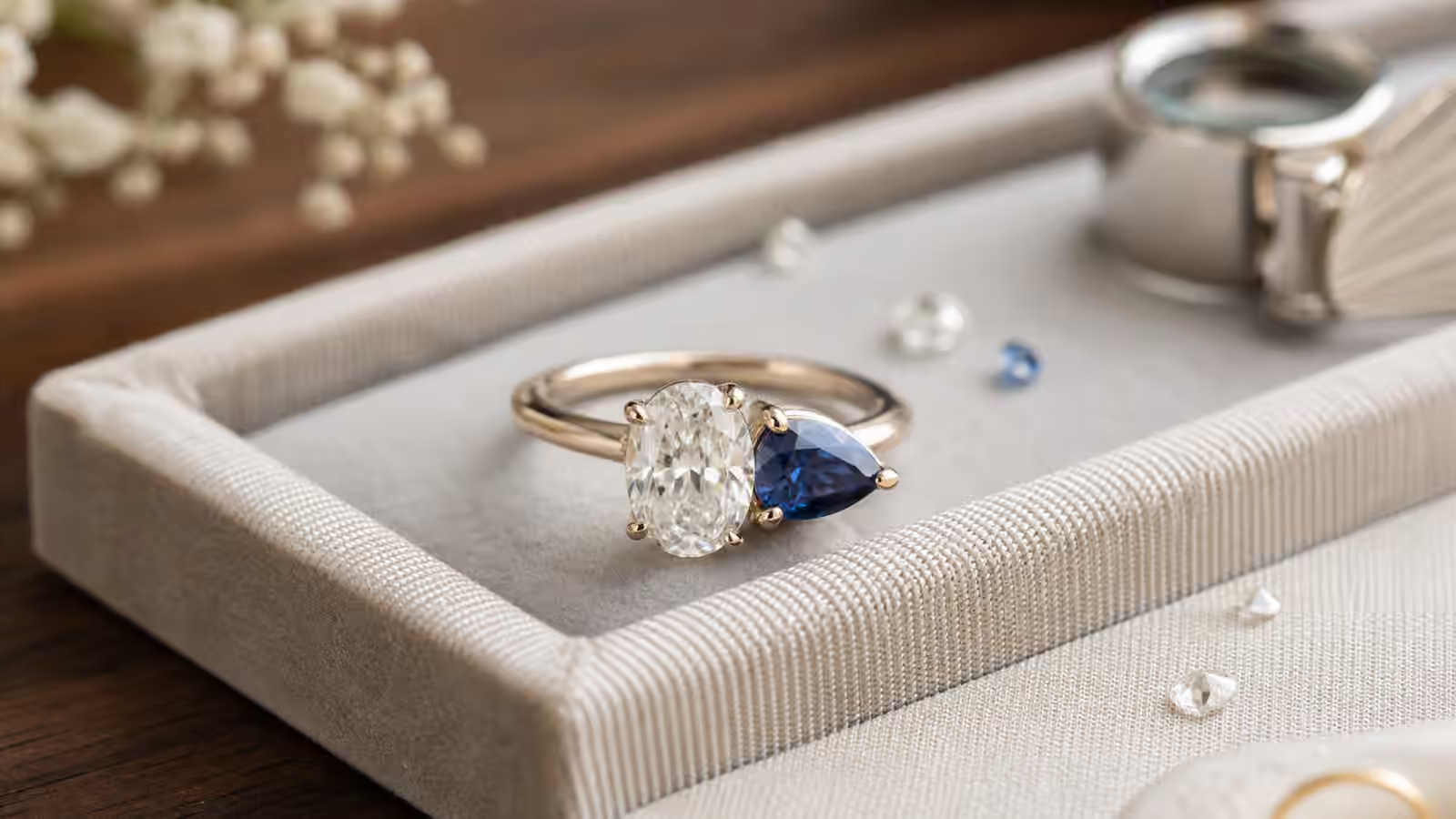
An east-west engagement ring turns an elongated center stone sideways across the finger. An oval, emerald cut, marquise, pear, radiant, or cushion that would usually run from fingertip to wrist instead stretches from side to side. The change sounds simple, but it can make the ring feel more modern, more relaxed, and sometimes more wearable.
The diamond shapes guide explains how outline affects personality. East-west orientation adds another layer: the same stone shape can speak differently when turned. A north-south oval often lengthens the finger visually. An east-west oval feels wider, calmer, and more unexpected. A marquise set vertically can look dramatic and pointed. Set horizontally, it can feel sleek and almost leaf-like. The stone has not changed, but the hand reads it differently.
Orientation Changes Proportion First
East-west rings are often chosen for style, but proportion is the practical starting point. Turning a stone sideways increases visible width across the finger. On some hands, that creates satisfying coverage without needing a heavier carat weight. On others, it can make the ring feel too wide between neighboring fingers. The only way to know is to try the orientation on a hand, or at least use a stone or paper outline with similar millimeter dimensions.
Carat weight is a poor guide here. A long, shallow oval may cover a lot of width east-west, while a deeper stone of the same weight may look more compact. A marquise may seem dramatic in millimeters but feel narrow through the center. An emerald cut may look clean and architectural, but if it is very long, the corners may sit close to the sides of the finger. The diamond carat weight and face-up size guide helps keep the focus on visible measurements rather than weight alone.
Think about the wearer’s existing jewelry. Someone who likes wide bands, signet rings, or horizontal shapes may enjoy the presence of an east-west center. Someone who prefers delicate rings may like a modest east-west oval but not a long marquise spanning the finger. The orientation should feel intentional, not like the stone is trying to cover more space than the hand wants.
Different Shapes Behave Differently
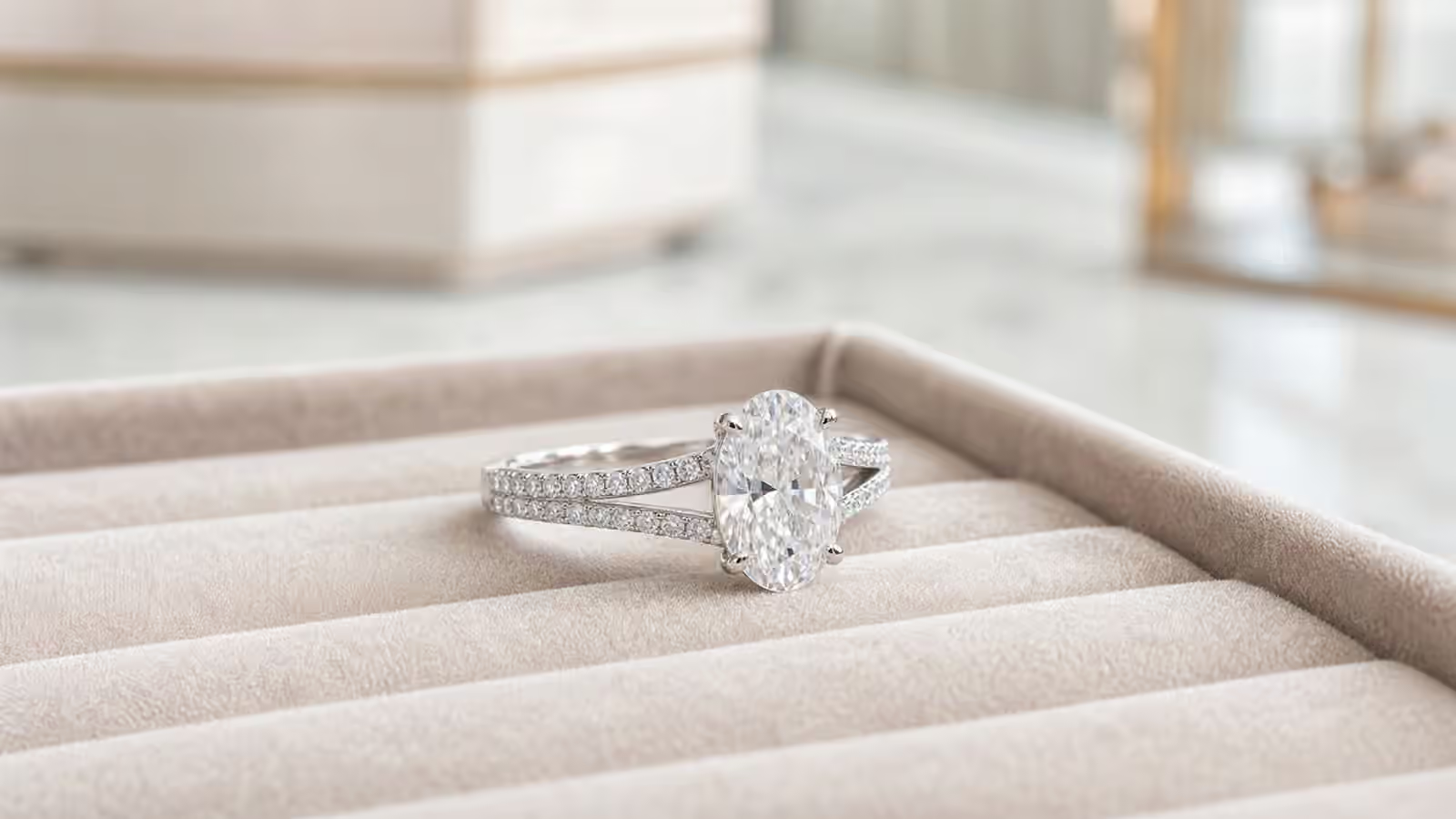
Ovals are one of the easiest east-west shapes because their curves stay soft and wearable. A well-cut oval turned sideways can look relaxed and fluid. The bow-tie, if present, may read differently when the stone is horizontal, so inspect it in the intended orientation. The oval engagement rings bow-tie ratio guide is still relevant even though the stone is turned.
Emerald cuts become more graphic east-west. The horizontal steps can feel Art Deco, minimal, or tailored depending on the setting. Clarity and color remain important because the open facets are still visible. Radiants and elongated cushions can give more sparkle than emerald cuts while keeping a rectangular footprint. Marquise stones are dramatic east-west, but their points need careful protection. Pear shapes are more unusual because the point and rounded end create an asymmetric horizontal line. That asymmetry can be beautiful, but it should be chosen deliberately.
Colored gemstones also work well east-west when the color is strong and the cut is lively. A sapphire or spinel oval set horizontally can feel less traditional than the same stone set vertically. With colored stones, ask whether the color looks even in the final orientation. Some stones show stronger color in one direction, and rotating them can change what the wearer sees most.
Settings Need to Protect the Ends
Turning a stone sideways changes which parts meet the world first. The long ends of an oval or the corners of an emerald cut may now sit near the sides of the finger. A marquise’s points can become the widest and most exposed parts of the ring. That makes prong placement, bezel coverage, and shank support more important.
A bezel can be especially appealing for east-west rings because it smooths the outline and protects vulnerable edges. It can make the ring feel low and easy to wear, particularly with ovals, emerald cuts, and marquises. Prongs can keep the look lighter, but they should be shaped to the stone. V-prongs may be important for points. Corner prongs may be needed for emerald cuts and radiants. The bezel engagement rings and engagement ring prongs guides are useful before deciding.
The shank should support the width. A very thin band under a wide horizontal stone can feel top-heavy and rotate. A slightly sturdier shank, tapered shoulders, or a low basket can make the ring feel balanced. The engagement ring shank width and comfort guide helps connect width, rotation, and daily wear.
Low Profile Often Suits the Style
Many east-west rings look best when they sit relatively low. The horizontal orientation already gives presence, so extra height is not always needed. A low basket or bezel can make the ring feel integrated with the finger, almost like a refined band with a center stone rather than a traditional raised solitaire. That smoothness is part of the appeal for people who want a modern ring they can wear easily.
Low profile has tradeoffs. A wedding band may not sit flush if the center stone or basket blocks it. A very low closed setting can be harder to clean under the stone. A bezel may protect the gem but cover more of its edge. These compromises are manageable when they are expected. The low-profile engagement rings guide explains them in more detail.
Try the ring with sample bands early. East-west settings can create unusual band interactions because the center stone spans more width. A straight band may tuck neatly under a raised setting, or it may hit the stone’s edge. A curved band may solve fit but change the clean horizontal look. The wedding band pairing guide is useful before choosing a setting that will later need a companion.
The Style Should Have a Reason
East-west orientation can look fresh, but it should not be chosen only because it is different. The wearer should like horizontal balance, slightly unconventional design, and the way the ring looks from arm’s length. Some people love the quiet surprise. Others feel that an elongated stone loses its graceful finger-lengthening effect when turned. Neither reaction is wrong.
The best east-west rings feel settled. The stone’s proportions suit the finger. The setting protects the ends. The shank keeps the ring from spinning. The wedding band plan is understood. The orientation makes the ring more like the wearer, not merely more unusual.
If a shopper is unsure, compare the same shape both ways. Place an oval north-south, then east-west. Turn an emerald cut and watch how the step facets change. Try a bezel and prongs. The decision often becomes clear when the hand is involved. A ring that looks interesting on a tray must still feel natural when the fingers move.
East-west design is a small rotation with a large effect. It can make a classic stone feel personal, give finger coverage without chasing size, and create a ring that feels modern without relying on extra ornament. When the proportions are right, the sideways choice does not feel like a trend. It feels like the ring found its proper direction.