
Reading a Diamond Grading Report Before You Buy
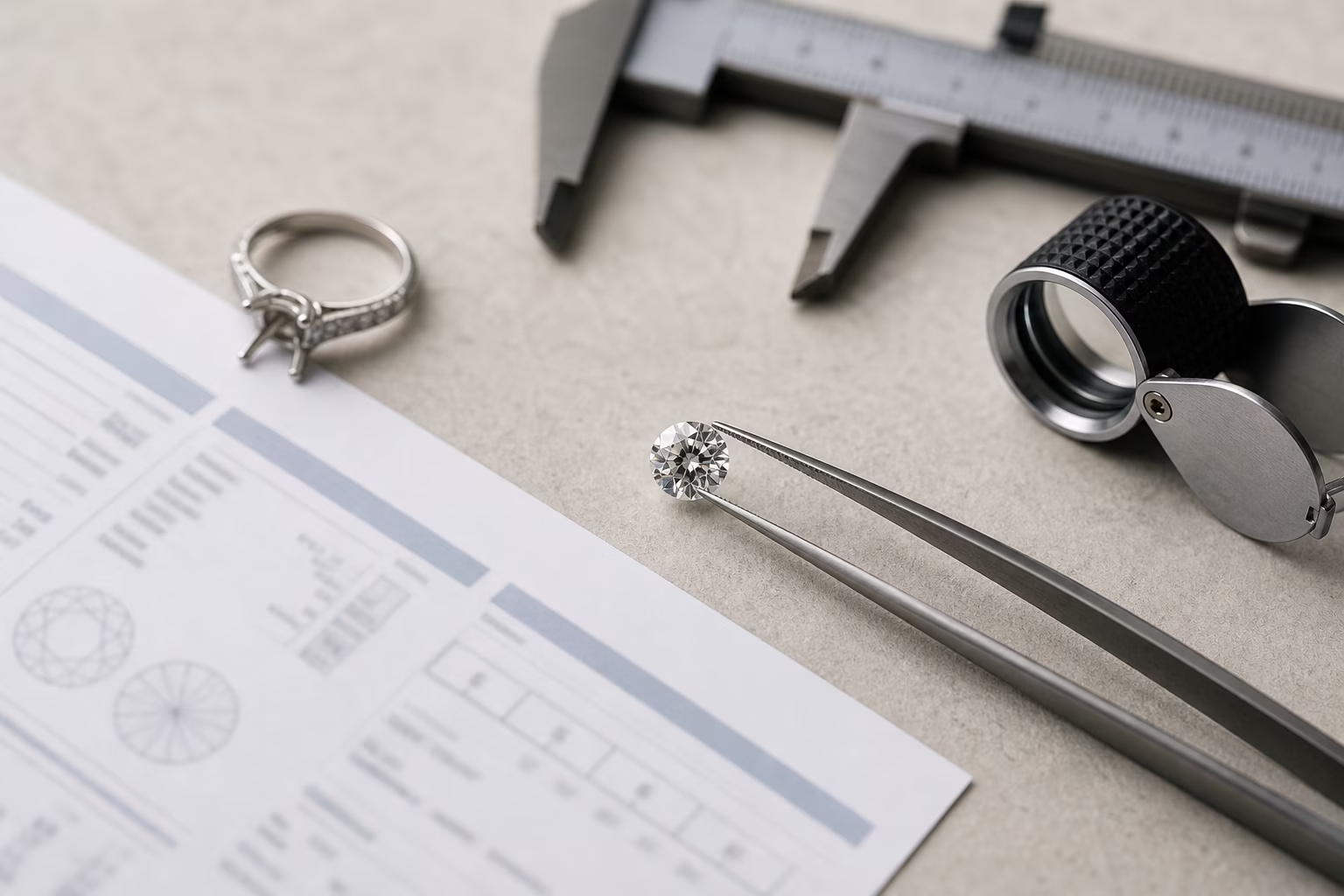
A diamond grading report looks official enough to end a conversation. It has a lab name, a report number, measurements, grades, diagrams, and the kind of tidy language that makes a shopper feel as if the hard part has been solved. The paper says the diamond is this shape, this weight, this color, this clarity. The seller says it matches the stone in front of you. The temptation is to treat the report as proof that the diamond is good.
That is almost right, but not quite. A grading report is one of the most useful documents in engagement ring shopping, yet it is not a beauty certificate, an appraisal, a warranty, or a promise that the ring is well made. It is a structured description of one loose stone at the time it was examined. Used well, it protects you from vague claims and gives you a common language for comparison. Used lazily, it can make an average diamond seem safer than it is.
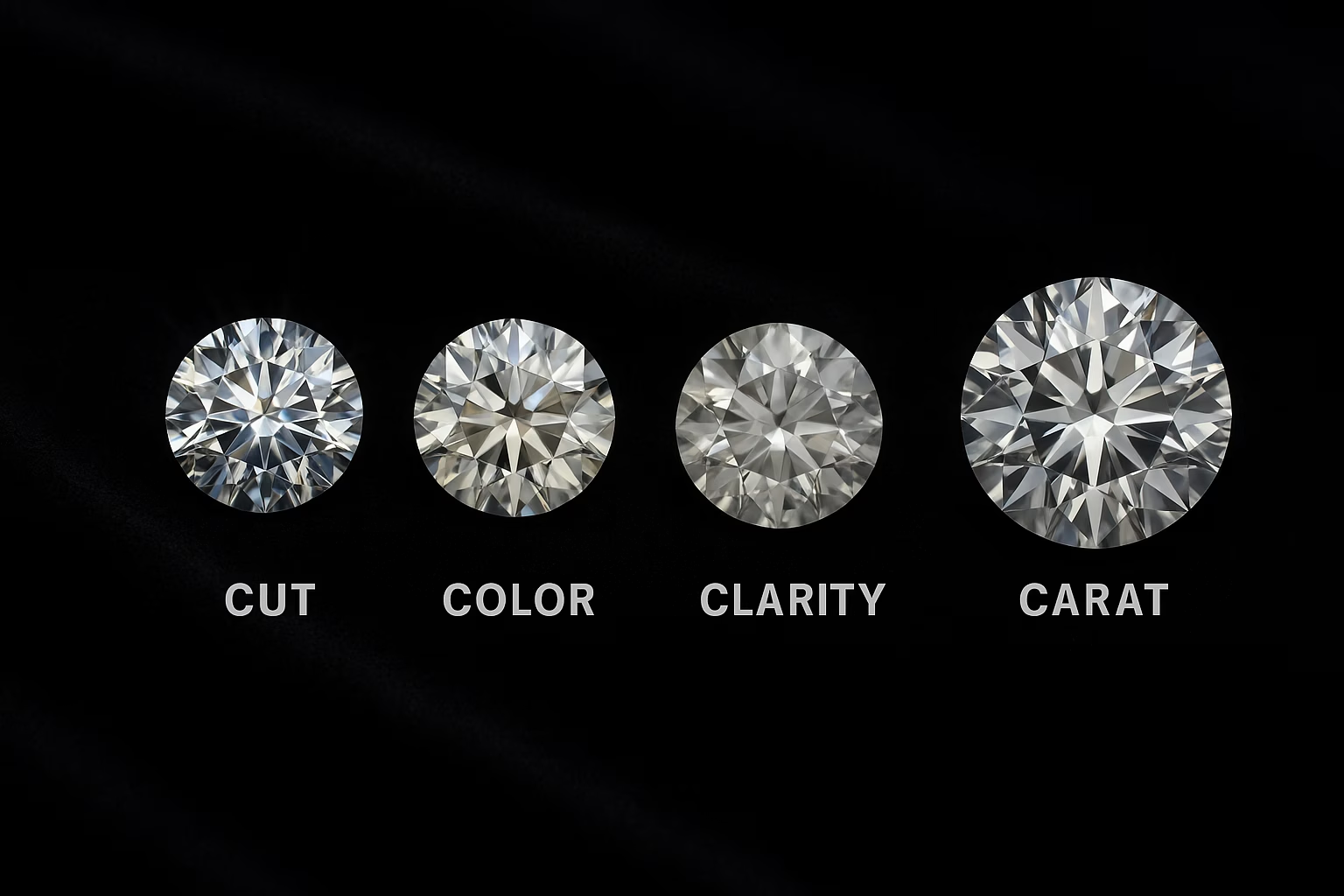
The best way to read a report is to move slowly from identity to appearance. First confirm that the document belongs to the diamond you are considering. Then read the grades in the context of the 4Cs of diamonds , paying special attention to the parts that your eyes will actually notice. Finally, compare the report to the ring design, because a stone that looks sensible on paper can still be the wrong choice for a high setting, a delicate halo, or a partner who wants a quieter everyday ring.
Start With What the Report Is Actually Saying
Most shoppers call the document a certificate, but report is the more useful word. A certificate sounds like an endorsement. A report is more modest. It records observations and grades made by a laboratory according to that lab’s standards. Established independent labs such as GIA and IGI are often referenced because their reports give buyers and sellers a shared baseline, but no report removes the need to inspect the diamond itself.
The report describes the diamond, not the finished engagement ring. If you are buying a mounted ring, the report may cover only the center stone. It will not tell you whether the prongs are neatly finished, whether the shank is too thin for daily wear, whether the side stones are secure, or whether the wedding band will sit cleanly next to it. Those questions belong with the ring settings and wedding band pairing decisions. The report gives you the stone’s facts; the ring still needs its own inspection.
This distinction matters most when a seller uses the report to rush you. A report can verify that a diamond has a certain carat weight and color grade. It cannot tell you whether the diamond looks lively in ordinary light, whether the inclusion bothers you once you know where it is, or whether the stone’s shape suits the wearer’s hand. Treat the report as a map, not the destination.
Confirm Identity Before You Compare Specs
Before reading grades, make sure the report belongs to the diamond in front of you. The report number is the anchor. Many diamonds have that number laser-inscribed on the girdle, the thin outer edge where the crown meets the pavilion. The inscription is microscopic, so you may need magnification, and not every stone has one. If it is present, ask the jeweler to show it to you. This is not rude. It is a normal part of buying a high-value stone.
If the diamond is already set, seeing the inscription may be harder. Prongs, bezels, or halos can block parts of the girdle, and some settings make inspection inconvenient. In that case, the jeweler should still be able to explain how the stone was matched to the report and what documentation they will provide at sale. The goal is not paranoia. The goal is chain of custody: you want the diamond described on the paper to be the diamond leaving the store with you.
The measurements are another identity check. A report usually gives the diamond’s dimensions in millimeters. For a round diamond, this means diameter measurements and depth. For fancy shapes, it usually means length, width, and depth. Those numbers should make sense for the carat weight and shape. A one-carat stone can face up larger or smaller depending on proportions, but a dramatic mismatch between measurements and expectation is a reason to ask more questions.
Measurements also help you understand how the diamond will wear. Two diamonds with the same carat weight can look different on the hand because carat is weight, not visible size. This is especially important for ovals, pears, emerald cuts, cushions, and other fancy shapes. If you are still choosing a silhouette, the diamond shapes guide explains why outline, spread, and corner protection matter as much as the number on the report.
Read Cut As a Light-Performance Clue
Cut is the grade that deserves the most attention because it controls how the diamond handles light. For round brilliant diamonds, many reports provide a cut grade along with polish and symmetry grades. A strong cut grade usually means the stone has proportions that should return light effectively, but it is still a clue rather than a substitute for looking. Some diamonds that grade well can have visual quirks, and some shoppers prefer a different balance of brightness, fire, and contrast.
For fancy shapes, the report may not give a simple cut grade. This surprises buyers who expect every diamond to be reduced to the same set of labels. Fancy shapes are more individual. An oval can have a flattering length-to-width ratio or a heavy bow-tie. An emerald cut can have crisp, even steps or a glassy, flat look. A cushion can show broad antique-style flashes or a busy crushed-ice pattern. The report gives dimensions, polish, symmetry, and other data, but your eyes have to finish the job.
Polish and symmetry matter because they describe workmanship. Polish refers to the surface finish of the facets. Symmetry describes how well the facets and outline align. Excellent or very good grades are common targets for engagement rings, but the practical question is whether any compromise is visible. A slight downgrade may not matter in a modestly priced stone if the diamond looks bright and balanced. A poor finish, however, can make even attractive specs feel disappointing in person.
The healthiest habit is to read the cut-related numbers and then immediately look away from the paper. Move the diamond under diffuse light, not only under jewelry-store spotlights. Tilt it slowly. Watch whether brightness travels across the stone or whether areas go dead. A report can tell you what the diamond is supposed to be. Movement tells you how it behaves.
Read Color in the Context of Metal and Taste
Color grading for white diamonds measures how much body color a diamond shows. The highest grades are described as colorless, followed by near-colorless and then warmer grades. On paper, the difference between one grade and the next can feel decisive. On the hand, the setting and the viewer’s sensitivity often matter just as much.
A diamond that looks bright white in yellow gold may show more warmth in platinum or white gold. A warmer stone can look intentional in a vintage-inspired yellow gold setting and slightly tinted in a sleek white metal solitaire. Shape matters too. Step cuts such as emerald and Asscher cuts can reveal body color more plainly than many brilliant cuts because their facets are broad and open. Smaller diamonds and busy facet patterns can be more forgiving.
This is where the report should inform taste rather than replace it. If your partner wants an icy, high-contrast white-metal ring, it makes sense to be stricter about color. If they love warm gold, antique settings, or soft romantic designs, a slightly warmer diamond may look natural and beautiful. The ring metals guide is useful here because metal color changes how the same stone reads once it is mounted.
Color also interacts with budget. It is easy to spend heavily for a grade improvement that nobody will see in normal wear. The report helps you avoid guesswork, but the final test is comparison. Ask to see adjacent color grades in the metal color you are considering. If you cannot see the difference without being told, you may have found a place to save money without losing beauty.
Read Clarity Like a Wearer, Not a Microscope
Clarity grades describe internal inclusions and external blemishes under magnification. The report may also include a plotting diagram that marks the type and location of notable features. That diagram can look alarming. Tiny crystals, feathers, clouds, needles, and pinpoints appear as symbols on a clean outline, making a diamond sound more flawed than it looks.
The important question is whether the diamond is eye-clean for the way it will be worn. An inclusion hidden near the edge, covered by a prong, or lost in a brilliant facet pattern may never bother anyone. The same grade in a step-cut diamond may be more obvious because the stone’s open facets give the eye a clear view inside. Clarity is not only a grade. It is a relationship between the feature, the shape, the size of the stone, and the viewer.
Pay attention to location. An inclusion under the table, the large central facet, is more likely to be noticed than one near the girdle. A dark crystal can draw the eye more than a pale feather. A cloud may not appear as a single mark, but if it affects transparency, the diamond can look sleepy even when the grade seems acceptable. If the report mentions clarity characteristics you do not understand, ask the jeweler to show them under magnification and then view the diamond normally again.
There is also a durability angle, though it should be handled carefully. Some inclusions near edges or points can matter more for vulnerable shapes, especially if they sit where a prong applies pressure or where the stone might take an impact. This does not mean every feather is dangerous. It means the report should start a practical conversation with the jeweler about setting choice and stone protection.
Do Not Let Carat Weight Do All the Talking
Carat weight is the easiest number to understand and the easiest one to overvalue. A report records weight precisely, often to two decimal places. That precision can make the number feel more important than it is. A 1.00-carat diamond sounds meaningfully different from a 0.94-carat diamond, but the visible difference may be very small, especially once the stone is set.
Face-up size depends on measurements and proportions. A diamond that carries too much weight in depth may look smaller from above than another stone with the same carat weight. An elongated oval or marquise may appear larger because it spreads across more finger area. An emerald cut may look substantial because of its broad table but sparkle less intensely than a smaller round. Carat is part of the story, not the headline.
The report lets you compare carat to millimeter spread. That comparison is useful when you are deciding whether a diamond uses its weight well. If a stone costs more because it crosses a popular weight threshold but looks nearly identical to a slightly lighter option, the lighter stone may be the better ring. This is not compromise for its own sake. It is spending money where the wearer will actually see it.
Notice Fluorescence, Treatments, and Origin
Fluorescence describes how a diamond reacts under ultraviolet light. Many reports grade it from none through stronger levels. In some diamonds, fluorescence has little visible effect. In others, especially when strong, it can change how the stone looks in certain lighting or make a diamond appear hazy. The report tells you to check. It does not tell you automatically to reject the stone.
Treatments deserve a firmer response: they need clear disclosure. Some diamonds are treated to change color or improve visible clarity. Some lab-grown diamonds may have post-growth treatments that improve color. Treatments are not always a problem if they are disclosed and priced accordingly, but undisclosed treatment is a trust problem. The report should state relevant treatment information, and the seller should be comfortable explaining it plainly.
Origin matters because natural and lab-grown diamonds can share the same physical properties while carrying different meanings, prices, and resale expectations. A lab-grown diamond report should clearly identify the stone as laboratory-grown. A natural diamond report should not leave origin ambiguous. If you are still deciding which origin fits your priorities, read the lab-grown vs natural diamonds guide before you compare stones solely by size and grade.
Keep the Report With the Ring’s Paper Trail
After purchase, the grading report becomes part of the ring’s practical history. Save a digital copy, keep the original secure, and record the report number somewhere you can find later. If the diamond has a laser inscription, photograph any documentation that references it. This helps with future service, resale conversations, appraisals, and insurance claims.
The report is not the same as an appraisal. An appraisal describes the ring and assigns a value for insurance or replacement purposes. The grading report describes the stone’s characteristics. For an engagement ring, you often want both: the report for diamond identity and the appraisal for the finished ring. The ring insurance guide explains how those documents work together when you are protecting the ring after purchase.
It is also worth keeping the purchase receipt and any setting details alongside the report. If the ring has accent stones, a custom setting, a special metal alloy, or a matching band, the center stone report will not capture those details. A complete paper trail makes future conversations less dependent on memory.
Let the Report Slow the Purchase Down
The real value of a grading report is not that it makes the decision instant. It is that it slows the decision in a useful way. It gives you numbers to verify, questions to ask, and tradeoffs to compare. It helps you separate the seller’s adjectives from the diamond’s documented characteristics.
Still, the ring is not worn on paper. Once the report checks out, return to the hand, the light, and the life around the ring. Does the diamond look bright away from the counter lights? Does the shape suit the person who will wear it? Does the setting protect the vulnerable parts of the stone? Does the price make sense for the visible beauty, not just the printed grades?
A good report should make you calmer, not more passive. It should give you enough structure to trust your eyes. When the paper, the stone, the setting, and the wearer’s style all tell the same story, you are much closer to choosing a ring that will still feel right long after the receipt and report have been filed away.


