
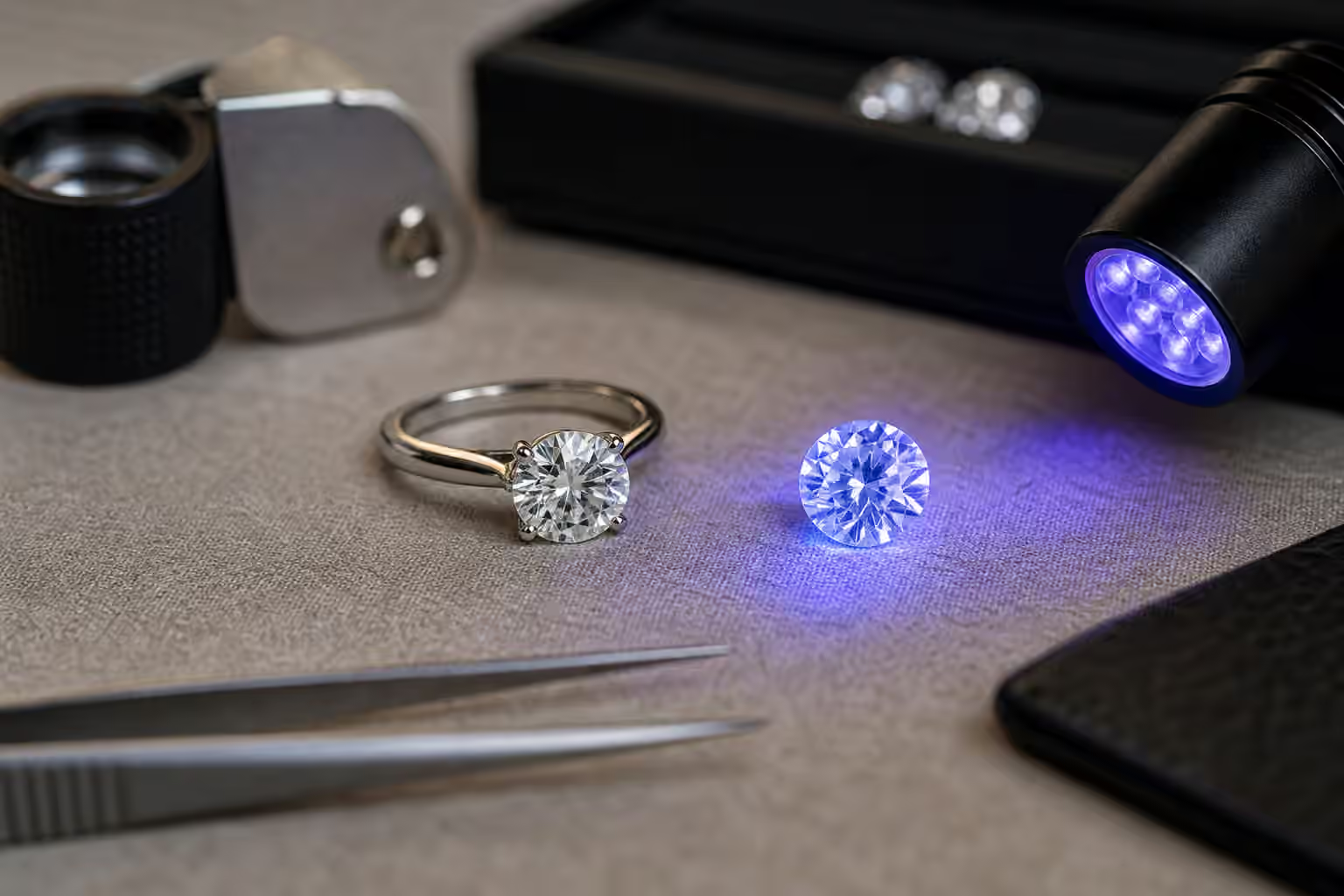
Diamond Fluorescence in Engagement Rings: What the Glow Really Means
Fluorescence is one of the easiest diamond details to overreact to because it sounds more mysterious than it usually is. A grading report may list it in a small line near the bottom, often after the familiar parts of the 4Cs of diamonds . The stone may be described as having none, faint, medium, strong, or very strong fluorescence. A seller may wave it away as meaningless. A forum post may treat it like a hidden defect. Neither reaction is careful enough.
In simple terms, fluorescence is the visible glow a diamond can emit when exposed to ultraviolet light. The most common glow is blue, though other colors can occur. The effect comes from trace elements and structural features inside the diamond, not from a battery, coating, or surface treatment. It is not proof that the diamond is natural, and it is not proof that the diamond is lab-grown. It is simply one more characteristic to understand before deciding whether a particular stone looks right for a particular ring.
The practical question is not whether fluorescence exists. The practical question is whether it changes the diamond’s appearance in normal wear. Most engagement rings are not worn under a jeweler’s ultraviolet lamp. They are worn near windows, under office lighting, in restaurants, outdoors, in photographs, and in the quiet mix of light that fills ordinary rooms. A fluorescent diamond may look completely normal in those places. It may even look a little brighter in some daylight. In a smaller number of stones, especially those with stronger fluorescence, it may look hazy, milky, or less crisp than its paper grades suggest.
That range of outcomes is why fluorescence deserves inspection rather than fear.
What the Report Is Telling You
A diamond grading report records fluorescence as a strength grade, not as a beauty grade. None means the lab did not observe meaningful fluorescence under its testing conditions. Faint means the reaction is slight. Medium, strong, and very strong describe increasing intensity when the diamond is exposed to ultraviolet light. The report may also note the fluorescence color, with blue being the one shoppers encounter most often.
This line on the report is useful because it tells you to look more closely. It does not tell you to reject the diamond automatically, and it does not tell you the stone is a bargain automatically. The report describes a reaction under specific light. Your eyes still have to decide how the diamond behaves when the ring is viewed the way it will actually be worn.
This is similar to the broader discipline of reading a diamond grading report . The paper gives you identity, measurements, grades, and clues. It does not replace movement, comparison, and real light. Fluorescence is one of those clues. If the report says strong blue, you should ask to see the diamond away from the counter lights. If the report says none, you still need to judge cut, color, clarity, shape, and setting because a non-fluorescent diamond can still be dull for unrelated reasons.
Why Blue Fluorescence Can Be Harmless
Many diamonds with faint, medium, or even strong blue fluorescence look attractive in normal conditions. The diamond does not glow visibly in every room. It does not become neon at dinner. It does not announce itself as unusual to people across a table. For a wearer, the effect may be essentially invisible unless the ring is placed under a UV lamp or brought into light with a strong ultraviolet component.
There is also a color interaction that can work in the buyer’s favor. Blue sits opposite yellow on the color wheel, so blue fluorescence can make some warmer diamonds appear a little whiter in daylight. This is not a trick to rely on blindly, but it explains why some near-colorless or faintly warm diamonds with blue fluorescence can look lively and pleasant rather than compromised. A J-color diamond in yellow gold may already look intentional because the metal supports its warmth. A similar stone with blue fluorescence may look a touch cooler in daylight, though the effect varies from diamond to diamond.
Metal choice matters here. White metals such as platinum and white gold tend to reveal warmth more clearly, while yellow gold and rose gold can make warmth feel softer and more deliberate. If you are balancing diamond color against setting metal, the ring metals guide is the natural companion to this decision. Fluorescence does not erase color grade, but it can influence how the grade reads in the finished ring.
The safest way to think about harmless fluorescence is visual, not theoretical. If the diamond looks bright, transparent, and appealing in several kinds of light, fluorescence may simply be a note on the report. If the stone keeps looking cloudy when compared with a similar non-fluorescent diamond, the fluorescence may be part of the reason.
When Fluorescence Deserves Caution
The word to watch for is haze. A hazy diamond looks as if a fine film sits inside the stone, even after cleaning. It may have acceptable color and clarity grades, but the light return feels softened. The facets lack crispness. Under bright light, instead of sharp flashes, the diamond can seem a little sleepy. Strong or very strong fluorescence is sometimes associated with this appearance, though it is not the only possible cause.
Haze can also come from clarity features such as clouds, graining, or a cut that leaks light. That is why it is risky to blame fluorescence without looking at the whole diamond. A strong-blue stone with excellent transparency can be a better choice than a non-fluorescent stone with weak cut quality. The label alone does not choose the ring for you.
Higher color diamonds deserve special attention because buyers often pay a premium for icy whiteness and crisp appearance. If a D, E, or F color diamond has very strong fluorescence, the question becomes whether the price and appearance still make sense together. Some stones will look perfectly clean. Others may have a softness that defeats the reason for paying for a top color grade in the first place. The only fair test is side-by-side comparison under neutral light, daylight, and a less flattering indoor source.
Shape can make the judgment easier or harder. Step cuts such as emerald and Asscher cuts have open, broad facets, so transparency issues can be more obvious. Brilliant cuts, cushions, ovals, and radiants have busier facet patterns that can hide small visual quirks, though they can also hide problems until the stone is viewed slowly. If you are still choosing the outline of the center stone, the diamond shapes guide helps explain why facet style changes what the eye notices.
How to Inspect a Fluorescent Diamond
Start by looking at the diamond without asking the jeweler to turn on a UV lamp. This keeps the decision anchored in normal appearance. Move the stone through diffuse daylight, shaded daylight, bright indoor light, and softer evening light if possible. A diamond that only impresses under jewelry-store spotlights has not proven much. The useful question is whether brightness and contrast stay lively when the light becomes less theatrical.
Then compare it with another diamond of similar shape, size, color, clarity, and cut quality, ideally one with no or faint fluorescence. Perfect comparison stones are rarely available, but even a close comparison helps. Look for transparency first. Does one stone look sharper through the table? Does one show facet edges more clearly? Does one seem to have an internal mist that remains after cleaning? If both look equally crisp and the fluorescent stone is priced sensibly, the fluorescence may be a reasonable tradeoff.
Only after that should the UV light come out. Under ultraviolet light, the glow can be interesting, but it is not the main event. A strong blue reaction can look dramatic in the jeweler’s hand and still matter very little in the ring’s daily life. The UV test confirms the report and helps you understand the stone’s behavior. It should not become theater that distracts from the ordinary-light inspection.
If the diamond is already mounted, inspect the ring from the side as well as from above. A setting can cover parts of the girdle and change how much light reaches the stone. A low basket or bezel may make fluorescence even less relevant in daily appearance, while a higher open setting may expose the diamond to more light from different directions. This does not mean one setting is correct. It means the center stone and the ring settings decision should be judged together.
Fluorescence and Lab-Grown Diamonds
Fluorescence can appear in both natural and lab-grown diamonds, but it should not be used as a simple origin test. Some natural diamonds fluoresce. Some do not. Some lab-grown diamonds show fluorescence or phosphorescence patterns. Some do not. Origin belongs on the grading report and in the seller’s disclosure, not in a guess based on glow.
This matters because shoppers sometimes treat every unusual optical behavior as suspicious. A diamond can be natural and fluorescent. A lab-grown diamond can be beautifully cut and non-fluorescent. A treated diamond can have documentation that clearly explains what was done to it. These are separate questions. If you are comparing origin as part of the purchase, read lab-grown vs natural diamonds before treating fluorescence as a shortcut.
The same practical standard applies either way. Does the stone look good? Is the report clear? Are treatments disclosed? Does the price reflect the combination of appearance, specs, origin, and demand? Fluorescence belongs inside that full conversation, not outside it as a superstition.
A Sensible Buying Position
For most buyers, the best position is calm skepticism. Do not reject every fluorescent diamond. Do not buy one only because someone says fluorescence makes it a secret value. Treat the grade as an invitation to inspect transparency, compare in real light, and ask why the price is what it is.
Faint fluorescence is usually a minor note. Medium fluorescence is often still minor, especially if the diamond looks crisp. Strong and very strong fluorescence deserve more careful comparison, not automatic rejection. In warmer color ranges, blue fluorescence may be visually pleasant. In top color ranges, it should be evaluated against the premium being charged for colorless appearance. In every case, cut quality remains more important for sparkle than the fluorescence line on the report.
The right diamond is not the one with the cleanest paper in every category. It is the one whose tradeoffs are visible, understood, and acceptable. Fluorescence is a tradeoff only when it changes appearance, price, or confidence. If it does none of those things, let it stay where it belongs: a small line on a report, not the center of the story.


