We had looked at forty-seven diamonds and still did not know what she wanted.
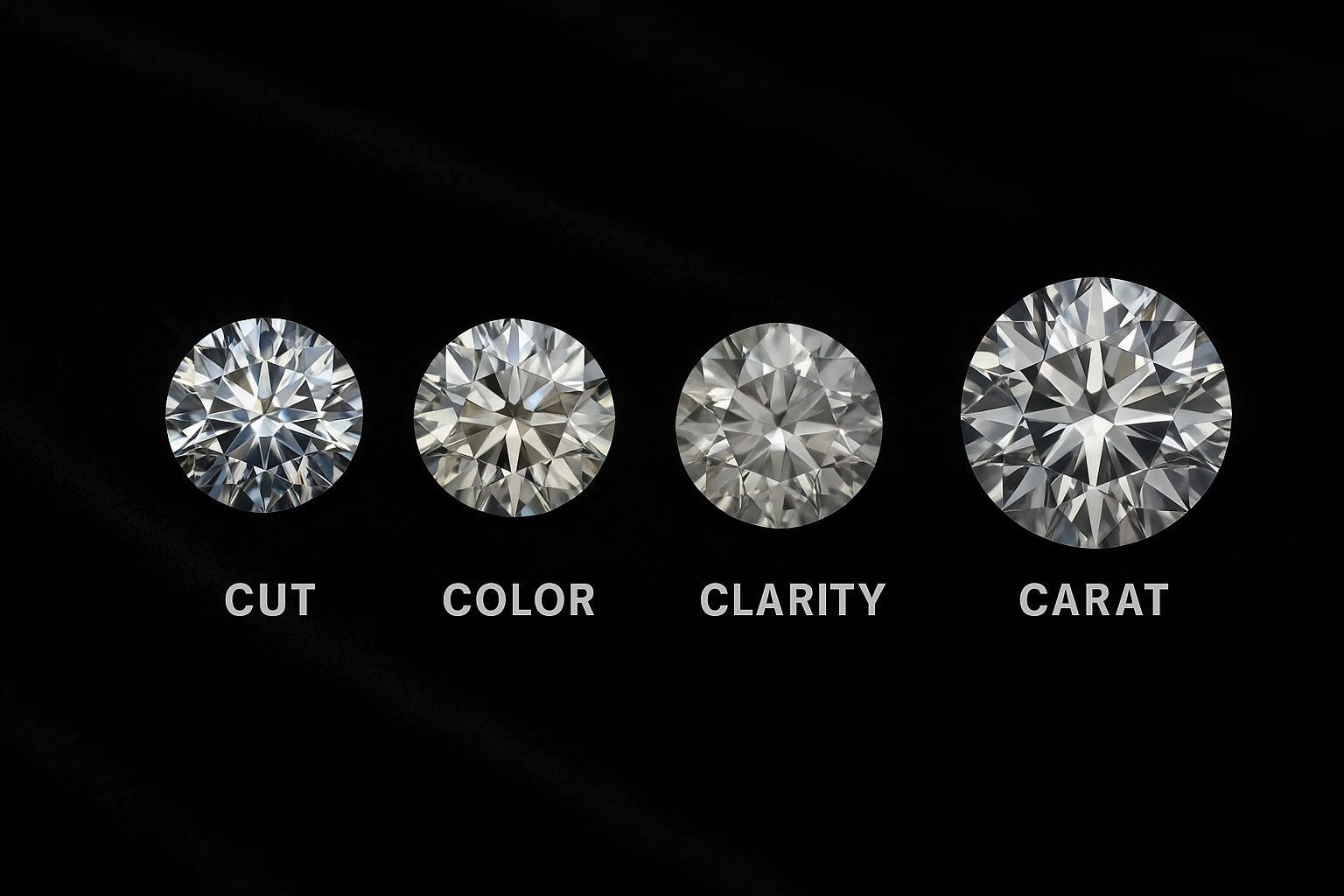
I had the Four Cs down. I had spreadsheets. I had opinions about table percentages.
I also had one wrong assumption. I assumed she wanted a diamond.
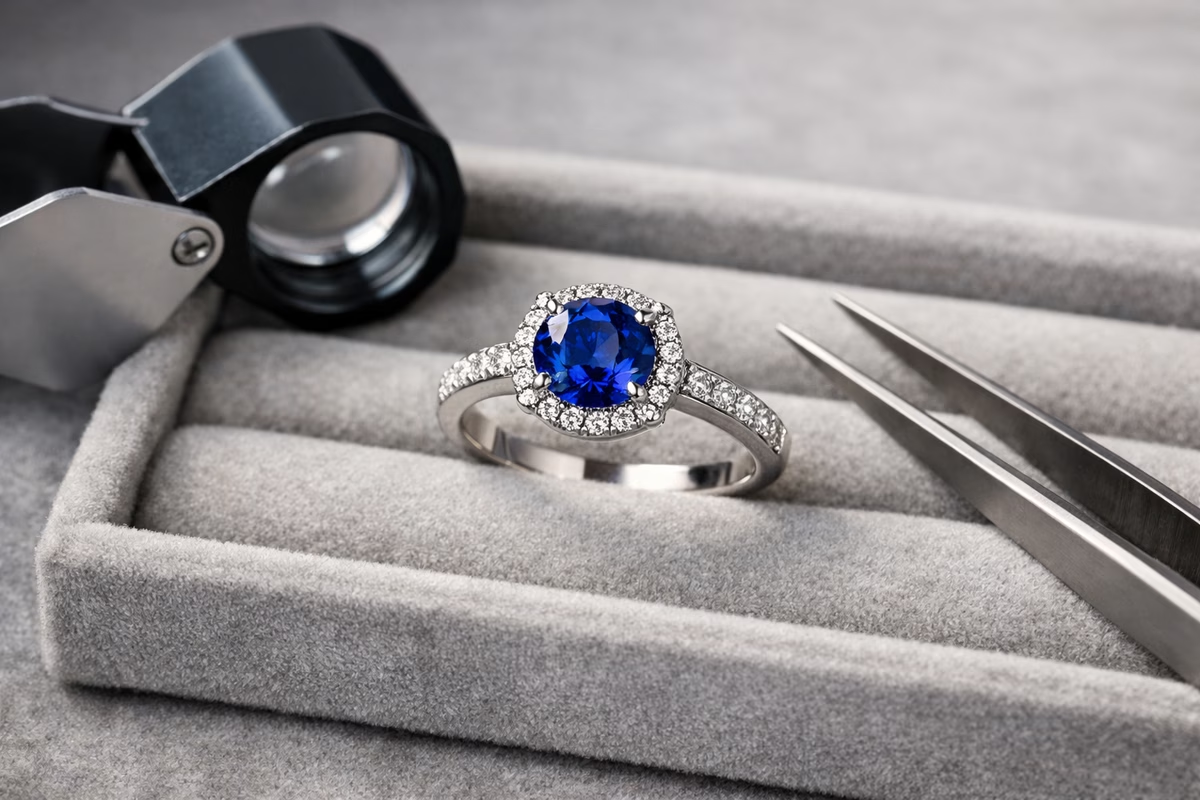
The ring that changed everything was in a case we almost walked past. It was a blue sapphire in a simple yellow gold setting. It was not the biggest or the most expensive stone, but it stopped her.
Three weeks later, that sapphire was on her finger. This guide is for anyone who might be walking past the right ring.
Why colored gemstones deserve consideration
The diamond engagement ring tradition is not very old. Before the marketing push in the 1930s and 40s, colored gemstones were common for engagement rings. Queen Victoria wore emeralds. Princess Diana wore a blue sapphire. Napoleon gave Josephine a sapphire-and-diamond toi et moi ring.
Diamonds are still a good choice. But if you or your partner likes color, there is plenty of history behind that too.
The practical case
Colored gemstones also have practical upsides:
- Uniqueness — A colored stone stands out right away.
- Value — Many colored gemstones give you more presence for the money.
- Meaning — Color carries symbolism, and that can matter more than a grading report.
The Big Three: sapphire, ruby, emerald
These are the gemstones with enough hardness and history to work well in everyday engagement rings.
Sapphire
Hardness: 9 (Mohs scale) — second only to diamond Colors: Blue is classic, but sapphires come in every color except red (red corundum is ruby). Pink, yellow, peach (“padparadscha”), teal, and white sapphires all exist.
Sapphire is the most practical colored gemstone for an engagement ring. It is nearly as hard as diamond, so it handles daily wear well. Blue sapphire is the most common choice.
What to look for:
- Color saturation matters most. Aim for a vivid blue that is not too dark or too pale.
- Eye-clean clarity is enough. Sapphires are judged mostly by color.
- Origin matters to collectors, but a good stone is still a good stone.
Ruby
Hardness: 9 (Mohs scale) Colors: Red, from pinkish-red to deep “pigeon blood” red
Ruby is corundum in red form. Fine rubies are rare and can cost more than diamonds.
What to look for:
- Color matters most. Aim for a saturated red that is not too dark.
- Inclusions are common. A perfectly clean ruby can be a red flag.
- Treatment: Heat treatment is normal. Avoid glass-filled rubies.
Emerald
Hardness: 7.5–8 (Mohs scale) — softer than sapphire or ruby Colors: Green, from light to deep, with blue or yellow secondary hues
Emerald is the most dramatic and also the most delicate of the Big Three. Its green has been prized for a long time. Most emeralds have visible inclusions.
What to look for:
- Color should be a vivid green.
- Clarity: Do not expect eye-clean. Avoid stones with fractures that affect durability.
- Setting matters: Emeralds need protection. A bezel or sturdy prong setting is better than a thin exposed one.
Beyond the Big Three: gemstones worth knowing
Morganite
A pink variety of beryl. It has a soft peach-pink color, good hardness, and a low price.
Alexandrite
This stone changes color in different light. Natural alexandrite is rare and expensive. Lab-created alexandrite gives you the effect for much less.
Spinel
Spinel used to be confused with ruby. It comes in red, pink, blue, and lavender, and it has good hardness and brilliance.
Montana Sapphire
Montana sapphires come in teal, blue-green, dusty blue, and peachy pink. They are popular because the colors are unusual.
How to choose: a practical framework
Step 1: Color first, always
Unlike diamonds, colored gemstones are judged mostly by color. Ask what color your partner already likes in clothes, art, or decor.
If you are unsure, blue sapphire is the safest choice.
Step 2: Hardness matters for daily wear
An engagement ring is worn every day, so harder stones hold up better.
| Stone | Hardness (Mohs) | Daily Wear Suitability |
|---|---|---|
| Diamond | 10 | Excellent |
| Sapphire / Ruby | 9 | Excellent |
| Spinel | 8 | Very Good |
| Emerald / Morganite | 7.5–8 | Good with a protective setting |
| Opal / Pearl | 5.5–6.5 | Not recommended for daily wear |
Step 3: Setting protects the stone
For softer stones, a bezel setting gives the most protection. For harder stones like sapphire, a prong setting works well and lets in more light.
Step 4: Buy from a reputable source
Colored gemstones are less standardized than diamonds. There is no universal GIA-style grade for sapphires, so you need to trust your jeweler.
Look for:
- A gemological report from a recognized lab
- Clear disclosure of any treatments
- A return policy that lets you check the stone in different light
- A jeweler who explains things instead of pushing
The metal question: what pairs with colored stones
Color interacts with metal differently than white diamonds do:
- Yellow gold warms cool-toned stones.
- White gold / platinum keeps the color clean and bright.
- Rose gold works well with warm-toned stones.
There is no wrong answer. Try the stone against different metals before you decide.
The ending: the stone that was always there
She wears the sapphire every day.
It changes with the light. People notice it and ask about it. That usually starts a real conversation.
They do not ask how many carats it is. They ask what kind of stone it is and why we chose it.
The answer is simple. We were looking for the wrong thing.
Next steps
- Read the 4 C’s of Diamonds guide if you are still comparing options
- Explore Ring Settings for help choosing a setting
- Check Ring Metals for gold and platinum guidance
- See Ring Care for long-term care