We had looked at forty-seven diamonds.
Forty-seven. In six shops, across three weekends, through a fog of light performance metrics, certification acronyms, and fluorescence grades. I knew the Four Cs backward. I had spreadsheets. I had opinions about table percentages.
And I had no idea what she actually wanted.
Because she’d never once said she wanted a diamond. I had simply assumed.
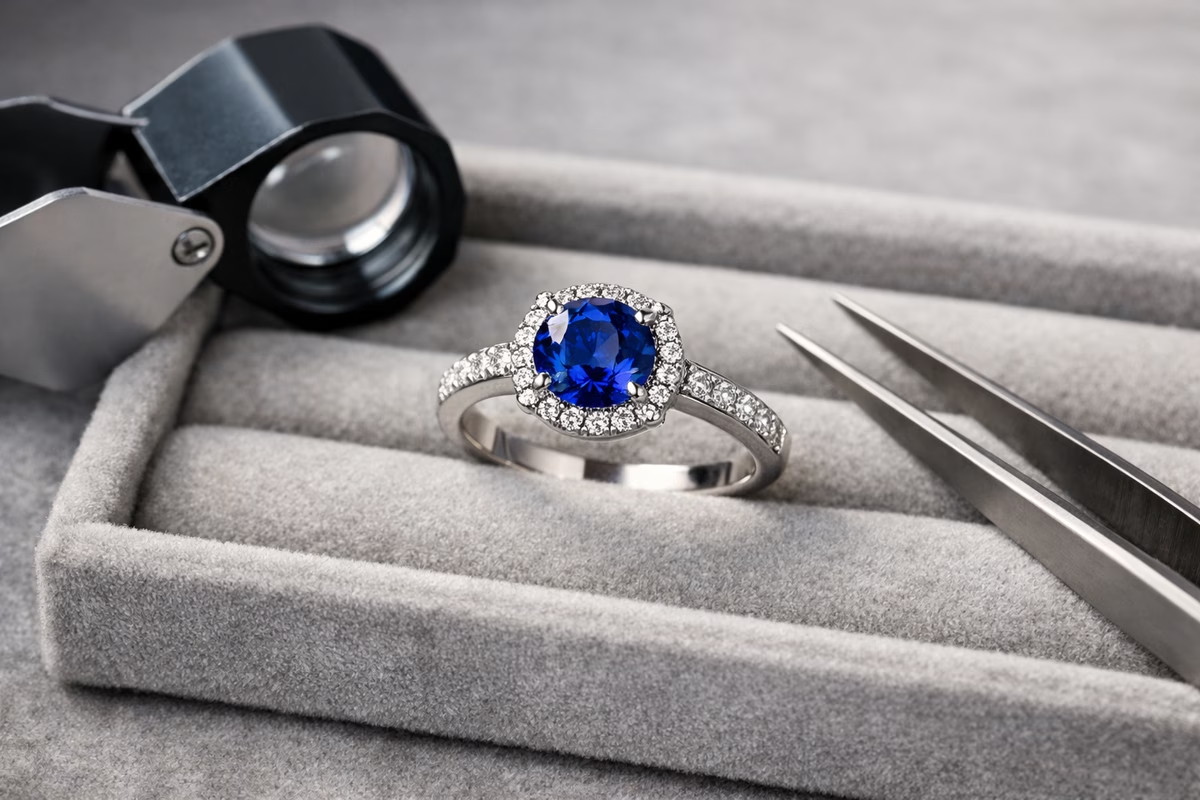
The ring that changed everything was in a case we almost walked past—a row of colored stones that the salesperson hadn’t bothered to highlight. A deep, velvety blue sapphire in a simple yellow gold setting. It wasn’t the biggest. It wasn’t the most expensive. But it stopped her.
“Oh,” she said. Just that. “Oh.”
Three weeks later, that sapphire was on her finger. This guide is for everyone who might be walking past the case that matters.
Why colored gemstones deserve consideration
The diamond engagement ring tradition is barely a century old. Before De Beers’ marketing campaigns in the 1930s and 40s, colored gemstones were the norm for engagement rings throughout most of history. Queen Victoria wore a snake ring with emeralds. Princess Diana chose a blue sapphire (now worn by Catherine, Princess of Wales). Napoleon gave Josephine a sapphire-and-diamond toi et moi ring.
None of this means diamonds are wrong. Diamonds are extraordinary stones—hard, brilliant, and timeless. But if you or your partner feels drawn to color, history is on your side.
The practical case
Beyond history and aesthetics, colored gemstones offer real advantages:
- Uniqueness — A colored stone is instantly distinctive. In a world of round brilliant diamonds, a teal sapphire or deep emerald stands out.
- Value — Many colored gemstones offer more visual impact per dollar than equivalent-quality diamonds. A stunning 1.5-carat sapphire costs significantly less than a comparable diamond.
- Meaning — Colors carry symbolism. Blue for loyalty. Green for growth. Red for passion. A stone chosen for its meaning adds a layer that no grading report captures.
The Big Three: sapphire, ruby, emerald
These are the gemstones with enough hardness, beauty, and tradition to work beautifully in everyday engagement rings.
Sapphire
Hardness: 9 (Mohs scale) — second only to diamond Colors: Blue is classic, but sapphires come in every color except red (red corundum is ruby). Pink, yellow, peach (“padparadscha”), teal, and white sapphires all exist.
Sapphire is the most practical colored gemstone for an engagement ring. It’s nearly as hard as diamond, which means it handles daily wear with grace. Blue sapphire is the most popular choice, ranging from pale periwinkle to deep midnight.
What to look for:
- Color saturation is the most important quality factor. A vivid, medium-toned blue is most prized. Avoid stones that are too dark (they look black in low light) or too pale (they lack presence).
- Eye-clean clarity is enough. Unlike diamonds, where clarity is closely graded, sapphires are judged primarily by color.
- Origin matters to collectors (Kashmir and Burmese sapphires command premiums), but a beautiful stone is beautiful regardless of where it was mined.
Ruby
Hardness: 9 (Mohs scale) Colors: Red, from pinkish-red to deep “pigeon blood” red
Ruby is corundum (same mineral as sapphire) in its red form. Fine rubies are among the rarest and most expensive gemstones in the world—per carat, top rubies can exceed diamond prices.
What to look for:
- Color is everything. The ideal is a saturated, slightly purplish red with medium-dark tone. Too light and it becomes “pink sapphire.” Too dark and it loses brilliance.
- Inclusions are common and expected. A perfectly clean ruby is suspicious—it might be synthetic or glass-filled.
- Treatment: Most rubies on the market are heat-treated to improve color. This is standard and accepted. Glass-filled rubies are a different story—avoid them for engagement rings, as the filler can degrade over time.
Emerald
Hardness: 7.5–8 (Mohs scale) — softer than sapphire or ruby Colors: Green, from light to deep, with blue or yellow secondary hues
Emerald is the most dramatic and also the most delicate of the Big Three. Its legendary green has been prized for millennia. However, emeralds are almost always included (the French call these internal fractures jardins—gardens—because they look like tiny plant structures under magnification).
What to look for:
- Color should be a vibrant, saturated green. The most prized emeralds have a slight blue secondary hue.
- Clarity: Don’t expect eye-clean. Accept the jardin as part of the stone’s character. But avoid stones with surface-reaching fractures that affect durability.
- Setting matters: Emeralds need protective settings. A bezel setting or one with substantial prongs shields the stone from impact. Avoid thin, exposed prong settings.
Beyond the Big Three: gemstones worth knowing
Morganite
A pink variety of beryl (emerald’s cousin). Soft peach-pink color, good hardness (7.5–8), and very affordable. Morganite has become one of the most popular alternative engagement ring stones because of its warm, romantic color and excellent value.
Alexandrite
The chameleon stone: it appears green in daylight and red-purple under incandescent light. Fine natural alexandrite is extraordinarily rare and expensive—more per carat than most diamonds. Lab-created alexandrite captures the color-change effect beautifully at a fraction of the price.
Spinel
Once confused with ruby (the “Black Prince’s Ruby” in the British Crown Jewels is actually a spinel), this stone has been rediscovered by modern jewelers. Spinel comes in vivid reds, pinks, blues, and lavenders. Hardness of 8, excellent brilliance, and often untreated.
Montana Sapphire
Deserving its own mention: sapphires mined in Montana come in unique colors—teal, blue-green, dusty blue, and peachy pink—that don’t exist in traditional sapphire sources. They’re increasingly popular for engagement rings because of their one-of-a-kind color and American origin.
How to choose: a practical framework
Step 1: Color first, always
Unlike diamonds (where cut is king), colored gemstones are judged primarily by color. Ask yourself: what color makes your partner’s eyes light up? What color do they gravitate toward in clothing, art, and decor?
If you’re unsure, blue sapphire is the safest choice. It’s universally flattering and nearly indestructible.
Step 2: Hardness matters for daily wear
An engagement ring is worn every day, which means it takes constant micro-impacts. Harder stones survive this better.
| Stone | Hardness (Mohs) | Daily Wear Suitability |
|---|---|---|
| Diamond | 10 | Excellent |
| Sapphire / Ruby | 9 | Excellent |
| Spinel | 8 | Very Good |
| Emerald / Morganite | 7.5–8 | Good (with protective setting) |
| Opal / Pearl | 5.5–6.5 | Not recommended for daily wear |
Step 3: Setting protects the stone
For softer stones, a bezel setting (metal surrounding the stone’s edge) offers the most protection. For harder stones like sapphire, a prong setting works beautifully and lets more light through.
Step 4: Buy from a reputable source
Colored gemstones are less standardized than diamonds. There’s no universal “GIA grade” for sapphires the way there is for diamonds. This means you need to trust your jeweler.
Look for:
- A gemological report from a recognized lab (GIA, AGL, Gübelin)
- Clear disclosure of any treatments (heating, oiling, filling)
- A return policy that lets you examine the stone in different lighting
- Willingness to educate—a good jeweler explains; a bad one pressures
The metal question: what pairs with colored stones
Color interacts with metal differently than white diamonds do:
- Yellow gold warms cool-toned stones (blue sapphire in yellow gold is a timeless combination)
- White gold / platinum keeps the stone’s color pure and makes it pop
- Rose gold harmonizes beautifully with warm-toned stones (morganite, peach sapphire)
There’s no wrong answer. But try the stone against different metals before committing. The same sapphire can look formal in platinum and vintage in yellow gold.
The ending: the stone that was always there
She wears the sapphire every day.
It picks up light in ways I didn’t expect—sometimes it looks navy, sometimes almost violet, sometimes a blue so clear it looks like deep water. People notice it. They ask about it. And every time, there’s a conversation instead of an appraisal.
Nobody asks how many carats it is. They ask what kind of stone it is. They ask where we found it. They ask why we chose it.
And the answer is always the same: we didn’t choose it. It chose us.
We just had to stop looking at what we thought we were supposed to see.
Next steps
- Read the 4 C’s of Diamonds guide if you’re still considering diamonds alongside colored options
- Explore Ring Settings to find the right setting for your chosen stone
- Check Ring Metals for detailed guidance on gold, platinum, and alternative metals
- See Ring Care for maintaining colored gemstone rings over a lifetime