Colored Gemstone Durability for Engagement Rings
Colored gemstone engagement rings make a different promise from diamond rings. They bring color into a symbol that is often expected to be white, and that color can feel more personal than a grade on a report. A blue sapphire can look steady and classic. A green emerald can feel old-world and vivid. A ruby can carry warmth and drama. A spinel, teal sapphire, or peach sapphire can make the ring feel specific to one person’s taste rather than to a category.
The practical question is not whether colored stones are appropriate for engagement rings. Many are. The question is how each stone behaves when it is worn often. Diamonds are not the only durable gems, but colored gemstones vary widely in hardness, toughness, cleavage, treatment, sensitivity, and repair options. A ring can be beautiful and still need a setting that respects the stone’s limits.
The existing colored gemstone rings story is a useful starting point for opening the search beyond diamonds. This guide sits beside it as the more technical companion: how to judge whether a colored center stone is likely to live well on a hand.
Hardness Is Only One Part of Durability
Gemstone durability is often reduced to the Mohs hardness scale. The scale matters because it describes resistance to scratching. A diamond is 10. Sapphire and ruby are 9. Spinel is usually around 8. Emerald is lower, and stones such as opal and pearl are much softer. For daily wear, scratch resistance is important because an engagement ring meets keys, counters, dust, soap residue, cookware, gym equipment, and other jewelry.
Hardness, however, does not tell the whole story. A stone can resist scratches but still chip if struck at the wrong angle. Toughness describes how well a gem resists breaking. Cleavage describes planes where a stone can split more easily. Inclusions, fractures, and treatments can also change risk. This is why a simple hardness number should never be the whole decision.
Emerald is the clearest example. It is hard enough to be jewelry, and fine emerald rings can last for generations, but emeralds often contain internal features that make them more vulnerable to impact than sapphire or diamond. That does not make emerald wrong for an engagement ring. It means the setting, wearer habits, and repair expectations must be honest from the beginning.
Sapphire Is the Practical Color Workhorse
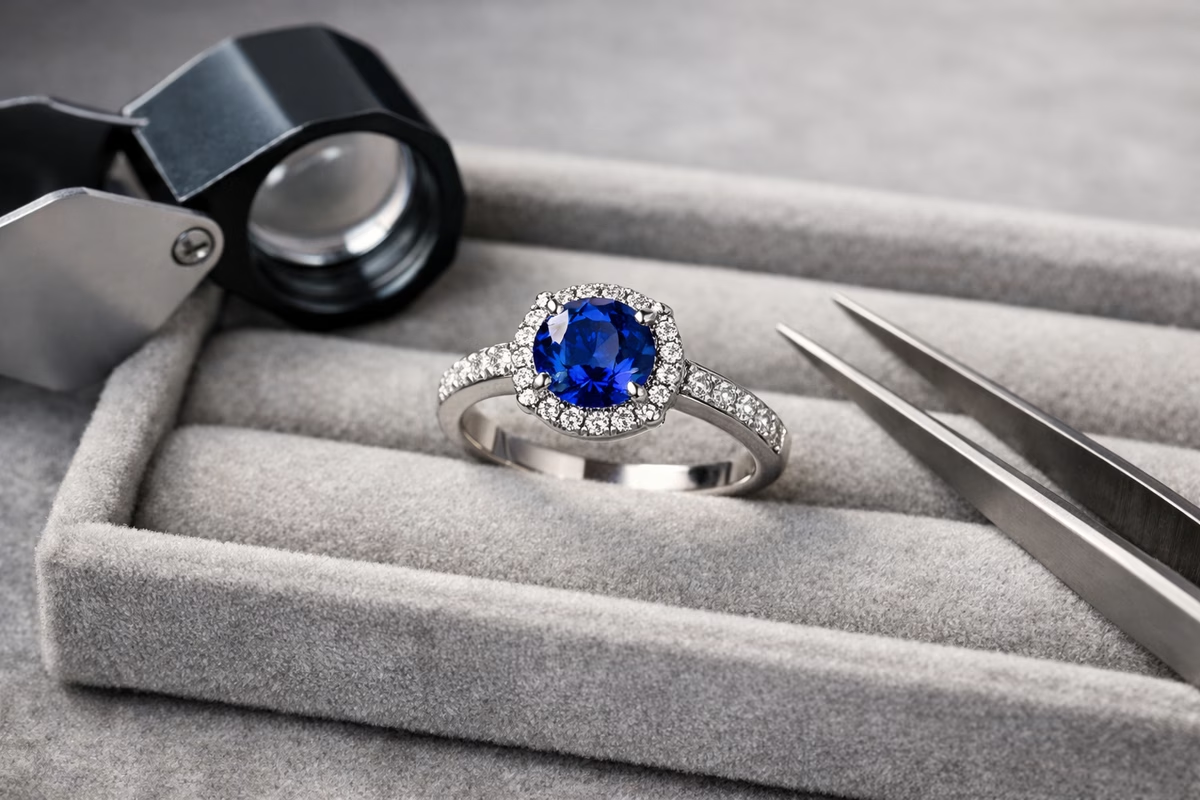
Sapphire is the easiest colored gemstone to recommend for frequent engagement ring wear because it combines strong hardness with broad color choice. Blue is the classic, but sapphire also appears in pink, yellow, green, teal, peach, lavender, and near-colorless varieties. Red corundum is ruby, which is why red sapphire is not normally described as sapphire in the trade.
For a daily ring, sapphire gives a useful balance of beauty and resilience. It can handle prong settings, bezels, halos, three-stone designs, and low-profile rings when the setting is well made. It also gives shoppers a wide range of moods. A deep blue sapphire in yellow gold feels traditional. A pale blue or teal sapphire in platinum can feel quiet and modern. A peach sapphire in rose gold can feel warm without looking like a diamond substitute.
Color matters more than a standardized grading vocabulary. Unlike diamonds, colored gemstones are not bought by a single universal grade sequence. The same description can cover stones with very different appearances. Look at the stone in several lighting conditions. Some sapphires go nearly black indoors. Some pale stones wash out in bright light. Some teal stones shift between blue and green, which may be the appeal or may surprise the wearer later.
Treatments should be disclosed. Heat treatment is common for sapphire and ruby, and many buyers accept it when it is represented clearly. Other treatments can be more significant. A jeweler should be able to tell you what is known, what is documented, and how the treatment affects care or value. The broader responsible engagement ring sourcing guide is useful here because clear answers matter as much as the answer itself.
Ruby Brings Strength and Sensitivity to Value
Ruby is the red form of corundum, so it shares sapphire’s strong hardness. As an engagement ring center stone, it can be durable and striking. It also carries a value landscape that can be harder for first-time buyers to read. Fine rubies are rare. Color, origin, treatment, and clarity can change price dramatically, and a small difference in appearance may carry a large difference in cost.
The durability advantage is real, but ruby still needs careful selection. Inclusions are common and not automatically a problem, but surface-reaching fractures or aggressive treatments deserve scrutiny. Some heavily treated rubies are not good candidates for an everyday engagement ring because repair, cleaning, or heat exposure can create complications. A calm jeweler will explain this plainly rather than treating all rubies as interchangeable.
Ruby also changes the design mood quickly. A red center stone already has presence, so the setting may need restraint. A plain yellow gold solitaire, a protective bezel, or tapered diamond side stones can let the ruby lead. A heavy halo and diamond-covered band may be beautiful for someone who likes ornament, but the ring can become visually intense. That is not a durability problem, but it is a long-term wear problem if the style feels louder than the wearer.
Emerald Needs Protection and Realistic Care
Emerald is loved for a reason. Its green is not easily replaced by another stone, and its internal garden can give it depth and character. In an engagement ring, though, emerald asks for more care than sapphire or ruby. Most emeralds have inclusions, and many are treated with oils or resins to improve clarity. Those treatments are common in the emerald market, but they should still be disclosed because they influence cleaning and future service.
A protective setting matters. A bezel can guard the edges of an emerald and soften the risk from everyday knocks. Sturdy prongs can work, especially with good corner protection on emerald cuts, but very exposed settings are less forgiving. The advice in low-profile engagement rings becomes especially relevant because lower, smoother settings reduce the number of ways the stone meets the world.
Cleaning should be gentle. Ultrasonic cleaners and steam can be risky for some emeralds, especially when treatments or fractures are present. Warm water, mild soap, and a soft brush are often safer, but the jeweler who sold the stone should give care guidance specific to the gem. The ring care habits still apply, with the added reminder that colored gemstones are not all cleaned like diamonds.
Emerald buyers should also think about temperament. If the wearer wants a ring they almost never remove, works with hands, or dislikes signs of wear, emerald may create anxiety. If the wearer loves the stone enough to treat it with attention, choose a protective setting, and accept occasional professional care, emerald can be deeply satisfying.
Spinel, Garnet, and Other Alternatives Need Specific Questions
Not every colored engagement ring needs to be sapphire, ruby, or emerald. Spinel deserves more attention than it often receives. It can be bright, lively, and durable enough for many rings, with colors ranging from red and pink to lavender, gray, and blue. It does not have the same mainstream recognition as sapphire, which can be either a drawback or part of its appeal.
Garnet is a family, not a single durability profile. Some garnets can be lovely in occasional-wear rings, while others may be less ideal for a ring worn constantly. Aquamarine and morganite can look soft and romantic, but they may show wear faster than sapphire, especially in exposed settings. Opal, pearl, turquoise, and similar softer or more porous gems are usually better for jewelry that is not worn every day on the hand.
The point is not to memorize every mineral. The point is to ask better questions. How hard is the stone? How tough is it? Does it have cleavage? Is it treated? Can it go in an ultrasonic cleaner? Can it tolerate heat from future repair work? Is the setting designed to protect the vulnerable edges? A jeweler who works seriously with colored stones should welcome those questions.
Setting Design Can Make a Good Stone Wear Better
The setting cannot turn a delicate stone into a diamond, but it can reduce avoidable risk. Bezels protect edges and create a smooth outline. Low baskets can keep the stone closer to the finger. V-prongs protect points on pear, marquise, and princess shapes. A halo can offer some edge protection, though tiny accent stones add their own maintenance. A thick enough shank helps stabilize the ring so the center stone does not constantly rotate into knocks.
Shape matters too. Ovals and rounds have fewer vulnerable corners. Emerald cuts and cushions need clean corner protection. Pears and marquises have points that should not be left exposed. The diamond shapes guide is written for diamonds, but much of the shape logic applies to colored stones as well. Outline, points, spread, and setting height all affect daily wear.
Metal color can change both appearance and perceived value. Yellow gold can make blue, green, and red stones feel warmer and more traditional. Platinum and white gold can make cool sapphires and spinels look crisp. Rose gold can flatter peach and pink stones but may shift the apparent color of some gems. Because colored stones are judged first by color, view the actual stone against the actual metal whenever possible.
Documentation and Aftercare Protect the Choice
A colored gemstone purchase should come with clear written details. The document may not look like a diamond grading report, and not every stone needs the same laboratory paperwork, but the basic identity should be written down: species, variety when relevant, approximate measurements, weight, metal, setting description, known treatments, and any report information. If the ring will be insured, these records become part of the file discussed in ring insurance .
Aftercare should also be discussed before purchase. Ask how often the ring should be inspected, whether the jeweler can tighten or repair the setting without risking the stone, and what cleaning methods are safe. Ask what happens if the stone chips, loosens, or needs resetting. These questions are not pessimistic. They are part of buying a ring meant to last beyond the first photograph.
The best colored gemstone engagement ring is not the one that imitates a diamond most successfully. It is the one that lets color be the reason for the choice while still respecting daily wear. Sapphire may be the steady answer. Ruby may be the bold one. Emerald may be the romantic one that asks for care. Spinel or another gem may be the quiet discovery. The right choice is the stone whose beauty and limits the wearer can live with, set in a ring that helps it do exactly that.