Cluster Engagement Rings: Shape, Scale, and Small-Stone Care
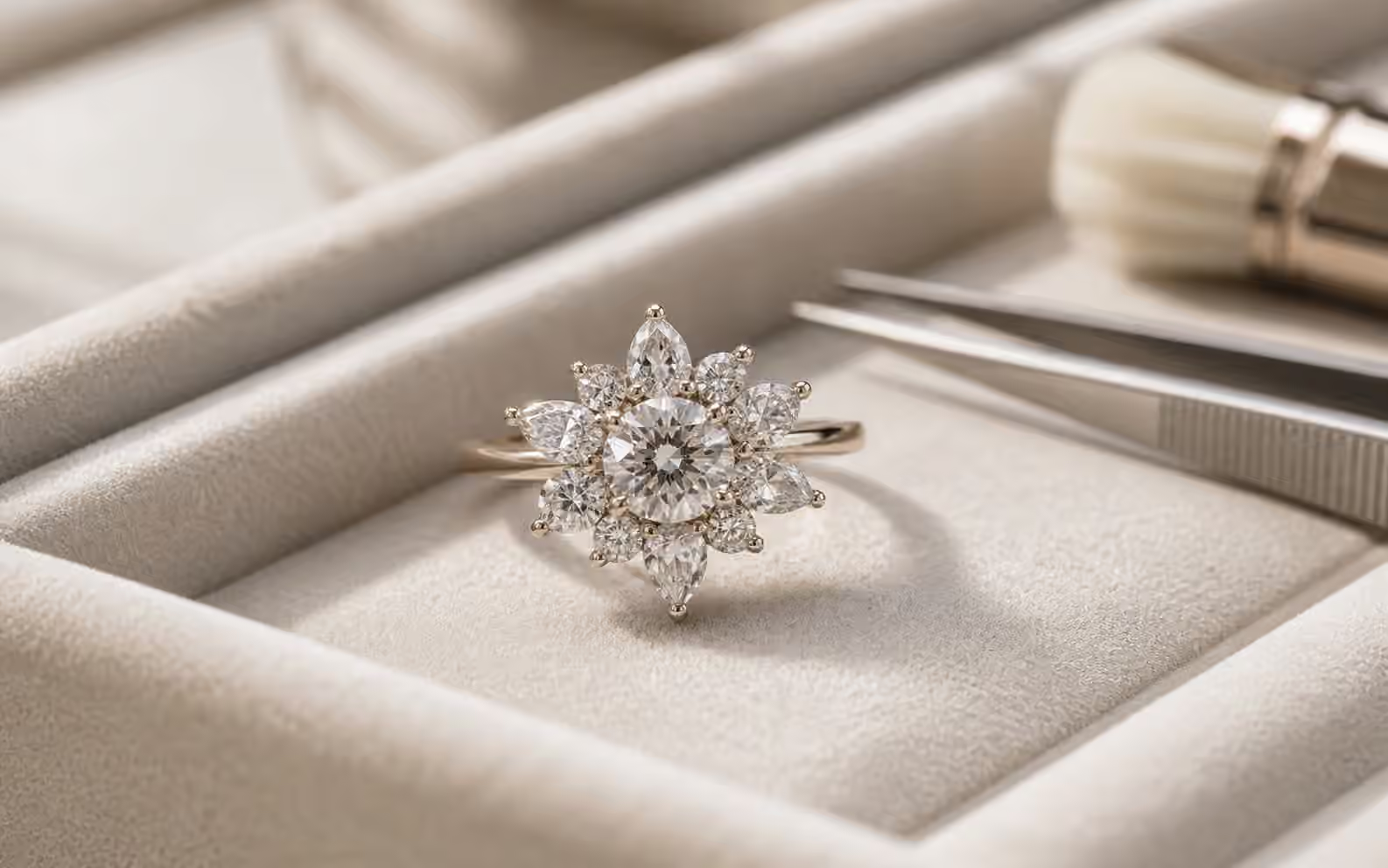
A cluster engagement ring builds its presence from a group of stones rather than one center stone with a simple supporting cast. Some clusters have a clear main diamond surrounded by smaller shapes. Others spread the attention across several stones, almost like a small bouquet. The appeal is easy to understand: cluster rings can look generous, textured, and individual without relying on a single large diamond.
The risk is that “more stones” can become a substitute for design judgment. A good cluster has order. It may be symmetrical or intentionally irregular, vintage or modern, floral or geometric, but the eye should understand where to rest. If the ring looks busy in the tray, it will usually look busier on the hand.
Cluster rings sit near several existing engagement ring families. They borrow from halo engagement rings when small stones frame a center. They overlap with side stones and accent diamonds when the supporting stones shape the outline. They often nod toward vintage-inspired engagement rings because older jewelry used clusters long before modern solitaire language became dominant. This guide treats the cluster as its own structure, with its own design and ownership questions.
A Cluster Needs Hierarchy
The strongest cluster rings usually answer one question clearly: what is the main idea? Sometimes the answer is a center stone with a surrounding arrangement. Sometimes it is a flower-like outline. Sometimes it is an asymmetrical spray of shapes that moves across the finger. Without that answer, the ring can become a collection of small stones that happen to share a shank.
Hierarchy does not require one large center stone. A ring can have several similar stones and still feel organized if the outline is controlled. It might use matching rounds in a soft oval cluster, or a mix of pear shapes that all point toward the same visual center. What matters is whether the design has a readable rhythm. If every stone is trying to be the focal point, none of them will be.
Look at the ring from normal distance before studying it under magnification. The small details should reward closer viewing, but the basic shape should make sense from across a table. If the ring only looks coherent in a close-up photograph, it may feel fussy in daily life.
Shape Mixing Is the Whole Art
Cluster designs often combine rounds, pears, marquises, baguettes, cushions, and colored stones. Mixed shapes can make a ring feel custom and lively. They can also create awkward gaps, exposed points, and uneven sparkle. A pear-shaped accent near a round center can soften the outline. Marquise accents can create a leaf-like effect. Baguettes can introduce order and geometry. Small rounds can fill spaces, but too many of them may turn the ring into a mound of sparkle.
The diamond shapes guide is useful because every shape brings a different edge condition. Pears and marquises have points. Princess cuts and some radiants have corners. Baguettes have long edges and quieter light. A cluster designer has to protect those features while making the stones look effortless together.
Try to notice negative space. A little air between stones can make a cluster look delicate and intentional. Too much air can look like missing stones. No air at all can make the ring difficult to clean and repair. The best clusters often use metal as part of the design rather than hiding every bit of structure.
Clusters Are Not the Same as Halos
A halo is usually a border around a center stone. A cluster may frame a center, but it does not have to. This distinction matters because halo expectations can mislead shoppers. If the goal is to make a center diamond look larger while keeping the outline simple, a halo may be the cleaner tool. If the goal is a textured composition with multiple visible shapes, a cluster may be more satisfying.
Clusters can also avoid one common halo problem: the center stone disappearing into a uniform border. Because cluster stones may vary in shape and scale, they can make the design feel more organic. At the same time, they can create more irregular edges that catch more easily or complicate band fit. A cluster is not automatically more durable because it uses smaller stones.
If the design has a center stone, check that the center still reads as the center. If the design is centerless, check that the whole outline feels complete. Both approaches can be beautiful. The mistake is buying a cluster while expecting the visual simplicity of a solitaire or the clean frame of a halo.
Small Stones Mean More Setting Decisions
Every stone in a cluster needs its own seat, prongs, beads, or bezel edge. That means more workmanship to inspect and more tiny parts to maintain. A delicate cluster can last well when built carefully. A ring with uneven prongs, thin shared metal, or poorly seated stones can become frustrating even if it looked impressive in the case.
Pay attention to prong placement. Tiny prongs should not feel sharp. Points should be protected. Shared prongs should be substantial enough to hold the stones they serve. If a small stone is tucked under an overhanging neighbor, ask how it can be tightened or replaced later. Repair access is not a romantic topic, but it matters in a ring with many small components.
The pave engagement rings guide explains similar maintenance concerns because pave also depends on many small stones. Cluster rings may use larger accent stones than pave, but the ownership habit is similar: gentle cleaning, periodic inspection, and quick attention when a stone looks tilted, dull, or loose.
Cleaning and Wear Are Part of the Design
Cluster rings can trap residue in small spaces. Lotion, sunscreen, soap, and dust gather where stones meet metal. That buildup can make diamonds look flat and colored stones look sleepy. A cluster owner does not need to be anxious, but they should be realistic. The ring will usually need more careful cleaning than a plain solitaire.
The ring care guide gives the broader routine. For clusters, the most useful habit is gentle regular cleaning followed by inspection in good light. Do not scrub aggressively under small stones or poke at delicate settings. If a soft brush catches, stop and have the ring checked. Catching can be a sign that a prong has lifted or a bead has worn.
Daily wear patterns also matter. A high cluster may bump surfaces more often. A wide cluster can rub neighboring fingers. An open, airy cluster can be lovely but may expose more edges. A low, dense cluster may feel smoother but collect more residue. There is no perfect version, only a set of tradeoffs that should fit the wearer.
Vintage Clusters Need a Different Eye
Older cluster rings can be beautiful because they carry handwork, unusual stones, and softer proportions. They can also carry worn prongs, thinned shanks, chipped stones, and past repairs. If buying antique or estate, do not judge only the romance. Have the ring inspected by someone who can speak plainly about structure.
A vintage-inspired cluster may give the same mood with new construction. That can be a good compromise if the wearer loves the look but wants a stronger shank, modern sizing, or a clearer warranty path. The antique ring revival story captures the appeal of older rings, while the practical question remains whether this particular cluster is ready for daily wear.
Old-cut diamonds, rose cuts, and colored stones may appear in clusters. Their light behavior may be softer than modern brilliant cuts. That is not a flaw when it suits the design. But the buyer should know what kind of sparkle they are choosing. A cluster with many gentle stones can glow beautifully; it will not look like a modern round brilliant solitaire.
Budget Should Follow Craft, Not Stone Count
Clusters can offer visual size without the cost of one large center diamond, but they are not automatically economical. Many stones require labor. Good setting work costs money. A ring with a modest center and carefully arranged accents may be a better value than a larger-looking cluster with weak construction. The setting is not packaging here; it is the ring.
If the budget is fixed, compare the cluster against simpler options. Would the wearer prefer the texture and spread of the cluster, or would the same money be better spent on a cleaner center stone and a simpler setting? The diamond carat weight and face-up size guide helps because visible size can come from many places, not only more stones.
Documentation matters as the ring becomes more complex. Ask what stones are included, which are diamonds or gemstones, and how repairs are handled. For insurance, a cluster with multiple meaningful stones should be described clearly enough that replacement is not left to guesswork. The ring insurance guide is a useful companion after purchase.
When a Cluster Ring Works
A cluster engagement ring works best for someone who enjoys detail, texture, and a less conventional outline. It suits a wearer who likes jewelry as composition, not only as a showcase for one stone. It can be romantic, antique, floral, sculptural, or quietly modern depending on the shapes and metalwork.
It may be a poor fit for someone who wants low maintenance, strict symmetry, a perfectly straight wedding stack, or a very smooth ring top. The style asks for a little more care and a little more design literacy. That is part of its charm, but it should be chosen knowingly.
The right cluster feels resolved. The stones have a relationship, the outline flatters the hand, and the setting gives each small part enough support. Instead of looking like a way to use many stones, it looks like one ring that needed many stones to say what it means.